Rooftop Unit Replacement Cost for Commercial Buildings
Rooftop unit replacement costs $7,000 to over $35,000. Learn how to estimate your project, compare quotes, and avoid hidden fees. Use our tools to decide repair or replace.
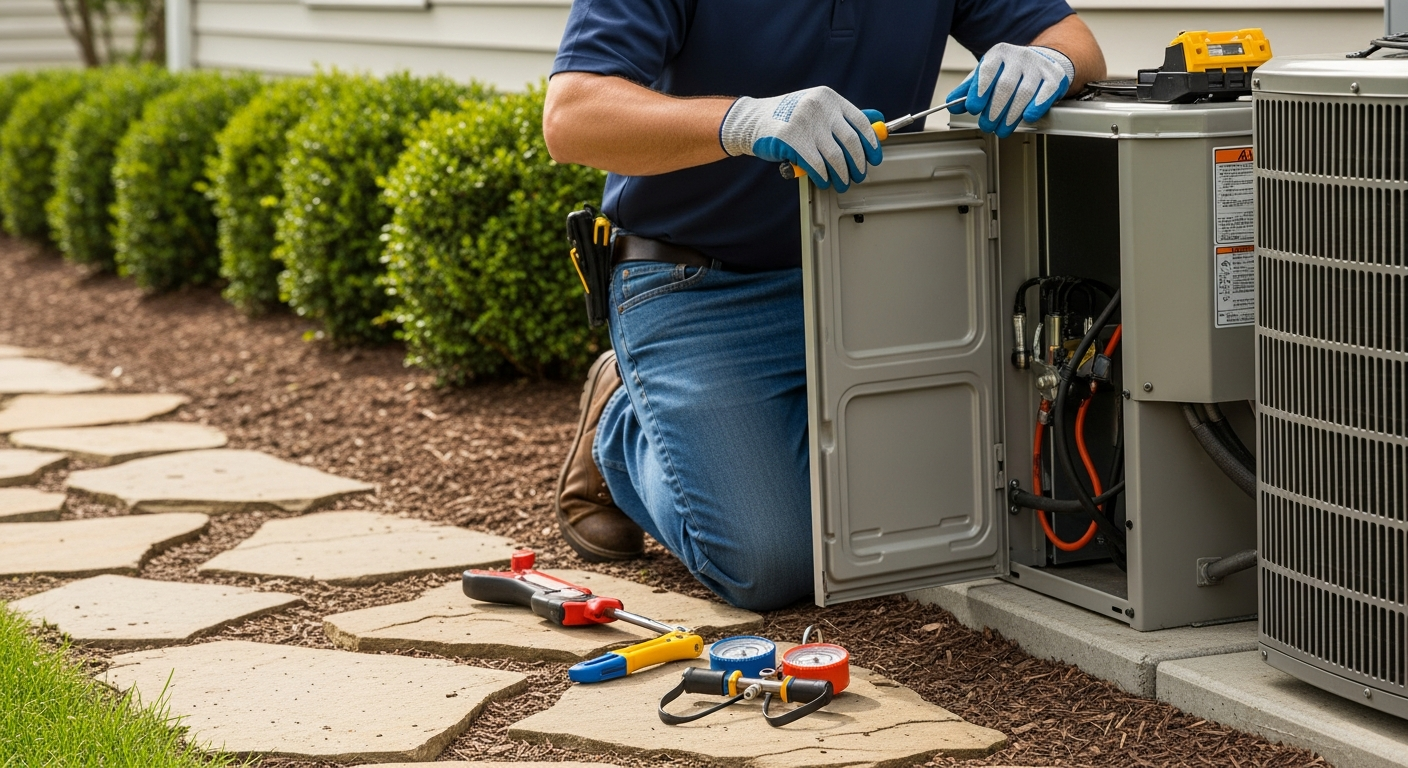
Best next step
Use the article decision rules, then compare a written quote when professional work is required.
What Matters Most
- Check safe basics first.
- Use cost ranges to sanity-check quotes.
- Call a qualified pro for refrigerant, gas, combustion, and electrical work.
Strengths
- Clearer next step.
- Better quote comparison.
Weaknesses
- Final pricing depends on local conditions.
- Some problems require in-person diagnosis.
Decision summary
| Scenario | Usually do | Why |
|---|---|---|
| Minor, safe homeowner issue | Check basics first | Filters, settings, and blocked vents can be resolved safely. |
| Mechanical, refrigerant, gas, or electrical issue | Call a qualified technician | These areas carry safety, code, and warranty risk. |
What You Need to Know About Rooftop Unit Replacement Costs
Replacing a commercial rooftop unit (RTU) typically ranges from $7,000 to over $35,000 per unit, with most small- to mid-sized buildings spending $10,000–$20,000 for a 5- to 10-ton system. Total costs include equipment, crane rental, labor, and any needed curb adapters or ductwork changes. A new high-efficiency unit can cut energy bills 20–40%, and utility rebates may offset 10–30% of the upfront price. Use our cost estimator and repair-or-replace calculator to ballpark your project, then find local pros for quotes.
Quick Answer: How Much Does a Commercial RTU Replacement Cost?
The national average for a commercial rooftop unit replacement is $12,000–$25,000 for a typical 5–10 ton packaged unit. Expect to budget:
- Equipment only: $3,000–$25,000 (based on tonnage and efficiency)
- Crane and rigging: $1,000–$5,000
- Labor and installation: $3,000–$10,000
- Permits and incidentals: $200–$1,500
Use our quote checker to compare bids and avoid hidden fees.
RTU Replacement Cost by Tonnage
| Tonnage | Typical Building Size | Equipment Cost Range | Total Installed Cost Range |
|---|---|---|---|
| 3-5 tons | Small retail, office | $3,000 – $7,000 | $7,000 – $14,000 |
| 6-10 tons | Mid-size restaurant, clinic | $6,000 – $14,000 | $12,000 – $25,000 |
| 12.5-20 tons | Large retail, school wing | $10,000 – $22,000 | $20,000 – $35,000+ |
| 25+ tons | Warehouse, manufacturing | $18,000 – $35,000+ | $30,000 – $55,000+ |
Note: Prices are editorial estimates and vary by region, access, and unit efficiency.
What Drives the Cost of Replacing a Rooftop Unit?
Several factors combine to determine your final invoice. Understanding them helps you budget and negotiate with contractors.
Unit Capacity and Efficiency
Commercial RTUs are sized in tons. A 3-ton unit cools about 1,500 sq ft, while 25 tons serves 15,000+ sq ft. Higher tonnage means pricier equipment. Efficiency ratings (SEER, IEER) also matter: standard units (14-16 SEER) cost less upfront, but high-efficiency (18+ SEER) can lower energy bills 30%. Check for local utility rebates that often cover the efficiency premium.
Crane and Logistics
Because RTUs sit on the roof, a crane must lift out the old unit and place the new one. Crane rental fees range from $1,000 to $5,000, depending on reach, weight, and building height. Obstacles like trees or power lines increase cost. Schedule wisely; crane companies often charge more for weekend or after-hours lifts.
Curb Adapters and Ductwork
If your new unit doesn’t match the existing roof curb footprint, you’ll need a curb adapter, which is a custom metal frame that bridges the gap. Adapters cost $500–$2,000 plus labor. Also, if the new unit has different airflow characteristics, ductwork modifications may be necessary to maintain proper air distribution.
Electrical and Control Upgrades
Modern high-efficiency units may require a different voltage, breaker size, or upgraded wiring. Adding a building automation system (BAS) interface can also add $1,000–$3,000.
Permits and Inspections
Local building departments require mechanical and electrical permits, often costing $200–$1,500. Factor in inspection fees and possible code upgrades (e.g., seismic restraints in some areas).
Safety Boundaries: What Homeowners and Property Managers Can (and Cannot) Do
Replacing a commercial rooftop unit involves high-voltage electricity, refrigerants, heavy lifting, and gas connections. Never attempt any of this work yourself. Only licensed HVAC professionals and certified crane operators should handle the replacement. However, you can safely perform these checks before and after installation:
- Safe homeowner/property manager checks:
- Inspect visible damage like rusted panels, bent fins, or water stains on the ceiling below the unit.
- Check thermostat operation and air flow from vents; note any unusual noises or odors.
- Verify that the contractor pulls necessary permits and provides a detailed written quote.
- After installation, confirm the unit sits level on the curb, and that all panels are secure.
- Professional-only tasks (do not attempt):
- Handling refrigerant or adding/removing refrigerant charge.
- Electrical wiring, disconnecting/reconnecting power, or testing capacitors/contactors.
- Gas line installation or leak checks (for gas-heated RTUs).
- Compressor or coil replacement.
- Bypassing any safety switches or controls.
- Operating the crane or rigging.
If you suspect refrigerant leaks or electrical issues, contact a certified HVAC contractor immediately.
Repair or Replace? Decision Rules for Your Rooftop Unit
Use these practical thresholds to decide if replacement is smarter than another repair.
The Rule of 5,000
Multiply the unit’s age (in years) by the quoted repair cost. If the result exceeds $5,000, replacement is typically the better long-term investment. For example, a 12-year-old unit with a $500 repair gives 12 × 500 = 6,000, which passes the threshold, signaling that replacement should be strongly considered.
Age and Efficiency Benchmarks
- If your unit is over 15 years old and needs a major repair (compressor, heat exchanger), replace it.
- If the unit’s SEER rating is below 10, upgrading to a 14+ SEER unit can cut cooling costs 30% or more.
- If you’ve had two or more breakdowns in the past year, the reliability risk outweighs repair costs.
Energy Savings Payback
Use the repair-or-replace calculator to factor in estimated energy savings. Often, a high-efficiency replacement pays for itself in 5–10 years through lower utility bills alone, even without considering maintenance savings.
Use HVACDatabase Tools to Estimate and Plan Your Project
Before you call contractors, get a ballpark with our free tools:
- Cost Estimator: Input your building size, location, and unit type to see typical installed cost ranges.
- Repair or Replace Calculator: Plug in age, repair cost, and efficiency to get a clear recommendation.
- Quote Checker: Upload your bid and we’ll flag overpriced items or missing line items.
- Rebate Finder: Check for local utility incentives that can trim 10–30% off the installation cost.
These tools give you confidence when comparing contractor proposals side by side.
Questions to Ask Before Approving a Rooftop Unit Replacement
Interview at least three contractors. Use this checklist to vet their qualifications and quotes:
- Are you licensed and insured for commercial HVAC? Ask for license number and verify it online.
- How many RTU replacements have you completed this year? Look for a specialist, not a residential tech.
- Will you provide a detailed, line-item quote? It should separate equipment, crane, labor, permits, and any adapter or electrical work.
- Do you handle the crane and permits? Some companies expect you to arrange the crane yourself—avoid those.
- What efficiency options do you recommend, and what rebates apply? They should know local rebate programs and help with paperwork.
- Can you provide references from similar buildings? Call previous clients to ask about timeliness and post-installation support.
- What warranty do you offer on labor and equipment? Typical labor warranty is 1–2 years; equipment warranty varies by brand.
- How will you protect the roof during installation? They should use plywood and create a clear plan to avoid leaks.
After collecting quotes, use our quote checker for an unbiased review.
How Climate and Location Affect Your RTU Replacement Choice
Your building’s location should influence the unit type and features you pick.
- Hot, dry climates (e.g., Phoenix, AZ): Prioritize high SEER for maximum cooling efficiency. Consider economizers that bring in outside air when cool. Find Phoenix AC pros familiar with desert conditions.
- Hot, humid regions (e.g., Miami, FL): Focus on dehumidification features and corrosion-resistant coils if near the coast.
- Cold climates (e.g., Chicago, IL):
Methodology
HVACDatabase estimates combine common contractor price patterns, service-category pricing ranges, equipment complexity, urgency, regional labor variation, and known HVAC safety boundaries. Actual prices vary by city, brand, system size, access, warranty status, permit requirements, and whether the visit discovers ductwork, electrical, refrigerant, gas, or drainage issues. Use these numbers to sanity-check quotes, not as a guaranteed price.
FAQ
Can I handle Rooftop Unit Replacement Cost for Commercial Buildings myself?
You can handle basic checks such as thermostat settings, filter replacement, blocked vents, visible debris, and obvious water or ice. Anything involving refrigerant, gas, combustion, high-voltage electrical components, compressors, or sealed system work should be left to a qualified technician.
When should I call an HVAC contractor?
Call a contractor if the problem repeats, the system trips a breaker more than once, cooling or heating is weak after basic checks, you see ice or water where it does not belong, or the repair requires opening equipment panels.
How do I know if a quote is fair?
Compare the written scope, not just the price. A fair quote should explain the diagnosis, parts, labor, warranty, exclusions, and whether follow-up work may be needed.
Should I repair or replace the system?
Repair usually makes sense for newer equipment with minor failures. Replacement becomes worth comparing when the system is older, the repair is major, comfort is poor, or the repair approaches 40-50% of replacement cost.
What is the safest next step?
Do the safe homeowner checks first, document symptoms, then use HVACDatabase tools or contractor comparison pages if the issue points to mechanical, electrical, refrigerant, gas, or combustion work.
Related articles
Connect this page to adjacent guides so readers keep moving deeper into the topic cluster.

Cost to Install Multiple Smart Thermostats
Get a clear cost breakdown for installing 2–4+ smart thermostats. Includes equipment, labor, zoning upgrades, and how to save with utility rebates. Practical checks and contractor questions inside.
How to Implement a Whole Home Energy Management System
Integrate smart tech and HVAC controls to cut energy waste. This guide shows how to audit, upgrade, and automate your home's energy use, with real savings estimates.
How Utility Demand Response Programs Use Smart Thermostats
Enrolling your smart thermostat in a demand response program can earn you up to $150/year while keeping you comfortable. Learn if it's right for your home and how to maximize benefits.