Understanding HVAC Load Calculations
Discover how accurate Manual J load calculations lead to ideal system sizing, lower bills, and better humidity control—plus how to ensure your contractor gets it right.
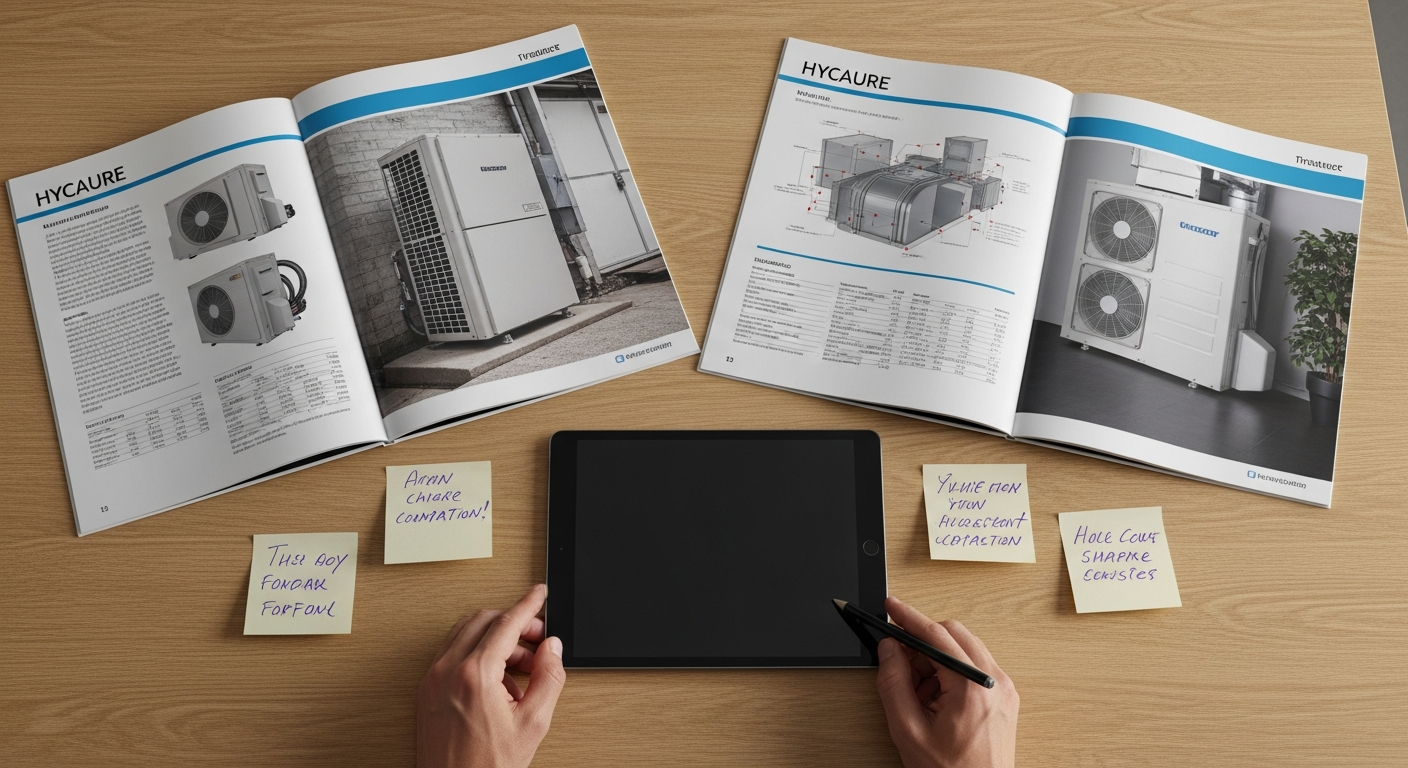
Manual J is Non-Negotiable
Homeowners should never accept a quote based solely on “what’s already there” or square-footage rules. A Manual J ensures the system fits the home’s actual thermal profile, preventing decades of discomfort and high bills.
What Matters Most
- Always request a room-by-room Manual J, Manual S, and Manual D from your contractor.
- Use HVACDatabase tools like the BTU calculator and quote checker to spot gross oversizing before you hire.
- An oversized system won’t just cost more upfront—it’ll spike your energy bills and leave you clammy.
- Invest $150–$300 in a standalone Manual J if your contractor is vague; it can save thousands over the system’s life.
Strengths
- Eliminates guesswork and hobbyist rules of thumb.
- Reduces energy consumption by 15–30% through correct sizing.
- Improves humidity control, indoor air quality, and comfort.
- Extends equipment life by avoiding short cycling and excessive wear.
- Positions you to claim manufacturer and utility rebates that require proper sizing documentation.
Weaknesses
- Quality depends on the technician’s thoroughness; missing an uninsulated wall or leaky duct can skew results.
- Upfront cost of $99–$500 may deter some homeowners, though it pays for itself quickly.
- Not all contractors offer it, limiting your bidding pool in some rural areas.
- If major home improvements are planned later, a new calculation may be needed, but this is manageable.
Decision at a Glance
| Scenario | Usually do | Why |
|---|---|---|
| Replacing an HVAC system | Insist on Manual J | Avoids oversizing and ensures comfort after any changes to the home. |
| Adding a sunroom or building addition >300 sq ft | Get a separate Manual J for that zone | Main system may not handle the new load; a ductless mini-split could be more efficient. |
| Building a new home | Require full Manual J, S, D, and T from the builder’s HVAC sub | Many production builders skip this; you’ll live with the result for decades. |
| Experiencing uneven temperatures or high humidity | Schedule a Manual J with blower door test | Identifies if the root cause is sizing, duct issues, or air leakage. |
| Upgrading insulation or windows | Re-run the Manual J before replacing the HVAC | Loads may drop enough to downsize, saving on equipment cost and energy. |
Installing the right-size HVAC system isn’t about square footage alone. When a contractor uses “rule of thumb” sizing—like one ton per 500 sq ft—you risk oversizing, which leads to short cycling, high humidity, and premature equipment failure. A Manual J load calculation (the ACCA industry standard) accounts for insulation, windows, air leakage, climate, and more, matching capacity to your home’s actual needs. At HVACDatabase, we connect you with pros who perform detailed load calculations so you get comfort without waste.
Quick Answer
A Manual J load calculation is a room-by-room analysis that determines exactly how much heating and cooling your home requires. It prevents oversizing (which causes clammy air, high bills, and wear) and undersizing (which leaves you uncomfortable on extreme days). Always insist on a Manual J before replacing or installing a new system. Reputable contractors will include it in the quoting process, often for no extra charge.
What Is an HVAC Load Calculation?
Developed by the Air Conditioning Contractors of America (ACCA), Manual J is the gold standard for sizing residential HVAC equipment. Instead of guessing based on floor area, it considers:
- Insulation levels in walls, attic, floors
- Window type, size, and orientation
- Air tightness (leakage)
- Number of occupants
- Heat-producing appliances and lighting
- Local climate data
After the load is calculated, Manual S then selects the right equipment capacity, and Manual D designs the ductwork to deliver air efficiently. Skipping these steps often leads to comfort and efficiency problems that persist for the life of the system.
What Factors Does a Load Calculation Include?
| Factor | Why It Matters |
|---|---|
| Insulation R-values | Higher insulation reduces heat gain/loss; unknown attic insulation often leads to oversized equipment. |
| Window U-factor & SHGC | High-performance windows (low U-factor, low SHGC) cut solar heat gain and winter heat loss. |
| Air leakage (ACH) | A leaky house (high air changes per hour) can double heating and cooling loads. A blower door test quantifies this. |
| Ceiling height & volume | Cathedral ceilings or tall spaces increase conditioned volume beyond simple floor area. |
| Duct location | Ducts in unconditioned attics or crawlspaces lose energy; the load calc accounts for this penalty. |
| Internal gains | People, lighting, and appliances add heat; Manual J estimates 2,300 Btu/h for a standard kitchen. |
Why Oversizing Hurts Your Home
An oversized air conditioner or heat pump cools the air too quickly without running long enough to remove moisture. The result:
- Short cycling: The unit turns on and off frequently, stressing the compressor and electrical components.
- Clammy indoor air: Humidity stays high, promoting mold and dust mites.
- Temperature swings: Rooms feel cool then warm between cycles.
- Higher energy bills: Starting and stopping draws more power than steady running.
- Reduced lifespan: Compressor failure and blower motor burnout become more likely.
In cold climates, an oversized furnace produces the same short-cycling effect, wasting fuel and creating hot blasts followed by chilly spells.
The Comfort and Savings of a Right-Sized System
When your system matches the Manual J load:
- Humidity stays between 45–55% in summer, even during mild days.
- Temperature holds steady within ±1°F of the setpoint.
- Energy use drops 15–30% compared to oversized equipment.
- Equipment life often exceeds 15 years with proper maintenance.
- You may qualify for utility rebates that require a Manual J. Check available offers with our rebate finder.
When to Insist on a New Load Calculation
Use these rules to decide if a load calculation is necessary before HVAC work:
- Replacing any central system: Always. Even if you’re swapping like for like, your home may have changed (insulation upgrades, window replacements).
- Adding square footage: If the new space adds more than 300 sq ft or has high glass area, a separate zone calculation is needed.
- Major renovations: New windows, attic insulation, or air sealing can reduce loads by 20% or more.
- Persistent comfort issues: Hot/cold rooms, high humidity, or short cycling often trace back to incorrect sizing.
- Solar panel or appliance changes: Significant changes to internal heat gain or passive heating affect the calculation.
Safety Boundaries: What You Can Check vs. Professional Work
Safe Homeowner Observations
- Monitor frequency of on/off cycling on mild days. If it runs less than 10 minutes, system may be oversized.
- Track indoor humidity with a hygrometer. Above 60% in summer with AC running suggests oversizing or air leaks.
- Check and change filters regularly to avoid misinterpreting airflow problems as sizing issues.
- Inspect visible ductwork in basement or attic for disconnected or crushed sections—these mimic undersized system symptoms.
Leave to Qualified Professionals
- The Manual J calculation itself: It requires software, training, and accurate measurements of insulation depth, window dimensions, and airtightness.
- Refrigerant charge and compressor analysis: Only EPA-certified techs should handle refrigerant.
- Electrical load panel assessment: If a new system requires more breaker capacity, an electrician or qualified HVAC pro must evaluate the service.
- Duct design and modification: Manual D calculations and duct alterations demand specialized tools and knowledge.
Tools to Understand Your Home’s Needs
Before calling a contractor, use these HVACDatabase tools to estimate your current situation:
- BTU Calculator: Get a rough idea of heating and cooling needs based on your home’s basics.
- Energy Calculator: See how sizing affects potential energy use and costs.
- HVAC Cost Estimator: Understand pricing ranges for correctly sized equipment in your area.
- Quote Checker: Upload a contractor quote to see if pricing aligns with Manual J-based recommendations.
Remember, online calculators are no substitute for a full Manual J, but they can alert you to obvious oversizing.
How Location Affects Load Calculations
Hot & Humid Climates (Southeast, Gulf Coast)
Latent load (moisture removal) is critical. Oversizing creates a humidity nightmare. Look for contractors who emphasize sensible capacity vs. total capacity. Consider a whole-house dehumidifier if Manual J shows high latent needs. Check our tips on running AC during humid vacations.
Cold Climates (Midwest, Northeast, Mountain States)
Heating load dominates; Manual J will size for the coldest day of the year (99% design temperature). Oversized furnaces short-cycle, wasting fuel. Pair the load calc with a home energy audit to find air leaks and insulation gaps.
Coastal & Mixed-Humid (California, Pacific NW)
Mild weather often means low loads. Heat pumps and ductless mini-splits sized via Manual J avoid the ‘overkill’ of conventional systems. In wildfire-prone areas, airtightness and high-MERV filters become part of the load discussion.
Older Homes (Pre-1980 construction)
Unpredictable insulation and air leakage make rules of thumb even more dangerous. Always include a blower door test with the Manual J. Prioritize air sealing before replacing equipment—you might downsize by 30% and save thousands.
Contractor Checklist: 8 Questions to Ask Before Approving Work
- “Will you perform a Manual J room-by-room load calculation as part of the quote?” If the answer is no or “we just size based on your old unit,” move on.
- “Can I see the load calculation report with all inputs and assumptions?” A legitimate report lists window sizes, insulation values, duct location, and design temperatures.
- “What Manual J software do you use?” Common programs: Wrightsoft, Elite, Adtek. A pro should name one.
- “Will you also provide Manual S equipment selection and Manual D duct design?” Full design ensures the equipment fits the load and the ducts deliver air correctly.
- “How do you account for ducts in unconditioned spaces?” If ducts run through a 130°F attic, the load calc includes a significant penalty—some contractors ignore this.
- “What design temperatures do you use for our area?” Example: Phoenix uses 107°F summer, Minneapolis -12°F winter. Generic numbers may skew sizing.
- “Is there a charge for the load calculation?” Some contractors include it for free if you hire them; others charge $200–$500 as a separate service. It’s a wise investment even if you don’t choose that contractor.
- “Can you provide references from similar homes where you performed Manual J?” Get proof they not only sell it but deliver accurately sized systems.
Use our contractor comparison tool to evaluate multiple bids. Or search HVACDatabase for pros in your ZIP code who specialize in load calculations.
How We Form Our Recommendations
HVACDatabase’s guidance is based on ACCA standards (Manual J, S, D, T) and Department of Energy best practices for residential HVAC design. Cost ranges come from industry surveys, actual HVACDatabase contractor data, and Bureau of Labor Statistics wage estimates—adjusted for regional variations. All price estimates are editorial and not guaranteed. We update ranges annually to reflect supply chain and labor changes. Where tools are suggested, they rely on validated algorithms and public climate data, but are for informational use only and not a substitute for professional measurement.
Frequently Asked Questions
Q: How long does a Manual J calculation take?
A: A thorough room-by-room calculation for an average 2,000 sq ft home typically takes 1–3 hours on site, plus additional time for software input and report generation. Simple whole-house versions might take less than an hour, but room-by-room is preferred for balanced airflow.
Q: Is a Manual J required by code?
A: The 2009 International Residential Code (IRC) and many state energy codes require that heating and cooling equipment be sized to ACCA Manual J or equivalent. However, enforcement varies; always request it from your contractor even if not strictly required locally.
Q: Can I do my own Manual J with online software?
A: Homeowner-friendly tools (like CoolCalc or LoadCalc.net) can give a reasonable estimate if you accurately input measurements. However, key variables like airtightness and duct leakage are hard to gauge without professional tools. For a full system replacement, we strongly advise professional measurement.
Q: My contractor says my old unit was 4 tons, so a new 4-ton unit is fine. Is that correct?
A: Not necessarily. If you’ve improved insulation, replaced windows, or added shade, your load may be lower. Conversely, additions or removed walls could increase it. A Manual J confirms the correct size. Oversizing by even half a ton can lead to humidity and efficiency losses.
Q: How much does a professional Manual J load calculation cost?
A: Prices range from $99 to $500, depending on home size and system complexity. Some contractors waive the fee if you hire them for installation. As an editorial estimate, expect $150–$300 for a standalone report. Investing a few hundred dollars ensures decades of comfort and saves much more in energy costs.
Methodology
HVACDatabase estimates combine common contractor price patterns, service-category pricing ranges, equipment complexity, urgency, regional labor variation, and known HVAC safety boundaries. Actual prices vary by city, brand, system size, access, warranty status, permit requirements, and whether the visit discovers ductwork, electrical, refrigerant, gas, or drainage issues. Use these numbers to sanity-check quotes, not as a guaranteed price.
Related articles
Connect this page to adjacent guides so readers keep moving deeper into the topic cluster.

Tips for Choosing a Smart Thermostat for a Heat Pump
Learn which smart thermostat features prevent expensive auxiliary heat mistakes, how to verify compatibility, and when to call a pro.

Understanding C Wire Adapters for Smart Thermostats
Missing the C wire for your smart thermostat? C wire adapters solve power issues without pulling new wiring. Compare types, costs, and installation options.

Best Smart Thermostats for Multi Zone Homes
Discover which smart thermostats deliver accurate zoning, remote sensors, and energy savings for homes with multiple HVAC zones. Our guide helps you pick the right model and avoid costly compatibility mistakes.