How to Improve Furnace Efficiency
Learn how to improve furnace efficiency with actionable steps like filter replacement, duct sealing, and thermostat optimization. Use our calculators to decide when to repair or replace your system.
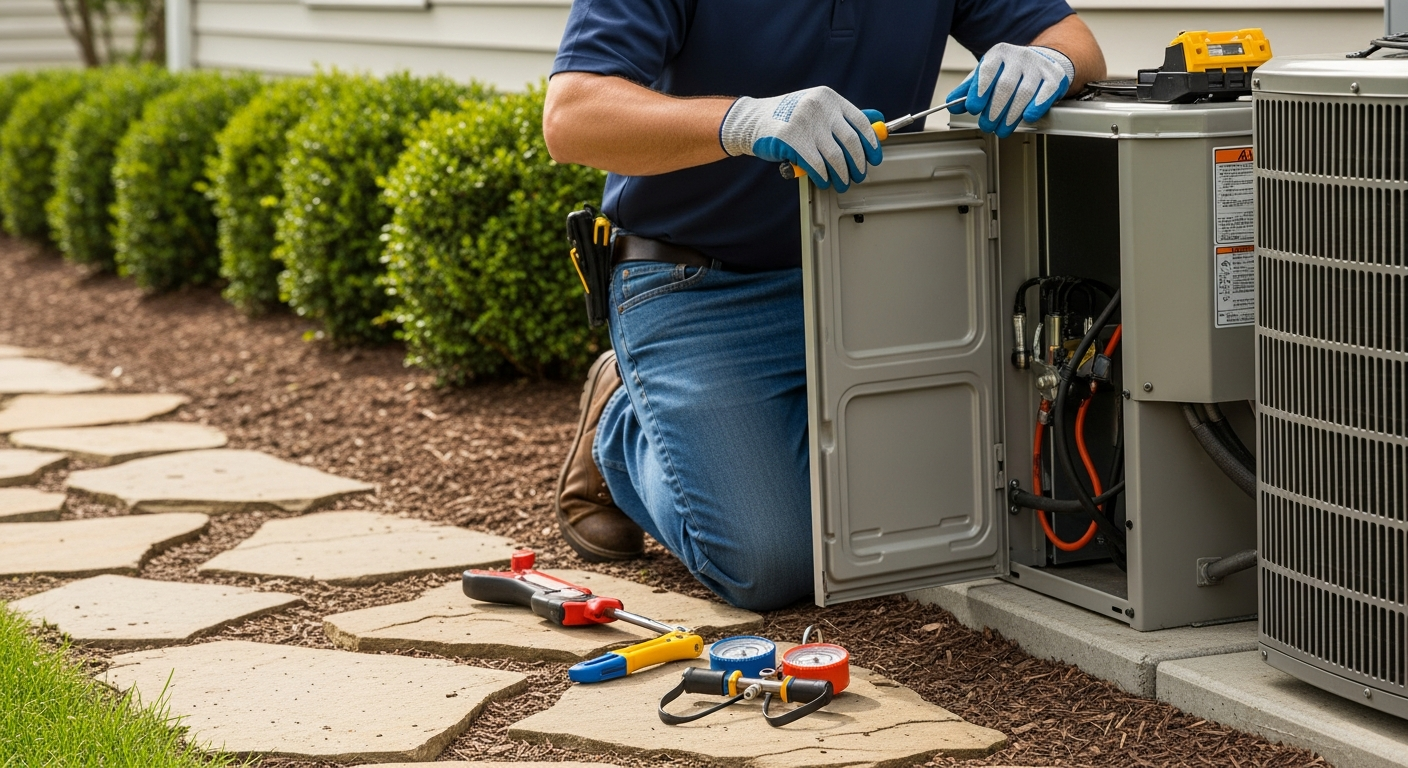
Proactive, data‑driven maintenance beats reactive repair bills
Regular filter changes, annual tune‑ups, and duct sealing deliver the best return. When repairs come, use our calculators to decide quickly whether fixing or replacing is smarter, and always get at least three bids.
What Matters Most
- A $15 filter change can improve airflow by 15% and prevent motor burnout
- Annual $150–$250 tune‑ups catch small problems before they cost thousands
- Sealing ducts and adding insulation often yield faster payback than a new furnace
- Set your thermostat back 7–10°F for 8 hours to cut heating bills by up to 10%
- Use the Repair‑or‑Replace Calculator when repair costs exceed 50% of a new unit’s price
Strengths
- Low‑cost DIY steps (filter, weatherstripping, thermostat) start saving immediately
- Decision rules remove guesswork from repair‑or‑replace dilemmas
- Integrated tools and contractor checklist empower informed hiring
Weaknesses
- Payback for a high‑efficiency upgrade may take 5–10 years in mild climates
- Duct sealing in finished basements or crawlspaces can be invasive and costly
- Smart thermostats require a common wire; installation may need a pro ($100–$200)
- Older homes may need electrical or venting upgrades to support a new condensing furnace
Decision summary: Improve vs. Replace
| Scenario | Usually do | Why |
|---|---|---|
| Furnace under 10 years, annual repair <$300 | Tune‑up and minor fixes | Efficiency is still high; maintenance extends life |
| 10–15 years, repair $300–$800 | Use repair‑or‑replace calculator | Balance remaining life against efficiency savings |
| 15+ years with AFUE <80%, repair >$1,500 | Replace with 95%+ model | Fuel savings alone may offset cost in 3–5 years |
| Duct leakage >20% | Seal ducts first | Efficiency gains from new furnace lost through leaks |
Quick Answer: 7 Ways to Improve Furnace Efficiency
- Replace the air filter every 30 days during heating season.
- Book a professional tune‑up annually (typical cost $80–$250).
- Seal leaky ducts with mastic or foil‑backed tape—don’t use cloth duct tape.
- Install a programmable or smart thermostat; setback 7–10°F for 8 hours saves 10% annually.
- Add attic insulation and weatherstrip windows/doors to reduce heat loss.
- Address short‑cycling or flame sensor issues promptly (pro repair: $150–$300).
- Use a repair‑or‑replace calculator to weigh the cost of repairs against a high‑AFUE upgrade.
These steps cut waste, lower bills, and extend equipment life—without risky DIY work.
1. Replace the Air Filter Every 30 Days During Heating Season
A clogged filter starves the blower, increases energy use, and can cause overheating. Check your filter monthly; if it’s gray or dusty, swap it. For homes with pets or allergy sufferers, consider a mid‑range MERV 8–11 filter. A clean filter alone can improve airflow by up to 15%.
Need help? Our contractor search can connect you with a local pro who can show you the right filter size.
2. Schedule a Professional Tune‑Up ($80–$250)
Beyond the filter, a technician will measure gas pressure, clean the burner, inspect the heat exchanger for cracks, and test safety controls. This preventative visit costs $80–$250 and can catch small issues before they become emergency repairs. An annual plan often costs $150–$500 and includes priority scheduling. Use our quote checker to compare offers from contractors near you.
After the tune‑up, ask for a written report; it helps track performance year over year.
3. Seal Leaky Ductwork and Unblock Vents
Leaky ducts can lose 20–30% of conditioned air. Inspect accessible ducts in the attic, basement, or crawlspace. Seal gaps with mastic sealant or foil‑backed tape—never cloth duct tape. Make sure supply and return vents are free of furniture, rugs, and curtains.
If you spot disconnected or crushed ducts, call a pro. A diagnostic visit ($80–$200) typically includes a leakage test and a repair estimate. Use our HVAC cost estimator to understand local pricing.
4. Program Your Thermostat for Real Savings
A 7–10°F setback for eight hours a day (overnight or when you’re away) can shave up to 10% off annual heating bills. Programmable thermostats start around $25; smart models with phone alerts and usage reports add convenience. Check your energy savings with our energy calculator.
Constant manual adjustments often waste more energy than a steady, pre‑programmed schedule.
5. Stop Heat Loss at the Source
Even the best furnace can’t keep up if warm air escapes. Weatherstrip doors and windows, and re‑caulk gaps. Insulate your attic to the recommended R‑value for your climate zone (R‑38 to R‑60 in cold climates). In rooms with high ceilings, run ceiling fans in reverse (clockwise) on low speed to push warm air down.
These low‑cost fixes reduce furnace run time and improve comfort.
6. Watch for Component Wear (No DIY Gas or Electrical Work)
A dirty flame sensor can cause the furnace to cycle on and off repeatedly—a condition known as short‑cycling. While many online videos show cleaning, improper handling can crack the sensor or create a fire hazard. Have a pro diagnose and clean or replace the flame sensor. Typical repair cost: $150–$300. Read more about short‑cycling in our guide: How to Fix a Furnace That Short Cycles.
Similarly, if your furnace won’t heat at all, start with our troubleshooting article: How to Troubleshoot a Furnace That Won’t Heat, but leave gas or electrical fixes to a licensed technician.
7. Know When to Repair vs. Replace
An older furnace (15+ years) with an AFUE of 80% or less often costs more to run than a new 95%+ unit. Use the table below as a starting point, then check your specific numbers with our repair or replace calculator.
| Furnace Age | Typical AFUE | Annual Repair Costs | Recommendation |
|---|---|---|---|
| Under 10 years | 90%+ | Under $300 | Maintain and tune annually |
| 10–15 years | 80–90% | $300–$800 | Use repair‑or‑replace calculator; replace if major component fails |
| 15+ years | Below 80% | $800+ | Likely replace; new unit can cut fuel use 20–30% |
Remember: replacement costs range from $5,000 to $15,000+ for a furnace (or full system), while a high‑efficiency heat pump might run $7,000–$18,000+. Check for rebates with our rebate finder before you decide.
Safety Boundaries: What You Can and Cannot Touch
Safe homeowner checks
- Replace disposable air filter
- Clean supply and return grilles
- Set thermostat schedules
- Inspect visible duct seams and seal with mastic/foil tape (not cloth)
- Add weatherstripping, caulk, and insulation
- Keep vents clear
- Check that the area around the furnace is clean and unobstructed
- Test carbon monoxide detectors
Pro‑only tasks—do not attempt
- Measuring or adjusting gas pressure
- Cleaning burners or ignition components beyond wiping the exterior
- Inspecting or repairing the heat exchanger
- Replacing capacitors, contactors, control boards, or wiring
- Handling refrigerant (for heat pumps)
- Opening the sealed combustion chamber
- Replacing draft inducers or gas valves
If you smell gas, leave immediately and call your utility company.
Tools to Help You Decide
HVACDatabase offers several free calculators to guide your next step:
- Energy Calculator – estimate potential savings from efficiency upgrades.
- Repair or Replace Calculator – input age, repair cost, and efficiency to get a recommendation.
- BTU Calculator – right‑size your next furnace.
- Rebate Finder – discover utility and tax incentives.
- Cost Estimator – see price ranges for your ZIP code.
- System Age Decoder – decode your furnace’s serial number.
Decision Rules: Repair vs. Replace
Use these thresholds after you’ve gathered cost and efficiency data:
- If repair cost exceeds 50% of a new furnace, replace.
- If the unit is over 15 years old and needs a heat exchanger or blower motor, replace.
- If annual fuel savings from a 95%+ unit exceed the annual repair cost of the old 80% unit, upgrade.
- If your home has inconsistent temperatures and the ductwork is accessible, prioritize duct sealing before replacing.
For a data‑backed answer, run your numbers through our repair‑or‑replace calculator.
Contractor Checklist: Questions to Ask Before You Approve Work
- Are you licensed, bonded, and insured in my state? (Verify at your state’s licensing board.)
- Will you perform a Manual J load calculation before recommending a new system?
- Do you offer a written, itemized estimate with labor and parts separated?
- How do you determine the AFUE rating needed for my climate?
- What manufacturer and labor warranties are included? (Get them in writing.)
- Can you provide references from similar jobs in my area?
- Do you pull permits, and is the cost included in the quote?
Use our contractor comparison tool to evaluate multiple bids side by side.
Local Climate Considerations
- Cold climates (USDA zones 5–7): Aim for a furnace with AFUE 95%+ and consider a dual‑fuel heat pump. Insulate to R‑60. Link to Chicago heating contractor example.
- Hot, humid climates: Focus on duct sealing to prevent moisture and mold. A heat pump may be more efficient for shoulder seasons. Example: Phoenix AC contractors also handle heating.
- Coastal areas: Salt air corrodes heat exchangers; consider stainless steel or coated coils. Annual tune‑ups are critical.
- Older homes: Address duct leakage first—often 30%+ of energy loss—before upgrading equipment.
Methodology
Cost ranges in this article are editorial estimates based on aggregated market data, not guaranteed quotes. Actual prices depend on system size, location, complexity, season, and contractor rates. Always obtain at least three competitive bids. Our recommendations follow ASHRAE and ENERGY STAR guidelines for comfort and efficiency.
Frequently Asked Questions
How often should I really change my furnace filter?
Every 30 days during heating season, or sooner if you have pets, allergies, or live in a dusty area. A simple visual check takes 30 seconds.
Does closing vents in unused rooms save energy?
No. Modern furnaces are designed for balanced airflow; closing vents increases duct pressure, leading to leaks and reduced efficiency. Keep all vents at least partially open.
Can a smart thermostat really cut my bill by 10%?
Yes, if you consistently use a 7–10°F setback for 8+ hours a day. The savings come from reduced run time, not the thermostat itself.
What is a reasonable AFUE goal for a cold climate?
In areas with 5,000+ heating degree days, aim for 95% AFUE or higher. In milder climates, 90% is often sufficient unless fuel costs are very high.
My furnace is only 12 years old but needs a $1,200 repair. Should I fix it?
If the unit is otherwise well‑maintained and the repair is a one‑time expense (e.g., blower motor), it may make sense to repair. However, use the repair‑or‑replace calculator to compare long‑term costs, especially if your furnace’s AFUE is below 90%.
Related articles
Connect this page to adjacent guides so readers keep moving deeper into the topic cluster.
How to Implement a Whole Home Energy Management System
Integrate smart tech and HVAC controls to cut energy waste. This guide shows how to audit, upgrade, and automate your home's energy use, with real savings estimates.

How to Set Up Thermostat Geofencing
Set up thermostat geofencing to automatically adjust home temperature as you come and go. Save energy, extend equipment life, and never return to an uncomfortable house. Get our quick-start guide now.
How to Troubleshoot Smart Thermostat WiFi Issues
Your smart thermostat offline? Most WiFi drops can be fixed with power checks, router adjustments, and simple restarts. Follow our step-by-step guide to regain remote control and energy savings.