How to Install a Heat Pump Water Heater
Upgrading to a heat pump water heater can cut water heating costs by up to 70%. This guide helps you decide if it's right for your home and find a qualified installer.
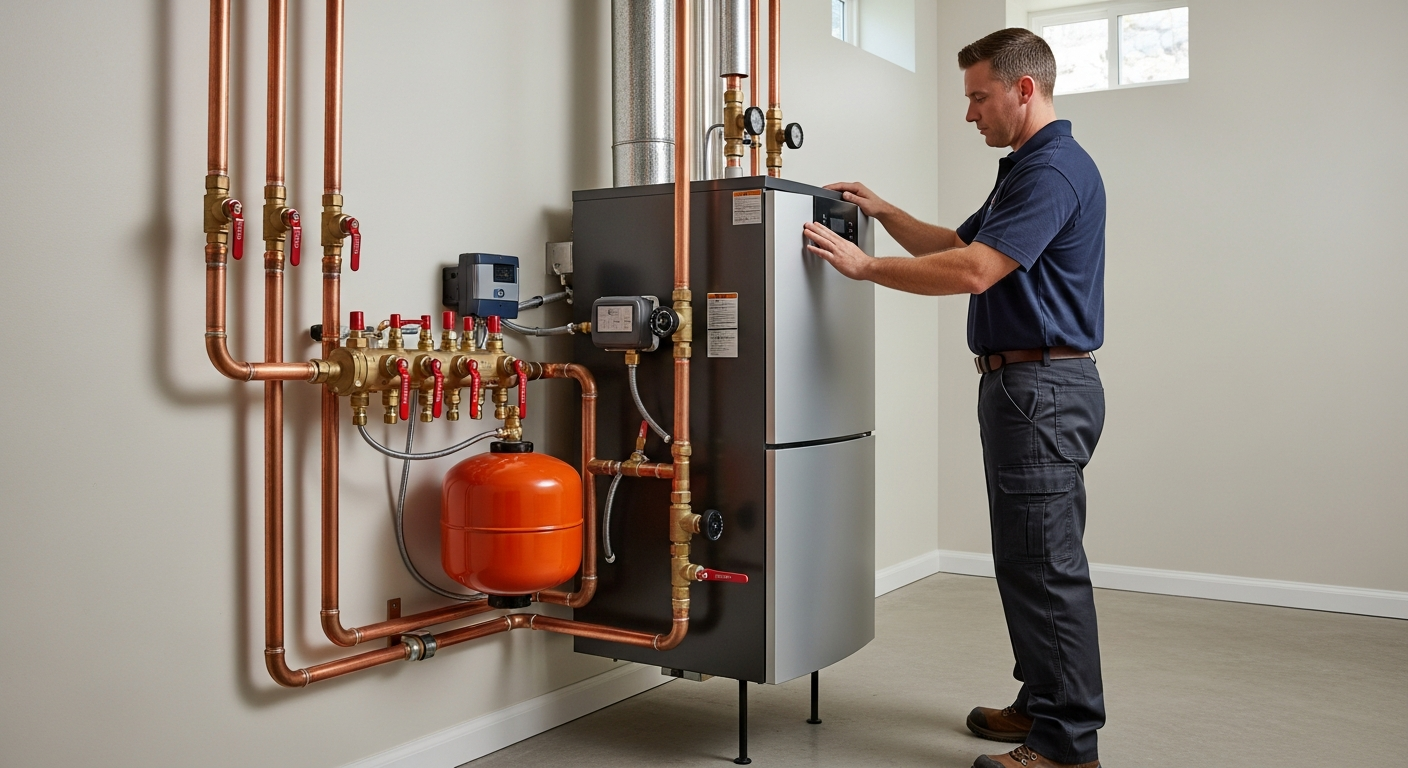
Heat pump water heaters are a smart upgrade for most electric households — but only when professionally installed in a suitable space.
A heat pump water heater can cut water heating costs by up to 70%, but the upfront cost and strict site requirements mean it’s not for everyone. Always hire a licensed pro for electrical and refrigerant work, and verify that your home meets the air volume and temperature criteria before proceeding.
What Matters Most
- Installation is not a DIY project; hiring a licensed electrician/HVAC tech is mandatory.
- You need at least 1,000 cubic feet of air and ambient temperatures above 40°F year-round.
- Savings range from $200–$500 per year, with payback in 3–6 years after rebates.
- Use our calculators and checklists to compare quotes and avoid surprises.
- The contractor checklist ensures you hire a qualified pro who will handle permits and startup correctly.
Strengths
- 2–3x more efficient than standard electric water heaters.
- Dehumidifies the surrounding air, a bonus in humid climates.
- Longer lifespan and lower operating costs after payback period.
Weaknesses
- Higher upfront cost ($2,000–$5,500+) compared to $500–$1,000 for a basic electric tank.
- Requires large air volume and mild temperatures; performs poorly in unheated spaces in cold climates.
- May need electrical panel upgrades or condensate pumps, adding cost.
Decision Summary
| Scenario | Usually do | Why |
|---|---|---|
| Existing electric water heater, suitable space, 200A panel | Install heat pump water heater | Highest savings, quick payback |
| Existing gas water heater, cheap gas rates | Stick with high-efficiency gas | Switching may not save enough to justify cost |
| Cramped utility closet or freezing garage | Consider a standard electric or relocate unit | Heat pump needs air volume and 40°F+ temps |
| Budget under $1,500 all-in | Opt for standard electric for now | Heat pump install costs exceed short-term budget |
Quick Answer: Should You Install a Heat Pump Water Heater?
Yes, if you currently use a standard electric water heater, have a suitable installation space (at least 1,000 cubic feet of air and ambient temperatures between 40°F and 90°F), and are prepared for a higher upfront cost in exchange for long-term savings. Heat pump water heaters are 2–3 times more efficient than conventional electric models, but they require professional installation due to electrical and refrigerant work. Use our Heat Pump Savings Calculator to estimate your payback period.
What a Heat Pump Water Heater Installation Involves
Installation is not a DIY project. It requires a licensed electrician and often a plumber or HVAC technician. The work includes:
- Site assessment: verifying space, air volume, and ambient temperature range.
- Removing the old water heater (a homeowner may help with draining and moving, but electrical disconnection is pro-only).
- Running a new 240-volt, 30-amp dedicated circuit (if needed).
- Connecting water lines and a condensate drain – the unit dehumidifies and produces water that must be drained.
- Configuring the unit's settings and ensuring the refrigerant circuit is sealed and charged (pro-only).
- Permits and inspections per local codes.
While you can clear the area, check panel capacity visually, and shut off water/power, leave all wiring, refrigerant handling, and final hookups to a qualified pro.
Installation Cost and Savings
| Scenario | Estimated Cost Range | Notes |
|---|---|---|
| Basic replacement: existing 240V circuit, easy access | $2,000 – $3,500 | Includes unit and labor. May qualify for rebates. |
| Complex install: new circuit, plumbing modifications, or condensate pump | $3,500 – $5,500+ | Higher if electrical panel upgrade needed. |
| Whole-home electrification bundle (with heat pump HVAC) | $7,000 – $18,000+ | Combined with HVAC replacement; see cost guide hub. |
Prices are editorial estimates. Annual savings typically range from $200 to $500 on water heating bills. Get a personalized quote with our HVAC Cost Estimator.
Safety Boundaries: Homeowner Tasks vs. Pro-Only Work
You Can Safely:
- Measure your space and check air volume (L x W x H ≥ 1,000 cu ft).
- Verify that your electrical panel has physical space for a double-pole breaker (do not open the dead front).
- Turn off the water supply and drain the old tank following manufacturer instructions.
- Clear the installation area and secure pets/children.
- Ask to see the contractor’s license and insurance.
Leave to Licensed Professionals:
- Running new wiring or connecting to the breaker panel.
- Handling refrigerant lines or checking refrigerant charge.
- Making final plumbing connections (if not using simple push-fit connectors).
- Activating the unit and configuring all safety controls.
- Obtaining permits and scheduling inspections.
Critical: Never turn on power before the tank is completely full of water. Dry-firing the elements will destroy them instantly and can create shock hazards.
Decision Tree: Is a Heat Pump Water Heater Right for You?
- Do you currently have an electric water heater?
- Yes: Go to step 2.
- No: Switching from gas or oil may require significant changes; run the numbers with our Repair or Replace Calculator.
- Can you provide a location with at least 1,000 cubic feet and year-round temps between 40°F and 90°F?
- Yes: Go to step 3.
- No: A standard electric or gas model may be more practical unless you can create a conditioned enclosure.
- Is your electrical panel 200 amps or can it accommodate a new 30-amp double-pole breaker?
- Yes: Likely a good candidate.
- No: Factor in panel upgrade cost ($1,500–$3,000).
- Are you prepared for upfront cost $2,000–$5,500 with a payback of 3–6 years?
- Yes: Proceed. Use our Heat Pump Savings Calculator to fine-tune.
- No: A conventional electric water heater costs less now but more to operate.
Contractor Checklist: Questions to Ask Before Hiring
- Are you licensed, bonded, and insured for both plumbing and electrical work?
- How many heat pump water heaters have you installed in the last year?
- Will you pull all required permits and coordinate inspections?
- Is the quote inclusive of any needed electrical upgrades (breakers, wire runs, panel work)?
- What is your labor warranty, and how does it interact with manufacturer warranties?
- Can you provide three recent references with this same equipment?
- Do you handle old unit removal and disposal?
- How will you route the condensate drain? Is a pump necessary?
- Will you verify and document refrigerant charge at startup?
- Do you offer an annual maintenance plan for the heat pump water heater?
Save time: use our Contractor Comparison tool to evaluate multiple bids side-by-side.
Local and Climate Considerations
Hot/Humid Climates (e.g., Southeast US): The dehumidification is a bonus; ensure the condensate drain is clear. Cold Climates (e.g., Northeast, Midwest): Install inside conditioned space only – unheated garages or basements that drop below 40°F will kill efficiency. Coastal Areas: Ask for corrosion-resistant components; check if local codes require strapping for seismic safety. Older Homes: May need an electric panel upgrade. Check for knob-and-tube wiring or insufficient grounding. Find a qualified contractor familiar with historic home challenges.
Maximize Savings with Our Tools
- Heat Pump Savings Calculator – see your specific payback period.
- Rebate Finder – unlock federal tax credits and local utility incentives.
- Cost Estimator – get an editable budget range for your project.
- Quote Checker – validate proposals from contractors.
Methodology
Cost ranges are editorial estimates derived from national survey data, manufacturer pricing, and typical labor rates. They are not guaranteed quotes. Savings projections rely on Department of Energy averages and assume prior electric-resistance water heating. Always obtain multiple written bids and verify local permit requirements. Our recommendations follow current best practices for safety, but no article can replace an on-site evaluation by a licensed professional.
Frequently Asked Questions
- How much can I save per year with a heat pump water heater? Typical households save $200–$500 annually, paying back the premium in 3–6 years. Savings increase if you also switch from gas to electric space heating with a heat pump.
- Do they work in basements that get chilly in winter? Yes, if the temperature stays above 40°F. Below that, efficiency drops and backup resistance elements kick in, reducing savings. Install in a conditioned space if possible.
- Can I install a heat pump water heater myself? No. While physical placement and draining are within reach, the electrical and refrigerant work requires licensed pros. DIY installations often void warranties and can be unsafe.
- What size do I need? For a family of four, a 50-gallon tank is typical. Larger households or high-demand may need 80 gallons. Sizing depends on first-hour rating; use our BTU Calculator as a starting point.
- How long do heat pump water heaters last compared to standard electric? With proper maintenance, expect 10–15 years, similar to electric tanks but with higher efficiency throughout. Annual air filter cleaning is crucial.
Related articles
Connect this page to adjacent guides so readers keep moving deeper into the topic cluster.
How to Implement a Whole Home Energy Management System
Integrate smart tech and HVAC controls to cut energy waste. This guide shows how to audit, upgrade, and automate your home's energy use, with real savings estimates.

How to Set Up Thermostat Geofencing
Set up thermostat geofencing to automatically adjust home temperature as you come and go. Save energy, extend equipment life, and never return to an uncomfortable house. Get our quick-start guide now.
How to Troubleshoot Smart Thermostat WiFi Issues
Your smart thermostat offline? Most WiFi drops can be fixed with power checks, router adjustments, and simple restarts. Follow our step-by-step guide to regain remote control and energy savings.