Radiant Heat vs Forced Air
Deciding between radiant heating and forced air? Get practical, data-driven guidance on comfort, costs, and air quality to make the right investment for your home.
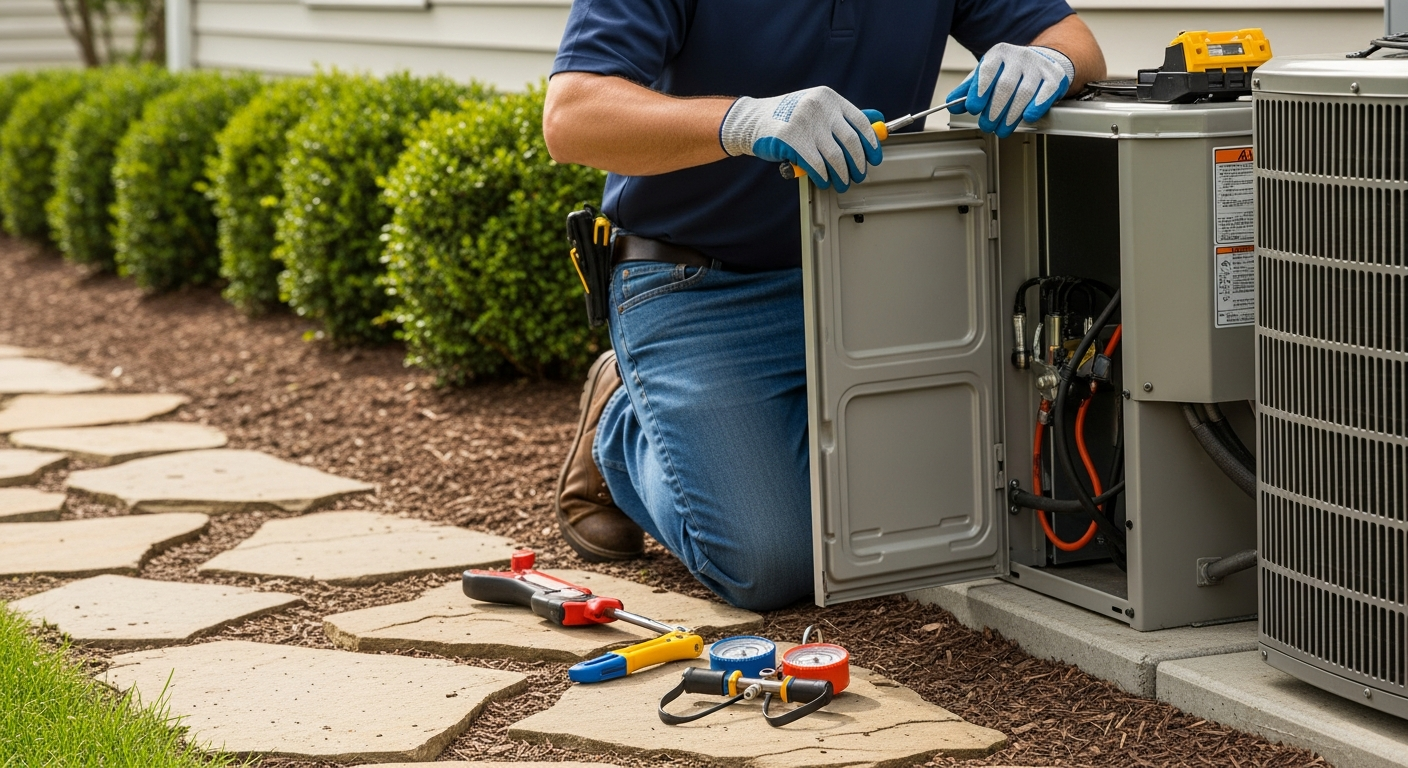
Best next step
Use the article decision rules, then compare a written quote when professional work is required.
What Matters Most
- Check safe basics first.
- Use cost ranges to sanity-check quotes.
- Call a qualified pro for refrigerant, gas, combustion, and electrical work.
Strengths
- Clearer next step.
- Better quote comparison.
Weaknesses
- Final pricing depends on local conditions.
- Some problems require in-person diagnosis.
Decision summary
| Scenario | Usually do | Why |
|---|---|---|
| Minor, safe homeowner issue | Check basics first | Filters, settings, and blocked vents can be resolved safely. |
| Mechanical, refrigerant, gas, or electrical issue | Call a qualified technician | These areas carry safety, code, and warranty risk. |
Quick Answer
Choose forced air if you need cooling too and have existing ducts; the lower upfront cost and fast response are hard to beat. Choose radiant heat if you prioritize silent, draft-free comfort, have allergy concerns, and are willing to invest more upfront for long-term energy savings. In most retrofit scenarios, forced air is more practical; for new builds or major remodels, radiant often wins.
How They Work
Forced air systems use a furnace and blower motor to push heated air through a network of ducts. They can also circulate cooled air in summer and filter indoor air year-round. Radiant systems, on the other hand, warm objects and people directly—typically via hot water tubes (hydronic) or electric coils embedded in floors, walls, or ceilings. Hydronic radiant is the most popular for whole-home heating and pairs well with high-efficiency boilers or heat pumps.
Radiant Heat vs Forced Air: At a Glance
| Feature | Radiant Heat | Forced Air |
|---|---|---|
| Comfort | Silent, even warmth, no drafts | Can cause temperature swings and fan noise |
| Air Quality | No air movement—ideal for allergies | Circulates dust unless high‑MERV filters are used |
| Energy Efficiency | No duct losses; up to 25% more efficient | Duct losses of 20–30% are common |
| Upfront Cost | $10–$20+ per square foot for retrofit | $3,000–$8,000 for a new furnace if ducts exist |
| Cooling Integration | Requires separate AC (e.g., ductless) | Uses same ducts for central air |
| Response Time | Slow to heat up; best for steady temperatures | Quick to respond; cycles on and off |
Editorial cost ranges only—actual prices depend on home size, region, and labor.
Energy Efficiency & Real‑World Costs
Forced air loses a significant fraction of its heat to leaks, poorly insulated ducts, or unconditioned spaces. Radiant hydronic systems deliver heat directly to the living space and often allow you to set the thermostat 2–4°F lower while feeling equally warm. If you already have ductwork, upgrading to a modulating furnace can reduce temperature swings and improve efficiency. For new construction, pairing radiant floors with a ground‑source heat pump can slash operating costs. Use our HVAC cost estimator to ballpark local prices, and check the rebate finder for incentives on high‑efficiency equipment.
Indoor Air Quality & Health
Radiant heat doesn't blow air, so allergens like dust, pollen, and dander aren't circulated. Allergy sufferers often report symptom relief after switching. Forced air systems can still provide excellent indoor air quality if paired with the right filtration—explore the differences between UV‑C and ionizer air purifiers. Remember, the furnace filter must be changed regularly; a clogged filter reduces efficiency and air quality.
Installation: What Homeowners Should Expect
Retrofitting radiant floors in an existing home is invasive: floors must be removed, tubing laid, and a boiler or heat source installed. It's often most cost‑effective during major renovations or in new builds. Forced air is simpler if ductwork exists—a furnace swap can be completed in a day. Without ducts, adding them can be expensive and may require opening walls. For a deeper look at the process, see our article on radiant floor heating installation. Always get three quotes; use our quote checker to spot red flags.
Safety Boundaries
Homeowner Maintenance You Can Safely Do
- Forced air: Replace or clean the air filter every 1–3 months. Keep vents and returns unobstructed. Visually inspect accessible ducts for obvious gaps. Listen for unusual noises; if your furnace short cycles, note the pattern but don't reset it repeatedly.
- Hydronic radiant: Check the boiler pressure gauge—normal range is 12–15 psi. If you have radiators, bleeding air is a simple task; see our radiator bleeding guide. For electric radiant, test the thermostat calibration with a separate thermometer.
Pro‑Only Work (Never DIY)
- Any gas line, burner, or combustion chamber work.
- Boiler installation, repair, or annual tune‑ups on the heat exchanger.
- Electrical wiring, control boards, relays, capacitors, or contactors.
- Refrigerant handling for any cooling add‑ons.
- Resetting a tripped safety switch without determining the cause.
If you smell gas, evacuate and call 911 or your utility—do not touch electrical switches or phones inside. For heating emergencies, use our emergency HVAC finder.
Decision Rules: Which Heating System Fits Your Situation?
Use these concrete thresholds to guide your choice:
- Existing ducts in good shape: Lean strongly toward a high‑efficiency forced air furnace. Add a modulating model for comfort.
- New construction or full‑gut renovation: Radiant hydronic floors often become the luxury baseline—pair with a condensing boiler or heat pump.
- Total budget under $5,000: Forced air replacement (if ducts present) is the realistic path.
- Allergies or asthma in the household: Radiant eliminates airborne circulation; otherwise, invest in whole‑home filtration on a forced air system.
- Need cooling, too? Forced air handles both with one set of ducts. Radiant requires a separate AC system, such as ductless mini‑splits. Compare your options in our ducted vs. ductless AC guide.
- Cold climate with long heating season: Radiant’s efficiency advantage grows; typical payback on the premium can be 5–10 years.
- You want silence: Radiant is virtually noiseless—no fan, no whoosh of air.
Contractor Checklist: Questions to Ask Before You Sign
- Are you licensed, insured, and familiar with local building codes? (Ask for license number and verify.)
- Will you perform a Manual J heat loss calculation, not just a rule‑of‑thumb estimate?
- What is the total installed cost, including permits, and what does it exclude?
- What warranty do you provide on parts and labor, and what does the manufacturer cover?
- For forced air: How will you seal and test the ductwork? Can you show me the static pressure test results?
- For radiant: Have you installed this specific type (staple‑up, poured slab, etc.) before? Can I see photos of past projects?
- Do you offer an annual maintenance plan? What does it include?
- What potential pitfalls do you foresee with my home’s layout or construction?
Search our contractor directory and use the comparison tool to evaluate bids side‑by‑side.
Local Context: Climate & Home Age Matter
In cold climates like Chicago or Minneapolis, radiant’s steady comfort will be appreciated daily. Older homes with existing cast‑iron radiators may already have a hydronic system—consider upgrading the boiler instead of switching to forced air. In hot, humid regions (think Phoenix or Miami), the need for powerful cooling often tips the scale toward forced air with central AC. Coastal or mild climates might benefit from a hybrid: radiant in bathrooms for comfort, with a small forced‑air system for the rest of the house. If you’re in an area with frequent power outages, note that some gas‑fired radiant systems can run on small generator power, while large forced air blowers may not.
Tools & Calculators
Make data‑driven decisions with our free resources:
- HVAC Cost Estimator – Get a ballpark for your project.
- Repair or Replace Calculator – If your current system is aging, see if a fix makes sense.
- BTU Calculator – Size your heating needs before calling contractors.
- System Age Decoder – Decode your furnace or boiler’s age from its serial number.
- Rebate Finder – Check for utility rebates on high‑efficiency equipment.
Methodology
Our recommendations and editorial cost ranges are based on aggregated data from public sources, including Energy Star, Department of Energy, and trade organizations. Price ranges reflect national averages for single‑family homes and are influenced by
FAQ
Can I handle Radiant Heat vs Forced Air myself?
You can handle basic checks such as thermostat settings, filter replacement, blocked vents, visible debris, and obvious water or ice. Anything involving refrigerant, gas, combustion, high-voltage electrical components, compressors, or sealed system work should be left to a qualified technician.
When should I call an HVAC contractor?
Call a contractor if the problem repeats, the system trips a breaker more than once, cooling or heating is weak after basic checks, you see ice or water where it does not belong, or the repair requires opening equipment panels.
How do I know if a quote is fair?
Compare the written scope, not just the price. A fair quote should explain the diagnosis, parts, labor, warranty, exclusions, and whether follow-up work may be needed.
Should I repair or replace the system?
Repair usually makes sense for newer equipment with minor failures. Replacement becomes worth comparing when the system is older, the repair is major, comfort is poor, or the repair approaches 40-50% of replacement cost.
What is the safest next step?
Do the safe homeowner checks first, document symptoms, then use HVACDatabase tools or contractor comparison pages if the issue points to mechanical, electrical, refrigerant, gas, or combustion work.
Related articles
Connect this page to adjacent guides so readers keep moving deeper into the topic cluster.
Electrostatic vs Pleated HVAC Filters
Electrostatic filters are washable and budget-friendly over time, but pleated filters catch more allergens. See which fits your home's air quality and HVAC demands.

Supply vs Exhaust Ventilation Systems
Discover whether a supply or exhaust ventilation system suits your home’s climate, budget, and air quality goals. Our guide includes cost ranges, safety tips, and pro checklists.
Smart Thermostat vs Smart Vent System
Homeowners often ask: smart thermostat or smart vents? Our practical guide explains the core trade-offs, safety limits, and a clear decision path to avoid wasting money or harming your system.