Understanding HSPF Ratings for Heat Pumps
HSPF ratings measure heat pump heating efficiency. Higher scores mean lower electric bills in winter. Use our guide to match the right rating to your climate and avoid overpaying for features you don't need.
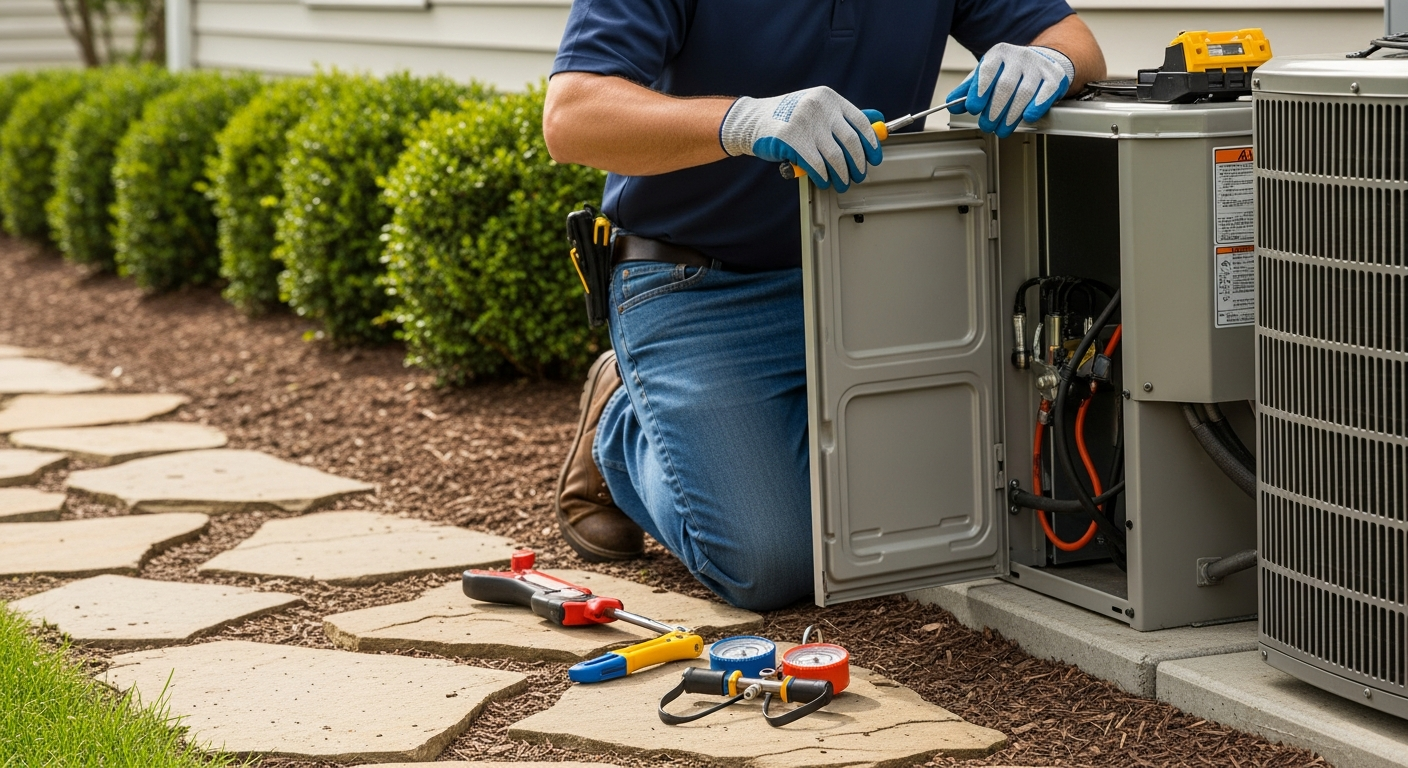
A higher HSPF rating is worth the upfront premium in cold climates, but in warm regions, balance it with SEER.
If you live where winter design temperatures stay below 20°F, aim for HSPF2 ≥10 to cut resistance heat use and lower bills. In mild areas, a mid-range HSPF paired with a high SEER often gives better total energy savings and shorter payback.
What Matters Most
- HSPF (or HSPF2) is the measure of heating efficiency—think MPG for winter warmth.
- In cold zones, upgrading from minimum to high HSPF can trim heating costs by 25–30%.
- Real-world efficiency depends on duct tightness, insulation, and correct sizing.
- Use rebates and tax credits: many high-HSPF units qualify, slashing the upgrade price.
- Always ask for HSPF2 numbers when comparing quotes to avoid outdated ratings.
Strengths
- Lowers long-term heating bills, especially where winters are long and severe
- Improves cold-weather comfort by reducing reliance on electric backup strips
- May qualify for utility rebates, federal tax credits, or local incentives
- Often comes with better overall construction, quieter operation, and longer warranties
Weaknesses
- Higher upfront cost—budget $500–$2,000 more for a 2-3 HSPF2 jump
- Longer payback period in mild climates with limited heating hours
- Efficiency gains disappear if ductwork is leaky or insulation is poor
- Not all installers size correctly; an oversized high-HSPF unit may short-cycle and lose efficiency
HSPF Rating Decision Summary
| Scenario | Usually Do | Why |
|---|---|---|
| Winter design temp <20°F | Pick HSPF2 ≥10 or cold-climate heat pump | High heating demand justifies premium; avoids costly resistance heat. |
| Winter design temp 20°–40°F | Pick HSPF2 9.0–9.5 | Balances upfront cost with moderate heating savings; pair with decent SEER. |
| Winter design temp >40°F (mild) | Focus on SEER; minimum HSPF2 OK | Heating load is small; cooling hours dominate, so SEER yields better returns. |
| Older, poorly insulated home | Prioritize envelope upgrades + mid HSPF | Sealing and insulation improve efficiency more than a marginal HSPF bump. |
Quick Answer
HSPF (Heating Seasonal Performance Factor) rates a heat pump’s heating efficiency over a typical winter—think miles per gallon for heating. Today, the mandatory minimum is 8.8 HSPF2 (equivalent to roughly 9.5 old HSPF). For cold climates, aim for 10+ HSPF2; in mild regions, 8.8–9.5 HSPF2 often suffices. Upgrading from a standard to a high-efficiency unit can reduce your heating costs by 20–40% annually, depending on your climate and home.
What Is HSPF and Why It Matters
HSPF measures the total heat provided during the heating season (in BTUs) divided by the total electricity consumed (in watt-hours). A higher number means you get more warmth per dollar. Unlike SEER, which handles cooling, HSPF focuses purely on heating mode—critical if winter energy bills dominate your budget. The rating is tested under standardized conditions, but real-world performance hinges on installation quality, duct tightness, and your home’s insulation.
How Much Can a Higher HSPF Rating Save You?
The table below illustrates projected annual heating costs for a typical 1,500 sq. ft. home in a mixed climate (e.g., Mid-Atlantic), based on average electricity rates. Actual savings vary with local weather, fuel prices, and system runtime.
| HSPF2 Rating | Efficiency Level | Est. Annual Heating Cost* | Savings vs. 8.8 HSPF2 |
|---|---|---|---|
| 8.8 | Federal minimum (baseline) | $710–$850 | — |
| 9.5 | Mid-efficiency | $660–$790 | ~7–10% |
| 10.5 | High-efficiency | $590–$710 | ~15–20% |
| 12.0 | Premium/cold-climate | $520–$630 | ~25–30% |
*Editorial estimate ranges; actual costs depend on local utility rates, home insulation, and weather severity. Use our heat pump savings calculator for a personalized figure.
HSPF vs. HSPF2: What’s the Difference?
In 2023, the Department of Energy introduced HSPF2, an updated testing protocol that better reflects real-world ductwork and static pressure. An HSPF2 number is typically lower than the old HSPF for the same equipment—not because efficiency dropped, but because the test is more demanding. Always confirm which metric the unit uses. When comparing quotes, ask contractors to provide the HSPF2 value to ensure an apples-to-apples comparison.
Which HSPF Rating Is Best for Your Climate?
Your winter temperature profile largely determines whether a premium HSPF rating pays off. Use this decision guide:
- Cold climates (winter design temp < 20°F, e.g., Minneapolis, Anchorage): Choose HSPF2 ≥ 10, and strongly consider a cold-climate heat pump optimized for sub-freezing operation. Savings from avoided electric resistance backup can be substantial.
- Moderate climates (winter design temp 20°–40°F, e.g., St. Louis, Philadelphia): HSPF2 9.0–9.5 balances upfront cost and heating efficiency. Prioritize models with a good SEER rating if cooling is also significant.
- Warm/mild climates (winter design temp > 40°F, e.g., Phoenix, Las Vegas): Minimum HSPF2 8.8 is usually sufficient; focus your budget on higher SEER for cooling season. In these areas, your heat pump will run far more hours in cooling mode, so cooling efficiency often yields better returns.
For location-specific advice, search for HVAC pros familiar with your region’s climate demands—for example, Phoenix AC contractors or Chicago heating contractors.
Five Factors That Can Make or Break Your Heat Pump’s Efficiency
Even a top-rated heat pump won’t deliver its advertised HSPF if the house isn’t ready. Address these before upgrading:
- Duct leakage: Leaky ducts can waste 20–30% of conditioned air. Pay for a duct leakage test or seal accessible joints with mastic. For guidance, read how to seal air leaks in your home.
- Insufficient insulation: If your attic has less than R-38 in cold zones, add blown-in insulation to cut runtime and boost comfort.
- Oversized or undersized unit: A system that is too large short-cycles; one too small runs constantly. Insist on a Manual J load calculation from your contractor.
- Dirty filters and coils: Homeowners can check and replace filters monthly. Schedule annual maintenance for coil cleaning—expect to pay $80–$250 per visit.
- Outdoor unit placement: Clear leaves, snow, and debris within 2 feet of the outdoor unit to maintain airflow.
Safety Boundaries: What Homeowners Can (and Can’t) Do
Click to expand safe homeowner checks and pro-only tasks
Safe for Homeowners
- Check and replace air filters every 1–3 months.
- Keep the outdoor unit free of leaves, snow, and blockages.
- Inspect visible ductwork in attics or basements for obvious disconnects or gaps (do not climb onto roofs).
- Monitor thermostat settings and note if the system runs constantly without reaching setpoint.
- Schedule professional maintenance annually.
Requires a Qualified Technician
- Refrigerant pressure, charge, or leak checks—these involve high-pressure systems and EPA certifications.
- Opening electrical panels, replacing capacitors, contactors, control boards, or compressors.
- Adjusting or repairing the reversing valve, expansion valve, or other sealed components.
- Any work on gas or combustion systems (if your heat pump has a dual-fuel backup).
- Duct sealing that requires specialty tools or access to dangerous locations.
Use Our Free Calculators to Estimate Your Savings
Before investing in a higher HSPF unit, pin down the numbers with our online tools:
- Heat Pump Savings Calculator – compare annual operating costs between models.
- Energy Calculator – see how much heating energy your home uses.
- Rebate Finder – locate utility incentives for high-efficiency heat pumps.
- HVAC Cost Estimator – get a rough upfront price range for your area.
- Repair or Replace Calculator – decide if a new system makes financial sense.
Contractor Checklist: Questions to Ask Before You Buy
Use these pointed questions to vet installers and avoid efficiency-killing mistakes:
- What HSPF2 rating do you recommend for my home size and climate, and why?
- Will you perform a Manual J load calculation before sizing the equipment? (If they say “rule of thumb,” consider another contractor.)
- Can you inspect and quote duct sealing if needed?
- Does this model qualify for any utility rebates or federal tax credits? (Cross-check with our Rebate Finder.)
- Can you provide modeled annual operating cost estimates for at least two efficiency levels?
- What warranty is included, and what does it cover (parts, compressor, labor)?
For help comparing contractor proposals, use our Quote Checker or Contractor Comparison tool.
How We Make Our Efficiency Recommendations
Our guidance draws on Department of Energy testing standards, Energy Star criteria, and climate zone data from ASHRAE. Estimated cost savings come from building simulation models assuming average insulation levels, typical temperature patterns, and national average electricity rates. We do not guarantee any specific savings; your results depend on installation quality, local weather, and utility prices. Always verify with local, vetted contractors and consider obtaining an energy audit before finalizing equipment choices.
Frequently Asked Questions
What is a good HSPF rating for a heat pump?
For any climate, look for at least the federal minimum of 8.8 HSPF2. In moderate zones, 9.0–9.5 is good; in cold climates, 10 or higher is considered high-efficiency and can yield significant savings.
What’s the difference between HSPF and HSPF2?
HSPF2 is a newer, more stringent test that accounts for external static pressure from ductwork. A given model will show a numerically lower HSPF2 than its old HSPF, but actual heating efficiency is comparable—just tested more realistically.
Does higher HSPF always save money?
Not necessarily. The payback period depends on heating demand. In mild winter climates with few heating hours, the upfront premium for a 12 vs. 8.8 HSPF2 may not pay back before the unit needs replacement. Use our savings calculator to check your break-even point.
Can I retrofit my existing heat pump for higher HSPF?
No. HSPF is inherent to the unit’s design—compressor, coil sizes, and refrigerant configuration. To upgrade efficiency, you must replace the outdoor heat pump and (usually) the indoor coil or air handler.
How does HSPF compare to SEER for heating?
SEER measures cooling efficiency under a different test. A heat pump with high SEER doesn’t guarantee high HSPF. For heating-dominant climates, prioritize HSPF; for cooling-dominant, SEER matters more. Many cold-climate models excel at both.
Methodology
HVACDatabase estimates combine common contractor price patterns, service-category pricing ranges, equipment complexity, urgency, regional labor variation, and known HVAC safety boundaries. Actual prices vary by city, brand, system size, access, warranty status, permit requirements, and whether the visit discovers ductwork, electrical, refrigerant, gas, or drainage issues. Use these numbers to sanity-check quotes, not as a guaranteed price.
Related articles
Connect this page to adjacent guides so readers keep moving deeper into the topic cluster.

Tips for Choosing a Smart Thermostat for a Heat Pump
Learn which smart thermostat features prevent expensive auxiliary heat mistakes, how to verify compatibility, and when to call a pro.

Understanding C Wire Adapters for Smart Thermostats
Missing the C wire for your smart thermostat? C wire adapters solve power issues without pulling new wiring. Compare types, costs, and installation options.

Best Smart Thermostats for Multi Zone Homes
Discover which smart thermostats deliver accurate zoning, remote sensors, and energy savings for homes with multiple HVAC zones. Our guide helps you pick the right model and avoid costly compatibility mistakes.