Energy Efficient HVAC Rebates and Tax Credits Guide
Learn exactly which high-efficiency HVAC equipment qualifies for 2025 federal tax credits and utility rebates—and how to combine incentives for maximum savings on your installation.
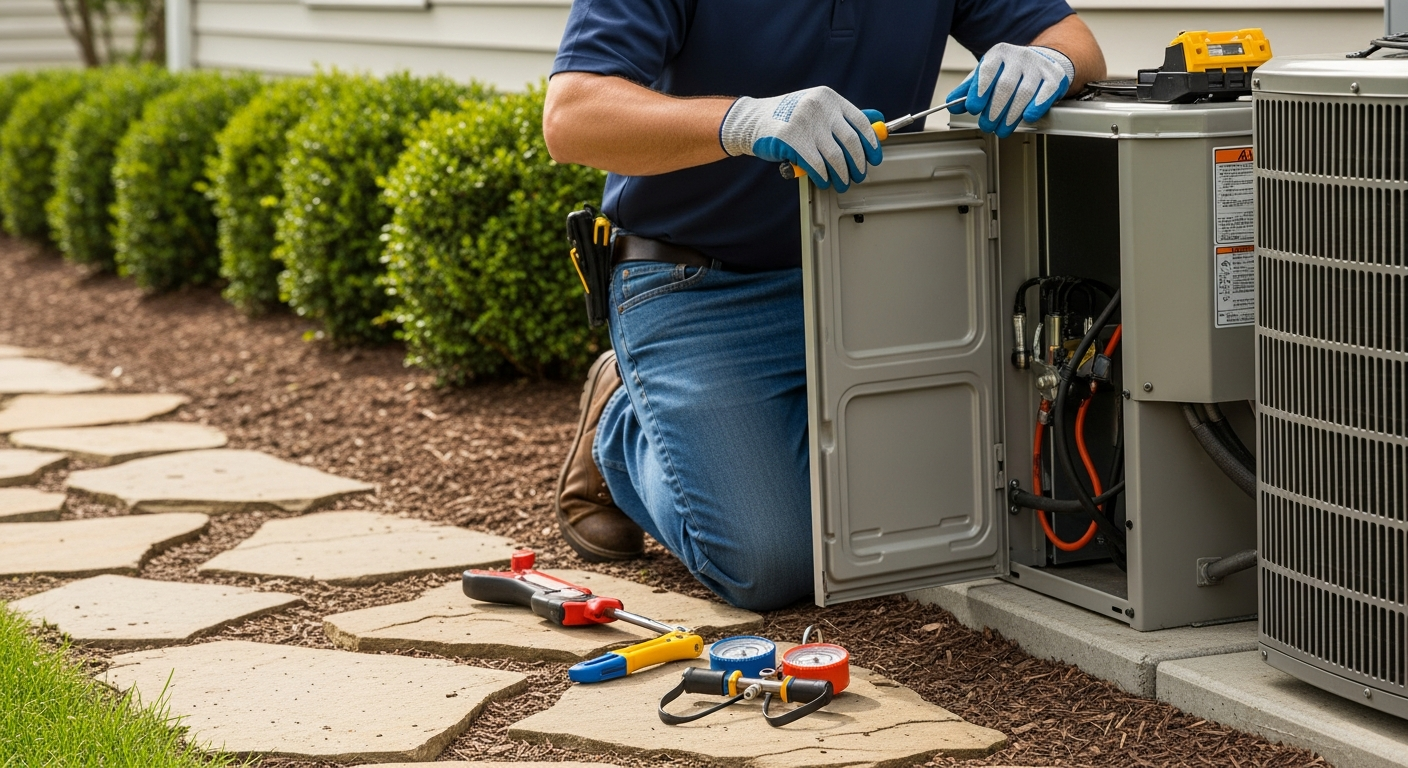
We recommend prioritizing high-efficiency heat pumps to maximize federal credits and long-term energy savings, while stacking local utility rebates.
Heat pumps offer the highest incentives under current law, often covering 30% of costs up to $2,000. For homes in cold climates, cold-climate models qualify and drastically cut heating bills.
What Matters Most
- Federal tax credits can cover up to $2,000 per year for heat pumps.
- Always request the Manufacturer’s Certification Statement and AHRI number.
- Use a contractor who handles rebate paperwork to avoid rejection.
- Combine insulation improvements with HVAC upgrades for total home efficiency.
- Run a repair-or-replace analysis before spending over $500 on an older unit.
Strengths
- Tax credits are non-refundable but can be carried forward.
- Instant rebates reduce out-of-pocket costs immediately.
- High SEER2 and HSPF2 ratings slash monthly energy bills.
- New systems add home value and reliability.
Weaknesses
- Incentives exclude used or rebuilt equipment.
- Credit limits may leave some high-cost projects under-covered.
- Complex paperwork can cause missed savings if not handled properly.
- Upfront cost remains higher than standard equipment even after incentives.
Decision Summary
| Scenario | Usually do | Why |
|---|---|---|
| 10+ year old AC with $1,500 repair | Replace with qualifying heat pump | Lifetime savings from credit + lower bills exceed repair costs within 5 years. |
| 5-year-old furnace needs $400 repair | Repair | Repair cost low; current unit still efficient and under expected life. |
| Building a new home in cold climate | Install cold-climate heat pump | Eligible for maximum credit; avoids fossil fuel costs. |
| Replacing AC only in hot, humid area | Choose high-SEER2 AC, consider whole-home dehumidifier | Moisture control improves comfort; some utilities offer dehumidifier rebates. |
Upgrading your HVAC system in 2025 could save you thousands through expanded federal tax credits and local utility rebates. The Inflation Reduction Act has boosted incentives for high-efficiency heat pumps, air conditioners, and furnaces—with credits covering up to 30% of costs or fixed dollar amounts up to $2,000 per year. Combined with instant utility rebates, many homeowners reduce payback periods by 3–5 years. This guide shows exactly which equipment qualifies, how to document your installation, and where to find vetted contractors who handle the paperwork.
Quick Answer: How to Maximize HVAC Incentives
- Federal tax credits: Up to $2,000 per year for qualifying heat pumps, $600 for air conditioners/furnaces.
- Local utility rebates: Often $200–$1,000, stackable with federal credit.
- Use a certified contractor to ensure eligibility; many file paperwork for you.
- Key documents: Manufacturer’s Certification Statement, itemized invoice, AHRI reference number.
- File IRS Form 5695 with your tax return to claim the credit.
Eligible Equipment & Incentive Ranges (2025)
| Equipment Type | Efficiency Requirement | Federal Tax Credit | Typical Utility Rebate* |
|---|---|---|---|
| Air-Source Heat Pump (ducted) | ≥15.2 SEER2 / 8.1 HSPF2 | 30% of cost, up to $2,000 | $300–$800 |
| Ductless Mini-Split Heat Pump | ≥16 SEER2 / 9 HSPF2 | 30% of cost, up to $2,000 | $200–$700 |
| Central Air Conditioner | ≥16 SEER2 (split system) | $600 | $100–$500 |
| Gas Furnace | ≥97% AFUE | $600 | $200–$600 |
| Geothermal Heat Pump | ENERGY STAR certified | 30% of cost, no upper limit | $1,000–$5,000+ |
*Editorial estimate ranges based on typical utility programs; actual rebates vary by region.
Should You Replace or Repair Your Old HVAC?
Use these concrete thresholds to decide:
- Age > 10 years and repair cost > 50% of new system cost: Replacement is usually smarter, especially with current incentives.
- Uses R-22 refrigerant (pre-2010): Replacement is almost always the better financial move due to refrigerant phase-out.
- Repair under $500 and system under 8 years old: Repair likely makes sense unless facing frequent breakdowns.
Run the numbers with our Repair or Replace Calculator for a personalized estimate.
Tools to Pinpoint Your Savings
- HVACDatabase Rebate Finder: Instantly see federal, state, and utility incentives by ZIP code.
- Energy Savings Calculator: Compare lifetime operating costs of standard vs. high-efficiency models.
- HVAC Cost Estimator: Get localized installation price ranges before incentives.
Incentives Vary by Climate and Region
Local weather and housing stock influence the best incentive strategy:
- Hot & Humid (Southeast): Focus on high SEER2 AC units and dehumidification. Some utilities offer add-on rebates for whole-home dehumidifiers—see our AC condenser cost guide.
- Cold Climates (Northeast, Midwest): Cold-climate heat pumps often qualify for the highest federal credit and can replace fossil fuel systems entirely. Pairing with home efficiency upgrades like air sealing boosts savings (how to seal air leaks).
- Coastal or Corrosive Areas: No specific rebates, but prioritize units with corrosion-resistant coils. Extended warranties become more valuable.
- Older Homes: Many state programs bundle HVAC with insulation or electric panel upgrades. Consider a professional energy audit to identify all qualifying improvements.
Contractor Checklist: Ensure You Qualify
Ask every contractor these questions before signing a contract:
- Are you licensed, insured, and experienced with ENERGY STAR installations?
- Will you provide the Manufacturer’s Certification Statement and AHRI reference number?
- Do you handle the utility rebate application and paperwork on my behalf?
- Can you itemize all costs (equipment, labor, permits) and break out incentive-eligible amounts?
- What warranties (parts, labor, compressor) are included, and do they require annual maintenance?
- Have you verified that the selected equipment meets my local utility’s efficiency thresholds?
Find pre-vetted professionals on HVACDatabase.com and use our contractor comparison tool to check ratings and credentials.
What to Leave to the Pros (Safety Boundaries)
Safe homeowner checks:
- Replace air filters every 1–3 months.
- Keep outdoor condenser clear of debris and vegetation.
- Check thermostat settings and batteries.
- Inspect exposed ductwork for gaps or disconnected segments.
- Monitor cooling/heating performance and listen for unusual noises.
Pro-only work (do not attempt):
- Handling refrigerant or measuring refrigerant pressures.
- Working on gas lines, burners, or heat exchangers.
- Servicing capacitors, contactors, circuit boards, or high-voltage wiring.
- Replacing or repairing compressors.
- Any task that could release refrigerant or affect combustion safety.
Hiring a qualified technician ensures your system meets incentive requirements and operates safely. For emergencies, use our 24/7 HVAC emergency finder.
How We Developed This Guide
Our recommendations are based on:
- Current IRS guidance (Form 5695 instructions, Energy Efficient Home Improvement Credit).
- ENERGY STAR Qualified Product Lists and efficiency standards (SEER2, HSPF2, AFUE).
- Database of thousands of utility rebate programs across the U.S.
- Interviews with certified HVAC installers and energy auditors.
- National and regional cost data from the HVACDatabase cost estimator.
All cost ranges are editorial estimates and may vary by system size, brand, region, season, and installation complexity. Always request at least three itemized quotes.
Frequently Asked Questions
Can I claim a tax credit for a DIY-installed system?
No. The federal tax credit requires installation by a qualified professional; self-installed equipment does not qualify. Additionally, DIY work on refrigerant, gas, or electrical components is dangerous and may void warranties.
What is the difference between a tax credit and a rebate?
A tax credit reduces the amount of tax you owe dollar-for-dollar (non-refundable but can carry forward). A rebate is cash back, often instant or via mail, and has no tax implications. You can stack both.
Do I need a home energy audit to qualify for credits?
Not for the federal credit. However, some state and utility programs require an audit to unlock certain rebates. An audit also helps identify additional savings opportunities (home energy audit guide).
Can I combine federal credits with state and local incentives?
Yes, typically. Federal credits are independent. Most utility rebates are stackable, but always verify with your specific program. Some state programs may have coordination rules.
What if I already installed an eligible system in 2024?
You can file an amended tax return (IRS Form 1040-X) for the 2024 tax year if you meet all requirements and haven’t already claimed the credit. Keep all documentation.
Methodology
HVACDatabase estimates combine common contractor price patterns, service-category pricing ranges, equipment complexity, urgency, regional labor variation, and known HVAC safety boundaries. Actual prices vary by city, brand, system size, access, warranty status, permit requirements, and whether the visit discovers ductwork, electrical, refrigerant, gas, or drainage issues. Use these numbers to sanity-check quotes, not as a guaranteed price.
Related articles
Connect this page to adjacent guides so readers keep moving deeper into the topic cluster.

Cost to Install Multiple Smart Thermostats
Get a clear cost breakdown for installing 2–4+ smart thermostats. Includes equipment, labor, zoning upgrades, and how to save with utility rebates. Practical checks and contractor questions inside.
Duct Booster Fan Installation Cost
Uneven room temps? Duct booster fan installation costs: register fans $30–$100 DIY, inline fans $500–$800+ with pro. Learn when a booster works and when you need a bigger fix.
Makeup Air Unit Installation Cost Guide
Expect to pay $1,500–$4,500 for a pro-installed makeup air unit. Discover passive vs. tempered options, code triggers, and money-saving decision rules.