Furnace Replacement Cost Guide
Planning a furnace replacement? Our guide breaks down costs by fuel type, efficiency, and labor, with practical tools to help you decide, budget, and hire the right pro.
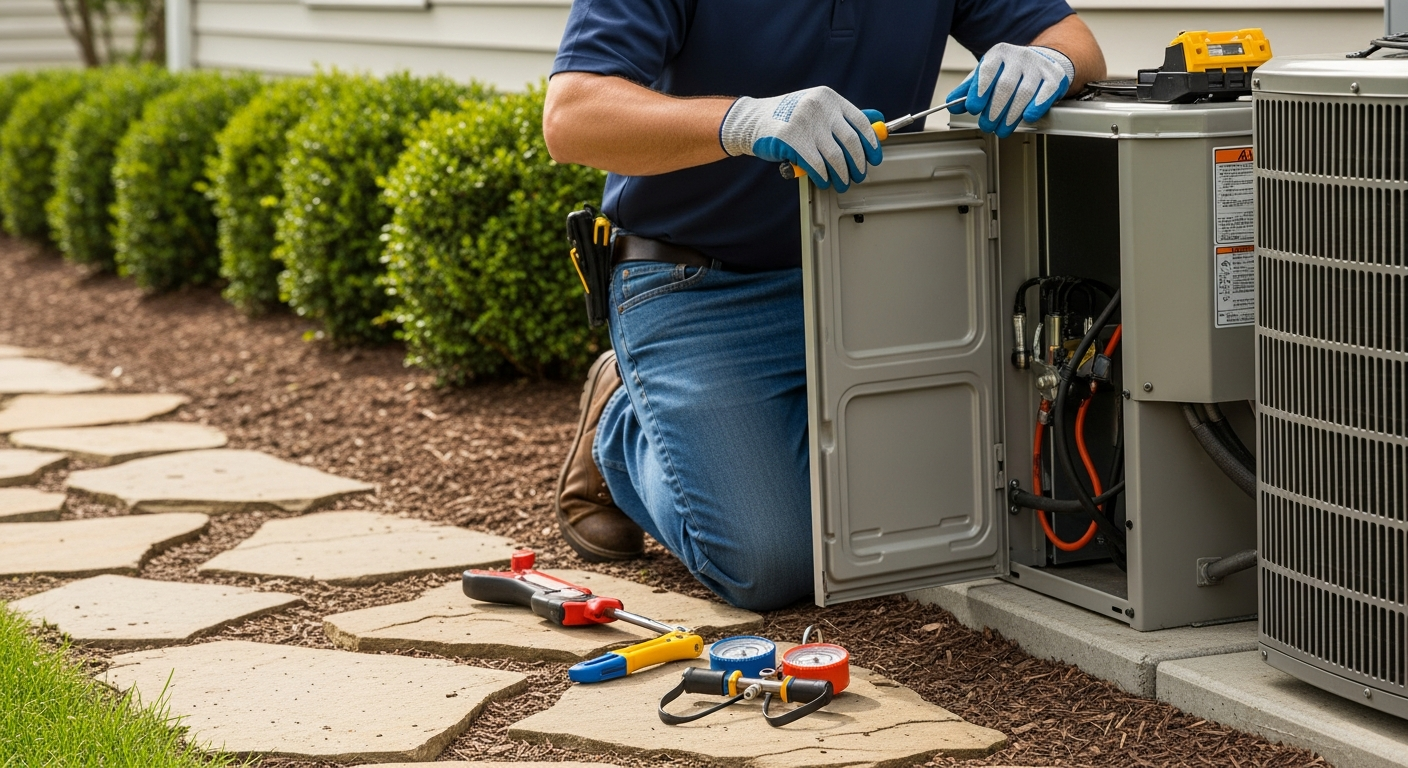
Prioritize a right-sized, high-efficiency gas furnace where feasible
For most homes with natural gas, a 95%+ AFUE condensing furnace paired with a professional Manual J load calculation delivers the best balance of comfort and lifetime savings. In all‑electric homes, consider a heat pump for lower operating costs.
What Matters Most
- Typical replacement costs run $3,000–$10,000+ depending on fuel, size, and efficiency.
- High AFUE (95%+) cuts bills 15–30% annually and often qualifies for tax credits.
- Always require a Manual J load calculation—never reuse the old furnace's size.
- Use our tools to estimate cost, check rebates, and compare contractor quotes.
- DIY is limited to filter, thermostat, and visual checks; internal work requires a pro.
Strengths
- Dramatically improves comfort and temperature consistency.
- Lowers long‑term energy costs, especially in cold climates.
- New warranties provide years of peace of mind.
- Modern variable‑speed blowers reduce noise and improve air quality.
- Environmental benefits from reduced fuel consumption.
Weaknesses
- Significant upfront investment—payback takes several years.
- Installation can be disruptive (1–3+ days) and may require ductwork work.
- Electric furnaces cost more to operate in most regions.
- Sizing errors lead to inefficiency, even with a high‑end unit.
- Propane and oil systems involve on‑site fuel tanks and regular deliveries.
Furnace Replacement Decision Summary
| Scenario | Usually Do | Why |
|---|---|---|
| Gas furnace, 15+ years old, major repair needed | Replace | Repair cost likely exceeds value; new 95%+ AFUE saves yearly. |
| Newer furnace (under 10 years), one minor part failure | Repair | Remaining lifespan and warranty often justify the fix. |
| Frequent breakdowns, rising energy bills | Replace | Unreliable comfort; efficiency gain cuts bills. |
| No gas line; considering electric furnace | Consider a heat pump | Heat pumps often cost 30–50% less to run than electric furnaces in moderate climates. |
| Carbon monoxide detected or cracked heat exchanger | Replace immediately | Life‑safety hazard; do not attempt repair. |
Quick Answer: What You'll Pay
Typical furnace replacement costs range from $3,000 to $7,500 for standard installations. High‑efficiency models or complex jobs often push the total above $10,000. Your final price depends on fuel type, efficiency rating, furnace size, ductwork condition, and local labor rates. Use our HVAC cost estimator to get a personalized starting range, then collect at least three contractor quotes.
Cost Breakdown by Fuel Type
The fuel source drives equipment and installation differences. High‑efficiency units (90–98% AFUE) add 20–40% to equipment cost over standard models (80% AFUE).
| Fuel Type | Typical Installed Cost* | Efficiency (AFUE) | Best For |
|---|---|---|---|
| Natural Gas | $3,000–$6,000 | 80%–98% | Homes with existing gas lines |
| Electric | $2,000–$4,500 | 95%–100% | Mild climates; no gas service |
| Oil | $4,500–$7,000 | 83%–95% | Rural areas; oil delivery available |
| Propane | $4,500–$7,000 | 90%–98% | Rural; propane tank required |
*Editorial estimate; not a guaranteed price. Prices vary by region, season, and job complexity.
What Drives the Price Tag?
- Furnace size (BTUs): Bigger homes need higher output. Wrong sizing causes short‑cycling or cold spots. Use our BTU calculator to estimate the right capacity.
- Efficiency (AFUE): A 95% AFUE furnace uses less fuel, but costs more upfront. In cold climates, the payback can be under 5 years.
- Ductwork condition: Leaky or undersized ducts reduce efficiency and comfort. Repairs or modifications add $500–$2,000+.
- Labor and permits: Rates vary by city. Permits typically cost $50–$300. Professional installation protects your warranty.
- Installation complexity: Converting fuel types (e.g., electric to gas) or relocating the furnace raises labor costs significantly.
Efficiency & Long‑Term Savings
Standard 80% AFUE furnaces lose 20% of heat up the flue. High‑efficiency 95–98% AFUE condensing models capture extra heat, lowering bills by 15–30% annually. Look for ENERGY STAR® units and check local rebates and tax credits that can cut your net cost by hundreds.
In very cold regions (e.g., Chicago), a 95%+ furnace usually pays for itself faster than in mild climates. Compare lifetime fuel costs using our cost estimator.
Decision Rules: Repair or Replace
Use these thresholds to decide. If multiple conditions apply, replacement is often the smarter play.
| Condition | Action | Why |
|---|---|---|
| Furnace age ≥ 15 years | Seriously consider replacement | Efficiency lags; major parts likely out of warranty |
| Repair cost > 50% of new unit cost | Replace | Better to invest in a new, efficient model |
| Frequent breakdowns (2+ per season) | Replace | Reliability and comfort suffer |
| Energy bills rising without explanation | Inspect & possibly replace | Old furnaces lose efficiency; new one saves money |
| Safety concerns (cracked heat exchanger, CO) | Replace immediately | Carbon monoxide risk |
For a more personalized recommendation, try our repair‑or‑replace calculator.
Safe Checks You Can Do
Before calling a pro, verify these basics yourself. Never remove the furnace cabinet panels—high-voltage and gas components inside pose serious risk.
- Replace or clean the air filter (monthly during heavy use).
- Check thermostat settings and batteries.
- Confirm circuit breakers are on and vents are open.
- Visually inspect around the unit for soot or rust (do not open).
- Test carbon monoxide detectors.
When to Call a Pro (Safety Boundaries)
These tasks are not DIY. They require licensed professionals with specialized tools and training:
- Gas valve, burner, or heat exchanger repairs
- Combustion analysis or flue inspection
- Refrigerant handling (heat pump systems)
- Electrical work inside the cabinet (blower, control board, capacitor, contactor)
- Ductwork sizing and modification
To find a qualified contractor, use our contractor directory and compare quotes and credentials.
Tools to Plan Your Project
Prepare for your quote conversations with these HVACDatabase tools:
- BTU Calculator – Rough‑size your heating needs
- Cost Estimator – Get a personalized price range
- Repair or Replace Tool – Weigh long‑term value
- Rebate Finder – Stack tax credits and utility rebates
- System Age Decoder – Check your current furnace’s age
- Quote Checker – See if your estimate is reasonable
Contractor Checklist: 8 Questions to Ask
Before you sign, ask every bidder these questions. Record their answers to compare later.
- Are you licensed, bonded, and insured in my state? Ask for proof.
- Will you perform a Manual J load calculation? Proper sizing is non‑negotiable.
- Do you pull required permits? This protects you and ensures code compliance.
- What are your warranty terms on labor and parts? Get it in writing.
- Can you provide local references from the last 12 months? Follow up.
- How will you handle ductwork issues if found? Understand what’s included.
- What is the payment schedule, and are there financing options? Avoid large upfront deposits.
- How long will the installation take, and who handles post‑install service?
Use our contractor comparison tool to evaluate multiple bids side by side.
Regional Considerations
Cold climates (Midwest, Northeast): Prioritize 95%+ AFUE and variable‑speed blowers. In cities like Chicago, sizing for sub‑zero days prevents short‑cycling. Browse Chicago heating contractors.
Hot, humid areas (Southeast, Gulf): A dual‑fuel system (heat pump + gas backup) or a high‑efficiency electric furnace may be more cost‑effective. See our AC condenser cost guide for cooling synergy.
Older homes: Ductwork may need extensive repair or replacement. Get a duct assessment before pricing the furnace alone.
Coastal regions: Look for corrosion‑resistant heat exchangers; salt air accelerates wear.
How We Build These Estimates
Our cost ranges come from a combination of contractor surveys, regional labor databases, manufacturer pricing, and historical project data. We update them quarterly to reflect material and labor shifts. These are editorial estimates, not guaranteed prices. Actual quotes depend on site conditions, access difficulty, permit fees, and market demand. Always obtain at least three written bids. For help evaluating a quote, use our Quote Checker.
Frequently Asked Questions
How long does a furnace replacement take?
A standard like‑for‑like replacement takes 1–2 days. Adding new ductwork, changing fuel type, or relocating the unit can extend the job to 3–5 days.
Can I replace just the furnace and keep my old ductwork?
Yes—if your ducts are sized correctly and leak‑free. A professional will inspect them. Sealing leaks and adding insulation often pays for itself in energy savings.
What's the most efficient furnace available?
Condensing gas furnaces reach 97–98% AFUE. Electric furnaces can achieve 100% AFUE but typically cost more to operate. In moderate climates, an electric heat pump often delivers the best overall efficiency.
Will a new furnace increase my home's value?
A modern, efficient system can improve marketability and comfort, but rarely adds as much to the sale price as a kitchen or bath remodel. Buyers appreciate lower utility costs and newer appliances.
Are there financing options for a new furnace?
Many HVAC companies offer third‑party financing (0% or low‑interest plans for qualified buyers). Some manufacturers and utilities also provide on‑bill financing or rebate‑linked loans. Ask your contractor and check local utility programs.
Methodology
HVACDatabase estimates combine common contractor price patterns, service-category pricing ranges, equipment complexity, urgency, regional labor variation, and known HVAC safety boundaries. Actual prices vary by city, brand, system size, access, warranty status, permit requirements, and whether the visit discovers ductwork, electrical, refrigerant, gas, or drainage issues. Use these numbers to sanity-check quotes, not as a guaranteed price.
Related articles
Connect this page to adjacent guides so readers keep moving deeper into the topic cluster.

Cost to Install Multiple Smart Thermostats
Get a clear cost breakdown for installing 2–4+ smart thermostats. Includes equipment, labor, zoning upgrades, and how to save with utility rebates. Practical checks and contractor questions inside.
Duct Booster Fan Installation Cost
Uneven room temps? Duct booster fan installation costs: register fans $30–$100 DIY, inline fans $500–$800+ with pro. Learn when a booster works and when you need a bigger fix.
Makeup Air Unit Installation Cost Guide
Expect to pay $1,500–$4,500 for a pro-installed makeup air unit. Discover passive vs. tempered options, code triggers, and money-saving decision rules.