How to Avoid HVAC Emergencies During Holidays
A furnace failure during holiday gatherings is stressful and costly. Use these proactive steps to avoid breakdowns, from quick DIY checks to knowing when to call a pro, with cost insights from HVACDatabase.
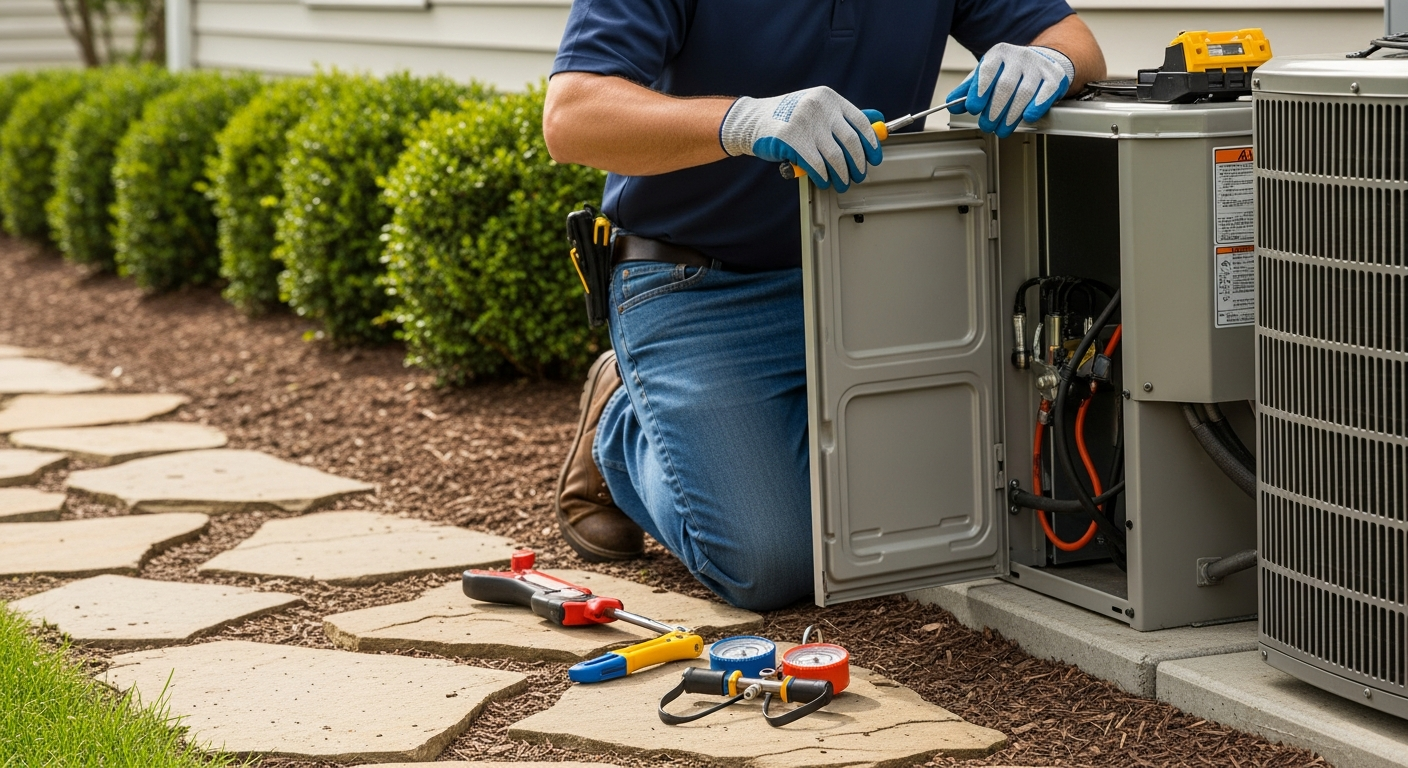
Prioritize Prevention with a Professional Tune‑Up
Scheduling a professional maintenance visit at least two weeks before the holidays is the most reliable way to avoid a breakdown. Combine it with simple DIY checks for the best protection.
What Matters Most
- Schedule a maintenance visit early to avoid premium emergency rates.
- Change your air filter and clear vents before guests arrive.
- Use HVACDatabase tools to assess system age and repair-vs-replace economics.
- If you hear banging, screeching, or notice frequent cycling, call a pro immediately.
- Vet emergency contractors now—don’t wait for a holiday failure.
Strengths
- Minimizes risk of cold, uncomfortable gatherings.
- Reduces likelihood of paying holiday emergency surcharges (often $150+ diagnostic).
- Extends equipment life and improves indoor air quality.
- Empowers homeowners with decision rules and contractor vetting tools.
Weaknesses
- Preventive maintenance incurs an upfront cost ($80–$250 typical).
- Older systems may still fail despite maintenance; replacement may be inevitable.
- Last‑minute scheduling may leave you without heat if parts are unavailable.
Decision Summary
| Scenario | Usually Do | Why |
|---|---|---|
| Furnace over 15 years old, needing frequent repairs | Replace before holidays if repair exceeds 30% of replacement cost | Prevents mid‑party failure; new units are more efficient and reliable |
| System under 10 years, no recent issues | Schedule a maintenance visit and change filters | Low cost ensures reliability; catch minor wear early |
| You hear banging or smell something unusual | Turn off the system, call a pro immediately | Safety first; delaying can lead to more expensive damage or risk |
Quick Answer: Prevent Holiday HVAC Breakdowns
Take these steps now to minimize the risk of a cold holiday emergency:
- Replace your air filter and ensure vents are unobstructed.
- Clear debris and snow from outdoor heat pump or AC units.
- Schedule a professional maintenance visit—especially if your system is over 10 years old.
- Bookmark an emergency contractor contact and know their holiday rates.
- Test your thermostat and circuit breaker before guests arrive.
What Does a Pre-Holiday HVAC Check Cost?
| Service | Typical Cost Range (Editorial Estimate) | Notes |
|---|---|---|
| Standard maintenance visit | $80–$250 | Annual plans often $150–$500 |
| Emergency diagnostic (after hours/holiday) | $150–$300+ | Premium may apply |
| Common heating repair | $150–$1,500+ | Varies by component and system |
Use our HVAC cost estimator to get personalized price ranges for your area.
Safety Boundaries: What You Can and Cannot Do
Homeowner-Safe Tasks
- Change or clean the air filter.
- Ensure supply and return vents are open and unobstructed by furniture, rugs, or decorations.
- Clear snow, ice, leaves, and debris from around outdoor heat pump or AC units.
- Check thermostat settings and batteries; consider a programmable schedule for holiday gatherings.
- Verify the circuit breaker for the furnace/air handler is in the ON position.
- Inspect accessible ductwork for obvious disconnections or air leaks.
Pro-Only Work (Do Not Attempt)
- Any task involving refrigerant handling, gas lines, or combustion components.
- Replacement or troubleshooting of capacitors, contactors, compressors, or control boards.
- Opening the sealed cabinet of a furnace, heat pump, or air conditioner if it exposes high‑voltage wiring or refrigerant lines.
- Attempting to bypass safety switches or limit controls.
- Performing combustion analysis or adjusting gas pressure.
Use Our Decision Tools Before the Holidays
If your system is aging or has needed recent repairs, it may be time to evaluate replacement. Try these calculators:
- System Age Decoder – Find out how old your unit is from the serial number.
- Repair or Replace Calculator – Weigh the cost of a major repair against a new, efficient system.
- HVAC Cost Estimator – See realistic local pricing for repairs and replacements.
Decision Rules: When to Act Now
Use these guidelines to decide whether you need a pro before guests arrive:
- Age threshold: If your furnace is over 15 years old or heat pump over 10–12 years, schedule a pre‑holiday inspection. The System Age Decoder helps confirm age.
- Strange noises: Banging, screeching, or rattling sounds often indicate worn belts, loose components, or failing motors. Do not ignore them; call a technician if noise persists after filter change.
- Frequent cycling: If the system turns on and off every few minutes, it could be a dirty filter, a faulty thermostat, or an oversized unit — all reduce comfort and efficiency.
- Weak airflow or uneven heating: If some rooms are cold while others are hot, check for blocked vents and a clean filter. If the problem persists, ductwork issues or blower motor problems may exist.
- High energy bills: A sudden spike in heating costs often signals declining efficiency that can lead to a breakdown.
Contractor Checklist for Holiday Emergency Calls
If you face an HVAC failure during the holidays, avoid paying inflated emergency rates without proper vetting. Ask these questions before approving work:
- Are you licensed, bonded, and insured in this state? Can you provide your license number?
- What are your holiday or after‑hours rates? Is the diagnostic fee separate?
- Will you provide a written estimate before starting any work, including parts and labor?
- Do you carry common replacement parts (ignitors, flame sensors, capacitors) on your truck to avoid a second trip?
- What warranties apply to the repair? Is there a guarantee on workmanship?
- Can you provide references or recent reviews from customers in my area?
- If the unit cannot be repaired immediately, do you offer temporary heating solutions or priority scheduling?
Compare local contractors on HVACDatabase’s comparison page or search for emergency HVAC services near you.
Adapt Your Plan to Your Climate
Cold & Snowy Regions
Ensure outdoor heat pump or AC units are elevated and cleared of snow. Insulate exposed pipes against freezing. A cold‑snap readiness guide provides additional steps.
Hot & Humid Holiday Gatherings
If you live in Phoenix, Miami, or similar, your AC may run hard with a full house of guests and a hot kitchen. Check your AC filter and consider a pre‑party maintenance visit. Phoenix AC contractors often recommend a preseason tune‑up.
Coastal & Corrosion‑Prone Areas
Salt air accelerates corrosion on outdoor coils and electrical connections. An annual inspection is critical. Search for local HVAC pros familiar with coastal systems.
Older Homes
Original ductwork may be leaky or uninsulated. Sealing and insulating ducts can dramatically improve heating reliability. Use our BTU calculator to check if your system is sized correctly for your home’s envelope.
Methodology: How We Form Estimates
Cost ranges in this article and across HVACDatabase are editorial estimates based on aggregated data from contractor surveys, industry pricing reports, and anonymized project submissions. Actual prices vary by region, season, system complexity, and labor rates. Always obtain multiple written quotes, and use our Quote Checker to evaluate fairness.
Frequently Asked Questions
How long does a pre‑holiday HVAC inspection take?
A typical maintenance visit for a furnace or heat pump takes 60–90 minutes. The technician will clean components, test safety controls, measure airflow, and check for wear.
Can I just use space heaters if my HVAC fails during a party?
While portable electric space heaters can provide temporary spot heating, they are not a substitute for a whole‑home system. Use them cautiously, never leave them unattended, and ensure they are not overloaded on circuits. For large spaces, consider renting temporary heating equipment from a local supplier.
What is the most common cause of holiday HVAC failure?
Dirty or clogged air filters are the number one cause of airflow restriction, leading to system overheating and shutdowns. A secondary cause is failure of ignition components in gas furnaces, which often occurs during high‑demand cycles.
Should I turn my thermostat down when cooking a big meal?
Yes. The oven, stovetop, and crowd body heat can add 4,000–12,000 BTU per hour to your kitchen area. Lowering the thermostat 3–5°F can prevent overheating and reduce cycling strain on your furnace or heat pump.
How do I find a reliable emergency HVAC contractor on a holiday?
Start with a platform like HVACDatabase’s emergency services where you can compare ratings, response times, and transparent pricing. Call two or three contractors, ask the checklist questions above, and confirm their availability before you need them — better yet, bookmark a trusted pro now.
Related articles
Connect this page to adjacent guides so readers keep moving deeper into the topic cluster.

Tips for Choosing a Smart Thermostat for a Heat Pump
Learn which smart thermostat features prevent expensive auxiliary heat mistakes, how to verify compatibility, and when to call a pro.

Understanding C Wire Adapters for Smart Thermostats
Missing the C wire for your smart thermostat? C wire adapters solve power issues without pulling new wiring. Compare types, costs, and installation options.

Best Smart Thermostats for Multi Zone Homes
Discover which smart thermostats deliver accurate zoning, remote sensors, and energy savings for homes with multiple HVAC zones. Our guide helps you pick the right model and avoid costly compatibility mistakes.