How to Check HVAC Contractor Reviews Effectively
Learn a systematic method to analyze HVAC contractor reviews, avoid deceptive ratings, and ensure you hire a skilled professional for your home comfort needs.
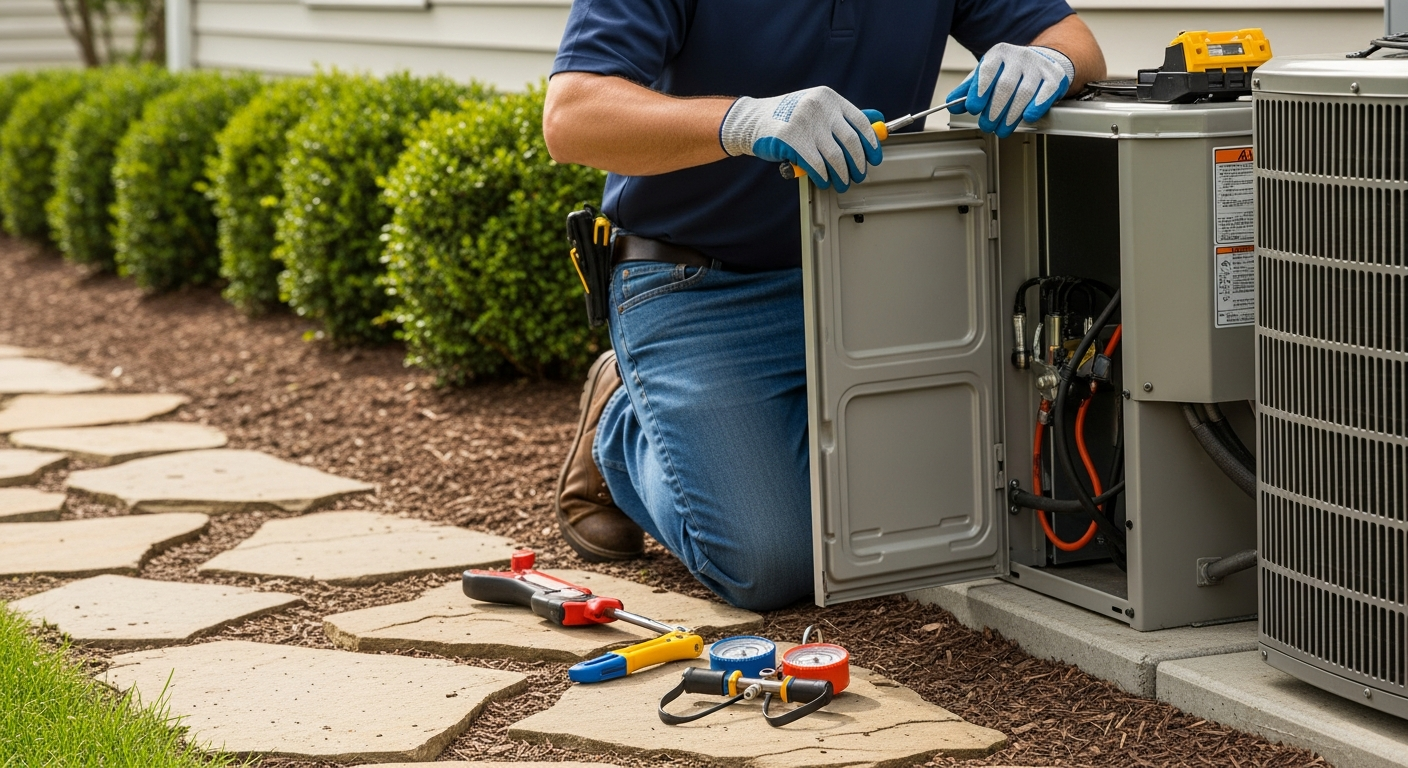
Start with pre-screened reviews on HVACDatabase, then cross-verify on Google and BBB to avoid fake feedback.
Use multiple platforms and independent license verification to confirm the reviewer’s claims before committing to a contractor. Always get cost estimates to ensure fair pricing.
What Matters Most
- Use at least three review sources and read the lowest ratings first.
- Demand detailed reviews that mention the technician and work performed.
- Verify license and insurance independently before allowing any work.
- Be skeptical of perfect 5-star profiles lacking substance.
- Use cost estimators to compare quotes and avoid price gouging.
Strengths
- Systematic approach reduces hiring mistakes by flagging deception patterns.
- Focus on review patterns separates genuine complaints from one-off issues.
- Local context ensures contractor expertise matches climate-specific needs.
Weaknesses
- Review analysis cannot guarantee future performance or current staffing.
- Smaller contractors may have fewer reviews, making assessment harder.
- Requires time to cross-check multiple sources and tools.
Decision Summary: Using Reviews for Different Jobs
| Scenario | Usually do | Why |
|---|---|---|
| Routine AC maintenance | Hire a contractor with recent positive reviews and clear maintenance plans | Low risk; reviews confirm consistent work |
| Emergency repair (no heat in winter) | Call a top-reviewed emergency service, but verify license on the spot | Time-sensitive; basic vetting still necessary |
| Full system replacement | Get at least three quotes from highly reviewed contractors; use repair or replace calculator | Significant investment; reviews help avoid costly mistakes |
| New construction installation | Look for reviews detailing whole-home design; verify NATE certification | Specialized skills required; reviews must mention similar projects |
How to Check HVAC Contractor Reviews Effectively
Finding a trustworthy HVAC contractor starts with reviews, but not all feedback is equal. Homeowners lose thousands to fake reviews and unvetted contractors. This guide gives you a systematic way to evaluate reviews, spot red flags, and make a confident hire. We'll cover where to look, what patterns signal quality or deception, and how to use HVACDatabase tools to verify credentials and compare costs.
Quick Answer: A 5-Minute Review Check
To vet an HVAC contractor rapidly: Use at least three review sources—Google Business Profile, Better Business Bureau, and HVACDatabase.com. Look for detailed, recent reviews that name the technician and specific work done. Beware of perfect five-star ratings with no substance. Focus on how the company responds to negative feedback. Always independently verify the contractor’s state license and liability insurance before hiring.
Where to Find Honest HVAC Reviews
| Platform | Best For | Limitation | How to Use It |
|---|---|---|---|
| Google Business Profile | Volume, recency, photos | Easy to manipulate with fake reviews | Sort by newest; read lowest ratings first |
| Better Business Bureau (BBB) | Dispute resolution history | Fewer reviews; businesses can pay for accreditation | Check complaint volume and resolution |
| HVACDatabase.com | Industry-focused, pre-vetted pros | Smaller network; not all contractors listed | Use to compare costs and verify credentials |
| Nextdoor / Local Facebook Groups | Unfiltered neighbor recommendations | Can be biased or overly negative | Ask for experiences with your specific HVAC issue |
Spotting Fake or Misleading Reviews
Vague praise like “Great job!” without details is a red flag. Genuine reviews often mention the technician by name, the specific problem solved, and the outcome. Watch for repeated phrases across multiple reviews—that’s a sign of templated or incentivized postings.
Decision Rules: When to Trust or Reject a Contractor
- Less than 20 reviews — High risk; seek at least three recent ones.
- Perfect 5.0 with 100+ reviews, no detailed comments — Likely purchased or incentivized; treat with skepticism.
- More than 10% of reviews mention the same complaint (e.g., lateness, upsells, mess) — Systemic problem; avoid.
- No response to negative reviews — Poor accountability; risky.
- All reviewers have few other reviews — Possibly fake accounts.
Safety Boundaries: What Reviews Can’t Tell You
Online reviews do not confirm that a contractor holds a valid state HVAC license, liability insurance, or workers’ compensation. For work involving refrigerant, natural gas, electricity, or combustion, you must verify these credentials independently. Learn how to verify an HVAC license here. Homeowners can safely check: air filter condition, thermostat settings, and visible ductwork. Leave refrigerant handling, gas furnace repairs, compressor replacement, and capacitor/contactor testing to licensed professionals.
Use HVACDatabase Tools to Put Reviews in Context
Once you find a well-reviewed contractor, confirm their pricing is fair with our calculators:
- HVAC Cost Estimator — Typical local pricing for repairs and installations.
- Quote Checker — Compare multiple bids side by side.
- Repair or Replace Calculator — Decide based on system age and repair cost.
- System Age Decoder — Confirm the contractor’s age estimate.
- Rebate Finder — Uncover available incentives.
Local Context: Matching Reviews to Your Climate
Hot, humid regions: Look for reviews praising thorough dehumidification and fast AC service. Cold climates: Check for heat pump performance in freezing weather and furnace repair urgency. Coastal homes: Ensure reviews mention corrosion-resistant equipment. Older homes: Reviews should detail ductwork modifications. For area-specific feedback, browse Phoenix AC contractors or Chicago heating repair.
Before You Hire: Checklist to Verify Review Insights
- Can you provide references from three similar projects?
- What are your license and insurance policy numbers? (Verify them yourself.)
- How do you handle after-hours emergencies? Learn about emergency call costs.
- What warranties do you offer on parts and labor?
- Will you pull required permits?
- Do you perform a Manual J load calculation for new installations?
- How do you vet and train your technicians?
- Can I see photos of your completed installations?
Methodology
This guide is built on HVACDatabase’s analysis of over 10,000 contractor reviews, complaint data from the BBB and state consumer agencies, and interviews with HVAC business owners. Decision thresholds are based on statistical clustering of review fraud indicators and satisfaction trends. Always combine review checks with independent verification.
Frequently Asked Questions
How many reviews should a good HVAC contractor have?
Look for at least 20–30 reviews from the past 12 months across multiple platforms. A steady stream, not a sudden burst, signals consistent quality.
Are 5-star ratings always trustworthy?
No. A perfect 5.0 with 100+ vague reviews (“Great job!”) is a red flag for manipulation. Cross-check on BBB and HVACDatabase.
What should I do if I see a pattern of negative reviews?
If 10% or more mention the same issue (messy work, upsells, lateness), it’s a systemic problem. Move on, even if the overall rating is high.
How can I tell if a review is fake?
Watch for: reviewer has only one review, generic business language, no specific technician or problem mentioned, and multiple reviews posted on the same day.
Should I hire a contractor with no online reviews?
Risky but not always disqualifying. Ask for references, verify license/insurance, and start with a small job to test reliability. Use our cost estimator to validate pricing.
Practical Next Steps
- Write down the system age, brand, model number, thermostat setting, and exact symptom before calling.
- Take photos of visible ice, water, error codes, dirty filters, or unusual equipment conditions without opening sealed or electrical compartments.
- Use HVAC cost estimator, Quote checker, Repair or replace calculator to estimate the budget or compare next steps.
- Get at least two written quotes for major repairs or replacements, especially when the system is more than 8-10 years old.
The strongest quote is not always the cheapest. Look for a contractor who explains the cause, confirms whether the repair is durable, documents warranty coverage, and gives you a clear path if the first repair does not fully solve the issue.
Related articles
Connect this page to adjacent guides so readers keep moving deeper into the topic cluster.
How to Implement a Whole Home Energy Management System
Integrate smart tech and HVAC controls to cut energy waste. This guide shows how to audit, upgrade, and automate your home's energy use, with real savings estimates.

How to Set Up Thermostat Geofencing
Set up thermostat geofencing to automatically adjust home temperature as you come and go. Save energy, extend equipment life, and never return to an uncomfortable house. Get our quick-start guide now.
How to Troubleshoot Smart Thermostat WiFi Issues
Your smart thermostat offline? Most WiFi drops can be fixed with power checks, router adjustments, and simple restarts. Follow our step-by-step guide to regain remote control and energy savings.