Quick Answer: How to Replace an AC Air Filter in 5 Steps
1. Turn off your HVAC system. 2. Locate the filter access. 3. Remove the old filter, noting the airflow arrow. 4. Insert the new filter with the arrow pointing toward the unit. 5. Replace the cover and restart. Always check the filter monthly, and replace it every 30–90 days.
For a deeper dive into selection, timing, costs, and when to involve a pro, read on.
Why Filter Replacement Matters
A clogged filter reduces airflow, forcing your AC to run longer and work harder. This can spike energy use by 5–15%, lead to frozen evaporator coils, and overheat the compressor. Regular changes keep indoor air cleaner by trapping pollutants—critical for homes with pets, smokers, or allergy sufferers.
Choosing the Right Replacement Filter
First, check the size printed on your existing filter’s frame (e.g., 20x20x1). Next, consider the MERV rating, which measures particle capture efficiency:
| MERV Rating | Performance | Best For |
|---|---|---|
| 1–4 | Large particles (lint, dust). Minor resistance. | Basic equipment protection; no allergy concerns. |
| 5–8 | Mold spores, pet dander, pollen. | Common homes; mild allergies. |
| 9–12 | Fine dust, auto emissions, legionella. | Pet owners, moderate allergies, or urban areas. |
| 13–16 | Smoke, bacteria, virus carriers. | Severe allergies or asthma; may need professional airflow check due to higher resistance. |
Caution: Higher MERV filters can restrict airflow. If your system is older or has marginal ductwork, stay at MERV 5–8 unless you’ve had a static pressure test—then follow contractor advice. Use our Filter Finder tool to match your system specs.
Step-by-Step Installation (Safe for Homeowners)
- Switch off power: Set your thermostat to “Off.” For extra safety, flip the furnace/air handler breaker. This prevents accidental fan startup.
- Open the filter access: Usually a slot on the return duct or a door on the air handler/blower cabinet. Some filters are behind a large wall grate.
- Slide out the old filter: Note the thick dust layer—proof it’s doing its job. Check the arrow on the frame indicating airflow direction.
- Insert new filter: Arrow must point toward the blower unit (toward the furnace or air handler). Installing backward may cause filter collapse or bypass dust.
- Secure cover and restore power: Turn the system back on and feel for steady airflow at a vent. Listen for any whistling—that could mean the filter is too restrictive or not seated properly.
Safety Boundaries – What Homeowners Should and Should Not Touch
✅ Safe for you: Inspecting/replacing the filter, cleaning the filter grille, visually checking the blower area for dust buildup (with power off), setting reminders for replacements.
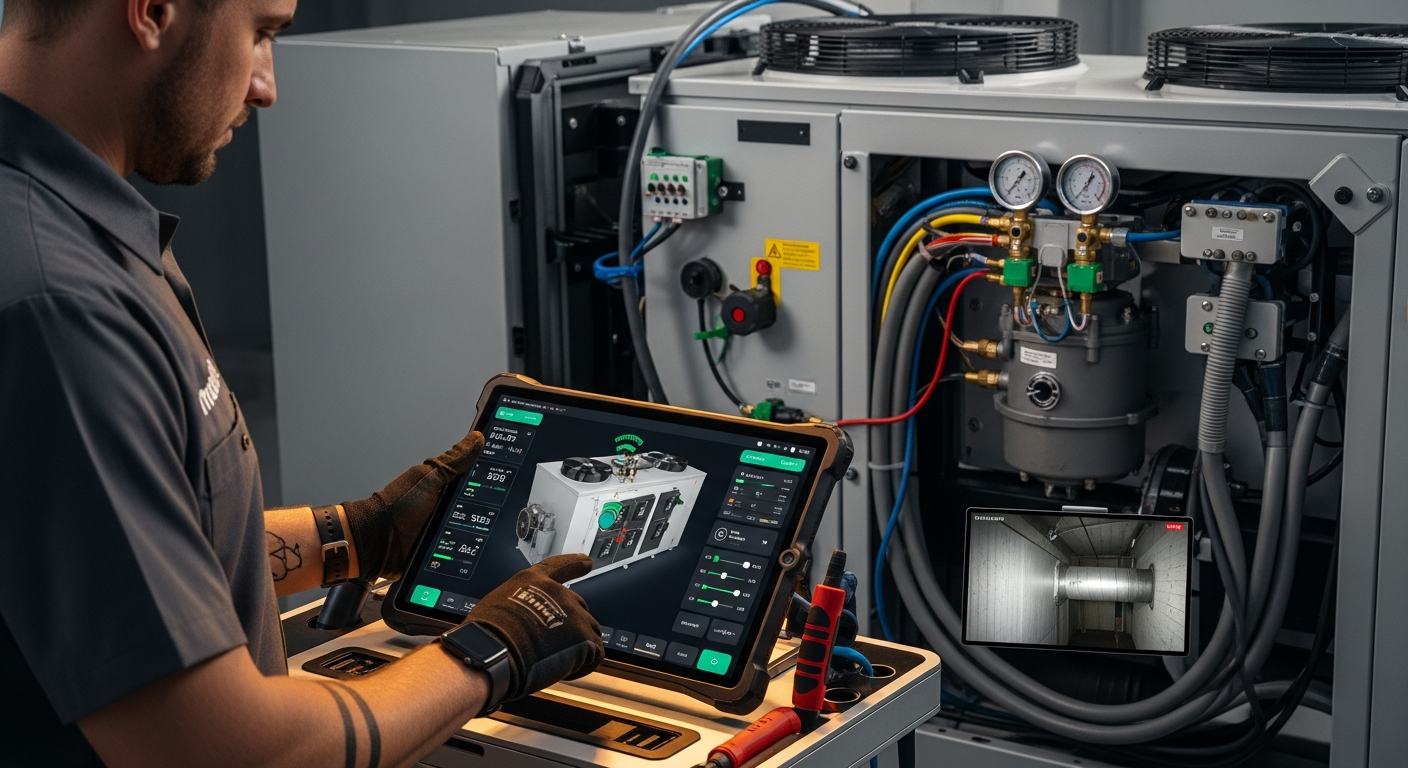
🚫 Leave to a licensed HVAC technician: Any work involving refrigerant lines, gas connections, electrical components (capacitors, contactors, circuit boards), compressor, or sealed evaporator coils. Also, if you notice oil stains, burnt smells, or loud motor noises, stop and schedule an emergency inspection.
When to Change Your Filter – Decision Rules
Don’t rely on a calendar alone. Use this simple framework:
- Every 30 days if: you have shedding pets, indoor smokers, live in a dusty/construction zone, or family members have severe allergies.
- Every 60–90 days if: typical suburban home with no major indoor pollution, and you use MERV 5–8.
- Every 6–12 months if: second home or lightly used system, high-end MERV 13+ with thick pleated media (4-inch or more).
- Immediately if: the filter is visually dark grey/covered, you notice reduced airflow, or ice forms on indoor or outdoor coils.
Pro tip: Write the installation date on the filter frame with a marker.
Costs & Tools to Help You Decide
Basic fiberglass filters cost $2–$5. Pleated filters (MERV 5–8) run $5–$15. High-efficiency filters (MERV 11–13) are $15–$30. Specialty 4–5-inch media cabinets: $20–$80 per filter. These are retail material costs; labor is free when you DIY.
| Filter Type | Material Cost (Each) | Typical Replacement Interval |
|---|---|---|
| Fiberglass (MERV 1–4) | $2–$5 | 30 days |
| Standard pleated (MERV 5–8) | $5–$15 | 60–90 days |
| High-efficiency pleated (MERV 9–12) | $15–$30 | 90 days–6 months |
| Deep-media cabinet (MERV 11–16) | $20–$80 | 6–12 months |
Editorial estimate: If you need a professional to diagnose airflow issues or upgrade to a media cabinet, expect $100–$350 for the diagnostic and $200–$600 for the cabinet installation (prices vary by region and accessibility). Use our HVAC Cost Estimator to get a personalized range.
Contractor Checklist: Questions to Ask Before Hiring
When you suspect your filter problem goes deeper (e.g., dust passing around the filter, or high bills despite clean filters), bring in a pro. Ask these questions:
- “Can you measure static pressure and total external static pressure (TESP) to see if my filter is too restrictive?”
- “Is my filter slot properly sealed, or is air bypassing around the frame?”
- “Based on my home’s dust load and equipment, what MERV rating do you recommend?”
- “Would a media cabinet upgrade pay for itself in energy savings?”
- “What’s your diagnostic fee, and does it apply to the repair if I proceed?”
Find vetted local contractors on HVACDatabase.com or compare quotes from multiple pros.
Local Considerations for Filter Replacement
- Hot climates (Phoenix, Las Vegas): AC runs nearly year-round. Check filters monthly in summer; dust storms can clog them fast. Consider MERV 11 to trap fine desert dust.
- Humid regions (Houston, Miami): High humidity promotes mold growth on filters. Change every 30-45 days. Look for filters with antimicrobial treatment.
- Cold regions (Minneapolis, Boston): During heating season, the filter is just as critical for your furnace. Check after fall start-up. Frozen coils? It could be an airflow issue—see our summer prep guide.
- Coastal areas (Los Angeles, New York): Salt air can corrode equipment. Ensure the filter slot is airtight to protect the evaporator coil.
- Older homes: Retrofit systems may have odd filter sizes. Measure carefully—custom sizes are available.
Methodology
Our recommendations are built on ASHRAE standards for residential filtration, manufacturer service manuals, and field data from NATE-certified technicians. Cost estimates reflect average national material pricing from major retailers and HVAC distributors, plus labor rates reported by contractors in the HVACDatabase network. All advice is reviewed by our editorial board to ensure safety and accuracy.
Frequently Asked Questions
Can I clean and reuse a disposable air filter?
No. Washing or vacuuming disposable filters can damage the media and reduce efficiency. Only re-usable electrostatic filters are designed for cleaning. If yours is disposable, replace it.
Why is my new filter making a whistling noise?
It may be too restrictive (high MERV) for your system or installed backward. Try a lower MERV filter or ensure the arrow points toward the blower. If whistling persists, have a tech check static pressure.
How does a dirty filter affect my energy bills?
A clogged filter increases motor load by 10–15%, adding $5–$15 to monthly cooling costs in a typical home. Over a season, that’s $60–$180 wasted.
Should I use a HEPA filter in my AC?
True HEPA filters are too restrictive for residential AC systems—they require a dedicated bypass or booster fan. If you need HEPA-level filtration, use portable air purifiers in rooms where you spend the most time.
Can I run my AC without a filter for a short time?
Never run without a filter, even for a day. Unfiltered air coats the evaporator coil and blower with dust, reducing efficiency and potentially causing mold or system failure. If you’re waiting for a new filter, keep the system off.
Next Steps: Mark your calendar for monthly filter checks. Grab your filter size and shop smart using our Filter Finder tool. If you're experiencing issues, find a licensed contractor today.