How to Troubleshoot a Heat Pump in Heating Mode
Follow safe, step-by-step homeowner checks to get your heat pump heating again. Covers thermostat, filters, outdoor unit, and when auxiliary heat kicks in—plus clear signs you need a pro.
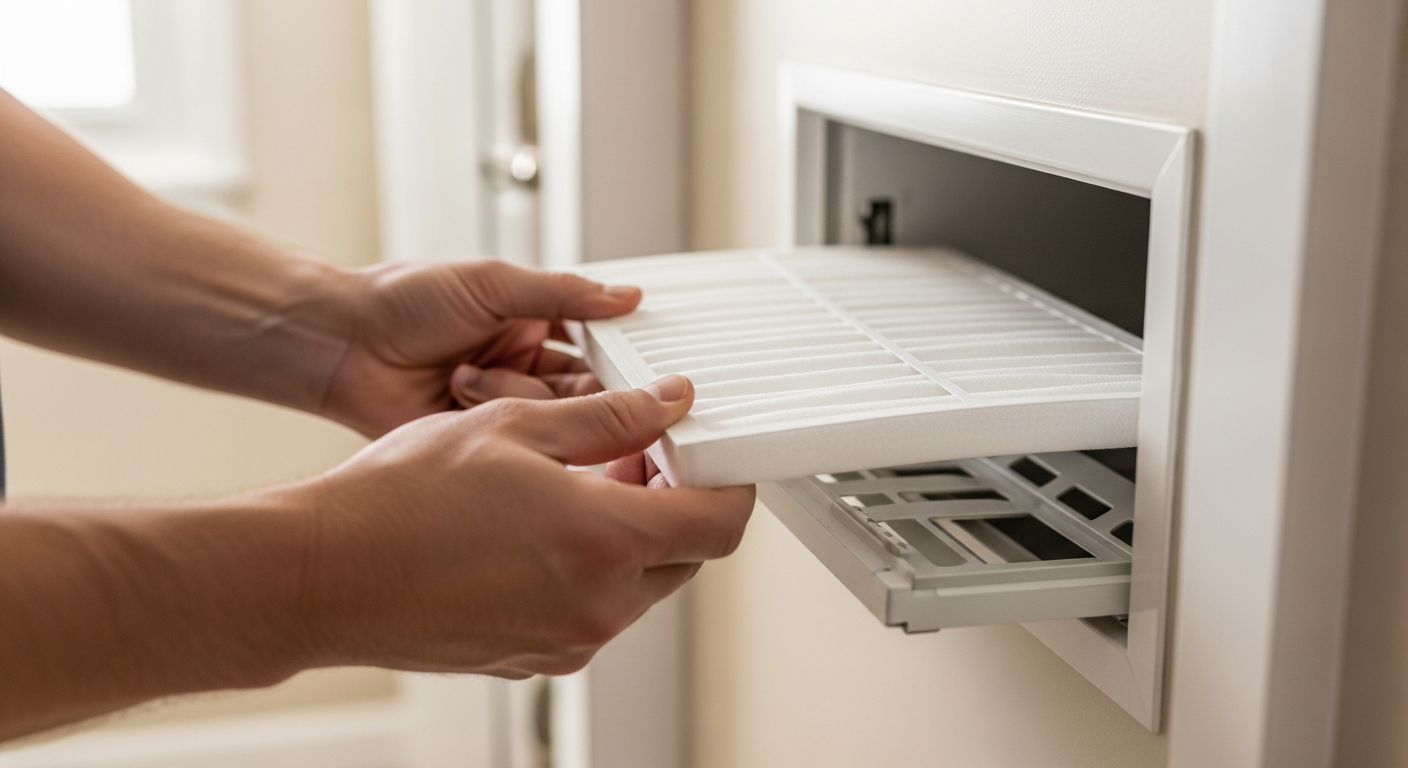
Homeowners can safely troubleshoot thermostat, filter, power, and ice—but never open panels or handle refrigerants.
There are clear, safe steps any homeowner can take to restore heating before incurring a service call. Respect voltage and refrigerant dangers; when basic checks fail, hire a licensed pro.
What Matters Most
- 90% of no‑heat calls stem from thermostat settings, a dirty filter, or a tripped breaker—fix these first.
- Heavy ice on the outdoor coil always requires a professional; light frost is normal and self‑clears.
- If aux heat runs constantly above 35°F, your heat pump likely has a refrigerant or mechanical fault.
- Use our repair‑or‑replace calculator before approving expensive repairs on older systems.
- Emergency heat is a costly last resort; use it only when the heat pump has failed completely.
Strengths
- Safe, step‑by‑step guides respect electrical and refrigerant hazards
- Clear decision thresholds prevent unnecessary service calls
- Integrated tools help homeowners estimate costs and compare options
- Local climate advice tailors recommendations to region‑specific behavior
- Contractor checklist ensures consumers get transparent, accountable quotes
Weaknesses
- DIY diagnostics cannot replace a professional’s tools—gauges, meters, and sensors are needed for exact diagnosis
- Cost estimates are editorial averages and may differ from local market quotes
- Homeowners without basic tool familiarity may still find breaker panel identification challenging
- Some intermittent issues (e.g., defrost sensor drift) require real‑time monitoring not covered here
Decision Summary
| Scenario | Usually do | Why |
|---|---|---|
| Unit won’t turn on | Check thermostat, filter, breakers | Resolves most no‑power conditions without a service call |
| Blowing cold air in mild weather | Call a pro (likely refrigerant or reversing valve) | Internal failure can’t be fixed by homeowner |
| Outdoor unit iced over | Turn system off; clear debris; call pro if ice >¼″ | Prevents coil damage and unsafe chipping |
| Aux heat always on above 35°F | Schedule service visit | Indicates heat pump not producing sufficient heat; strips driving up bills |
Quick Answer: Why Is My Heat Pump Not Heating?
First, check your thermostat settings, air filter, and circuit breakers. These three fixes solve most no-heat calls. If the outdoor unit is heavily iced up or the system blows cold air even in mild weather, stop and schedule a pro. Below 30°F, occasional cold air during defrost is normal; constant cold air suggests a refrigerant or reversing valve problem—work that requires a licensed HVAC technician.
1. Start With the Thermostat
Confirm it’s set to “Heat” (not “Cool” or “Off”) and the target temperature is at least 5°F above the room reading. If the display is blank, replace the batteries or check the breaker. For digital thermostats, try a thermostat reset to clear any logic glitches.
2. Inspect & Replace the Air Filter
A clogged filter is the #1 cause of poor heat pump performance. When airflow chokes, the system may overheat, short-cycle, or shut down. Check your filter monthly and replace it if you can’t see light through it or it looks gray. Use a MERV 8–11 filter for balanced airflow and filtration. Estimated filter cost: $5–$20; damaged ductwork or blower repair from neglect can run $400–$1,200.
3. Clear Obstructions Around the Outdoor Unit
In heating mode, the outdoor coil absorbs heat from the air. Leaves, snow, or shrubs blocking airflow starve the system. Keep at least 2 feet of clearance on all sides. Remove debris, trim bushes, and gently brush off light snow.
4. Check for Ice Buildup
A thin frost is normal; ice thicker than ¼ inch signals trouble. Heavy ice may mean a failed defrost board, low refrigerant, or a blocked drain. Do not chip or melt ice with hot water—you can damage the coil. Instead, turn the system off at the thermostat and call a pro. Pro tip: If your unit frequently looks like a block of ice, read why heat pumps ice up to understand root causes.
5. Verify Circuit Breakers & Power
Locate the breakers for the indoor air handler and outdoor unit in your home’s electrical panel. If one is tripped, flip it fully to “Off,” then back to “On.” If it trips again immediately, stop—this indicates a short or ground fault. Call an electrician or HVAC pro. Editorial cost note: A simple breaker replacement averages $150–$300; a new circuit or panel upgrade can exceed $1,500.
6. Understand Auxiliary & Emergency Heat
When outdoor temps fall below about 30°F, heat pumps lose capacity. Most systems use electric resistance strips (aux heat) to supplement. If your thermostat shows “Aux Heat” during mild weather (above 35°F), the heat pump may not be keeping up—this could be a refrigerant or compressor issue. “Em Heat” is manual emergency mode that locks out the outdoor unit and runs only the expensive strips; use it only as a last resort. Cost to run emergency heat: 2–3 times more per hour than normal heat pump operation.
| Symptom | Likely Cause | Homeowner Action | When to Call a Pro |
|---|---|---|---|
| No air blowing | Thermostat, tripped breaker, clogged filter, failed blower | Check thermostat setting, replace filter, check breakers | Breaker trips repeatedly; no air after basic checks |
| Blowing cold air in mild weather | Reversing valve stuck, refrigerant leak, compressor failure | Verify thermostat not in “Cool” mode; check air filter | Cold air persists; outdoor unit silent or humming |
| Outdoor unit heavily iced | Defrost control failure, low refrigerant, blocked drainage | Turn system off at thermostat; clear surrounding debris | Ice thicker than ¼ inch; unit ices repeatedly |
| Aux heat on constantly at 35°F+ | Heat pump locked out, refrigerant undercharge, faulty sensor | Check filter; confirm outdoor unit runs | Always a pro fix—shows system can’t meet load without backup |
Safety Boundaries: What You Can and Cannot Touch
Safe for Homeowners
- Thermostat batteries, modes, settings
- Air filter inspection and replacement
- Clearing leaves, snow, and debris from the outdoor unit (power off unit first)
- Resetting a tripped breaker once
- Checking the condensate drain if visible and accessible
Pro‑Only Work (Do Not Attempt)
- Opening the outdoor unit cabinet or access panels
- Handling refrigerants—requires EPA certification
- Testing or replacing capacitors, contactors, or control boards (high voltage)
- Diagnosing or replacing the compressor, reversing valve, or defrost board
- Any gas furnace backup components (if hybrid system)
- Resetting a breaker that trips again immediately
Decision Rules: When to Repair vs. Replace
Use these thresholds to guide your next step. For a personalized analysis, try our Repair or Replace Calculator and Heat Pump Savings Calculator.
- System age: If your heat pump is over 12 years old and needs a compressor or reversing valve repair ($1,200–$2,500+), replacement often yields better long‑term value. Use the System Age Decoder to confirm your unit’s age.
- Cost of repair: Multiply the repair quote by the system’s age. If the result exceeds $5,000 for a central heat pump, replacement may be smarter. Example: $800 repair × 10 years = $8,000 — lean toward replacement.
- Frequency of breakdowns: Two or more service calls in the past 12 months signal a declining system.
- Defrost behavior: If ice persists longer than 5–10 minutes or the unit remains iced even in sunny weather, the defrost system has failed and a technician must evaluate.
Contractor Checklist: Questions to Ask Before You Approve Work
- “Are you licensed and insured for HVAC work in my state? Can you provide a copy?”
- “What is the exact diagnosis? Show me the component that failed and explain why.”
- “Is a repair or replacement recommended? What are the pros and cons for my specific system?”
- “What is the total price, including labor, parts, tax, and any trip charges?”
- “Do you offer a written warranty on both parts and labor? For how long?”
- “Can I see a detailed line‑item quote before work begins?”
- “Do you have experience with my brand and model? Can you share a customer reference?”
- “Is there any rebate or financing available? Can you help me check eligibility?” — Use our Rebate Finder to research local incentives.
- “What maintenance plan options do you offer, and what does the annual cost cover?”
If you need a trusted pro, search HVACDatabase’s contractor directory or compare quotes with our contractor comparison tool.
Local Climate Considerations
- Cold climates (USDA zones 5–7, northern states): Heat pumps require robust backup heating (often gas furnace or large electric strips). Expect longer defrost cycles and more aux heat usage. If you live in cities like Chicago or Minneapolis, gas furnace integration is common—read furnace troubleshooting tips for hybrid systems. Find a local expert: Chicago heating contractors.
- Mild climates (coastal, southern US): Heat pumps should handle 90%+ of heating needs alone. If aux heat runs frequently above 25°F, the unit likely has a performance issue. In areas like Phoenix, a properly sized heat pump rarely freezes; however, see Phoenix AC & heat pump contractors for local service.
- Humid regions (Southeast, Gulf Coast): Outdoor coils can ice up due to high moisture even at moderate temperatures. Ensure good air circulation and check that the condensate drain is clear.
- Older homes: Ductwork leaks and undersized electrical breakers are common. An HVAC pro may need to test static pressure and verify wire gauge. Our cost guides include ductwork repair estimates.
Use Our Tools to Make a Data‑Driven Decision
- Heat Pump Savings Calculator — Compare operating costs vs. a furnace or boiler.
- Repair or Replace Calculator — Plug in your system age and repair quote to get a clear recommendation.
- HVAC Cost Estimator — See local price ranges for common repairs and new installations.
- Rebate Finder — Discover utility and state incentives for high‑efficiency heat pumps.
- System Age Decoder — Decode your serial number to verify equipment age.
Methodology
All cost ranges are editorial estimates based on national HVAC pricing data, installer surveys (2024–2025), and typical market rates for residential systems. Actual costs vary by region, contractor, system size, and job complexity. Always obtain multiple written quotes. Our recommendations follow industry best practices and safety standards from ACCA, ASHRAE, and the EPA. Tools like the Repair or Replace Calculator use a proprietary algorithm that weighs repair cost, system age, efficiency, and failure probability.
Frequently Asked Questions
Why is my heat pump blowing cold air?
In heating mode, the refrigerant cycle naturally produces air that feels cooler than a gas furnace (typically 85–95°F vs. 120°F+). It should still warm the room. If the air is truly cold, check the thermostat mode and filter first. If the problem persists, the reversing valve may be stuck or refrigerant is low—both require a professional.
How often should I change my heat pump filter?
Every 1–3 months, depending on usage, pets, and filter type. Pleated filters can go 3 months; high‑static filters or homes with allergens may need monthly changes. A clogged filter increases energy use by up to 15% and can cause the compressor to overheat.
Is it normal for the outdoor unit to have frost or ice?
Light, even frost is normal in cold weather and will disappear during the automatic defrost cycle. Heavy ice that doesn’t melt within 10 minutes or blocks airflow indicates a defrost system failure, refrigerant leak, or drainage issue. Turn the system off and call a technician.
When should I use emergency heat (Em Heat)?
Only when the heat pump is broken or totally unable to heat your home. Emergency mode bypasses the heat pump and runs the backup electric strips, which can cost 2–3 times more to operate. Do not use it for routine cold‑snap “boost”; rely on normal auxiliary heat instead.
How much does heat pump repair cost on average?
Typical repairs: $150–$700 for minor issues (thermostat, capacitor, sensor, fan motor). Major repairs (compressor, reversing valve, coil replacement): $800–$2,500+. Complete system replacement: $7,000–$18,000+ depending on size, efficiency, and region. Our cost estimator can narrow your estimate.
Related articles
Connect this page to adjacent guides so readers keep moving deeper into the topic cluster.
How to Implement a Whole Home Energy Management System
Integrate smart tech and HVAC controls to cut energy waste. This guide shows how to audit, upgrade, and automate your home's energy use, with real savings estimates.

How to Set Up Thermostat Geofencing
Set up thermostat geofencing to automatically adjust home temperature as you come and go. Save energy, extend equipment life, and never return to an uncomfortable house. Get our quick-start guide now.
How to Troubleshoot Smart Thermostat WiFi Issues
Your smart thermostat offline? Most WiFi drops can be fixed with power checks, router adjustments, and simple restarts. Follow our step-by-step guide to regain remote control and energy savings.