Lennox vs Goodman Furnaces
Lennox or Goodman? Get clear thresholds, installed price ranges, safety boundaries, a contractor question list, and tools to avoid a wrong furnace choice.
Choose Goodman for Budget & Repairability, Lennox for Premium Quiet and Long-Term Stays
Most homeowners are best served by a Goodman furnace installed by a top-rated local contractor, unless you are noise-sensitive or plan to live in your home for 15+ years and can afford the Lennox premium. In all cases, installation quality is the real differentiator.
What Matters Most
- Install quality trumps brand: a poorly installed Lennox costs more to fix than a perfectly installed Goodman.
- Use the BTU calculator to nail sizing; oversizing causes short cycling and early failure.
- Don’t pay for 98% AFUE unless you live in a very cold climate — a 96% Goodman often has better payback.
- Always require a Manual J load calculation and a written labor warranty.
- Check the Rebate Finder: utility incentives can bridge the price gap between brands.
Strengths
- Goodman offers universal parts and a massive installer network, meaning same-day repairs even in winter.
- Lennox delivers the quietest operation in the industry and smart home integration for those who value comfort.
- Both brands have strong heat exchanger warranties, but Goodman’s is easier to claim.
- Using HVACDatabase’s free tools eliminates guesswork and saves hundreds on uneeded premium upgrades.
Weaknesses
- Lennox’s proprietary parts can leave you without heat for days if your local dealer doesn’t stock them.
- Goodman’s reputation suffers from DIY-install or cut-rate contractors; vet your installer carefully.
- The price difference (up to $2,500) may never be recouped in energy savings alone for a typical home.
- Homeowners who don’t register their warranty on time lose 5 years of parts coverage.
Decision Summary
| Scenario | Usually do | Why |
|---|---|---|
| You plan to stay 15+ years and noise is critical | Lennox Signature Series (98%+ AFUE) | Lowest sound, modulating comfort, max long-term savings |
| Budget under $6,000, 10-year stay or rental | Goodman 96% AFUE two-stage | Best value, easy repairs, fast parts availability |
| Cold climate (Zone 6–7), high utility rates | Lennox SLP99V or similar 98%+ model | Recoup premium faster when heating load is high |
| Mild climate or dual-fuel system | Goodman 80% or 92% with heat pump | Ultra-high AFUE not needed; invest in AC or heat pump instead |
| Older home with possible duct issues | Choose based on installer’s duct plan, not brand | Duct sealing or replacement often more important than the furnace box |
| You have a trusty independent HVAC pro who stocks Goodman | Goodman, any tier | Lower repair costs and less downtime beat marginal efficiency gains |
Lennox vs Goodman Furnaces: Real-World Decision Guide
Picking a furnace means choosing between Lennox’s precision-comfort technology and Goodman’s budget-friendly reliability. Lennox offers whisper-quiet modulating heat and up to 99% AFUE, but its proprietary parts can mean longer repair waits. Goodman trades some silence for universal parts, lower price, and a 10-year parts warranty. We’ll give you concrete thresholds, cost estimates, and tools so you can decide with confidence—and avoid overpaying.
Quick Answer
Choose Lennox if you’ll stay 15+ years, quiet is non-negotiable, and you can afford the $1,000–$2,500 premium over a comparable Goodman. Choose Goodman if you’re budget-driven, own a rental, or plan to move within 10 years. Regardless, installer quality matters more than brand: a perfect Goodman install beats a sloppy Lennox job. Use our BTU sizing calculator before you shop.
At-a-Glance: Lennox vs Goodman Furnaces
| Feature | Lennox | Goodman | Our Take |
|---|---|---|---|
| Efficiency Range (AFUE) | 80–99% | 80–96% | Both will save similar amounts at same AFUE. Lennox offers 98%+ modulating models for extreme climates. |
| Typical Installed Cost* | $6,000–$15,000+ | $4,500–$10,000 | Premium Lennox models can be 25–50% higher. Use our cost estimator for your area. |
| Noise Level | As low as 50 dB (quiet library) | Typically 60–70 dB | Lennox is the clear winner for silence. Goodman may be noticeable in living areas. |
| Parts Availability | Proprietary, dealer-only | Universal, sold at most supply houses | Goodman’s parts are often same-day; Lennox can take days if control boards fail mid-winter. |
| Warranty | 10-year parts, limited lifetime on heat exchanger | 10-year parts, lifetime heat exchanger on most | Similar on paper, but Lennox requires registration and can deny if not dealer-installed. |
| Best For | Luxury homes, noise-sensitive owners, long-term stays | Budget-minded, rentals, quick repairs, DIY-friendly filter/basic checks |
*Editorial estimates; actual prices vary by region, system size, ductwork needs. See our cost guide hub for local numbers.
Safety Boundaries: What You Can (and Cannot) Touch
Homeowner-Safe Checks
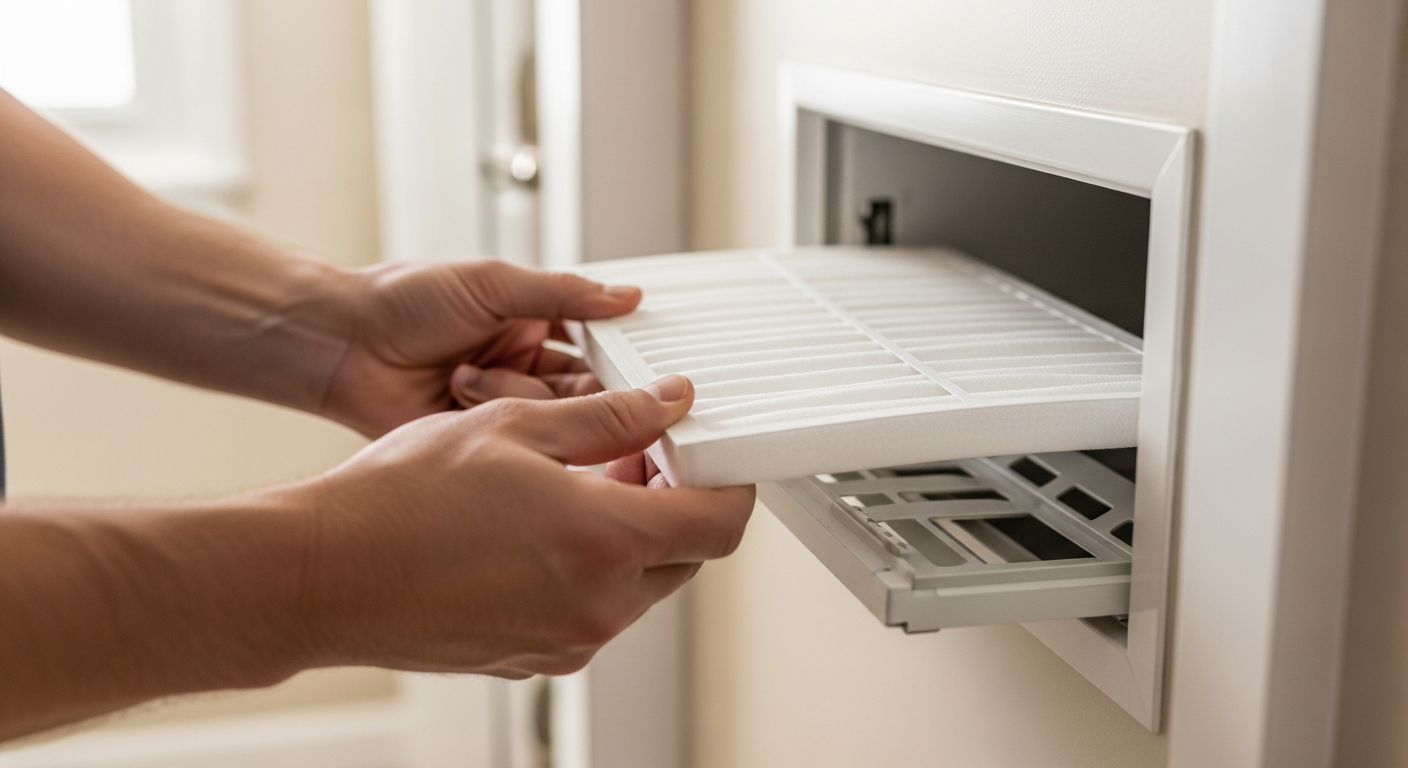
- Replace air filter monthly during heavy-use months.
- Confirm thermostat is set to “heat” and temperature correctly.
- Check that circuit breaker hasn’t tripped.
- Listen for loud bangs, screeches, or repeated clicking — note and report to pro.
- Inspect visible ductwork for detached sections in attic/basement.
Pro-Only Work (Do Not Attempt)
- Adjusting gas valve, manifold pressure, or burner alignment.
- Opening sealed combustion chamber or inspecting heat exchanger.
- Replacing blower motor, capacitor, contactor, or control board (high-voltage hazard).
- Adding refrigerant or recharging any sealed system.
- Bypassing any safety switch or limit control.
Always hire a licensed HVAC contractor through our verified search tool. For emergency no-heat situations, use our emergency contact finder.
Smart Tools to Pin Down the Right Furnace
Don’t guess on size or budget. These free calculators turn your home details into hard numbers:
- BTU Calculator: Input square footage, insulation, climate to avoid oversized (short-cycling) or undersized (never warm) mistakes.
- Repair-or-Replace Calculator: If your current furnace is 12+ years and repair estimates exceed $800, replacement might be cheaper long-term.
- Cost Estimator: Get a realistic installed-price range by ZIP code — vital for comparing bids.
- Quote Checker: Upload your quote and we flag missing line items or upsells.
- Rebate Finder: Many utilities offer $300–$1,200 for high-AFUE furnaces; don’t leave money on the table.
Decision Rules: When Each Brand Wins
Concrete Thresholds
Go Lennox if:
- You’ll own the home 15+ years — lifetime efficiency savings offset price premium.
- Noise tolerance is low (furnace near bedrooms or open-plan living).
- You want modulating heat (multi-stage comfort beyond two-stage).
- Local Lennox dealers have strong service reputation — check on our contractor comparison.
Go Goodman if:
- Budget is under $6,000 installed (typical 80–96% AFUE models).
- You’re a landlord or plan to move within 10 years — recovery of premium unlikely.
- You value fast, inexpensive repairs — parts available to any technician.
- You have a trusted independent HVAC contractor who recommends Goodman.
Quick Decision Tree
- Is quiet operation a must? Yes → Lennox if budget allows, else consider sound-dampening with Goodman and softer-start technology.
- Staying in home >12 years? Yes → consider Lennox’s top-tier efficiency; No → Goodman often wins on total cost of ownership.
- Do you have a reliable Lennox dealer within 20 miles? No → Goodman’s universal parts are safer for future repairs.
Contractor Checklist: Questions to Ask Before You Buy
Use this script with any furnace installer (print it):
- “Will you perform a Manual J load calculation and provide a copy?” (Required for sizing.)
- “What does your price include: permits, gas-line modifications, duct transitions, thermostat, startup/training?”
- “What is your labor warranty? Are you factory-authorized for this brand?”
- “How many modulating Lennox or similar Goodman installs have you done in the last year?”
- “Can I see a certificate of insurance and three local references?”
- “What is the expected part lead time if my furnace fails during peak winter?”
For more vetting, use our contractor comparison tool to see local ratings and validations.
Regional Nuances: Climate and Home Age Matter
- Cold climates (Zone 5–7): High-AFUE (96%+) pays off fast. Lennox’s 98–99% models shine when heating dominates utility bills. Check sizing for sub-zero design temps.
- Hot/humid (Zone 1–2): Furnace runs less, so ultra-high efficiency may not recoup cost. Goodman 80% or 92% with a well-matched AC might be smarter. Avoid oversizing — it causes short cycling and humidity problems. See short-cycling causes.
- Coastal/marine: Corrosion from salt air can shorten furnace life. Both brands offer coated cabinets; ask about stainless-steel heat exchangers.
- Older homes: May need ductwork upgrades or zoning. Factor that into your total replacement cost. Use our estimator and note “duct modification” if home is pre-1970.
- Example cities: In Chicago, find trusted heating pros; in Phoenix, even though AC is king, top-rated contractors handle dual-fuel systems.
Methodology: How We Form Our Recommendations
All price ranges are editorial estimates based on aggregated contractor quotes, regional cost-of-living multipliers, and manufacturer suggested list prices. Efficiency data comes from AHRI certification matchups and brand specification sheets. Our reliability insights are drawn from thousands of verified homeowner reviews and contractor surveys through HVACDatabase. We apply ACCA design standards (Manual J, S) for sizing. Always obtain at least three detailed quotes before committing—use our Quote Checker to compare them.
Frequently Asked Questions
1. Which furnace saves more money in the long run?
At identical AFUE, operating costs are the same. However, Lennox’s modulating technology can reduce thermostat overshoot and deliver more constant comfort, potentially shaving 2–3% off bills due to lower blower wattage and fewer cycles. Actual savings depend on your gas rates, home insulation, and how tight your ducts are. Use our repair-or-replace calculator to compare total lifecycle costs.
2. Are Goodman furnaces really that noisy?
Most Goodman furnaces operate between 60–70 dB, comparable to a normal conversation. Lennox’s claim of “50 dB” is for top Signature models with variable-speed blowers in sound-attenuated cabinets. If noise is critical, consider insulating the mechanical room or using acoustic duct liner—often cheaper than paying the Lennox premium.
3. Can I use my smart thermostat with either brand?
Both brands work with most 24V smart thermostats (Nest, ecobee, etc.) when properly wired. Lennox’s proprietary iComfort communicating thermostat offers additional diagnostics and dehumidification control but requires matching Lennox equipment. Do not attempt wiring without confirming compatibility with a contractor—incorrect connections can damage the control board.
4. How do warranties actually differ?
Both offer a 10-year parts warranty upon registration within 60 days of installation. Goodman includes a lifetime heat exchanger warranty on many gas furnaces; Lennox offers a limited lifetime heat exchanger on premium lines. Failure to register drops coverage to 5 years. Labor warranties are separate, typically 1–5 years from the installer—always get this in writing. Goodman’s broad parts availability makes warranty claims faster.
5. What’s more important: brand or installer?
Installer skill outweighs brand by a wide margin. A NATE-certified technician who performs Manual J, sizes ductwork correctly, and commissions the furnace will deliver better efficiency and reliability than a premium brand slapped in by the lowest bidder. Check installer credentials on our contractor comparison page.
Related articles
Connect this page to adjacent guides so readers keep moving deeper into the topic cluster.
Electrostatic vs Pleated HVAC Filters
Electrostatic filters are washable and budget-friendly over time, but pleated filters catch more allergens. See which fits your home's air quality and HVAC demands.

Supply vs Exhaust Ventilation Systems
Discover whether a supply or exhaust ventilation system suits your home’s climate, budget, and air quality goals. Our guide includes cost ranges, safety tips, and pro checklists.
Smart Thermostat vs Smart Vent System
Homeowners often ask: smart thermostat or smart vents? Our practical guide explains the core trade-offs, safety limits, and a clear decision path to avoid wasting money or harming your system.