Why Your Heating System Makes Banging Noises
Is your furnace banging? Identify causes, perform safe checks, and decide if it's time for repair. Expert cost estimates and contractor advice.
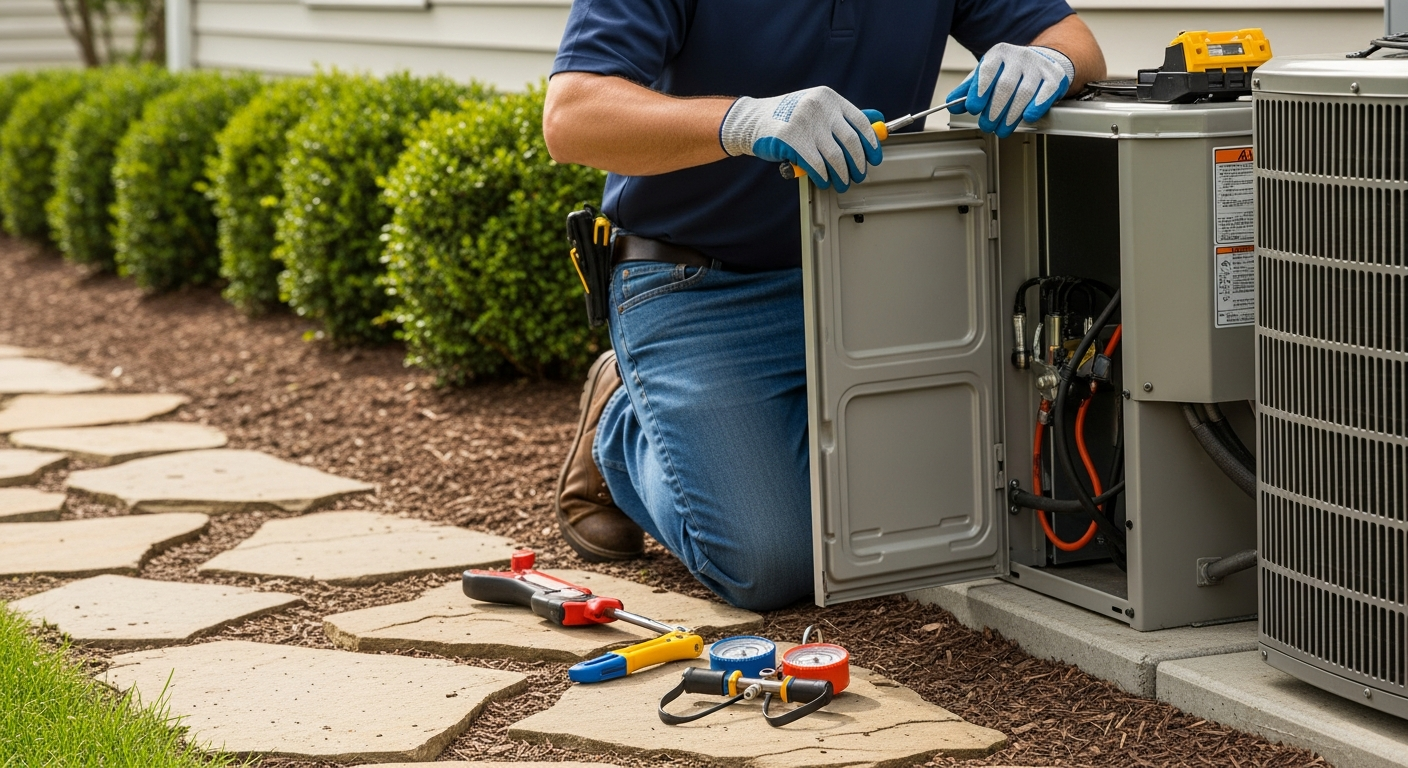
Get loud, new, or worsening bangs diagnosed promptly by a qualified technician; simple pops from ducts can often be managed with filter changes.
Ignoring a furnace bang risks safety hazards and more expensive repairs. A professional inspection provides peace of mind and prevents small issues from becoming major breakdowns.
What Matters Most
- Match the sound to the cause using the symptom table for an initial diagnosis
- Perform only safe homeowner checks; never open the combustion chamber or handle gas/electrical components
- Use our cost estimator and repair-or-replace calculator to budget and decide wisely
- Ask contractors the right questions to verify credentials and avoid overselling
- Act immediately on gunshot-like bangs or any carbon monoxide alarm
Strengths
- Early detection prevents catastrophic failures like cracked heat exchangers
- Professional combustion analysis ensures safe operation and efficiency
- Informed homeowners can negotiate better and avoid unnecessary repairs
- Free tools and guides reduce guesswork and provide personalized cost insights
Weaknesses
- Some noises are benign, so a diagnostic call may cost $80–$200 without finding a problem
- Dishonest contractors might recommend premature replacement for commission
- Older homes with inaccessible ductwork may require costly retrofits to fully eliminate pops
Decision Summary
| Scenario | Usually do | Why |
|---|---|---|
| Loud bang at startup | Schedule pro burner cleaning/inspection | Prevent heat exchanger damage and potential carbon monoxide risk |
| Mild duct pop | Replace filter, monitor, ensure vents open | Often noise from normal expansion; restricted airflow worsens it |
| New metallic grinding | Shut off system, call pro immediately | Indicates blower contact or motor failure, which can destroy the unit |
Why Your Heating System Makes Banging Noises: A Homeowner’s Decision Guide
That loud bang from your furnace isn’t just startling—it could signal a safety hazard or expensive repair. In this guide, you’ll learn to match the sound to the likely cause, discover which checks are safe for you (and which aren’t), and find clear thresholds for calling a technician. Use our tables, decision rules, and tools to decide your next steps.
Quick Answer
Most heating system bangs fall into one of these categories:
- Boom at startup: Delayed ignition from dirty burners (risk of heat exchanger damage). Immediate action recommended.
- Pop or bang when blower starts/stops: Ductwork expansion/contraction (usually harmless but may indicate airflow issues). Monitor and check filter.
- Rhythmic banging in pipes: Thermal expansion in hydronic systems (typically nuisance). Secure pipes or add expansion loops.
- Metallic grinding or banging: Blower wheel loose or motor mount failure. Urgent: turn off system to prevent further damage.
- Gurgling or thumping: Clogged condensate drain in high-efficiency furnace. Clean drain or call for service.
Symptoms & Causes at a Glance
| Symptom | Likely Cause | Homeowner Check | Editorial Repair Cost Estimate |
|---|---|---|---|
| Loud boom at ignition | Delayed ignition (dirty burners) | Observe through sight glass for flame rollout or soot. Do not open combustion chamber. | $150–$500 for burner cleaning; $800–$2,500+ if heat exchanger cracked |
| Oil-canning pop at start/stop | Ductwork expansion/contraction | Check air filter (replace if dirty), ensure vents open, listen for changes. | $0 (filter) to $200–$600 for duct bracing or modifications |
| Clicking/banging from baseboards | Thermal expansion of pipes | Inspect for pipes rubbing against framing. Insulate or add cushioning. | $50–$300 for pipe insulating or securing; up to $1,500 for major repiping |
| Loud metallic banging constant | Loose blower wheel, worn motor mounts | Turn off system, look for debris around vents. Do not open blower compartment if not accessible without tools. | $250–$700 for blower wheel/mount repair; $600–$1,200+ for motor replacement |
| Gurgling or water hammer | Clogged condensate line | Inspect drain line for visible clogs. Vinegar flush can be safe. Call pro if in doubt. | $100–$300 for drain cleaning; up to $500 for pump replacement |
Cost ranges are editorial estimates based on typical national pricing and may vary by region, system, and contractor. Get a detailed quote with our HVAC cost estimator.
Safety Boundaries: What You Can (and Cannot) Do
Safe for Homeowners
- Replace air filter regularly.
- Ensure supply and return vents are open and unblocked.
- Listen for changes in noise pattern and note when it occurs.
- Visually inspect for water leaks, soot, or corrosion around the furnace exterior.
- Check thermostat settings and battery.
- Clean condensate drain line with vinegar or water if accessible (follow manufacturer instructions).
- Turn off system at thermostat and circuit breaker if you suspect mechanical damage.
Pro-Only Tasks (Do Not Attempt DIY)
- Opening the combustion chamber or removing burner assembly.
- Inspecting, cleaning, or replacing gas valves, burners, or ignitors.
- Testing or repairing heat exchanger integrity.
- Handling refrigerant (in heat pump systems).
- Replacing blower motor, capacitor, control board, or any electrical components.
- Any repair involving high voltage or gas lines.
If you smell gas or suspect a cracked heat exchanger, evacuate immediately and call emergency services. For urgent heating repair, find a pro on our emergency HVAC page.
Decision Rules: Is It Time to Call a Pro?
Use these thresholds to decide your next step:
- Call a pro immediately if:
- The bang is extremely loud (like a gunshot) or accompanied by a burning smell.
- You see flames or soot around the furnace.
- The noise is new and getting worse each cycle.
- Your carbon monoxide detector goes off.
- Schedule a maintenance visit if:
- The bang occurs at startup but isn’t excessively loud (possible early delayed ignition).
- You’ve noticed a slow increase in noise over weeks.
- The system is over 10 years old and hasn’t been tuned in 2+ years.
- Monitor and DIY check if:
- The pop or creak has been present for years and never changed.
- You have a hydronic system with minor pipe noises when heating up.
- Gurgling is occasional and corresponds with high humidity (check drain).
Local & Seasonal Context
Heating bangs vary by climate and home type:
- Cold climates (e.g., Midwest, Northeast): Duct expansion more pronounced due to greater temperature swings. Delayed ignition risk higher from disuse in shoulder seasons.
- Historic homes: Pipes often run through tight spaces, increasing expansion rubbing. Hydronic upgrades may introduce new sounds.
- Coastal/humid regions: Condensate lines can clog faster with algae; frequent gurgling may indicate drain issues.
- Hot climates with heat pumps: Reversing valve bangs during defrost cycle can be loud but normal. Use our HVAC noise guide to compare.
Tools to Help You Decide
Before calling a contractor, use these free HVACDatabase tools:
- HVAC Noise Identifier: Match your sound to likely causes.
- Repair or Replace Calculator: Input your system age and repair cost to see if replacement is smarter.
- Heating Repair Cost Estimator: Get a localized cost range for your zip code.
- System Age Decoder: Decode your furnace’s serial number to see how old it is.
Contractor Checklist: Questions to Ask Before Approving Work
- Are you licensed, insured, and experienced with my furnace brand?
- Can you provide a written diagnosis and estimate before starting repairs?
- Will you perform a combustion analysis and carbon monoxide check?
- Is the repair covered by warranty, and how long is your labor guarantee?
- Do you have references from similar jobs in my area?
- What is the total cost, including diagnostic fee? (Expect $80–$200 for a standard visit.)
- If a heat exchanger replacement is needed, is it safer to replace the whole furnace? (See short-cycling guide for related issues.)
Compare quotes from at least two trusted contractors using our contractor comparison tool.
Methodology
This guide synthesizes data from HVAC technicians, building science principles, and industry best practices. Cost estimates are editorial ranges based on survey data from HVAC contractors, national part pricing, and typical labor rates as of 2024. They are not guaranteed and vary by region, emergency fees, and system specifics. Always obtain multiple written quotes. Safety guidelines align with IECC and manufacturer warnings.
Frequently Asked Questions
1. Can I ignore a banging sound if my heat still works?
Not advised. A quiet pop from ducts is often benign, but a loud boom at ignition may signal a cracked heat exchanger, which can leak carbon monoxide. Even if heat works, the safety risk is real. At minimum, have a professional inspection.
2. Is it normal for a new furnace to make banging noises?
Some expansion ticking is normal. However, a loud bang on startup in a new system could indicate improper installation, undersized ductwork, or a factory defect. Contact the installer while under warranty.
3. How can I tell if ductwork popping is dangerous?
If you only hear pops when the blower starts/stops and the system keeps temperature, it’s likely pressure-related. Check your filter and vents first. If the noise is violent or the duct vibrates excessively, have static pressure measured. A high static pressure can reduce equipment life.
4. My boiler pipes bang only in one room. Can I fix that myself?
You may be able to add foam insulation or secure loose straps where accessible. Avoid soldering or cutting pipes unless you’re qualified. For persistent hammering, a plumber can install an expansion tank or air chamber to absorb shock.
5. How much does it cost to fix a banging furnace?
Costs range widely: a simple burner cleaning may be $150–$500, while a cracked heat exchanger replacement can exceed $2,500, often making a new furnace more economical. Use our repair-or-replace calculator for a personalized analysis.
Related articles
Connect this page to adjacent guides so readers keep moving deeper into the topic cluster.

Tips for Choosing a Smart Thermostat for a Heat Pump
Learn which smart thermostat features prevent expensive auxiliary heat mistakes, how to verify compatibility, and when to call a pro.

Understanding C Wire Adapters for Smart Thermostats
Missing the C wire for your smart thermostat? C wire adapters solve power issues without pulling new wiring. Compare types, costs, and installation options.

Best Smart Thermostats for Multi Zone Homes
Discover which smart thermostats deliver accurate zoning, remote sensors, and energy savings for homes with multiple HVAC zones. Our guide helps you pick the right model and avoid costly compatibility mistakes.