How HVAC Systems Work Explained Simply
Learn what HVAC stands for and how the parts work together to control your home's temperature and air quality. Our practical guide helps you make better maintenance and upgrade choices without the jargon.
Understand Before You Spend
Knowing how heat transfer works lets you evaluate contractor claims and decide when to invest in repair versus replacement. Use the tables and calculators to turn confusion into a clear action plan.
What Matters Most
- HVAC moves heat; it doesn't create cold.
- Filter maintenance is the #1 DIY task; everything else with gas or refrigerant needs a pro.
- Use age and cost thresholds to decide repair vs replacement.
- Always ask for a load calculation before getting a quote.
- Climate dictates whether you need a furnace, heat pump, or dual-fuel system.
Strengths
- Demystifies operation without jargon
- Turns knowledge into immediate decision thresholds
- Links to free tools that personalize ROI
- Provides contractor verification checklist
- Addresses regional differences explicitly
Weaknesses
- Cannot replace on-site diagnostics
- Cost estimates are broad averages subject to local variance
- Homeowner checks are limited; early warning signs still require pro assessment
- Simplifies some technical nuances for clarity
When to Repair vs Replace: Quick Scenarios
| Scenario | Usually do | Why |
|---|---|---|
| AC is 8 years old, $600 capacitor fails | Repair | System has 7+ years of life left; capacitor is a minor fix |
| Furnace is 15 years old, heat exchanger cracks | Replace | Exchanger cost often exceeds 50% of new unit; age >12 |
| AC uses R-22, compressor fails in 100°F heat | Replace | R-22 phased out, refrigerant is expensive; new system improves efficiency |
| Heat pump 10 years old, needs refrigerant leak fix $800 | Repair if minor leak; replace if chronic | Weigh total repair history; if first leak, fix and recharge |
Quick Answer: What Your HVAC System Does Every Hour
Your HVAC system doesn't "produce" cold. It moves heat from inside to outside (cooling) or outside to inside (heating). A furnace creates heat by burning fuel, while a heat pump reverses the cooling process. The blower fan circulates air through ductwork, and the filter catches particles. The thermostat tells the system when to cycle based on your setpoint. In simple terms: it's a heat mover, not a miracle worker.
Core Components at a Glance
| Component | What It Does | Homeowner Can Check? |
|---|---|---|
| Thermostat | Reads temperature; signals on/off | Yes – batteries, setpoints |
| Air filter | Traps dust, pollen | Yes – replace regularly |
| Blower fan | Moves air through ducts | No – electrical access; listen for odd noises |
| Evaporator coil | Absorbs heat indoors | Look for ice buildup (signals trouble) |
| Condensing unit | Releases heat outdoors | Clear debris, keep fins straight |
| Refrigerant lines | Carry refrigerant between coils | No – sealed system requires pro |
| Compressor | Pumps and pressurizes refrigerant | No – high voltage, sealed; pro only |
How Cooling Really Works (It Removes Heat, Not Adds Cold)
When indoor air blows over the cold evaporator coil, heat transfers to the refrigerant inside. The now-warm refrigerant travels to the outdoor condensing unit, where the compressor increases its pressure and temperature so it can release that heat even on a 100°F day. The fan blows across the condenser coil, ejecting heat outdoors. The refrigerant cools, returns indoor, and the cycle repeats. The chilled air is distributed via the blower.
Heating: Furnace vs Heat Pump – Which Logic Applies to You?
Furnace: Burns natural gas or propane in a sealed chamber. The hot exhaust gases pass through a heat exchanger, warming metal surfaces. The blower pushes household air across the exchanger, sending heated air through ducts. No outdoor unit involved in heat generation.
Heat Pump: Runs the AC cycle in reverse. Even cold outdoor air contains some heat; a reversing valve redirects refrigerant flow so the outdoor coil becomes the evaporator, extracting heat from outside air and delivering it indoor. In very cold climates, a backup electric strip heater or gas furnace may kick in.
| Factor | Furnace | Heat Pump |
|---|---|---|
| Energy source | Gas, propane | Electricity |
| Best climate | Very cold winters (below 25°F) | Moderate or warm climates |
| Maintenance complexity | Gas safety checks needed | Same as AC, but reversing valve adds risk |
| Typical efficiency | AFUE 80-98% | HSPF 8-13 |
| Upfront cost (editorial est.) | $2,500-$6,000 installed | $4,000-$8,000 installed (air-source) |
| Monthly energy cost trend | Gas prices stable, volatile regionally | Electricity rates vary; efficient models can cut bills |
Safety Boundaries: What You Can (and Can't) Touch
Homeowners can safely:
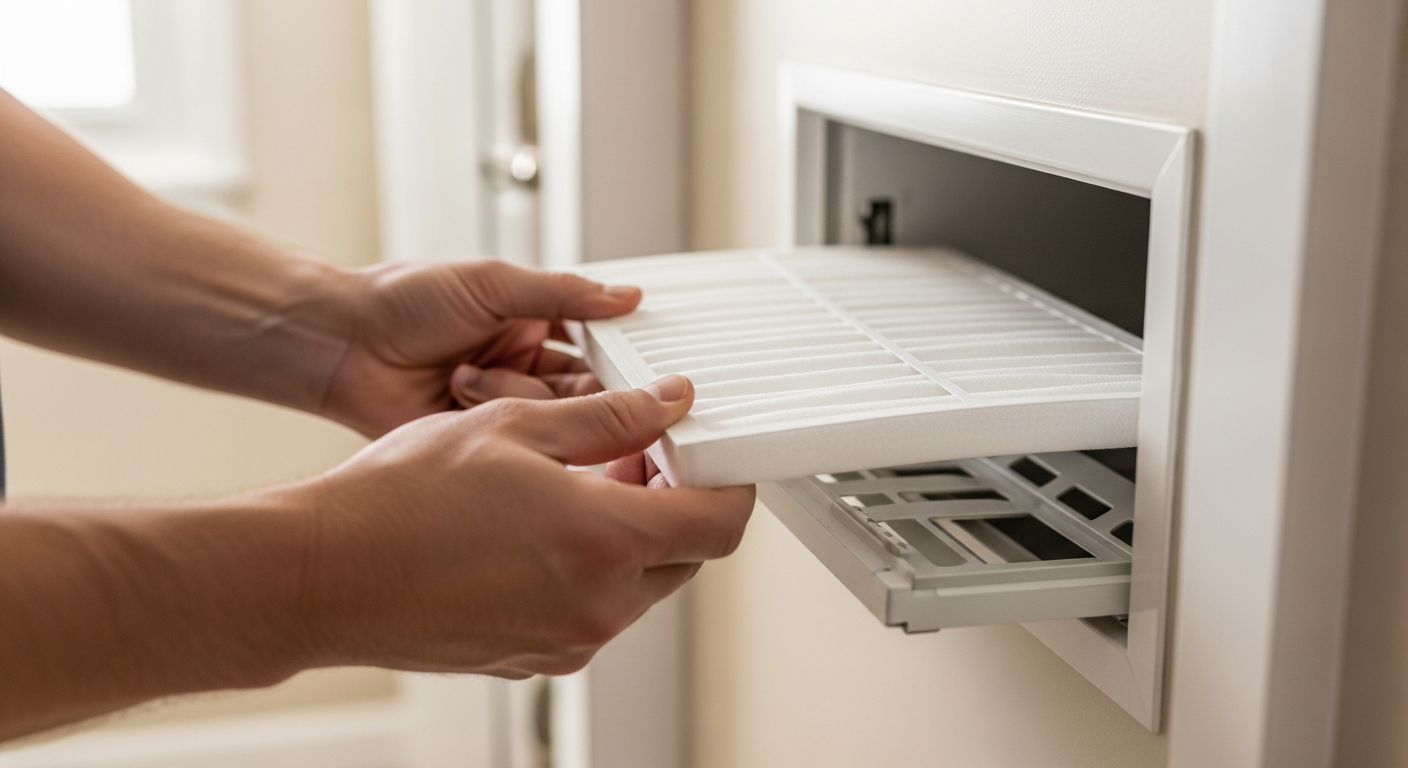
- Replace disposable air filters every 1–3 months
- Clear leaves, grass clippings, and snow from around the outdoor unit
- Check that indoor vents aren't blocked by furniture
- Verify thermostat settings and replace batteries
- Listen for unusual noises or smells, then call a pro
Never attempt:
- Opening refrigerant valves or adding refrigerant (illegal without EPA cert)
- Adjusting gas valves or ignition systems
- Replacing capacitors, contactors, or wiring
- Compressor repairs
- Bypassing safety switches
Anything involving high voltage, refrigerants, gas, or sealed systems requires a licensed HVAC technician.
Decision Rules: Repair or Replace?
Use these thresholds when you face a failed system:
- Age: System over 12 years old and major repair >$1,500 → consider replacement (especially if R-22 refrigerant).
- Frequency: Second repair in 2 years costing >40% of a replacement → replace.
- Efficiency: Current AC below 13 SEER or furnace below 80% AFUE → a new system cuts energy bills 20–40%.
- Cooling/heating load change: You've added square footage or improved insulation? A BTU calculator can confirm if your system is now undersized.
- Try our Repair vs Replace Calculator for a personalized recommendation.
HVAC Cost Cheat Sheet (Editorial Estimates)
| Service | Typical Range | Notes |
|---|---|---|
| Diagnostic call | $80–$200 | After-hours/emergency higher |
| Annual maintenance visit | $80–$250 per visit | Plans $150–$500/year |
| Common AC repair (capacitor, relay) | $150–$650 | Depends on part |
| Refrigerant leak fix + recharge | $500–$1,500 | Older R-22 can cost more |
| Compressor or coil replacement | $1,500–$4,000+ | Often signals end of life |
These are editorial estimates; final prices depend on location, system size, brand, and access. Get multiple quotes and use our Quote Checker to compare.
Contractor Checklist: 7 Questions Before You Approve Work
- Are you licensed, insured, and bonded? (Ask for license number and verify online.)
- Will you perform a Manual J load calculation? (No guesswork; a proper load calc ensures correct sizing.)
- What's included in the estimate? (Equipment model, labor, permits, disposal, startup, warranty registration.)
- Can I see your quote in writing with a breakdown? (Use our Quote Checker to spot hidden fees.)
- How long is the labor warranty, and what does it cover? (Minimum 1 year expected.)
- Do you offer seasonal maintenance plans, and what's the cost? (Compare with typical ranges above.)
- Can you provide local references from the past 12 months? (A good contractor will share recent jobs.)
Find pre-screened contractors near you: HVACDatabase contractor search.
Local Climate Considerations
Your region heavily influences HVAC choices:
- Hot, humid South (FL, TX): Focus on AC SEER rating and humidity control. Variable-speed blowers and dedicated dehumidifiers prevent mold. Heat pumps are ideal because mild winters rarely need gas backup.
- Very cold North (MN, ND): Furnace efficiency matters; 95%+ AFUE saves significant fuel. Heat pumps become inefficient below 10°F unless you invest in cold-climate models. Consider dual-fuel: heat pump for shoulder seasons, gas for deep freeze.
- Coastal areas: Salt air corrodes outdoor coils quickly; ask about coated coils (epoxy or microchannel) for longer life.
- Historic homes: Ductless mini-splits often solve the problem of no existing ductwork without ruining architecture. Read our guide on HVAC for a home addition for retrofit ideas.
Toolbox: Use These Free Calculators
- BTU Calculator – See if your new space needs a different size system.
- HVAC Cost Estimator – Get ballpark replacement costs by zip code.
- System Age Decoder – Decode the serial number to know exactly how old your unit is.
- Rebate Finder – Check utility and manufacturer rebates for energy-efficient upgrades.
Methodology: How Our Recommendations Are Built
Our editorial team combines industry-standard guidelines (ACCA Manuals J, S, D), aggregated contractor pricing data from HVACDatabase partner networks, Department of Energy efficiency standards, and manufacturer lifespan data (typical 15-20 years for AC/heat pumps, 20-30 for furnaces). Cost estimates are averages updated quarterly; they are not quotes. Always verify with local, licensed contractors.
Frequently Asked Questions
How often should I replace my HVAC air filter?
Every 1–3 months for disposable 1-inch filters; longer for thicker media cabinets. Check monthly and replace when dirty. A clogged filter stresses the blower and reduces efficiency.
What's the difference between a heat pump and an air conditioner?
Both cool the same way. A heat pump has a reversing valve that lets it run backward to provide heating. An AC only cools; you'd pair it with a separate furnace. In moderate climates, a heat pump can handle both.
Can I install a smart thermostat myself?
If your system is low-voltage (24V) and you follow the manufacturer's wiring guide, it's often a DIY project. Turn off power at the breaker first. If you have a complex system (multi-stage, heat pump with emergency heat, or proprietary wiring), hire a pro to avoid miswiring that could damage equipment. Safety: never touch line-voltage thermostats (common in electric baseboard heat).
My AC is running but not cooling. What should I check before calling a tech?
1. Confirm thermostat set to COOL and temp lower than room. 2. Check air filter: replace if dirty. 3. Inspect outdoor unit for obvious ice; if iced, turn off AC and run fan to thaw, then call. 4. Ensure breakers aren't tripped. 5. Look for blocked condensing coil (leaves). If none, you likely have a refrigerant or compressor issue – schedule a diagnostic.
How long should an HVAC system last?
Average: central AC 15–20 years, gas furnace 20–30 years, heat pump 15 years. Coastal or heavy-use regions cut lifespan. Poor maintenance (skipped filter changes) shortens it significantly. Economic replacement often occurs around 12–15 years when major repairs add up.
Related articles
Connect this page to adjacent guides so readers keep moving deeper into the topic cluster.
How to Implement a Whole Home Energy Management System
Integrate smart tech and HVAC controls to cut energy waste. This guide shows how to audit, upgrade, and automate your home's energy use, with real savings estimates.

How to Set Up Thermostat Geofencing
Set up thermostat geofencing to automatically adjust home temperature as you come and go. Save energy, extend equipment life, and never return to an uncomfortable house. Get our quick-start guide now.
How to Troubleshoot Smart Thermostat WiFi Issues
Your smart thermostat offline? Most WiFi drops can be fixed with power checks, router adjustments, and simple restarts. Follow our step-by-step guide to regain remote control and energy savings.