How to Dry Out HVAC Equipment After Flooding
Discover the essential safety checks, professional drying methods, and decision tools you need after HVAC flooding. Avoid DIY dangers and make informed repair vs. replace choices with our cost guidance and contractor checklist.
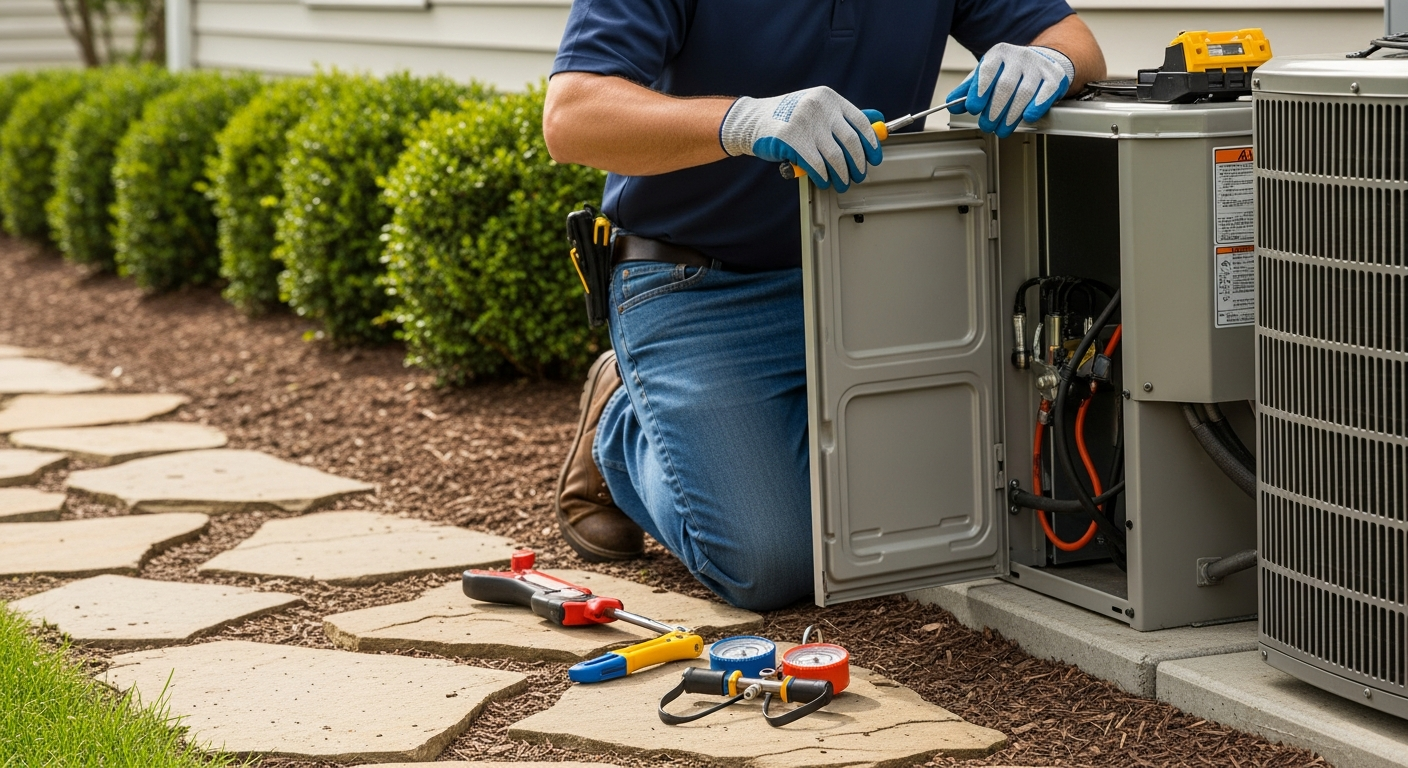
Best next step
Use the article decision rules, then compare a written quote when professional work is required.
What Matters Most
- Check safe basics first.
- Use cost ranges to sanity-check quotes.
- Call a qualified pro for refrigerant, gas, combustion, and electrical work.
Strengths
- Clearer next step.
- Better quote comparison.
Weaknesses
- Final pricing depends on local conditions.
- Some problems require in-person diagnosis.
Decision summary
| Scenario | Usually do | Why |
|---|---|---|
| Minor, safe homeowner issue | Check basics first | Filters, settings, and blocked vents can be resolved safely. |
| Mechanical, refrigerant, gas, or electrical issue | Call a qualified technician | These areas carry safety, code, and warranty risk. |
When floodwater invades your HVAC system, seconds count. Cutting power and avoiding DIY temptations can prevent a fatal shock or a house fire. This guide gives you a clear decision path: what you can safely tackle, when to call a pro, and how to navigate insurance and contractor quotes with confidence.
Quick Answer: First Steps to Save Your Flooded HVAC
- Turn off power immediately at the main breaker – never touch the system while it’s energized.
- Shut off gas if you smell rotten eggs; evacuate and call the utility.
- Document damage with photos/videos for insurance before moving anything.
- Do not attempt to run the system – even a momentary test can cause a short, fire, or mold spread.
- Call a licensed HVAC pro for any submerged or water-damaged equipment; most homeowner policies require professional assessment to process claims.
Water and electricity are lethal. Floodwater carries sewage and chemicals. Your safety comes first. Emergency HVAC help >
Safety Boundaries: What You Can (and Cannot) Do Yourself
After a flood, some actions are safe and necessary for homeowners. Others are strictly professional territory due to electrocution, gas leaks, and contamination risks.
| Task | Homeowner Safe? | Why / Notes |
|---|---|---|
| Turn off electricity at main breaker | Yes | Stand in a dry area, use a non-conductive tool if needed. If water is near the panel, do not touch – call an electrician. |
| Take photos and document water line | Yes | Use for insurance. Mark maximum water height. |
| Remove standing water from around outdoor unit | Yes | Once power is off, use a wet/dry vac or pump. Avoid touching electrical components. |
| Replace air filters | Yes | Discard any that are wet or damp. Read our air filter guide. |
| Clean visible mud/debris from outdoor coil exterior | Yes | Gently rinse with a low-pressure garden hose after power is off. Do not use pressure washer or touch fins. |
| Open equipment cabinet to dry | Only if safe | If power is confirmed off and you see only water (no mud on electronics), you may open panels to air-dry. Never touch wires, capacitors, or motors. If in doubt, wait for a pro. |
| Test or reset components, check refrigerant, open sealed compartments, replace valves/sensors, handle gas | No – Pro Only | High voltage, gas leaks, and toxic refrigerant release risk. Submerged gas valves and control boards are often unrepairable. |
| Sanitize or clean inside air handler, ducts, or blower | No – Pro Only | Black water requires antimicrobial treatments and industrial drying to prevent mold. |
Contractor Checklist
Before approving HVAC work, ask for a written scope rather than a one-line price. HVAC advice changes by market. In hot cities such as Phoenix or Las Vegas, cooling failures become urgent faster and summer schedules fill quickly. In humid markets such as Houston, Tampa, or Miami, drainage, mold risk, and humidity control matter as much as temperature. In cold markets such as Chicago or Minneapolis, no-heat calls can become safety issues during severe weather. Coastal homes may see faster outdoor-unit corrosion, while older homes often need duct, electrical, venting, or access corrections before equipment performs as advertised. HVACDatabase estimates combine common contractor price patterns, service-category pricing ranges, equipment complexity, urgency, regional labor variation, and known HVAC safety boundaries. Actual prices vary by city, brand, system size, access, warranty status, permit requirements, and whether the visit discovers ductwork, electrical, refrigerant, gas, or drainage issues. Use these numbers to sanity-check quotes, not as a guaranteed price. You can handle basic checks such as thermostat settings, filter replacement, blocked vents, visible debris, and obvious water or ice. Anything involving refrigerant, gas, combustion, high-voltage electrical components, compressors, or sealed system work should be left to a qualified technician. Call a contractor if the problem repeats, the system trips a breaker more than once, cooling or heating is weak after basic checks, you see ice or water where it does not belong, or the repair requires opening equipment panels. Compare the written scope, not just the price. A fair quote should explain the diagnosis, parts, labor, warranty, exclusions, and whether follow-up work may be needed. Repair usually makes sense for newer equipment with minor failures. Replacement becomes worth comparing when the system is older, the repair is major, comfort is poor, or the repair approaches 40-50% of replacement cost. Do the safe homeowner checks first, document symptoms, then use HVACDatabase tools or contractor comparison pages if the issue points to mechanical, electrical, refrigerant, gas, or combustion work. The strongest quote is not always the cheapest. Look for a contractor who explains the cause, confirms whether the repair is durable, documents warranty coverage, and gives you a clear path if the first repair does not fully solve the issue.
Local Context
Methodology
FAQ
Can I handle How to Dry Out HVAC Equipment After Flooding myself?
When should I call an HVAC contractor?
How do I know if a quote is fair?
Should I repair or replace the system?
What is the safest next step?
Practical Next Steps
Related articles
Connect this page to adjacent guides so readers keep moving deeper into the topic cluster.
How to Implement a Whole Home Energy Management System
Integrate smart tech and HVAC controls to cut energy waste. This guide shows how to audit, upgrade, and automate your home's energy use, with real savings estimates.

How to Set Up Thermostat Geofencing
Set up thermostat geofencing to automatically adjust home temperature as you come and go. Save energy, extend equipment life, and never return to an uncomfortable house. Get our quick-start guide now.
How to Troubleshoot Smart Thermostat WiFi Issues
Your smart thermostat offline? Most WiFi drops can be fixed with power checks, router adjustments, and simple restarts. Follow our step-by-step guide to regain remote control and energy savings.