How to Prevent Frozen Pipes During Heating Failure
Protect your plumbing when the heat goes out with simple emergency steps, a decision tree for when to drain pipes, and guidance on hiring a pro to prevent costly water damage.
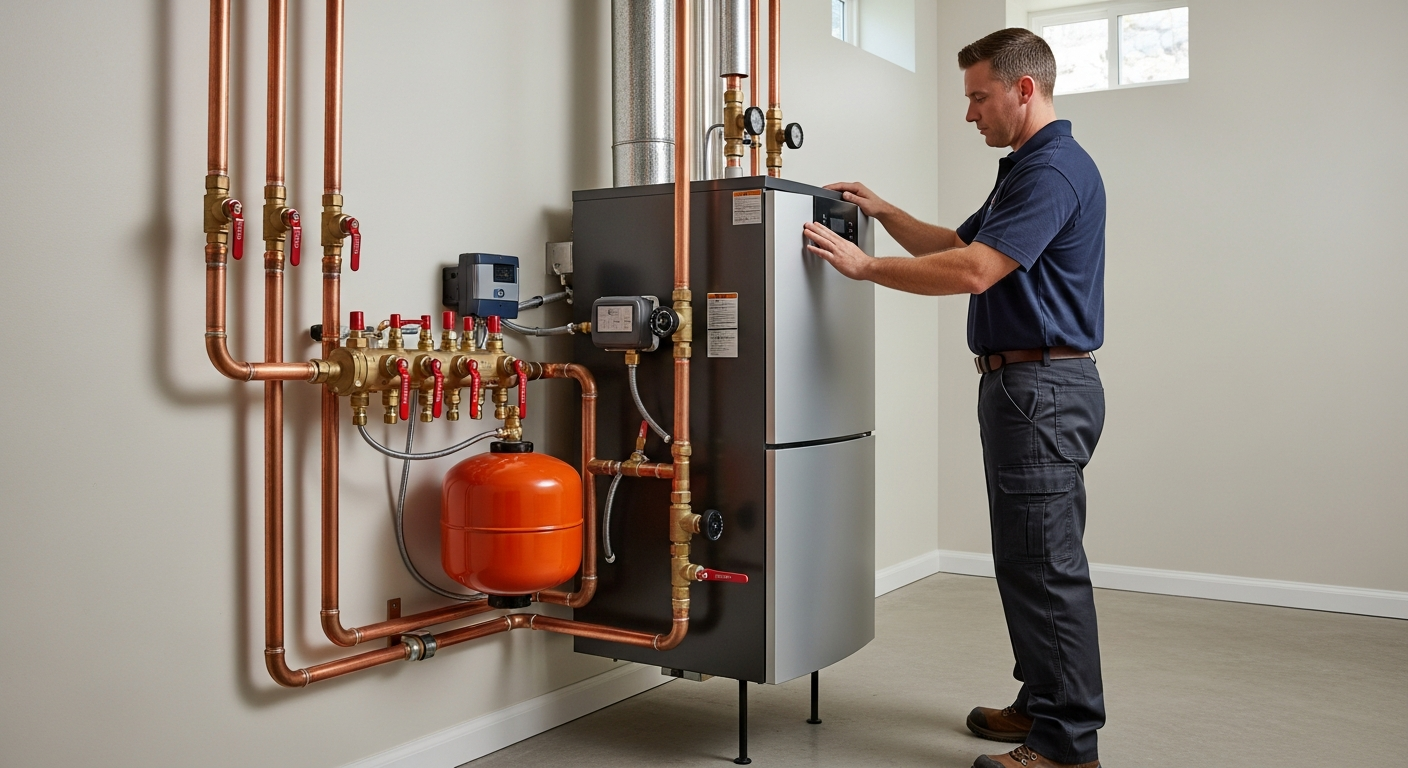
Act Fast to Prevent Water Damage
When the heat fails in freezing weather, the greatest property risk is frozen and burst pipes. Immediate actions like dripping faucets, opening cabinets, and using safe supplemental heat can prevent most pipe freezes. If the outage will last more than 24 hours, drain the entire plumbing system. Always avoid open flame
What Matters Most
- Drip faucets at a slow stream to keep water moving and release pressure.
- Open cabinet doors to let warm air reach pipes under sinks.
- Use portable electric heaters with caution—keep them away from flammables.
- If heat will be out for more than a day in subfreezing temps, drain the plumbing system.
- Never attempt DIY furnace repairs beyond checking the breaker, filter, and thermostat.
Strengths
- Immediate steps cost nothing to a few dollars and significantly lower freeze risk.
- Decision rules help homeowners choose the right strategy based on temperature and outage duration.
- Draining the system provides guaranteed protection against burst pipes.
- Contractor checklist empowers homeowners to hire qualified pros without overpaying.
Weaknesses
- Dripping faucets wastes water and slightly increases utility bills.
- Draining the system leaves the home without running water for drinking, flushing, or hygiene.
- Space heaters introduce fire danger, especially if used carelessly or left unattended.
- Pipe-freeze prevention does not fix the underlying heating failure—you still need an HVAC repair.
- Improper thawing can cause a pipe to burst, leading to water damage.
When to Do What: A Decision Summary
| Scenario | Usually do | Why |
|---|---|---|
| Heat out < 4 hours, outdoor temp > 20°F | Drip faucets, open cabinets | Risk low; water unlikely to freeze quickly. |
| Heat out 4–12 hours, outdoor temp < 20°F | Drip faucets, open cabinets, operate space heater safely | Need extra heat to keep pipes above freezing; monitor closely. |
| Heat out > 24 hours, subzero temps | Shut off main water, drain pipes, turn off water heater | Only sure way to prevent burst pipes; no water equals no freeze. |
| Water stops flowing or frost visible on pipe | Shut off main water, call professional for safe thaw | Pipe already frozen; improper thawing can cause immediate burst. |
Quick Answer
- Drip faucets at a 1/4-inch stream (both hot and cold) on all fixtures, especially those on exterior walls.
- Open cabinet doors under sinks to let warm air reach pipes.
- Use a portable electric heater in the same room as vulnerable pipes, but keep it 3 feet from anything flammable and never leave unattended.
- If the heating outage will last more than 24 hours and outdoor temperatures are persistently below 20°F, shut off your main water valve and drain all pipes.
- Call a licensed HVAC professional if your thermostat shows a lockout code that won’t clear after cycling the power, or if you smell gas or hear unusual noises from the furnace.
Safety Boundaries: What You Can Check vs. When to Call a Pro
Homeowner-Safe Checks:
- Confirm thermostat is set to "heat" and temperature is above room temp.
- Check that the furnace circuit breaker hasn’t tripped.
- Replace a dirty air filter if the furnace is switched off (filters are $10–$80).
- Clear snow or ice from around an outdoor heat pump unit—never open the panel.
- Plug in and operate portable electric heaters according to manufacturer instructions.
Call a Licensed HVAC Technician Immediately If:
- You smell gas or notice a hissing sound near the furnace.
- The furnace makes banging, squealing, or sparking noises.
- The system locks out with an error code that doesn’t reset after turning the power off for 30 seconds.
- The furnace cabinet is hot, or you suspect a cracked heat exchanger (signs: soot, yellow flames, musky odor).
- You need to add refrigerant, replace a capacitor, contactor, control board, or perform any work involving high-voltage electricity or combustion parts.
Prevention Methods Compared
| Method | Approx. Cost | Effectiveness | Best For | Risks |
|---|---|---|---|---|
| Drip faucets (hot & cold) | $1–$5 added to water bill | Reduces freeze risk by keeping water moving; relieves pressure if ice forms. | Short outages (4–12 hours), outdoor temps > 15°F | Wastes water; won’t protect if ambient temp drops below freezing for long. |
| Open cabinet doors | Free | Allows room heat to circulate around plumbing; often combined with dripping | All outages; works immediately | None, but only effective if indoor temp stays above freezing. |
| Space heater near pipes | $2–$5/day in electricity | Can keep small spaces above freezing if monitored | When you can safely attend the heater; outages up to 24 hours | Fire hazard if left unattended or placed too close to combustibles. |
| Drain whole plumbing system | Free, but you lose water supply | 100% effective—no water to freeze | Outages > 24 hours, severe cold (below 0°F), or unoccupied house | Inconvenient; must shut off water heater; risk of air locks when restoring. |
| Professionally installed heat tape/cable | $5–$15 per foot installed | Active protection; prevents freezing when powered | Homes with chronic freezing problems; pre-winter installation | Electrical cost; can fail if power goes out; needs professional installation. |
Decision Rules: When to Escalate
Follow this logical flow based on your situation:
- Outdoor temp > 32°F: Pipes unlikely to freeze. Monitor but no immediate action needed. Find a contractor to schedule a non-emergency repair.
- 20°F to 32°F: Start dripping all faucets, open cabinets. If heat won’t be back within 4 hours, add a space heater near vulnerable pipes (exterior walls, unheated garage).
- Below 20°F: Immediate drip essential. Open cabinets, run space heaters if safe. If temperature inside near pipes drops below 50°F or outage exceeds 12 hours, drain the system. Call an emergency HVAC pro if the furnace is dead.
- Water stops flowing or frost visible on pipe: Pipe likely frozen. Shut off main water valve and call a plumber or HVAC tech who can safely thaw it. Do not use open flames.
Use Our Tools to Plan Your Next Move
Our calculators help you estimate costs and compare options:
- Emergency HVAC Cost Estimator: See typical after-hours repair fees in your area.
- HVAC Repair Cost Estimator: Get a price range for common furnace fixes.
- Repair or Replace Calculator: If your furnace keeps breaking down, assess whether a new system saves money long-term.
- Find a Vetted HVAC Professional Near You: Search by zip code and review credentials.
Contractor Checklist: Questions to Ask Before Approving an Emergency Repair
When calling for urgent heating restoration, ask these questions to avoid overpaying and to ensure safety:
- Are you licensed and insured for HVAC work in this state? (Ask for license number and verify online.)
- What is your emergency service call fee? (Editorial range: $80–$200 standard, after-hours $150–$300.)
- Can you provide a written estimate before starting any work? (A reputable company will always offer this.)
- How soon can you arrive, and what is your overtime hourly rate?
- Do you have experience with my furnace brand and model?
- After the repair, will you test for carbon monoxide and confirm proper airflow?
- Can you also inspect my pipes for potential freezing while you’re here?
Local Considerations
Older homes (pre-1980): Pipes in crawl spaces, attics, or exterior walls are often poorly insulated. Know where your shut-off valve is and consider adding pipe insulation. Southern or coastal homes: Many lack adequate cold-weather design; even short cold snaps can freeze exposed plumbing. A bathroom or kitchen on an outside wall is especially vulnerable. Homes with basements: Basement pipes are less likely to freeze, but sill boxes may be drafty; check for cold air leaks.
What to Do If a Pipe Is Already Frozen
If you turn on a faucet and only a trickle flows, or you see frost on an exposed pipe, the pipe is likely frozen but may not have burst yet. Immediate steps:
- Keep the faucet open. As you treat the pipe, water will begin to flow and help melt ice.
- Do not use an open flame, blowtorch, or charcoal heater. Instead, use a hair dryer (on low), heating pad, or towels soaked in hot water—applied to the section nearest the faucet first.
- If you cannot locate the freeze, if a pipe has already burst (spraying water, wet floor), or if the frozen area is inaccessible, shut off the main water valve and call a licensed plumber or HVAC pro who offers freeze-thaw services.
Methodology
The advice in this guide is drawn from the International Plumbing Code, manufacturer safety guidelines, and HVAC industry best practices. All cost estimates are editorial approximations based on national service price surveys and contractor interviews, updated quarterly. They are not guaranteed quotes. Safety boundaries are absolute: we exclude DIY instructions for refrigerant handling, gas work, combustion components, high-voltage electrical repairs, capacitor/contactor replacement, and control-board bypassing. Our goal is to give you actionable steps you can take safely while urging you to hire qualified professionals for complex or hazardous repairs. Links to tools and local contractor searches are provided to help you make informed, timely decisions.
Frequently Asked Questions
How fast can a pipe freeze in an unheated house?
At an outdoor temperature of 20°F, poorly insulated pipes can freeze in as little as 4–6 hours; at 0°F, they may freeze within 2–3 hours. Wind chill accelerates the process if pipes are in drafty areas. Act immediately when heat fails.
Will dripping faucets really prevent freezing?
Yes. Moving water resists freezing, and the steady trickle relieves pressure even if partial ice formation occurs. A stream as thin as a pencil lead (about 1/4 inch) is sufficient. Drip both hot and cold lines.
Is it safe to use a space heater to warm pipes under a sink?
Yes, if the heater is placed on the floor, at least three feet from anything flammable, and has tip-over and overheat protection. Never leave it running unattended or while sleeping. A ceramic or oil-filled radiator is a safer choice than a coil heater.
Should I shut off the water if I'm leaving the house during a heating failure?
If the house will be unoccupied and heating is off in subfreezing weather, turn off the main water valve and drain pipes. This prevents catastrophic flooding if a pipe bursts. Also shut off the water heater to avoid damage if it empties.
Can I use antifreeze in my pipes?
Only non-toxic propylene glycol-based antifreeze approved for potable water systems can be used, and only in specific applications like trapping sewer gas. Never pour automotive antifreeze (ethylene glycol) into drinking water pipes; it’s poisonous. This is a short-term solution and best handled by a professional.
Related articles
Connect this page to adjacent guides so readers keep moving deeper into the topic cluster.
How to Implement a Whole Home Energy Management System
Integrate smart tech and HVAC controls to cut energy waste. This guide shows how to audit, upgrade, and automate your home's energy use, with real savings estimates.

How to Set Up Thermostat Geofencing
Set up thermostat geofencing to automatically adjust home temperature as you come and go. Save energy, extend equipment life, and never return to an uncomfortable house. Get our quick-start guide now.
How to Troubleshoot Smart Thermostat WiFi Issues
Your smart thermostat offline? Most WiFi drops can be fixed with power checks, router adjustments, and simple restarts. Follow our step-by-step guide to regain remote control and energy savings.