Trane vs Rheem Heat Pumps
Trane offers premium durability and efficiency; Rheem delivers value and ease of service. Our guide compares cost, performance, and installation trade-offs so you can choose confidently.
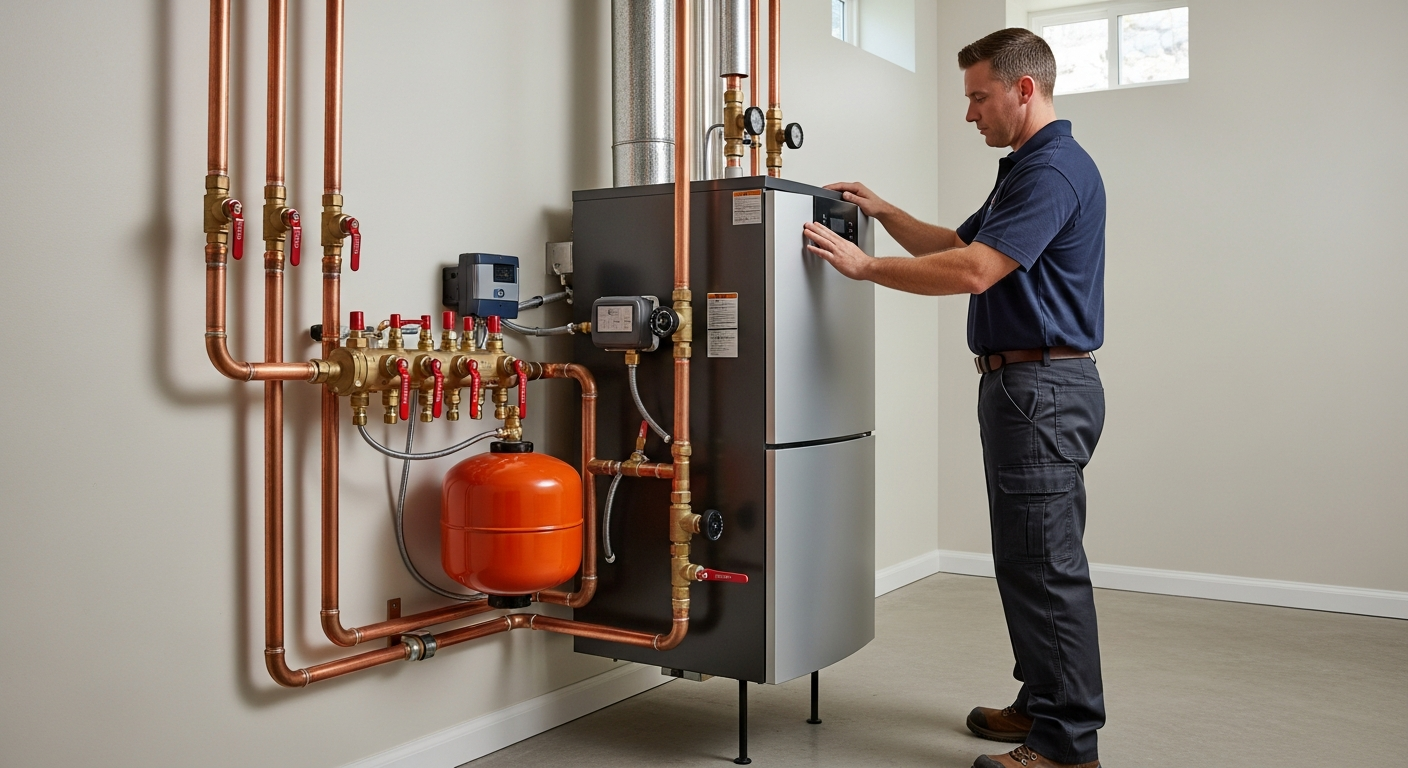
For Long-Term Owners, Trane Usually Wins
If you'll be in your home for a decade or more, Trane's superior efficiency and durability generally offset its higher initial cost. Rheem remains the smarter choice for short-term or budget-driven replacements.
What Matters Most
- Trane’s higher efficiency and durability often justify its price in 10+ year ownership scenarios.
- Rheem delivers comparable comfort at a lower installed cost, with cheaper and faster repair potential.
- Installation quality matters more than brand name — always demand a Manual J load calculation.
- Both brands are eligible for federal tax credits and local rebates when meeting efficiency thresholds.
- In humid or coastal climates, Trane’s corrosion-resistant coils and dehumidification give it a practical edge.
Strengths
- Proven Climatuff compressor with industry-leading reliability
- Superior dehumidification and precise temperature control
- High resale value perception; can be a selling point for future buyers
Weaknesses
- Higher upfront investment; payback depends on energy prices and usage
- Proprietary parts may lead to longer repair waits in remote areas
- Premium pricing means fewer discretionary funds for other home improvements
Decision Summary
| Scenario | Usually do | Why |
|---|---|---|
| You'll move within 5 years | Rheem | Lower upfront cost; modest energy savings won't recoup Trane premium. |
| You'll stay 10+ years in a hot/humid climate | Trane | Superior dehumidification and efficiency savings add up over time. |
| Budget is tight but you need a reliable heat pump now | Rheem | 10–20% cheaper installed; still backed by 10-year warranty. |
| Noise is a top concern (unit near bedroom) | Trane | Trane's sound-dampening cabinets can be 3–6 dB quieter than comparable Rheem units. |
| You live in a rural area with few HVAC suppliers | Rheem | Generic parts are more available, reducing downtime and repair cost. |
| You plan to maximize IRA tax credits and rebates | Either | Both offer qualifying high-efficiency models; check local incentives. |
Quick Answer: Trane or Rheem for Your Home?
Choose Trane if: You want best-in-class durability, fine temperature and humidity control, and can invest $1,500–$3,500 more upfront for lower long-term operating costs. Ideal for homeowners planning to stay 10+ years.
Choose Rheem if: Upfront budget is your top priority, you need a compact outdoor unit, or you live in an area with many HVAC service providers who stock common parts. Rheem’s value-centric design delivers solid performance at 10–20% lower installed cost.
Trane vs Rheem Heat Pumps: At a Glance
| Feature | Trane | Rheem |
|---|---|---|
| Installed Cost Range* | $8,500 – $18,000+ | $7,000 – $16,000 |
| SEER2 Range | Up to 22+ | Up to 20+ |
| Compressor Type | Climatuff® scroll (proprietary) | Scroll or rotary (standard) |
| Registered Warranty | 10-year limited parts & compressor | 10-year limited parts & compressor |
| Best For | Long-term ownership, extreme climates, quiet operation | Budget-conscious buyers, tight spaces, simple repairs |
*Editorial estimates for complete system replacement including installation. Actual prices vary by region, home size, and contractor.
Efficiency and Comfort: What You'll Feel Day to Day
Trane’s variable-speed TruComfort™ systems adjust output in tiny increments, maintaining temperature within ±0.5°F and reducing humidity spikes. Rheem’s Prestige® series also offers variable-speed, but its humidity control tends to be slightly less precise in muggy summer months. Both brands sell high-efficiency models exceeding 20 SEER2, but Trane leads in ultra-high-end efficiency tiers.
For homes in humid climates, Trane’s enhanced dehumidification can be a deciding factor. In drier regions, the difference is less pronounced.
Cost and Long-Term Value
Rheem’s lower upfront price – typically 10–20% less than a comparable Trane system – appeals to immediate budgets. But over a 15–20 year lifespan, Trane’s higher efficiency may recoup the extra cost through energy savings. Use our Heat Pump Savings Calculator to model your own numbers.
Typical installed prices:
- Entry-level single-stage: $7,000 – $10,000 (Rheem) / $8,500 – $12,000 (Trane)
- Mid-tier two-stage: $9,000 – $14,000 (Rheem) / $11,000 – $16,000 (Trane)
- Premium variable-speed: $13,000 – $18,000+ (Rheem) / $14,500 – $20,000+ (Trane)
Get multiple quotes and verify with our Quote Checker before signing.
Reliability and Warranty: What Breaks and Who Pays?
Both offer 10-year limited parts warranties when registered. Trane’s Climatuff compressor has a reputation for lasting 15–20 years. Rheem uses industry-standard compressors that are widely available, making out-of-warranty repairs potentially cheaper and faster. However, Trane’s proprietary parts can mean longer waits and higher costs if you’re outside a major metro area.
Annual maintenance costs are similar: budget $150–$300 per visit. A Repair or Replace Calculator can help decide when a failing unit is worth fixing.
Safety Boundaries: What Homeowners Can (and Cannot) Do
Safe DIY Checks
- Visually inspect outdoor unit for debris, ice, or plant overgrowth. Clear a 2-foot perimeter.
- Replace or clean air filters monthly during heavy-use seasons.
- Check thermostat settings and batteries.
- Listen for unusual grinding, squealing, or rattling; note when they occur.
Professional-Only Work
- Refrigerant handling (leak checks, charging, recovery) — requires EPA certification.
- Compressor, capacitor, contactor, or control-board replacement — risk of electric shock and system damage.
- Any work involving gas lines, combustion, or high-voltage connections.
- Warranty-required repairs; DIY can void coverage.
If you notice ice on coils, short cycling, or sudden efficiency drops, shut the system off and call a licensed technician. Find local pros with our Contractor Search.
Tools & Calculators to Support Your Decision
- HVAC Cost Estimator: Get a personalized installation estimate based on your home specs.
- Quote Checker: Submit contractor quotes for expert review — avoid overpaying.
- Heat Pump Savings Calculator: Compare operating costs against your current system.
- Repair or Replace Calculator: Crunch the numbers on fixing vs. replacing an aging unit.
- BTU Calculator: Right-size your new heat pump to avoid inefficiency.
Decision Rules: When to Choose Trane vs Rheem
Use these thresholds to guide your choice:
- Ownership horizon: If you plan to move within 5 years, Rheem’s lower upfront cost often makes more financial sense. If staying 10+ years, Trane’s efficiency and durability can pay back the difference.
- Climate severity: In areas with long, hot/humid summers or frigid winters (below 20°F regularly), Trane’s variable-speed cold-climate performance and humidity control give it an edge.
- Part availability: If you're in a rural area with fewer HVAC supply houses, Rheem’s generic parts may mean faster, cheaper repairs. In major metros, this advantage narrows.
- Noise sensitivity: Trane’s sound-dampening cabinets are quieter (as low as 43 dB), important if the unit is near a bedroom window.
Contractor Checklist: 7 Questions to Ask Before You Hire
- “Are you factory-trained for this brand?” Trane and Rheem both offer dealer certification. Certified installers often extend warranty benefits.
- “Will you perform a Manual J load calculation?” Offers must be based on a room-by-room heat loss/gain analysis, not just square footage.
- “What’s included in the price?” Verify that the quote covers new line sets, disconnect box, pad/stand, electrical whip, and permit fees.
- “How do you handle warranty registration and service?” The contractor should handle registration; ask about labor warranties beyond parts.
- “Can I see proof of license, insurance, and local permits?” Never skip this step — it protects your property and ensures code compliance.
- “What rebates or tax credits apply?” Many high-efficiency heat pumps qualify for federal tax credits and local utility incentives. Use our Rebate Finder to check.
- “How do you verify airflow and refrigerant charge?” A proper startup should include a written report showing superheat/subcooling, static pressure, and CFM settings.
Local Climate and Home-Specific Considerations
- Hot-humid (Southeast US): Trane’s superior dehumidification can keep indoor humidity below 50% even on mild days, reducing mold risk. Rheem still works but may need a supplemental dehumidifier.
- Cold climates (Northeast, Midwest): Both brands offer cold-climate heat pumps effective to -10°F or lower, but Trane’s integrated controls and defrost logic are often more refined, preserving backup heat usage.
- Coastal (salt air): Trane’s Spine Fin coils resist corrosion better than standard fins. Rheem offers coastal models but may not match Trane’s corrosion warranty.
- Older homes with existing ductwork: Have ducts inspected for leaks. A qualified contractor can measure static pressure and recommend duct improvements before installation.
Methodology: How We Generate Estimates and Recommendations
Our editorial team synthesizes public manufacturer data, third-party efficiency ratings (AHRI), aggregated installer pricing from nationwide cost databases, and analysis of thousands of homeowner-reported quotes. We factor regional labor rates, common system sizes (2–5 tons), and typical winter/summer design temperatures. All cost ranges are editorial estimates, not guaranteed quotes, and reflect average installations including basic electrical and duct modifications. We update this guide quarterly to reflect equipment changes and market conditions.
Frequently Asked Questions
- Which brand is more reliable, Trane or Rheem?
Both score well in reliability studies, but Trane’s proprietary Climatuff compressor has a longer average service life (15–20 yrs) compared to industry-standard compressors in Rheem (12–18 yrs). However, Rheem parts are more universally available, which can shorten repair timelines. - Is Trane worth the extra money?
If you plan to stay in your home for at least 7–10 years and value quiet operation and precise temperature control, yes. The efficiency difference often recoups the premium over time in high-usage climates. - Do Trane and Rheem have the same warranty?
Both offer a 10-year limited parts and compressor warranty when registered within 60 days of installation. Trane additionally provides a 12-year compressor limited warranty on select top-tier models. Unregistered warranties default to 5-year coverage. - Can I replace just the outdoor unit and keep my old indoor coil?
Not recommended. Mismatched systems lose efficiency, may shorten compressor life, and can void warranties. Always replace the indoor coil (or entire air handler) to ensure a matched AHRI-rated system. - How do I find a qualified installer?
Use our Contractor Search to find licensed, insured pros in your area. We recommend comparing at least three detailed bids using our Contractor Comparison tool.
Related articles
Connect this page to adjacent guides so readers keep moving deeper into the topic cluster.
Electrostatic vs Pleated HVAC Filters
Electrostatic filters are washable and budget-friendly over time, but pleated filters catch more allergens. See which fits your home's air quality and HVAC demands.

Supply vs Exhaust Ventilation Systems
Discover whether a supply or exhaust ventilation system suits your home’s climate, budget, and air quality goals. Our guide includes cost ranges, safety tips, and pro checklists.
Smart Thermostat vs Smart Vent System
Homeowners often ask: smart thermostat or smart vents? Our practical guide explains the core trade-offs, safety limits, and a clear decision path to avoid wasting money or harming your system.