Best Mini Split Brands for Homeowners
Our brand comparison helps homeowners select a reliable, efficient mini split for their climate and budget. See costs, key features, and red flags to avoid.
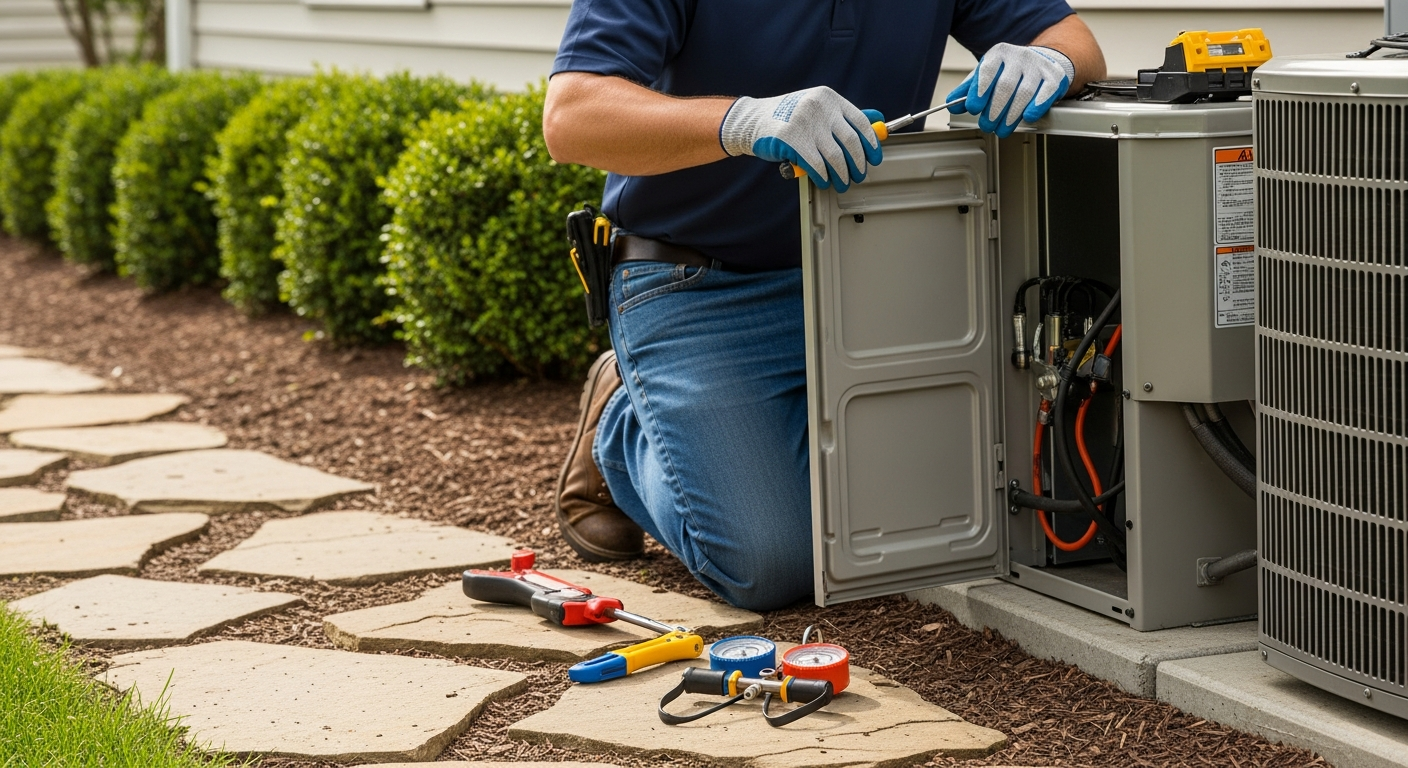
Introduction: Why Your Mini Split Brand Choice Matters
Ductless mini splits offer zoned comfort without ducts, but the brand you choose impacts reliability, efficiency, and long-term costs. With installed prices typically between $3,500 and $8,000+ per zone, a smart choice can save thousands in energy and repair bills. This guide cuts through marketing noise to give you a clear brand comparison, estimated costs, and a step-by-step decision process. We’ll also show you which tools to use before getting quotes, and exactly what to check when a contractor arrives. Whether you’re battling icy winters or muggy summers, our advice helps you pick a system that fits your home and budget.
Quick Answer: Top Mini Split Brands at a Glance
- Mitsubishi Electric: Best for extreme cold and top-tier reliability
- Daikin: Best comprehensive warranty and eco-friendly focus
- Fujitsu: Great balance of price and high efficiency
- LG: Smart features and sleek indoor unit designs
Scroll down for a detailed comparison table, climate-specific tips, and our contractor checklist.
Brand Comparison Table
| Brand | Key Strength | Best For | Estimated Installed Cost per Zone* |
|---|---|---|---|
| Mitsubishi Electric | Hyper-Heat INVERTER (H2i) technology, industry-leading cold-weather performance | Homes in cold climates (regularly below 0°F), whole-home multi-zone systems | $3,800–$8,500+ |
| Daikin | Long standard warranties (up to 12 years compressor), strong sustainability focus | Homeowners wanting long-term peace of mind, eco-conscious buyers | $3,500–$7,800+ |
| Fujitsu | High SEER ratings at a mid-range price, compact indoor units | Budget-conscious buyers who still want premium efficiency | $3,200–$6,800+ |
| LG | Built-in Wi‑Fi, ThinQ app, and wide model range | Smart home enthusiasts, single rooms, or simplified multi-zone setups | $3,300–$7,200+ |
* Editorial estimate ranges only. Actual prices vary by region, model, labor, permits, and project complexity. Use our HVAC Cost Estimator for tailored numbers.
Decision Tree: How to Pick the Right Brand
Use these concrete rules to narrow your choices:
- If winter lows regularly drop below 0°F: Pick Mitsubishi H2i or Daikin Aurora. These models provide full heating capacity down to -13°F without backup strips.
- If you live within 5 miles of the coast: Select a unit with factory anti-corrosion fin coating (offered by Mitsubishi, Daikin, and select Fujitsu/Frigidaire models). Salt air destroys standard coils quickly.
- If your total installation budget is under $4,000 per zone: Target Fujitsu or LG’s standard series. You’ll still get inverter efficiency, but the warranty may be shorter (5–7 years).
- If you prioritize smart home integration: LG’s ThinQ offers the most polished app experience. Mitsubishi’s kumo cloud is reliable but less user-friendly.
- If you need a multi-zone system (3+ indoor units): Stick with Mitsubishi or Daikin—their branch boxes and multi-zone logic are proven. Multi-zone Fujitsu is good, but LG’s multi-port outdoor units can be less forgiving.
- If your home has no ductwork but you want to heat/cool an entire floor: Consider a multi-zone system with a ceiling cassette or small ducted unit. Always get a Manual J load calculation first (see Contractor Checklist).
Safety Boundaries: What Homeowners Can Check vs. Pro Work
Maintain your system without stepping into dangerous territory.
Safe Homeowner Checks
- Clean or replace indoor air filters monthly during peak seasons.
- Keep the outdoor unit free of leaves, grass clippings, and snow drifts (at least 2 feet clearance).
- Verify that remote control settings match your comfort needs (mode, fan speed, set point).
- Listen for sudden rattling, hissing, or loud banging—these warrant a pro visit.
- Ensure indoor supply vents are not blocked by furniture or curtains.
Pro-Only Work (Never DIY)
- Adding or repairing refrigerant lines—requires EPA certification and special tools.
- Diagnosing electrical faults beyond the outdoor disconnect switch.
- Replacing compressors, capacitors, contactors, or circuit boards.
- Any task that would void the manufacturer warranty if done by an unlicensed person.
- Adjusting or recharging refrigerant levels.
Attempting these can cause injury, costly damage, and code violations. Always hire a licensed HVAC contractor.
Get the Right Size & Price: Use Our Free Tools
Arm yourself with data before you call for quotes:
- BTU Calculator – Get an approximate capacity based on room size, ceiling height, and insulation.
- HVAC Cost Estimator – See typical installation ranges in your ZIP code.
- Quote Checker – Upload a contractor bid for a second-opinion review.
- Rebate Finder – Discover local utility and federal incentives.
- Repair or Replace Calculator – Decide whether to fix an aging system or go new.
These tools give you baseline numbers; final sizing must come from a professional Manual J load calculation.
Contractor Checklist: 7 Questions to Ask Before You Sign
Vet installers with these non-negotiable questions:
- “Will you perform a Manual J load calculation, not just a square-footage rule of thumb?”
- “What is the AHRI reference number for the proposed system so I can verify efficiency ratings?”
- “Does your quote include all electrical work by a licensed electrician?”
- “How long is your labor warranty, and what does it cover?”
- “Can you help me register the equipment with the manufacturer for the full warranty?” (See how to register your HVAC warranty.)
- “Are there any current rebates or tax credits I qualify for, and do you handle the paperwork?”
- “Will you pull a permit, and can you show proof of liability insurance and bonding?”
For a deeper dive, read our guide on how to research HVAC equipment before buying.
Climate Matters: Adapting Your Choice to Where You Live
Your local weather dictates must-have features:
- Cold regions (e.g., Minnesota, Maine): Prioritize HSPF and low-temperature heating specs. Mitsubishi H2i or Daikin Aurora are almost mandatory. Standard heat pumps lose capacity quickly below 20°F.
- Hot/humid regions (e.g., Florida, Louisiana): Focus on SEER2 and dedicated dehumidification modes. Inverter-driven compressors maintain lower humidity by running at variable speeds.
- Coastal areas (within 5 miles of salt water): Corrosion protection is not optional. Look for “Gold Fin” or “Blue Fin” coatings. Even then, expect a shorter outdoor unit lifespan—10–12 years instead of 15–20. Our tips for HVAC near the ocean provide more details.
- Older homes (pre-1970): Check your electrical panel—mini splits require dedicated 15–30A breakers. You may need a subpanel upgrade. Also, wall construction may complicate line sets.
How We Evaluated These Brands
Our methodology combines manufacturer engineering data, consumer reliability surveys (J.D. Power, Consumer Reports), contractor feedback from HVACDatabase's network, and long-term warranty claim rates. We weighted most heavily: (1) verified SEER2/HSPF2 ratings, (2) cold-climate performance retention at 5°F, (3) standard warranty length when registered, and (4) availability of local factory-trained installers. Cost estimates reflect national average installed prices and assume typical one-zone additions; whole-home multi-zone projects cost more. Actual quotes will differ; multiple bids are essential.
Frequently Asked Questions
1. Which mini split brand is the most reliable?
Mitsubishi and Daikin top independent reliability studies. Both offer 10–12 year compressor warranties when registered within 60 days of installation. With proper annual maintenance, 15+ year lifespans are common.
2. How much does it cost to install a mini split?
For a single-zone system, expect $3,500–$8,500+ installed. Multi-zone systems (2–5 indoor units) run $8,000–$25,000+. Prices include equipment, labor, electrical, and basic line-set. Use our Cost Estimator for a tailored range.
3. What size mini split do I need?
Capacity is measured in BTUs. Start with our BTU Calculator for a ballpark figure, then insist your contractor performs a Manual J load calculation—it accounts for windows, insulation, ceiling height, and local climate.
4. Can a mini split heat my home in sub-zero temperatures?
Yes, if you select a cold-climate model. Mitsubishi H2i and Daikin Aurora provide 100% rated capacity at -5°F and run down to -13°F. Standard heat pumps may struggle below 20°F and often rely on heat strips.
5. How long should a mini split last?
With annual professional maintenance ($80–$250 per visit), a quality mini split can last 12–15 years. Coastal environments may reduce outdoor unit life to 10–12 years. Ignoring maintenance can shorten lifespan to under 10 years.
Related articles
Explore related maintenance, equipment, and hiring questions.

Nest Learning Thermostat (4th gen) vs ecobee Premium
Both models offer remote room sensors. Compare the exact generation, wiring compatibility, controls, and installed quote before choosing.

MERV 11 vs MERV 13: check filtration and equipment compatibility
Compare particle filtration, verify the filter your equipment supports, and use a buying checklist without assuming a universal health or energy saving.

How to check an HVAC contractor before hiring
Use a documented shortlist: business identity, applicable credentials, job experience, a written scope, and a clear handover.