Daikin vs Mitsubishi HVAC Systems
Daikin or Mitsubishi? Our data-driven comparison helps you weigh cold-climate performance, warranty value, and installation costs so you can pick the right system with confidence.
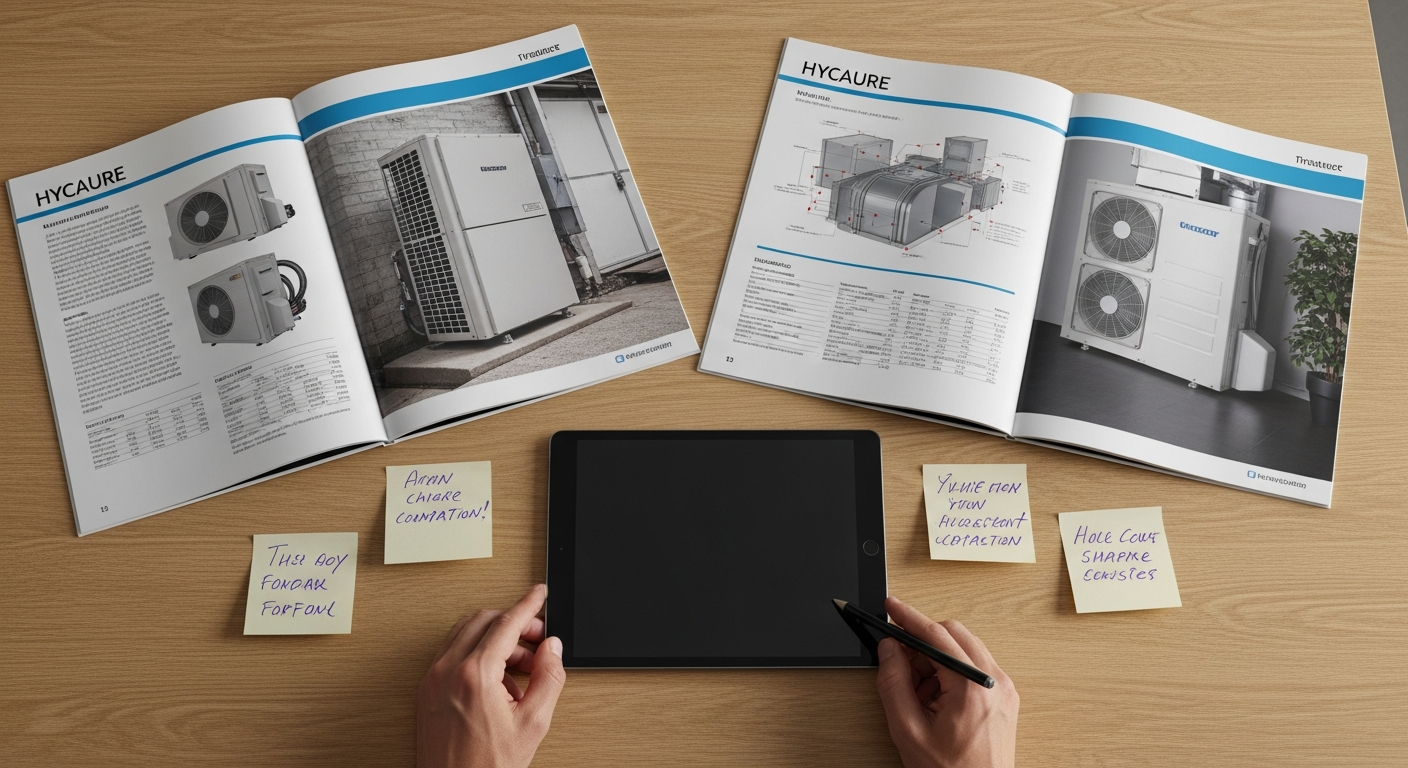
Choose Mitsubishi for unbeatable cold-climate heating and ductless flexibility; choose Daikin for warranty advantage and hybrid ducted options.
If your winter lows dip below 5°F, Mitsubishi Hyper-Heating delivers full capacity without backup heat. For homeowners who want the strongest warranty or need to pair with existing gas furnace, Daikin’s unit replacement coverage and broader equipment mix offer more peace of mind.
What Matters Most
- Mitsubishi H2i is the top performer in extreme cold and large ductless multi-zone setups.
- Daikin’s limited unit replacement warranty can save thousands if a compressor fails.
- Both brands achieve SEER2 above 20; real efficiency depends on installation quality.
- Always get a Manual J load calculation before signing any contract.
- Use rebates and tax credits to narrow the cost gap between premium and mid-tier systems.
Strengths
- Clear, threshold-based decision rules remove guesswork.
- Cost ranges help homeowners budget before contacting contractors.
- Tools and checklists empower homeowners to vet installers effectively.
- Safety section reduces risk of voided warranties or dangerous DIY mistakes.
Weaknesses
- Mitsubishi’s higher entry cost may strain budgets in mild climates where extreme-cold performance is less critical.
- Daikin’s unit replacement warranty is not available on all models; requires careful confirmation.
- Regional installer availability for one brand may limit choice in some areas.
- Performance claims rely on manufacturer specs; real-world results vary with installation and home shell.
Decision Summary: Daikin vs Mitsubishi at a Glance
| Scenario | Usually do | Why |
|---|---|---|
| You live where temperatures drop below 5°F | Choose Mitsubishi Hyper-Heating | Maintains full heating capacity at 5°F and operates efficiently down to -13°F. |
| You want the strongest warranty safety net | Choose Daikin (select models) | Limited unit replacement warranty replaces entire outdoor unit if compressor fails within 12 years. |
| You have existing ducts and want gas backup | Choose Daikin | Broader lineup of compatible gas furnaces and dual-fuel capable heat pumps. |
| You need a side-discharge unit for a small yard | Choose Daikin Fit | Compact side-discharge design fits where traditional units can’t. |
| You’re building a large ductless multi-zone system | Choose Mitsubishi | Advanced branch box controllers and wider variety of indoor unit styles. |
Daikin vs. Mitsubishi: Which HVAC Brand Wins for Your Home?
Daikin and Mitsubishi Electric dominate the high-efficiency heat pump market, but they cater to slightly different needs. This guide gives you clear decision rules, cost ranges, and checklists—not marketing fluff—so you can invest wisely. Both brands offer variable-speed inverter compressors that slash energy bills and improve comfort, but the right choice hinges on your climate, home layout, and warranty priorities. Before you call a contractor, use our HVAC cost estimator and repair or replace calculator to ground your expectations in real numbers.
Quick Answer
Choose Mitsubishi if you need best-in-class heating below 5°F, want maximum ductless flexibility, or live in a cold climate. Choose Daikin if you value a rare unit replacement warranty, want a hybrid system (pair with a gas furnace), or need a compact side-discharge unit for tight spaces. Both require a skilled installer—find top-rated contractors near you to get the performance you’re paying for.
| Factor | Mitsubishi Electric | Daikin |
|---|---|---|
| Peak Cold-Climate Heating | Hyper-Heating (H2i®) maintains 100% capacity at 5°F | Enhanced vapor injection on select models; excellent but slightly less cold-weather edge |
| SEER2 / HSPF2 Range | Up to 26 SEER2 / 13 HSPF2 | Up to 24 SEER2 / 12 HSPF2 (side-discharge Fit); many mid-tier options |
| Warranty Highlight | 12-year parts & compressor (Diamond Contractor required) | 12-year parts; select models include unit replacement if compressor fails |
| Ducted + Ductless Flexibility | Strong ductless, limited ducted air handlers | Broader ducted options (Fit, traditional splits, gas furnaces) |
| Typical Installed Cost* | $9,500–$18,000 (multi-zone ductless) | $8,500–$16,500 (multi-zone ductless or hybrid) |
*Editorial estimate ranges. Actual costs depend on home size, zone count, labor, and local incentives. Use our cost estimator for a tailored estimate.
Climate & Application Decision Rules
Use these concrete thresholds to narrow your options. If you answer “yes” to a condition, the recommended brand carries more weight for that scenario.
- Your winter design temperature is 5°F or lower: Favor Mitsubishi H2i. Even Daikin’s cold-climate units can lose some capacity in extreme cold, while Mitsubishi’s Hyper-Heating delivers full output.
- You have existing ductwork and want to keep a gas furnace backup: Daikin offers a wider range of compatible gas furnaces and dual-fuel setups. Mitsubishi’s ducted air handlers are excellent but limit hybrid combustion options.
- You’re replacing a central AC with a heat pump in a moderate climate (above 20°F lows): Both brands perform similarly. Choose based on local installer expertise and warranty preference.
- You need a side-discharge unit for a tight outdoor space: Daikin Fit is the go-to; Mitsubishi’s side-discharge options are more limited in residential lines.
- You prioritize ductless zoning with multiple indoor styles: Both excel, but Mitsubishi’s branch box controllers and wider indoor unit variety give it a slight edge for large multi-zone systems.
- You want the strongest possible warranty safety net: Daikin’s limited unit replacement warranty on premium models replaces the entire outdoor unit, not just the compressor, during the covered period. Mitsubishi’s 12-year parts warranty is solid but lacks this feature.
Warranty & Protection: What’s Actually Covered
Both brands require professional installation and prompt product registration to get full warranty benefits. Learn how to register your HVAC warranty to avoid losing coverage. Mitsubishi’s 12-year parts and compressor warranty is contingent on a Diamond Contractor—always verify that status. Daikin offers a 12-year limited parts warranty across most equipment, but their upper-tier Daikin Fit and VRV Life lines sometimes include unit replacement coverage for the first 12 years. This means if the compressor fails, you get a new outdoor unit, not just a repair—a huge cost avoidance. Always get the warranty terms in writing before signing a contract.
Safety Boundaries: What Homeowners Can (and Cannot) Do
Both systems contain high-voltage electricity, pressurized refrigerant, and sensitive electronics. Never attempt DIY refrigerant handling, compressor or capacitor swaps, gas furnace adjustments, or control board repairs. These require EPA certification, specialized tools, and can cause injury, fire, or void your warranty. Safe homeowner checks include:
- Wash or replace air filters monthly during heavy-use seasons.
- Keep outdoor unit free of leaves, snow, and debris (2–3 ft clearance).
- Check thermostat settings and error codes; note any blinking lights and refer to your manual before calling for service.
- Listen for unusual rattles or grinding—these signal a pro is needed.
- Schedule an annual professional maintenance visit; expect to pay $80–$250 for a standard tune-up.
For repairs, always use a licensed HVAC contractor. Diagnostic fees typically run $80–$200. Repairs can range from $150–$4,000+ depending on the problem. Check out emergency HVAC service options if your system fails in extreme weather.
Contractor Checklist: Questions to Ask Before You Buy
A premium system installed poorly will underperform and break early. Use these questions to vet bids and avoid regret:
- “Are you a Mitsubishi Diamond Contractor or Daikin Comfort Pro? Can you show proof?”
- “Will you perform a Manual J load calculation and share the report?” (Don’t accept rule-of-thumb sizing.)
- “What is your labor warranty on installation, and does it cover refrigerant and control board failures?”
- “Do you include an itemized breakdown of equipment, labor, electrical, and any ductwork modifications?”
- “Can you provide local references for recent installations of this brand?”
- “How do you handle warranty registration and future service calls?”
Use our contractor search and contractor comparison tool to find and evaluate local pros. For example, see profiles for Phoenix AC contractors or Chicago heating contractors to check ratings and specialties.
Cost & Value: What to Expect
Installed costs for a full system (single-zone ductless) can start around $5,000–$8,000; whole-home ducted or multi-zone ductless systems typically fall between $8,000 and $18,000, depending on capacity, labor complexity, and regional market. Daikin often has a lower entry point for comparable configurations, especially if you need to pair with existing ductwork. However, Mitsubishi’s performance advantage in cold climates can offset higher upfront costs through reduced auxiliary heating bills. Always factor in available local rebates and federal tax credits—these can cut $2,000 or more from your net cost. Our HVAC cost estimator gives a tailored range based on your home details.
Tools to Shape Your Decision
Narrowing your choice is easier with data. Use these free HVACDatabase tools:
- BTU Calculator: Don’t guess on sizing; input your room count, insulation, and climate zone.
- Repair or Replace Calculator: If you’re debating whether to repair an old unit or upgrade, this tool calculates the financial tipping point.
- Cost Estimator: Get a realistic range before talking to contractors.
- Rebate Finder: See which incentives apply to high-efficiency Daikin or Mitsubishi systems in your area.
- System Age Decoder: Decode your current unit’s age to understand urgency.
Regional Notes: Where You Live Changes the Equation
- Cold climates (Northeast, Midwest, Mountain West): Mitsubishi H2i models typically avoid the need for electric resistance backup down to -13°F, saving hundreds annually. Daikin’s Aurora line is competent, but Mitsubishi’s track record in these markets is deeper.
- Hot, humid South: Both brands handle humidity well with variable-speed blowers. Daikin’s mid-tier units often offer better value in regions where winter performance isn’t critical.
- Coastal areas: Check for corrosion-resistant coatings if you’re near salt water. Some Daikin and Mitsubishi outdoor units offer coastal protection; confirm with your contractor.
- Older homes: You may need electrical panel upgrades (200A service is common for multi-zone heat pumps). Get an electrician’s assessment early to avoid budget surprises. Also, consider ductwork modifications; see our ducted vs. ductless guide for tradeoffs.
Frequently Asked Questions
Which is more efficient, Daikin or Mitsubishi?
Both achieve SEER2 ratings above 20, with top models exceeding 24. Mitsubishi’s Hyper-Heating units often have a slight HSPF2 edge in sub-freezing conditions, but in typical climates the difference is marginal. Real-world efficiency depends more on proper sizing and installation than brand alone.
What is the typical installation cost difference?
Daikin tends to be 5–10% less expensive at the mid-tier level. For a whole-home multi-zone ductless system (4–5 indoor heads), expect $12,000–$18,000 from Mitsubishi vs. $10,000–$16,000 from Daikin, before incentives. Single-zone systems can start under $5,000 with either brand.
Can I mix ducted and ductless indoor units from one outdoor unit?
Yes, both brands support hybrid configurations. Mitsubishi’s MXZ multi-zone outdoor units and Daikin’s multi-zone platforms allow mixing ducted air handlers with wall-mount, ceiling cassette, or floor units. Discuss layout and branch box requirements with your installer.
How does Daikin’s unit replacement warranty compare to Mitsubishi’s part warranty?
Daikin’s limited unit replacement (available on select models when installed by a Comfort Pro) provides a new outdoor unit if the compressor fails within the registered 12-year period. Mitsubishi’s warranty covers the compressor part but not always the labor or associated components. Daikin’s offer can save $2,500–$5,000 in a catastrophic failure.
Which brand is better for very cold climates (below -10°F)?
Mitsubishi Hyper-Heating models have a proven operational range down to -13°F or lower, maintaining strong capacity. Daikin’s cold-climate models (e.g., Aurora) also perform well, but Mitsubishi’s longer market presence in extreme cold provides more field data and installer expertise.
Methodology
Our brand recommendations and cost estimates are based on publicly available technical specifications, warranty documentation, and aggregated feedback from HVAC professionals in the HVACDatabase network. Performance claims reflect manufacturer data under AHRI conditions; actual results vary with installation and climate. Cost ranges are editorial estimates derived from national contractor surveys and do not guarantee a particular price in your area. Always obtain multiple itemized quotes and verify local incentives. HVACDatabase does not perform independent lab testing; we rely on certified ratings and real-world installer insights to guide practical decisions.
Ready to get quotes? Use our contractor search to find vetted pros in your zip code, or compare contractors side by side.
Related articles
Connect this page to adjacent guides so readers keep moving deeper into the topic cluster.
Google Nest vs Ecobee Premium Thermostats
Choosing between Nest and Ecobee? Our decision tool weighs room sensors, smart home compatibility, and cost to help you pick the right smart thermostat.

Smart Thermostat vs Smart Vent System
Homeowners often ask: smart thermostat or smart vents? Our practical guide explains the core trade-offs, safety limits, and a clear decision path to avoid wasting money or harming your system.
Supply vs Exhaust Ventilation Systems
Discover whether a supply or exhaust ventilation system suits your home’s climate, budget, and air quality goals. Our guide includes cost ranges, safety tips, and pro checklists.