DIY vs Professional Seasonal HVAC Maintenance
Stop guessing: see exactly which HVAC tune-up steps you can safely handle and when a licensed pro is worth every dollar. Includes cost ranges, seasonal checklists, and local climate advice.
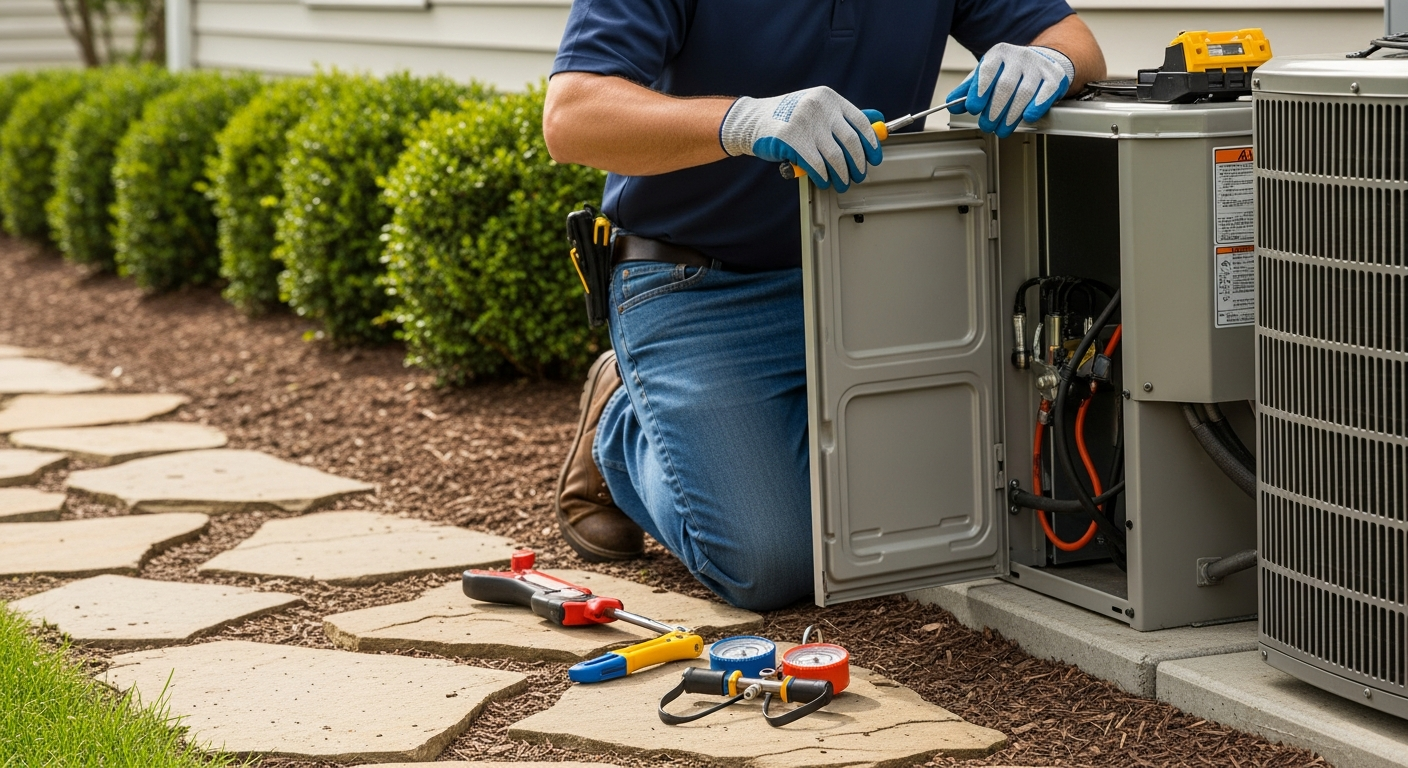
Split Maintenance Smartly: DIY Basics, Pro for What Counts
Homeowners should handle simple, low-risk tasks like filter changes and debris clearing every season. For anything involving refrigerant, gas, or sealed components, always hire a licensed pro—the cost of a tune-up is a fraction of a major repair and keeps your warranty intact.
What Matters Most
- Change your filter every 30–90 days; it’s the easiest way to protect efficiency.
- Annual professional tune-ups ($80–$250) are mandatory for safety, warranty, and long-term savings.
- Never attempt work that opens panels containing electrical, refrigerant, or combustion parts.
- Use a contractor checklist and verify licenses before hiring.
- Local climate dictates maintenance frequency and emphasis—adjust accordingly.
Strengths
- Saves money by clearly defining which tasks are truly DIY
- Protects HVAC warranty and prevents voiding
- Improves system safety and indoor air quality
- Empowers homeowners with decision thresholds and communication tools
Weaknesses
- DIY oversight might miss subtle early failures (mitigated by pro visits)
- Homeowners might overestimate their ability and attempt risky tasks (clear boundaries provided)
- Costs vary widely, so actual savings depend on system age and regional rates
Decision Summary
| Scenario | Usually do | Why |
|---|---|---|
| Replacing a dirty filter | DIY | $5–$30 part; 2 minutes; no tools. Pro would charge $50–$100 for a visit alone. |
| Clearing debris from outdoor unit | DIY | Garden hose and gloves only; prevents overheating for free. |
| Annual comprehensive tune‑up | Hire pro | $80–$250 buys peace of mind, warranty compliance, and 5–15% efficiency gain. |
| Strange noise or smell | Hire pro immediately | Ignoring can turn a $200 fix into a $2,000 compressor failure. |
| System over 10 years old, no recent service | Hire pro | Component wear accelerates; pro identifies aging parts before failure. |
Introduction: Stop Overpaying or Under-Maintaining Your HVAC
Seasonal HVAC maintenance isn’t just about comfort—it’s about avoiding surprise breakdowns, high bills, and voided warranties. Yet homeowners often spend either too much (hiring a pro for filter swaps) or too little (skipping essential checks that need a licensed tech). This guide replaces guesswork with a clear, practical split: safe DIY steps anyone can do in 30 minutes, and the pro-only tasks that protect your equipment, your family, and your warranty. You’ll also find cost benchmarks, a decision flowchart, and a ready-to-use contractor checklist.
Quick Answer
DIY: Replace air filters, clean vents, clear debris from outdoor units, check thermostat settings, pour a cup of bleach down the AC drain line (if accessible). Hire a pro: Anything involving refrigerant, gas, electrical components, combustion chambers, heat exchangers, or system controls. Annual professional tune-ups are essential—they catch hidden failures, maintain efficiency, and keep warranties valid. The cost of a pro visit ($80–$250) is far less than one major repair ($500–$4,000+). Use our Maintenance Reminders tool to stay on schedule.
DIY Maintenance You Can Safely Do
These tasks require no special tools or licenses. Do them every season for immediate efficiency gains and better air quality.
1. Replace Air Filters
Cheap insurance. A dirty filter can increase energy consumption by 5–15%. Check monthly; replace every 30–90 days depending on pets, allergies, and filter thickness. Make a note: pleated 1-inch filters typically last 1–3 months; 4-inch media filters can go 6–12 months.
2. Clean Around the Outdoor Unit
Clear leaves, grass, and debris. Keep 2 feet of clearance on all sides. Gently rinse fins with a garden hose (low pressure—high pressure bends fins). Do this after mowing, after storms, and before summer/winter.
3. Vacuum Supply and Return Vents
Blocked vents starve rooms of air and increase static pressure. Use a brush attachment on all registers and return grilles at least twice a year. Don’t close more than 10% of vents; it can strain the blower.
4. Inspect and Clean the Condensate Drain
For air conditioners and heat pumps: if you can access the PVC drain line near the indoor unit, pour a cup of white vinegar or bleach solution down the pipe every spring to prevent algae clogs. Don’t open sealed panels or disconnect any piping.
5. Test Thermostat and Batteries
Switch between heating/cooling modes to verify operation. Replace batteries annually. If you have a programmable or smart thermostat, confirm schedules are accurate.
Safety Boundaries: What Only a Pro Should Handle
Attempting these tasks risks code violations, physical harm, or expensive damage. Never open sealed access panels that expose electrical or refrigerant components.
| Pro‑Only Task | Why It’s Off‑Limits | Typical Service Cost (Editorial Estimate) |
|---|---|---|
| Checking refrigerant level | Requires EPA‑certified license. Mishandling can release harmful gases and destroy compressors. | $80–$200 as part of tune‑up; $150–$650+ for leak repair |
| Electrical testing / capacitor checks | High voltage and stored energy in capacitors can cause fatal shock even with power off. | $80–$200 for diagnostic; $150–$400 for capacitor replacement |
| Gas valve or burner cleaning | Improper adjustment leads to fire, explosion, or carbon monoxide poisoning. | $100–$300 within a furnace tune‑up |
| Heat exchanger inspection | Cracks require specialized cameras and combustion analysis; a missed crack leaks CO into living space. | $150–$300 for dedicated inspection |
| Evaporator coil deep cleaning | Often inaccessible without disassembly; harsh chemicals can damage fins if misapplied. | $200–$600 depending on access |
Decision Rules: DIY or Call a Pro?
Use these thresholds to decide instantly:
- Do it yourself if: Task is on the approved list above, requires no panel removal, involves only visible/accessible parts, and you can safely reach it with a step stool or from the ground.
- Call a pro if: The issue involves electricity, gas, refrigerant, odd noises, burning smells, water leaks inside the unit, or if your system is more than 12 years old and hasn’t been inspected in 2+ years.
- Emergency rule: If you smell gas or hear a hissing sound, leave the house immediately and call your utility provider. Do not touch any electrical switches.
Still unsure? Use our Repair or Replace Calculator if your system is aging or needs a costly fix.
Contractor Checklist: Questions to Ask Before You Book
Avoid overcharges and unnecessary work. Use these questions when scheduling a seasonal tune-up:
- What exactly is included in the maintenance visit? (Get a written checklist—no hidden add‑ons.)
- Is refrigerant level checked as part of the basic service? (Some companies charge extra.)
- Do you provide a digital report with photos and measurements? (Proof for warranty claims.)
- Are you licensed, insured, and EPA‑certified for refrigerant handling? (Ask for numbers and verify online.)
- What is your policy on repairs found during maintenance? (Get a separate estimate before approving any work.)
- Do you offer an annual maintenance plan, and what’s the cost vs. a single visit? (Plans often $150–$500/year with priority scheduling and discounts.)
Find vetted contractors in your area: HVACDatabase Contractor Search.
Local Climate Considerations
Your location shifts the urgency and type of maintenance:
- Hot, humid regions (Gulf Coast, Southeast): Spring AC check‑ups are critical. Look for mold on indoor coils and ensure drain lines are clear. Consider a dehumidifier if indoor humidity stays above 60%. Fall prep is still important for heat pumps.
- Cold climates (Midwest, Northeast, Mountain West): Fall furnace inspections prevent carbon monoxide risks. Have the heat exchanger inspected annually. Winterize outdoor AC units before first freeze.
- Coastal areas (salt air): Salt corrodes outdoor coils and fins. Rinse units more frequently; consider protective coatings. Pro inspections should include electrical connection tightening.
- Desert Southwest: Dust and sand clog filters and coils quickly. Check filters monthly. The ducted vs ductless decision also affects filter maintenance frequency.
- Monsoon regions: Prepare for sudden storms with seasonal storm prep and ensure outdoor unit is elevated if flooding possible.
Tools and Calculators
HVACDatabase offers free, anonymous decision tools tailored to your system and location:
- Maintenance Reminders – Set custom alerts for filter changes and annual tune‑ups.
- HVAC Cost Estimator – Get editorial cost ranges for repairs, replacements, or seasonal service in your zip code.
- Repair or Replace Calculator – Weigh whether fixing or upgrading makes financial sense.
- BTU Calculator – Right‑size a new system to avoid short‑cycling and efficiency loss.
Costs and Value: DIY vs Professional
| Scenario | Usually do | Why |
|---|---|---|
| Replacing a dirty filter | DIY | $5–$30 part; 2 minutes; no tools. Pro would charge $50–$100 for a visit alone. |
| Clearing debris from outdoor unit | DIY | Garden hose and gloves only; prevents overheating for free. |
| Annual comprehensive tune‑up | Hire pro | $80–$250 buys peace of mind, warranty compliance, and 5–15% efficiency gain. |
| Strange noise or smell | Hire pro immediately | Ignoring can turn a $200 fix into a $2,000 compressor failure. |
| System over 10 years old, no recent service | Hire pro | Component wear accelerates; pro identifies aging parts before failure. |
Methodology
All cost estimates are editorial ranges based on aggregated contractor surveys, industry data, and typical market pricing as of 2025. Actual costs vary by region, system type, season, and access. This article does not guarantee prices. Safety guidance aligns with EPA regulations, NFPA and NEC standards, and manufacturer warranty requirements. Always verify license and insurance before hiring.
Frequently Asked Questions
1. How often should I really change my air filter?
For standard 1‑inch pleated filters, every 30–90 days. Higher MERV ratings capture more particles but clog faster. In homes with pets or allergy sufferers, check monthly. Use the Maintenance Reminders tool to set a custom schedule.
2. Can I clean my outdoor AC coils myself?
You can gently rinse fins with a garden hose on low pressure, but deep cleaning requires special chemicals and should be left to a pro. High pressure or incorrect cleaners bend fins and reduce efficiency.
3. What happens if I skip professional maintenance this year?
Your system may still run, but efficiency drops (5–10% per year without care), minor issues worsen, and many manufacturers can deny warranty claims without documented annual service.
4. Is a maintenance plan worth it or should I pay per visit?
Plans often cost $150–$500/year and commonly include two seasonal tune‑ups, discount on repairs, and priority emergency service. If your system is over 5 years old, a plan usually pays for itself.
5. My system is working fine. Do I still need a pro to look at it?
Yes. Most catastrophic failures (compressor burnout, heat exchanger cracks) show no symptoms until too late. A pro uses instruments to measure refrigerant pressures, electrical loads, and combustion safety that you cannot see.
Related articles
Connect this page to adjacent guides so readers keep moving deeper into the topic cluster.
Electrostatic vs Pleated HVAC Filters
Electrostatic filters are washable and budget-friendly over time, but pleated filters catch more allergens. See which fits your home's air quality and HVAC demands.

Supply vs Exhaust Ventilation Systems
Discover whether a supply or exhaust ventilation system suits your home’s climate, budget, and air quality goals. Our guide includes cost ranges, safety tips, and pro checklists.
Smart Thermostat vs Smart Vent System
Homeowners often ask: smart thermostat or smart vents? Our practical guide explains the core trade-offs, safety limits, and a clear decision path to avoid wasting money or harming your system.