How to Calculate Your HVAC Energy Usage
Discover how to calculate your HVAC energy usage with simple math, understand SEER/AFUE ratings, and use free tools to estimate costs, decide on repairs, and find rebates.
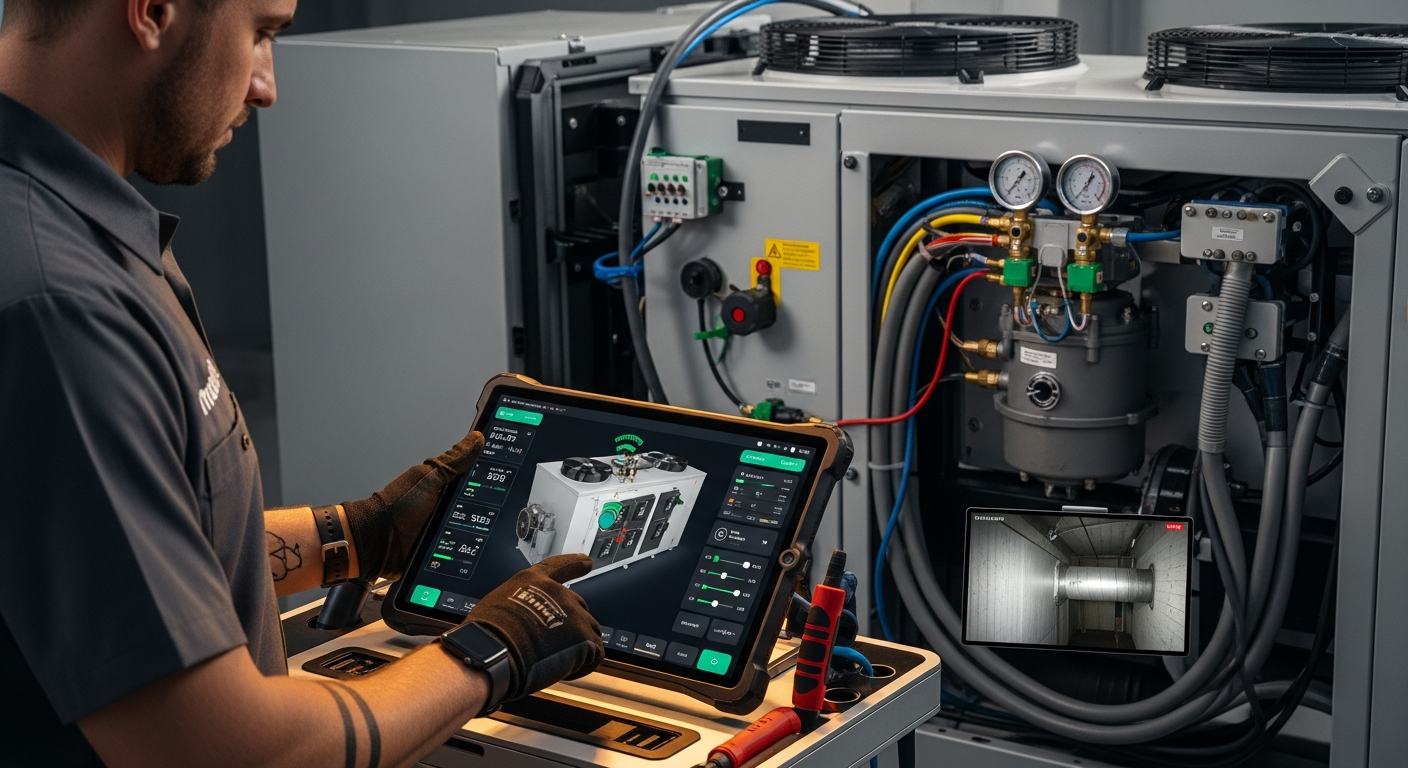
Calculate your actual energy usage before making any HVAC decision.
Use our free tools to compare costs and savings from efficiency upgrades. For most homes, upgrading from a 10+ year old system to a modern high-efficiency unit pays back through lower utility bills, especially when paired with available rebates. This article gives you the numbers, not just opinions.
What Matters Most
- Calculate HVAC energy use with a simple formula: watts × hours × days × rate.
- High SEER2 and AFUE ratings cut energy bills significantly; compare before buying.
- Use our free energy calculator for instant, personalized estimates.
- Apply our decision tree to know when to repair vs. replace.
- Always hire a licensed pro for refrigerant, electrical, or combustion work—it's not a DIY job.
Strengths
- Provides actionable math and tools, not vague tips.
- Includes concrete cost ranges and efficiency comparisons.
- Safety-first approach protects homeowners.
- Local climate advice tailors recommendations to your region.
Weaknesses
- Estimates depend on accurate runtime and rate inputs; incorrect assumptions may skew results.
- Does not account for future utility rate changes.
- Local incentives change; always verify rebates before purchase.
Decision Summary
| Scenario | Usually do | Why |
|---|---|---|
| Old system (12+ years) | Replace with high-efficiency | Avoid escalating repair costs and cut energy use by 30–50%. |
| Recent system (<8 years) | Repair unless major failure | Cost-effective to maintain; only replace if efficiency is very low. |
| High repair quote (>$2,500) | Replace | Unless system is nearly new, high repair costs make replacement smarter. |
| Rising energy bills | Audit first, then upgrade | Identify air leaks, then consider higher SEER/AFUE equipment. |
| Moderate climate, low usage | Delay upgrade, but plan | You can wait, but lock in rebates before they expire. |
Quick Answer
To calculate your HVAC electricity costs, find your unit's wattage (multiply amps × volts if needed), convert to kilowatts (÷1000), then multiply by daily run hours and days per month. Finally, multiply by your electricity rate. For gas heating, therms used depend on furnace AFUE. Use our Energy Calculator for an instant estimate. Example: A 3,500-watt AC running 8 hours/day at $0.15/kWh costs about $126/month. Upgrading from 10 SEER to 16 SEER can cut cooling costs by roughly 40%.
How to Calculate Your HVAC Electricity Usage
To estimate what your air conditioner or heat pump costs to run:
- Find wattage: Check the data plate on the outdoor condenser. If only amps and volts are listed, multiply them (A × V = W).
- Convert to kilowatts: Divide wattage by 1,000 (e.g., 3,500 W = 3.5 kW).
- Estimate daily runtime: Use a smart thermostat’s history or track manually on a typical day. In moderate weather, 4–8 hours; in extreme heat, 10–14+ hours.
- Calculate monthly kWh: kW × hours/day × days/month (e.g., 3.5 kW × 8 h × 30 = 840 kWh).
- Find cost: Monthly kWh × your electricity rate (e.g., 840 × $0.15 = $126).
For gas furnaces, the calculation uses therms instead of kWh. A 100,000 BTU furnace at 80% AFUE consumes 1.25 therms per hour of runtime. Multiply by hours used and your gas rate.
Understanding Efficiency Ratings
SEER2 and EER2 for Cooling
SEER2 (Seasonal Energy Efficiency Ratio) measures cooling efficiency over a season. Higher numbers mean lower bills. Even a small jump saves money:
| Rating | Efficiency Level | Annual Savings vs. 10 SEER |
|---|---|---|
| 14 SEER2 | Good | ~20% lower cooling costs |
| 16 SEER2 | Better | ~30% lower cooling costs |
| 20+ SEER2 | Best | ~50% lower cooling costs |
AFUE for Gas Furnaces
AFUE (Annual Fuel Utilization Efficiency) shows how much fuel becomes heat. A 95% AFUE furnace wastes only 5% of its fuel, while older 80% models waste 20%.
| Rating | Efficiency Level | Annual Savings vs. 80% AFUE |
|---|---|---|
| 90% AFUE | High efficiency | ~12% lower heating costs |
| 95% AFUE | Very high | ~18% lower heating costs |
Always check the yellow EnergyGuide label for estimated yearly operating cost.
Safety Boundaries: What You Can (and Cannot) Do Yourself
Homeowner-Safe Checks
- Replace air filters every 1–3 months (see how to replace an AC filter).
- Inspect exposed ductwork for disconnected or crushed sections.
- Keep supply and return vents unblocked.
- Check thermostat settings and batteries.
- Clear debris and vegetation 2+ feet from the outdoor unit.
Leave These to a Qualified Pro
- Refrigerant level checks and charging
- Electrical component testing or replacement (capacitors, contactors, control boards)
- Gas valve or burner adjustments
- Compressor or motor repairs
- Sealing refrigerant leaks
DIY work on these can cause injury, void warranties, or damage your system. Find a licensed contractor.
Use Our Free Calculators
Skip manual math: try the HVAC Energy Calculator for a personalized estimate. For whole-system decisions, use the Repair or Replace Calculator and the Cost Estimator. Find available rebates with our Rebate Finder.
Decision Tree: Repair, Upgrade, or Replace?
Apply these rules based on your system’s age, repair cost, and efficiency:
- Under 8 years old: Repair if cost <$800 and no recurring issues. Consider a maintenance plan.
- 8–12 years old: If repair exceeds 30% of a new system’s cost or efficiency is below 14 SEER/90% AFUE, start planning replacement.
- 12+ years old: Replacement usually pays off quickly through energy savings and avoided breakdowns.
- Major component failure (compressor, heat exchanger): In systems over 10 years, always replace.
- Rising energy bills: Use the energy calculator to compare your current costs against a high-efficiency model. If you can cut bills by 25%+, replacement often makes sense.
Not sure of your system’s age? Try the System Age Decoder.
Contractor Checklist: Questions to Ask Before Hiring
- Are you licensed, insured, and bonded? (Request proof)
- Do you perform a Manual J load calculation before sizing new equipment?
- Can you provide a written estimate with equipment model numbers, SEER2/AFUE ratings, and labor costs?
- What warranties are included on parts and labor?
- Do you offer a maintenance plan, and what does it cover?
- Will you inspect and seal ductwork if needed?
- How do you handle permits and code compliance?
- Can you reference three recent similar jobs?
Also run your quote through our Quote Checker to see if it’s reasonable.
Local Climate Considerations
Hot deserts (Phoenix, Las Vegas): AC runs 2,000+ hours/year. Prioritize high SEER2 (16+) and variable-speed compressors. See Phoenix AC contractors for climate-specific expertise.
Cold climates (Chicago, Minneapolis): Focus on high AFUE (95%+) gas furnaces. Dual-fuel systems (heat pump + gas backup) can optimize costs. Check Chicago heating specialists.
Humid regions (Houston, Miami): Choose units with enhanced dehumidification. Oversizing leads to short cycling and mugginess.
Coastal areas: Salt corrosion degrades outdoor coils; select corrosion-resistant models and schedule annual cleanings.
Older homes: Upgrade insulation and seal air leaks first (read how to seal air leaks) to reduce HVAC load.
Methodology: How We Calculate and Estimate
Our energy calculations assume average usage patterns: typical cooling season runtimes of 8–12 hours/day for central AC in moderate climates, and utility rates of $0.12–$0.18 per kWh (national average ~$0.15). Gas rates assumed at $1.00/therm. Efficiency savings are based on DOE comparisons. Cost estimates are editorial ranges intended for budgeting; actual costs vary by region, system size, and complexity. Always get multiple quotes from local contractors.
Frequently Asked Questions
How can I find my HVAC unit’s wattage?
Look on the data plate of the outdoor condenser or indoor air handler. If only amps and volts are listed, multiply them (A × V = W). For example, 15 amps × 230 volts = 3,450 watts. If the plate is unreadable, use the BTU Calculator to estimate size, then assume typical wattage (roughly 1,000–1,200 watts per ton).
How do I estimate my system’s daily runtime?
Smart thermostats often log cycle history. Otherwise, on a typical day, note runtime each hour and total it. In mild weather, 4–6 hours; in extreme weather, 10–14 hours. The Energy Calculator also lets you experiment with different runtimes.
Does a higher SEER always save me money?
Yes, but savings depend on climate and rates. In hot climates with many cooling hours, payback is faster. Moving from 10 SEER to 16 SEER might save $300/year in Phoenix vs. $80/year in Seattle. Use our calculator with your local rate to see the difference.
When should I get a home energy audit?
If bills remain high despite a modern system, an audit identifies hidden air leaks and insulation gaps. Many utilities offer subsidized audits. Learn more in how to get a home energy audit.
What are common mistakes when calculating HVAC energy usage?
- Using maximum wattage instead of average running watts.
- Ignoring standby power (furnace fans, smart thermostats).
- Not accounting for efficiency drop as equipment ages.
- Overlooking duct losses—leaky ducts can add 20–30% to energy use.
Related articles
Connect this page to adjacent guides so readers keep moving deeper into the topic cluster.
How to Implement a Whole Home Energy Management System
Integrate smart tech and HVAC controls to cut energy waste. This guide shows how to audit, upgrade, and automate your home's energy use, with real savings estimates.

How to Set Up Thermostat Geofencing
Set up thermostat geofencing to automatically adjust home temperature as you come and go. Save energy, extend equipment life, and never return to an uncomfortable house. Get our quick-start guide now.

How to Troubleshoot Smart Thermostat WiFi Issues
Your smart thermostat offline? Most WiFi drops can be fixed with power checks, router adjustments, and simple restarts. Follow our step-by-step guide to regain remote control and energy savings.