How to Check Your AC Refrigerant Levels
Discover how to recognize 7 warning signs of low AC refrigerant, understand what causes leaks, and find out what a professional diagnostic and repair will cost before you call a technician.
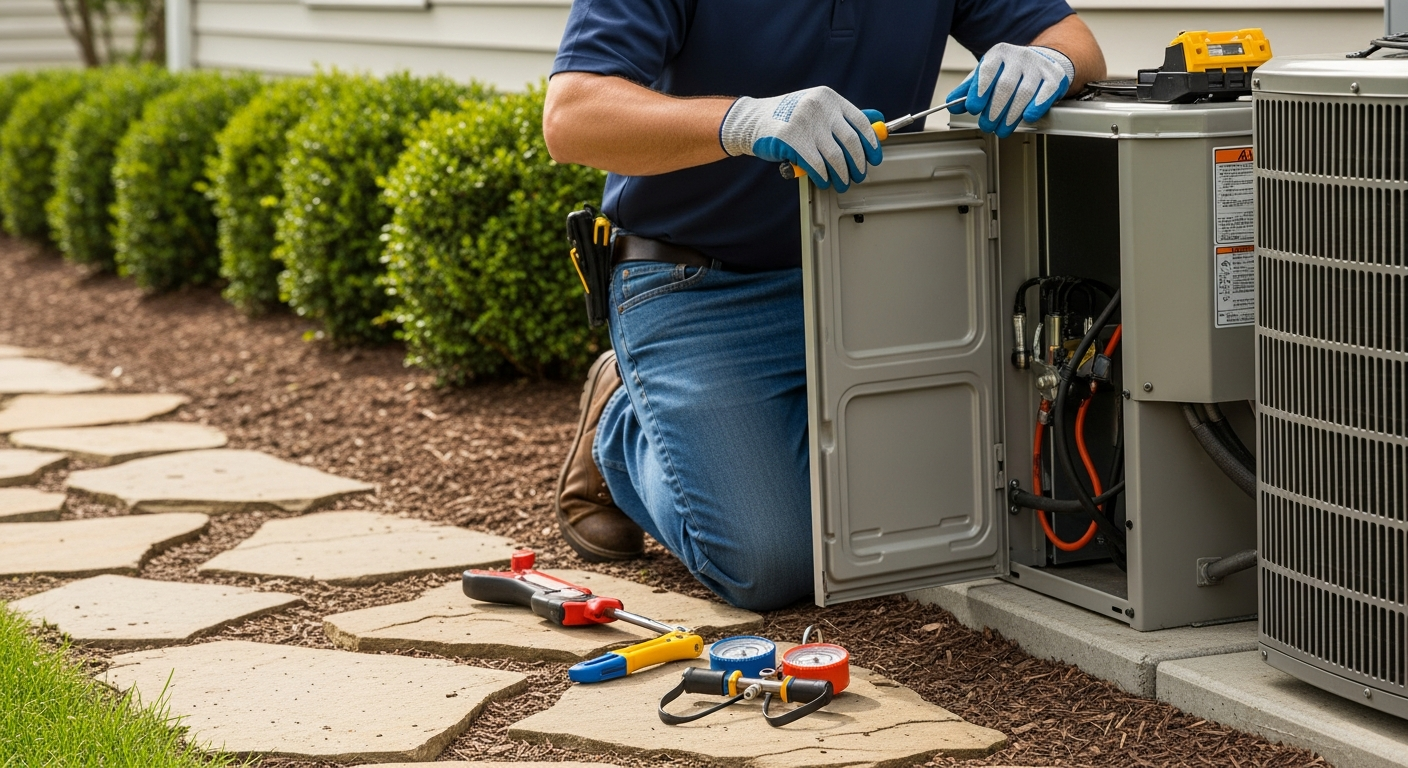
Always Hire a Pro for Refrigerant Issues
Homeowners can safely spot warning signs, but refrigerant handling requires EPA-certified technicians. Schedule a diagnostic if you see ice, hear hissing, or have a low temperature split.
What Matters Most
- Learn the 7 signs that suggest low refrigerant without using gauges
- Understand typical repair costs and plan your budget
- Use our tools to estimate replacement vs repair
- Verify your contractor’s credentials before any work begins
- Protect your system by addressing leaks promptly
Strengths
- Accurate diagnosis using professional tools
- Safe handling of refrigerants
- Proper leak repair promotes system longevity
- Compliance with environmental laws
- Warranty on professional work
Weaknesses
- Diagnostic fee applies even if no repair needed
- Higher upfront cost vs DIY attempts
- Risk of untrustworthy contractor if not vetted
- Some leaks may require expensive coil replacements
- Peak-season delays in technician availability
Decision Summary
| Scenario | Usually do | Why |
|---|---|---|
| Warm air but no ice | Check filter and thermostat first; if persists, call pro | Airflow issues are more common; refrigerant a possibility |
| Ice on indoor coil | Turn off system, thaw, call pro immediately | Continued operation risks compressor failure |
| Old R-22 system with leak | Get quote for replacement instead of recharge | R-22 recharge cost often exceeds benefit |
| System under 5 years with minor leak | Insist on leak repair (likely under warranty) | Preserves system life and efficiency |
Is Your Air Conditioner Not Cooling Like It Used To?
When the summer heat intensifies, a struggling AC often points to low refrigerant. Unlike a car’s oil, refrigerant doesn’t get “used up” — it cycles in a closed loop. Low levels mean a leak, and topping off without fixing the leak wastes money and harms the environment. This guide helps you spot the warning signs safely, understand what a proper fix entails, and connect with licensed professionals through HVACDatabase. Before you call anyone, use our tools to estimate costs and compare options.
Quick Answer: 7 Signs Your AC Might Be Low on Refrigerant
- Air from vents feels lukewarm, not cold.
- Frost or ice on the indoor coil or refrigerant lines.
- Hissing or bubbling noises from the indoor unit or line set.
- System runs constantly but house doesn’t reach set temperature.
- Higher-than-usual electric bills without a weather change.
- Water pooling around the indoor unit (from melted ice).
- Oil stains near refrigerant line connections.
If you notice any of these, don’t try to check refrigerant levels yourself—call a pro. Find a licensed HVAC technician to diagnose and fix the leak.
Safety Boundaries: What Homeowners Can Check vs. Pro-Only Work
Refrigerant is pressurized and regulated. Adding or removing refrigerant requires EPA Section 608 certification. Improper handling can cause severe frostbite, system damage, or environmental harm.
Safe for Homeowners
- Visually inspect the outdoor unit for debris-blocked coils (clean gently with a garden hose after shutting off power, if comfortable).
- Check and replace air filters monthly or as needed (see filter replacement guide).
- Monitor thermostat settings and confirm the system is set to cool and fan on auto.
- Look for ice buildup on visible refrigerant lines—this is a clear sign to call a pro.
- Listen for unusual noises and note when they occur.
Pro-Only: Do Not Attempt
- Attaching gauges to service ports.
- Trying to add refrigerant from a store-bought canister.
- Opening any refrigerant line connections.
- Replacing compressor, capacitor, contactor, or control board parts.
- Attempting to “find and fix” a refrigerant leak yourself with chemical sealants.
Working with refrigerant risks high-pressure injury, electrical shock, and costly system damage. If your AC stops working on a hot day, use our emergency HVAC service finder.
Symptom Checklist: Is It Really Low Refrigerant?
| Symptom | Possible Cause Beyond Refrigerant | What to Do First |
|---|---|---|
| Warm air from vents | Dirty filter, blocked condenser, thermostat setting, compressor failure | Check filter, condenser, and thermostat. If still warm, call pro. |
| Ice on evaporator coil | Low airflow (dirty filter, blower issue), extremely low outdoor temp | Turn system off to let ice melt. Replace filter. If reoccurs, call pro. |
| Hissing/bubbling sound | Refrigerant leak (gas escaping), expansion valve noise | Note location of sound. Schedule a leak search. |
| System runs nonstop | Undersized unit, home insulation issues, thermostat not calibrated | Check thermostat operation. If it’s correctly asking for cooling, pro needed. |
| High electric bills | Dirty condenser coils, duct leaks, aging system losing efficiency | Clean coils (via pro or DIY gentle cleaning), inspect ducts. Monitor. |
| Water around indoor unit | Clogged condensate drain (common), frozen coil melting | Check drain pan and line. If frozen, see ice symptom above. |
| Oil residue on line fittings | Almost certain refrigerant leak (oil escapes with refrigerant) | Contact an HVAC contractor immediately for leak repair. |
Decision Rule: When to Call a Technician vs. DIY Checks
Use these thresholds to decide quickly:
- If the temperature difference between your return air and supply air (split) is less than 15°F, you likely have a refrigerant or airflow problem. Get a professional diagnostic. (You can measure this with an infrared thermometer: aim at a return vent and a supply vent while the system runs. Note: This is not a refrigerant-level check; it only tells you if the system is cooling properly.)
- If ice is present on any indoor component, turn the system off immediately and call a pro. Continuing to run can damage the compressor.
- If you hear hissing or bubbling from the refrigerant lines, a leak is probable. Do not attempt to seal it; schedule a leak search and repair.
- If your system is more than 10 years old and needs a refrigerant repair, use our Repair or Replace Calculator to decide if replacement is more cost-effective.
What Will a Refrigerant Diagnostic and Repair Cost?
Costs vary by region, system type, and severity. Here are editorial estimate ranges based on industry data:
| Service | Typical Cost Range | Notes |
|---|---|---|
| Diagnostic service call | $80–$200 | After-hours or emergency may cost $150–$300. |
| Standard maintenance visit (not including repairs) | $80–$250 | Annual plans often $150–$500. |
| Refrigerant leak search & minor repair (e.g., tighten fitting, replace Schrader valve) | $150–$650 | Depending on accessibility and refrigerant type. |
| Major refrigerant repair (leak in evaporator coil, line set, or condenser coil) + recharge | $500–$1,500 | Coil replacement can push to the higher end. |
| Compressor or coil replacement | $1,500–$4,000+ | May be a borderline repair; use calculator. |
Get a precise estimate with our HVAC Cost Estimator and compare contractor quotes with the Quote Checker.
Questions to Ask Before Hiring an AC Technician
Before you approve any refrigerant work, verify the contractor’s qualifications:
- “Are you EPA Section 608 certified?” – Cert is required to handle refrigerants.
- “How will you locate the leak?” – Pros use electronic leak detectors, UV dye, or nitrogen pressure tests. Avoid anyone who wants to add refrigerant without a leak search.
- “What does the diagnostic fee include and what will be credited if I proceed with repair?” – Many companies apply the diagnostic fee toward the repair cost.
- “What refrigerant does my system use and is it still available?” – R-22 is phased out and very expensive. Consider system replacement if you have a significant R-22 leak.
- “Can you provide a written estimate with a breakdown of parts, labor, refrigerant, and a fixed repair time?”
- “Do you offer a warranty on the repair and the refrigerant charge?” – At least 1-year parts and labor is standard for leak repairs.
- “Will you check the system’s overall health (capacitor, contactor, airflow) during the visit?”
Use our Contractor Comparison Tool to vet local pros and read reviews.
Local Climate Factors That Affect Refrigerant Performance
Your location changes how quickly you notice low refrigerant and how urgent the repair is:
- Hot, Dry Climates (Phoenix, Las Vegas): Systems run nearly nonstop; a small leak will cause high bills fast. Coils can get dirty quickly. Phoenix AC contractors example.
- Hot, Humid Areas (Miami, Houston): Low refrigerant reduces dehumidification — you may notice sticky indoor air before temperature problems. Left unchecked, frozen coils can damage ducts.
- Cold Climate (Chicago, Minneapolis): Many systems are heat pumps — low refrigerant affects heating too. Check performance in both seasons. Chicago heating contractors example.
- Coastal Areas (salt air): Corrosion can accelerate coil leaks. Require technicians to use anti-corrosion treatments on new coils.
- Older Homes (pre-2000): May have R-22 systems. Refill is expensive and leaks are common; planning for a system upgrade often saves money long-term. Use our Repair or Replace Calculator.
How We Formulate Cost Estimates and Recommendations
Our editorial team draws on publicly available cost data from the U.S. Bureau of Labor Statistics, trade industry surveys, and aggregated data from HVAC contractor networks. Reported ranges reflect typical spending for common repairs and diagnostics across most U.S. regions, adjusted for 2025 market conditions. Estimates are not guaranteed and may vary based on your specific equipment, local labor rates, permit requirements, and seasonal demand. Consumers should always get multiple written quotes and verify contractor credentials before hiring. Our recommendations focus on safety, long-term efficiency, and cost-effectiveness, prioritizing repairs when a system is relatively new and replacement when facing repeated or expensive failures.
Frequently Asked Questions
Can I check my AC refrigerant level without gauges?
No. Accurate refrigerant level measurement requires manifold gauges and superheat/subcooling calculations, which should only be done by a qualified technician. Homeowners can look for indirect signs like ice, weak airflow, or unusual noises, but these symptoms can also be caused by non-refrigerant issues.
Is it illegal to add refrigerant to my own air conditioner?
Under EPA regulations (Section 608), knowingly releasing refrigerant into the atmosphere is illegal, and purchasing refrigerant usually requires technician certification. Most states also require licensing for HVAC work involving refrigerants. Homeowners without certification should never attempt to add or remove refrigerant.
Why is my air conditioner icy when it’s low on refrigerant?
Low refrigerant causes pressure and temperature drop in the evaporator coil. The coil temperature can fall below freezing, so moisture in the air freezes on contact. The ice insulates the coil, further reducing cooling and potentially damaging the compressor if liquid refrigerant returns.
How long does an AC refrigerant top-up last without fixing the leak?
There’s no fixed timeline — it can be days to months, depending on leak size. Adding refrigerant without repairing the leak is not recommended: it costs money and will eventually leak out again, harming the environment. Always fix the leak.
What refrigerant does my old AC use, and can it be replaced?
Most systems installed before 2010 use R-22, which is no longer produced or imported in the U.S. Existing recycled or reclaimed R-22 is still available but very expensive. Converting to a modern refrigerant is often not practical; replacing the unit with an R-410A or newer system is usually more cost-effective. Use our BTU Calculator to properly size a replacement.
Methodology
HVACDatabase estimates combine common contractor price patterns, service-category pricing ranges, equipment complexity, urgency, regional labor variation, and known HVAC safety boundaries. Actual prices vary by city, brand, system size, access, warranty status, permit requirements, and whether the visit discovers ductwork, electrical, refrigerant, gas, or drainage issues. Use these numbers to sanity-check quotes, not as a guaranteed price.
Related articles
Connect this page to adjacent guides so readers keep moving deeper into the topic cluster.
How to Implement a Whole Home Energy Management System
Integrate smart tech and HVAC controls to cut energy waste. This guide shows how to audit, upgrade, and automate your home's energy use, with real savings estimates.

How to Set Up Thermostat Geofencing
Set up thermostat geofencing to automatically adjust home temperature as you come and go. Save energy, extend equipment life, and never return to an uncomfortable house. Get our quick-start guide now.

How to Troubleshoot Smart Thermostat WiFi Issues
Your smart thermostat offline? Most WiFi drops can be fixed with power checks, router adjustments, and simple restarts. Follow our step-by-step guide to regain remote control and energy savings.