How to Choose a Ventilation System for a Tight Home
Discover which ventilation system fits your airtight home. Compare exhaust, supply, HRV, and ERV with cost estimates, climate rules, and a contractor checklist.
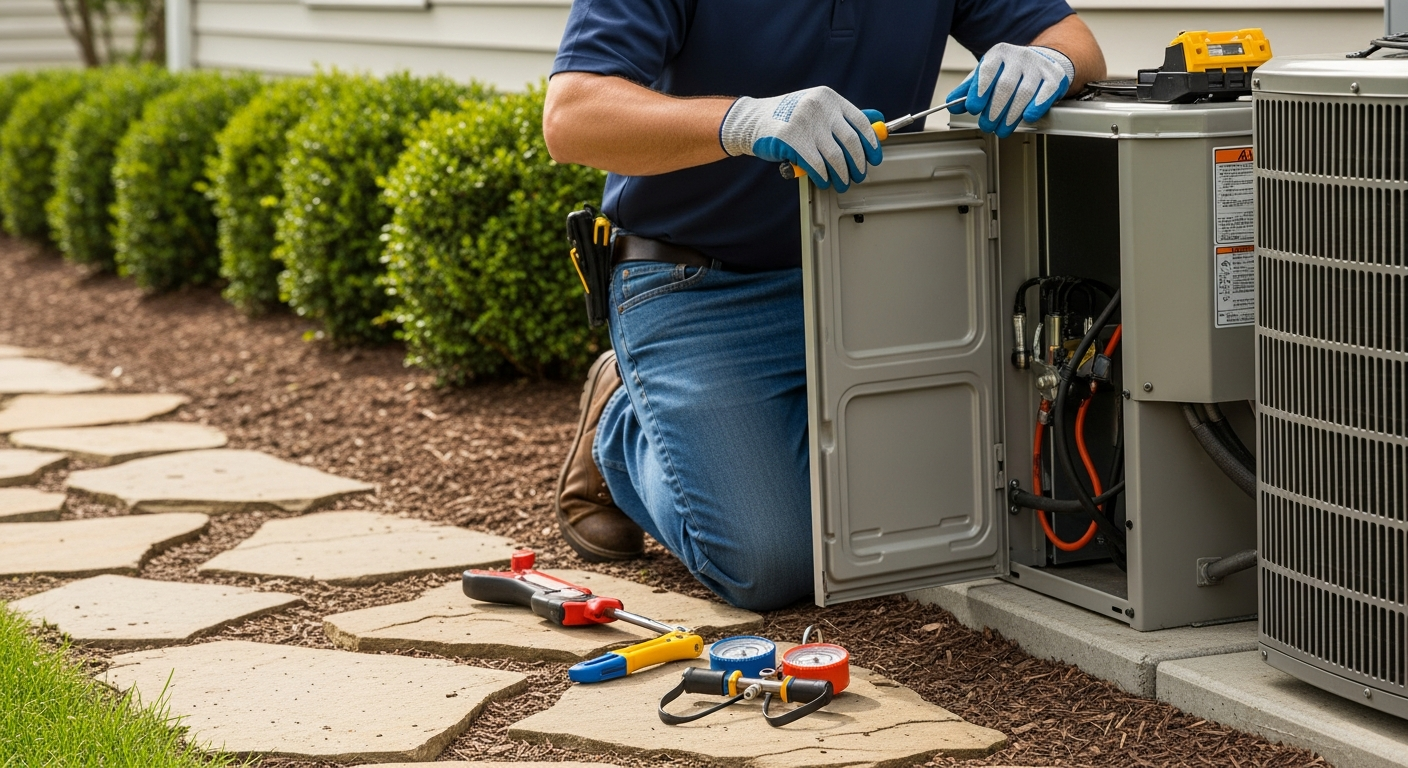
Best next step
Use the article decision rules, then compare a written quote when professional work is required.
What Matters Most
- Check safe basics first.
- Use cost ranges to sanity-check quotes.
- Call a qualified pro for refrigerant, gas, combustion, and electrical work.
Strengths
- Clearer next step.
- Better quote comparison.
Weaknesses
- Final pricing depends on local conditions.
- Some problems require in-person diagnosis.
Decision summary
| Scenario | Usually do | Why |
|---|---|---|
| Minor, safe homeowner issue | Check basics first | Filters, settings, and blocked vents can be resolved safely. |
| Mechanical, refrigerant, gas, or electrical issue | Call a qualified technician | These areas carry safety, code, and warranty risk. |
Why Tight Homes Need Mechanical Ventilation
Modern airtight building envelopes are a double‑edged sword: they slash energy bills but trap pollutants indoors. Without a continuous source of fresh outdoor air, carbon dioxide (CO₂), volatile organic compounds (VOCs), and excess humidity can rise to unhealthy levels. Building scientists recommend a minimum ventilation rate of 0.35 air changes per hour per ASHRAE 62.2, a standard that natural leakage alone rarely meets in homes built after 2010. If you’ve noticed lingering cooking odors, condensation on windows, or that “stuffy” feeling, it’s a sign your home needs a mechanical ventilation solution.
Quick Answer: Which System Should You Choose?
For most airtight homes in mixed or humid climates, a balanced ventilation system with an Energy Recovery Ventilator (ERV) delivers the best combination of fresh air, humidity control, and energy efficiency. In very cold, dry regions, a Heat Recovery Ventilator (HRV) is a better fit because it recovers heat without retaining moisture that could cause frost. If budget is the primary constraint and you have existing central ductwork, a supply‑only system offers an affordable entry point, but be aware it doesn’t recover energy and can slightly pressurize the house, which helps block outdoor contaminants.
Understanding Your Ventilation Options
Mechanical ventilation systems fall into four main categories. The table below breaks down each type so you can compare them side by side.
| System Type | How It Works | Best Climate | Upfront Cost Range * | Key Benefit | Main Drawback |
|---|---|---|---|---|---|
| Exhaust‑Only | A central fan (often a high‑CFM bath fan) expels indoor air, creating negative pressure. Fresh air enters through passive vents or envelope leaks. | Mild/hot‑dry regions with low outdoor humidity and no radon risk. | $500 – $1,500 installed | Low cost, simple install. | No filtration of incoming air; can draw in humidity, pollen, or radon from soil. |
| Supply‑Only | A fan pushes filtered outdoor air into the HVAC return plenum or a dedicated duct. House becomes slightly pressurized, so stale air exits through envelope leaks. | Hot/humid or where outdoor air quality is poor (filtration is built‑in). | $1,000 – $2,500 installed | Better filtration control; prevents infiltration of radon and humid outdoor air. | No energy recovery; can increase heating/cooling loads if not integrated carefully. |
| Heat Recovery Ventilator (HRV) | Two fans and an aluminum heat exchanger transfer only heat between the exhaust and supply airstreams, keeping indoor humidity unchanged. | Cold/dry climates (USDA zones 5‑7). | $2,500 – $5,500 installed | Recovers 70‑80% of heat; prevents icy drafts. | Does not dehumidify; may need supplemental humidifier in very dry winters. |
| Energy Recovery Ventilator (ERV) | Similar to HRV but the core transfers both heat and moisture, humidifying in winter and dehumidifying in summer. | Humid or mixed climates (USDA zones 3‑4 and below). | $3,000 – $6,500 installed | Maintains comfortable indoor humidity year‑round; best for energy efficiency. | Higher equipment cost; core needs occasional cleaning. |
*Editorial estimate ranges for complete system installation, including labor and materials. Prices vary widely by brand, duct complexity, and local market rates. Use our HVAC Cost Estimator for a personalized quote range.
How to Pick the Right System: Key Factors
Climate Zone
Your local weather is the single biggest deciding factor. If you live in a region where it’s both hot and humid (e.g., Southeast US), an ERV is almost always the answer. It will keep muggy outdoor air from adding moisture to your home in summer and retain indoor humidity in winter. In contrast, an HRV shines in cold, dry climates (think Minnesota or Alberta) because it exhausts dry indoor air and brings in fresh, cold air that it warms up without adding indoor humidity—preventing core frosting.
Existing Ductwork
If your home already has a forced‑air HVAC system, a supply‑only or a balanced system can often be integrated into the return air plenum, lowering installation costs. For ductless homes (mini‑splits or radiators), a balanced ERV/HRV with its own small‑diameter, dedicated ducts is the cleanest solution. In such cases, plan for $6,000–$10,000 for a fully ducted ERV system.
Indoor Air Quality Goals
If you or a family member suffers from allergies or asthma, choose a system that can accept high‑efficiency filters (MERV 13 or higher). Supply‑only and balanced systems allow you to upgrade filtration. For an even bigger upgrade, consider pairing your ventilation with a whole‑home air purifier. Learn more in How to Install a Whole‑Home Air Purifier.
Maintenance Requirements
All ventilation systems need regular filter checks. For ERVs/HRVs, the heat exchange core should be inspected annually and washed or vacuumed according to the manufacturer’s instructions. Neglecting this can slash efficiency by 20–30%. Budget about $50–$150 per year for replacement filters and cleaning supplies, or have it included in an annual HVAC maintenance plan. Find contractors who offer plans using our Contractor Search.
Sizing Your Ventilation System
An undersized system won’t hit the required air changes, and an oversized one wastes energy and can over‑dry your home. Professionals follow ASHRAE 62.2, which calculates continuous ventilation rate in cubic feet per minute (CFM) based on floor area and number of bedrooms:
- Base rate: 0.01 CFM per sq. ft. of conditioned floor area
- Add: 7.5 CFM per bedroom (assuming two people in master, one per additional bedroom)
Example: A 2,500 sq. ft. home with 3 bedrooms would need (2,500 × 0.01) + (3 × 7.5) = 25 + 22.5 = 47.5 CFM of continuous ventilation. For intermittent operation, the rate must be higher. Use our BTU Calculator to rough‑in your heating/cooling load and discuss sizing with a pro. A true Manual J, D, and T design will ensure ductwork is right‑sized and balanced.
Safety Boundaries: Homeowner vs. Professional Tasks
Ventilation systems improve air quality, but improper installation can create moisture problems, back‑draft combustion appliances, or violate building codes. Follow these safety boundaries.
Homeowner‑Safe Checks
- Visually inspect outdoor intake and exhaust hoods for leaves, insect nests, or ice blockage.
- Check and replace washable or disposable filters every 2–3 months. Missing this step is the #1 cause of poor performance.
- Listen for unusual grinding or rattling noises that may indicate a failing blower motor.
- Keep indoor supply and return grilles free from furniture, rugs, or curtains.
- If you have an HRV/ERV, verify the condensate drain line is clear and flowing.
Leave to a Licensed HVAC Pro
- Electrical wiring of the unit to the breaker panel.
- Any work that involves cutting into the building envelope for intake/exhaust termination.
- Replacement of the heat exchange core or blower motors.
- Integration with a fossil‑fuel furnace or water heater (requires combustion safety testing).
- Airflow balancing using a manometer or hot‑wire anemometer.
- Refrigerant‑related work (if pairing with an air conditioner).
Attempting these tasks without proper training risks fire, carbon monoxide poisoning, mold, and voided warranties. Use our Contractor Comparison Tool to find a vetted professional.
Decision Rules: Which System Fits Your Home?
Use the following rules to narrow down your choices. If you answer “yes” to any condition, follow the recommended path.
- Hot, humid climate (e.g., Houston, Orlando)? → Choose an ERV to reject outdoor humidity in summer.
- Cold, dry climate (e.g., Denver, Minneapolis)? → Choose an HRV to avoid bringing in excessive dry air.
- Home built before 1995 and recently air‑sealed? → Start with an exhaust‑only or supply‑only system if ducts are already present; otherwise, jump to an ERV/HRV.
- Ductless mini‑split home? → You’ll need a standalone ERV/HRV with dedicated ducting; factor in the higher install cost.
- Budget under $1,500? → A supply‑only system with MERV 13 filtration is your best bet; plan to add an ERV later.
- Family with asthma/allergies? → Get a balanced system that supports MERV 13+ filters; avoid exhaust‑only which pulls unfiltered air through cracks.
Contractor Checklist: Questions to Ask Before You Approve
Before signing a contract, make sure the installer addresses each of these points. The right answers increase the odds of a system that works silently and efficiently for decades.
- “What continuous ventilation rate (CFM) are you designing for?” They should cite ASHRAE 62.2 and provide the calculation based on your home’s floor area and bedrooms.
- “Will you perform a Manual J load calculation and Manual D duct design?” This is non‑negotiable for ducted systems. Without it, ducts may be too small, causing noise and loss of efficiency.
- “How do you plan to balance the system?” Balanced systems need airflow measurement at each grille. Ask to see the commissioning report.
- “What filter efficiency (MERV rating) are you recommending and why?” For balanced systems, MERV 11–13 balances airflow and particle capture without excessive static pressure.
- “Can you provide a written warranty for the heat exchanger core?” Cores typically carry a 5‑ to 10‑year warranty from the manufacturer; ensure the labor warranty is clear.
- “Are you experienced with integrating ventilation into [your heating system]?” Mixing ventilation with a furnace or boiler requires combustion safety knowledge.
- “Will you register the unit for the manufacturer’s extended warranty?” Many brands offer longer parts coverage if registered within 90 days of installation.
HVACDatabase estimates combine common contractor price patterns, service-category pricing ranges, equipment complexity, urgency, regional labor variation, and known HVAC safety boundaries. Actual prices vary by city, brand, system size, access, warranty status, permit requirements, and whether the visit discovers ductwork, electrical, refrigerant, gas, or drainage issues. Use these numbers to sanity-check quotes, not as a guaranteed price.
FAQ
Can I handle How to Choose a Ventilation System for a Tight Home myself?
You can handle basic checks such as thermostat settings, filter replacement, blocked vents, visible debris, and obvious water or ice. Anything involving refrigerant, gas, combustion, high-voltage electrical components, compressors, or sealed system work should be left to a qualified technician.
When should I call an HVAC contractor?
Call a contractor if the problem repeats, the system trips a breaker more than once, cooling or heating is weak after basic checks, you see ice or water where it does not belong, or the repair requires opening equipment panels.
How do I know if a quote is fair?
Compare the written scope, not just the price. A fair quote should explain the diagnosis, parts, labor, warranty, exclusions, and whether follow-up work may be needed.
Should I repair or replace the system?
Repair usually makes sense for newer equipment with minor failures. Replacement becomes worth comparing when the system is older, the repair is major, comfort is poor, or the repair approaches 40-50% of replacement cost.
What is the safest next step?
Do the safe homeowner checks first, document symptoms, then use HVACDatabase tools or contractor comparison pages if the issue points to mechanical, electrical, refrigerant, gas, or combustion work.
Related articles
Connect this page to adjacent guides so readers keep moving deeper into the topic cluster.
How to Implement a Whole Home Energy Management System
Integrate smart tech and HVAC controls to cut energy waste. This guide shows how to audit, upgrade, and automate your home's energy use, with real savings estimates.

How to Set Up Thermostat Geofencing
Set up thermostat geofencing to automatically adjust home temperature as you come and go. Save energy, extend equipment life, and never return to an uncomfortable house. Get our quick-start guide now.
How to Troubleshoot Smart Thermostat WiFi Issues
Your smart thermostat offline? Most WiFi drops can be fixed with power checks, router adjustments, and simple restarts. Follow our step-by-step guide to regain remote control and energy savings.