How to Choose an HVAC Contractor in El Paso
Selecting the right HVAC contractor in El Paso requires local knowledge of desert climates, careful vetting of credentials, and a focus on long-term system performance to keep your home cool and efficient.
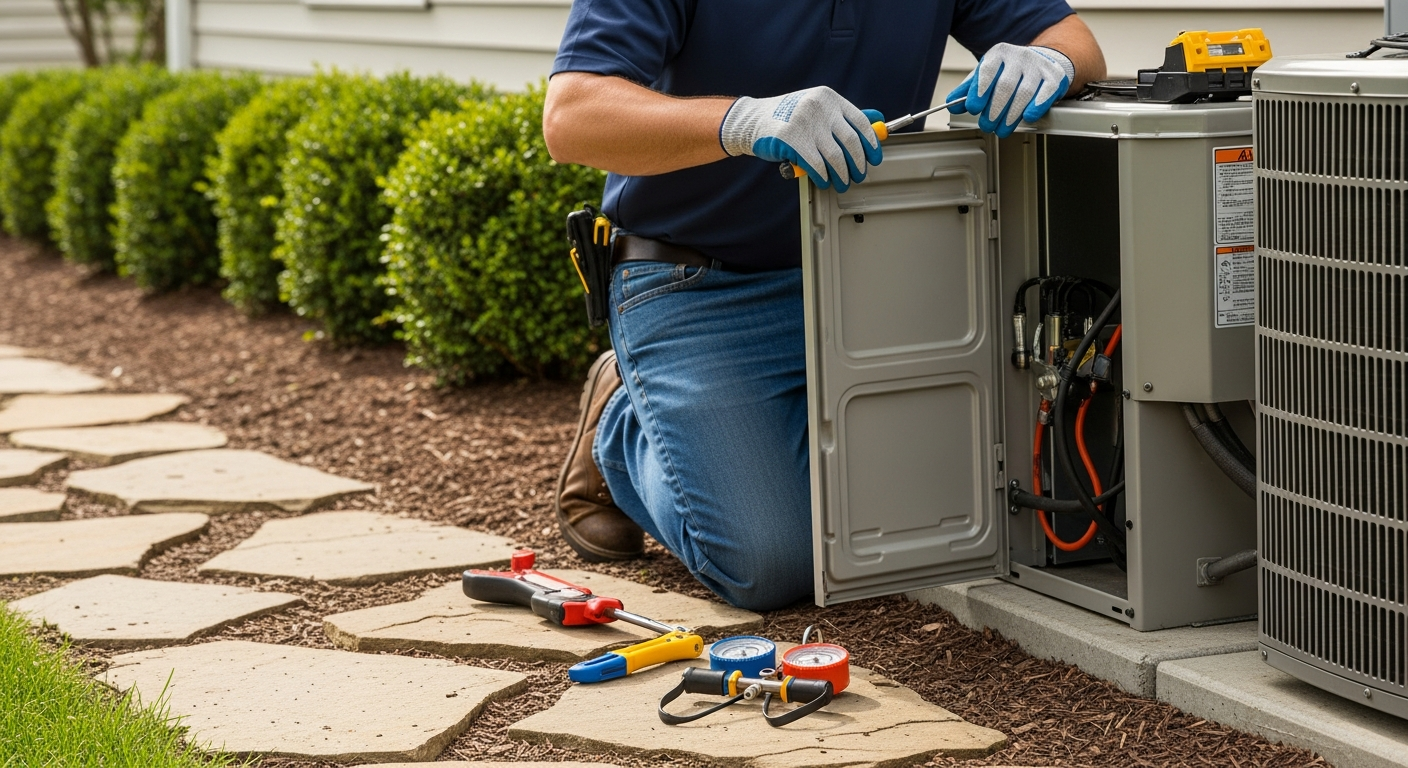
Quick Answer: How to Pick a Great HVAC Contractor in El Paso
Insist on a Texas TDLR license (verify online), proof of general liability and workers' compensation insurance, and a written estimate that includes a Manual J load calculation. Choose a company with NATE-certified technicians and local references from similar El Paso homes. Get at least three bids and compare them with our Quote Checker. Avoid any contractor who gives a firm price over the phone without inspecting your home.
What a Trustworthy El Paso HVAC Contractor Looks Like
| Characteristic | Green Flag (Good Sign) | Red Flag (Warning Sign) |
|---|---|---|
| Licensing | Provides TDLR number that checks out on the state website | Hesitates to share license number or says “we're certified” but isn't licensed |
| Insurance | Shows current certificate for liability and workers' comp | “Insurance? Don't worry, we're careful” – no written proof |
| Home Evaluation | Performs a thorough walk‑through, measures rooms, checks ducts and insulation | Gives a price over the phone after asking only square footage |
| Quote Detail | Line‑item estimate with equipment model, SEER2 rating, labor, permits, and disposal | One‑line total on a business card or verbal promise |
| Local Experience | Can discuss swamp cooler maintenance, hard‑water issues, and refrigerated air conversions | Answers with generic statements about “all climates” |
| Certifications | Employs NATE‑certified technicians; factory‑authorized dealer | No industry credentials beyond “years in business” |
| References | Offers 3 recent local references you can call | “Our reviews speak for themselves” but won't share phone numbers |
Safety Boundaries: What You Can (and Can’t) Do Yourself
Homeowners can perform basic maintenance without a license:
- Replace disposable air filters every 1–2 months during heavy use (learn how to replace an AC air filter).
- Keep the outdoor unit clear of debris, grass, and dust.
- Check that supply registers are open and unblocked.
- Verify thermostat settings and battery condition.
- Visually inspect insulation on refrigerant lines (but do not touch).
Do‑Not‑Touch List: Any work involving refrigerants, gas lines, electrical components, compressors, capacitors, contactors, or control boards must be handled by a licensed professional. Opening sealed system components risks injury, voided warranties, and EPA violations. If you suspect a refrigerant leak, call a pro—our Emergency HVAC finder can connect you with 24/7 service.
Use Interactive Tools to Make Smarter Decisions
Before you sign a contract, run the numbers with our free calculators:
- HVAC Cost Estimator: See typical installation price ranges for your home size in El Paso.
- Quote Checker: Upload or enter your bids to spot hidden fees or missing line items.
- Repair or Replace Calculator: Enter repair cost, unit age, and efficiency to see if replacement makes financial sense.
- BTU Calculator: Estimate the cooling capacity your home truly needs (but always confirm with a pro's load calculation).
- Rebate Finder: Discover local utility rebates for high‑efficiency heat pumps or AC units in the El Paso area.
Decision Rules: When to Walk Away or Move Forward
Use these concrete thresholds during the selection process:
- License check fails? Eliminate the contractor immediately—no second chances.
- Quote comes without a home visit? Politely decline; proper sizing requires a full evaluation.
- Repair cost >50% of a new system AND your AC is over 12 years old? Strongly consider full replacement. Our Repair or Replace Calculator can help you decide.
- One bid is more than 20% lower than others? Scrutinize for missing permits, disposal fees, or lower‑efficiency equipment. Use the Quote Checker to compare apples to apples.
- Contractor can’t provide 3 El Paso references? May lack local track record—opt for someone who can demonstrate satisfied neighbors.
Contractor Interview Checklist
Ask every prospective contractor these questions and note their answers:
- “What is your Texas TDLR license number, and may I verify it?” Write it down and check at www.tdlr.texas.gov.
- “Can you email me your insurance certificates for liability and workers’ comp?” Verify they’re current.
- “Will you perform a Manual J load calculation before quoting?” The answer must be yes, including measuring windows, insulation, and ductwork.
- “Do you have experience with both evaporative coolers and refrigerated air systems?” El Paso homes often have one or the other; experience matters.
- “What SEER2 ratings do you recommend, and why?” For desert heat, a minimum of SEER2 15 is often cost‑effective; higher if you plan to stay long‑term.
- “Does your quote include all permits, haul‑away of old equipment, and startup?” Avoid surprises later.
- “Can you give me three recent local references I can call?” Actually call them and ask about timeliness and final cost.
- “Are your installers NATE‑certified?” Certification signals ongoing training and competence.
- “What maintenance plans do you offer, and what’s included?” In El Paso, twice‑yearly checks are ideal.
- “How do you handle issues during the first year?” A labor warranty of at least one year is standard.
Local Context: Why El Paso Demands a Specialist
El Paso’s high‑elevation desert forces HVAC systems to work harder. Key local factors:
- Extreme dry heat: AC units can run 10–12 hours a day in summer. Proper sizing prevents short‑cycling and high humidity issues (even in dry areas, comfort relies on steady runtime).
- Evaporative coolers (swamp coolers): Many older homes still use them. They require regular pad changes, water‑line maintenance, and winterization. If you’re considering a conversion to refrigerated air, ask the contractor about ductwork modifications—some swamp cooler ducts are not compatible.
- Hard water: Mineral buildup shortens cooler pad life. A contractor experienced with El Paso water will recommend appropriate maintenance schedules.
- Monsoon season: July–September can bring humidity spikes that reduce swamp cooler effectiveness. Refrigerated air systems handle this better, but sizing must account for those conditions.
- Altitude: At ~3,800 feet, air is less dense, which slightly affects heat transfer. Factory‑authorized dealers can adjust equipment settings for altitude.
- Dust: Frequent dust storms mean outdoor coils need cleaning more often. Ask about easy‑access coil designs.
For a broader look at desert‑climate HVAC challenges, read our guide on HVAC tips for Phoenix homeowners. While climates differ, many best practices overlap.
Frequently Asked Questions
1. What license does an HVAC contractor need in El Paso?
They must hold a Texas Department of Licensing and Regulation (TDLR) license. Verify it at the TDLR website. Unlicensed work is illegal and voids manufacturer warranties.
2. How much does a typical AC repair cost in El Paso?
Basic diagnostic visits cost $80–$200. Common repairs range from $150–$650 for electrical or control issues, $500–$1,500 for refrigerant/leak or motor work, and $1,500–$4,000+ for compressor or coil replacement. Get a written estimate before approving work.
3. Should I choose a national chain or a local contractor?
Local expertise often wins. A family‑owned El Paso contractor understands desert‑specific quirks better than a national franchise. However, large chains may offer 24/7 availability and standardized warranties. Check reviews and ask about dedicated local techs, not subcontractors.
4. How often should I service my AC in El Paso’s climate?
Twice a year: a cooling tune‑up in spring (March–April) and a heating check in fall (October). Heavy summer use and dust storms make regular maintenance critical. Enrolling in an annual maintenance plan ($150–$500) often includes priority scheduling and discounts.
5. What is a SEER2 rating and what should I get?
SEER2 is the updated efficiency metric for air conditioners. In El Paso, a SEER2 of 15–16 balances upfront cost and long‑term savings. If you plan to stay in your home 10+ years, a higher SEER2 (19+) can pay off through lower electric bills. Use our Cost Estimator to see options.
Related articles
Explore related maintenance, equipment, and hiring questions.

How to check an HVAC contractor before hiring
Use a documented shortlist: business identity, applicable credentials, job experience, a written scope, and a clear handover.

How to compare HVAC quotes using the same scope
Use an itemized comparison worksheet to separate equipment, labor, exclusions, allowances, and warranty terms before choosing a contractor.

Nest Learning Thermostat (4th gen) vs ecobee Premium
Both models offer remote room sensors. Compare the exact generation, wiring compatibility, controls, and installed quote before choosing.