How to Install a Ductless Mini Split AC
Plan your ductless mini-split AC project with confidence. Learn what the work involves, what it costs, and how to find and vet qualified installers near you.

Hire a Pro, Plan Smart
Homeowners should not attempt full DIY mini‑split installation. Engage a licensed HVAC contractor for refrigerant and electrical work, but handle safe tasks like site preparation and filter maintenance to control costs and extend system life.
What Matters Most
- Mini‑split installation requires professional expertise for refrigerant, electrical, and warranty compliance.
- Budget $3,000–$8,000+ per zone; use the cost estimator for personalized pricing.
- Always verify contractor credentials, permits, and references before work begins.
- Proper sizing via a load calculation prevents comfort issues and efficiency loss.
- Regular filter cleaning and annual pro maintenance keep your system running for 15+ years.
Strengths
- Pros ensure correct refrigerant charge and leak‑tight connections, maximizing efficiency.
- Professional installation preserves full manufacturer warranty coverage.
- Licensed work meets local codes and passes inspections, protecting resale value.
Weaknesses
- DIY methods void warranties and often result in system failure within months.
- Improper handling of refrigerant can cause environmental harm and legal penalties.
- Homeowner electrical work increases fire risk and may fail inspection.
Installation Approach Decision Summary
| Scenario | Usually do | Why |
|---|---|---|
| Experienced DIYer wanting to save money | Hire a pro for final connections and commissioning | Most manufacturers require certified installation; partial DIY is rarely feasible. |
| First‑time homeowner with no HVAC knowledge | Hire a full‑service contractor | Ensures safety, code compliance, and warranty protection from day one. |
| Replacing an old, failed mini‑split | Hire a pro to recover old refrigerant and install new unit | EPA rules require certified professionals to handle refrigerant removal. |
Quick Answer
A mini-split installation requires an indoor air handler, outdoor condenser, connecting line sets, and electrical wiring. While handy homeowners can prepare the site and possibly mount the indoor unit, the critical tasks of flare connections, vacuuming the lines, releasing refrigerant, and final electrical hookups must be done by a licensed HVAC technician. Expect to pay $3,000–$8,000+ per installed zone, depending on system size and complexity. Use our tools below to estimate costs and find vetted contractors.
What Ductless Mini-Split Installation Involves
Ductless mini-splits provide zoned heating and cooling without ducts. A typical installation includes: selecting a properly sized unit, mounting an indoor air handler on an exterior wall, placing an outdoor condenser on a level pad, connecting insulated refrigerant lines and condensate drain through a small wall opening, wiring a dedicated circuit from the electrical panel, and professionally evacuating and charging the lines. The work usually takes one day for a single zone.
Safety Boundaries: What You Can (and Cannot) Do Yourself
While some tasks are deceptively simple, many are legally and technically restricted. This table clarifies homeowner boundaries:
| Homeowner‑Safe Tasks | Pro‑Only Tasks |
|---|---|
| Choosing the location according to manufacturer clearances | Connecting refrigerant lines (flare nuts require torque and leak‑free seals) |
| Providing a solid, level surface for the outdoor unit (e.g., concrete pad) | Using a vacuum pump to remove moisture and air from lines |
| Reading and understanding the installation manual | Releasing refrigerant into the system; handling any amount of refrigerant |
| Mounting the indoor backplate only if you are experienced locating studs and avoiding hidden pipes/wires | Running electrical wiring from the breaker panel to the disconnect box |
| Clearing debris and ensuring 12‑inch clearance around the outdoor unit | Testing system pressures, subcooling, and fine‑tuning performance |
Warning: DIY refrigerant or electrical work voids manufacturer warranties, violates building codes, and creates fire, shock, and refrigerant‑exposure hazards. These tasks require EPA Section 608 certification for refrigerants and often a licensed electrician.
How Much Does Mini-Split Installation Cost?
Below are editorial estimates based on national averages. Actual prices vary by system size, region, and home specifics. Use our HVAC cost estimator for a personalized range.
| Task / Component | Editorial Estimate Range | Notes |
|---|---|---|
| Basic single‑zone mini‑split (equipment only) | $1,000 – $3,000 | DIY‑grade or entry‑level heat pump |
| Installation labor (one zone) | $1,500 – $4,000 | Includes mounting, lines, electrical, commissioning |
| Additional indoor zones | $500 – $2,000 per extra zone | Multi‑zone systems share one outdoor unit |
| Electrical panel upgrade (if needed) | $1,200 – $3,000 | Common in older homes with insufficient amperage |
| Permits and inspection | $100 – $500 | Required in most jurisdictions |
Is a Mini-Split Right for Your Home? Decision Tree
Walk through these common scenarios to see if a ductless unit matches your needs:
- Do you need heating and cooling in a room without ductwork? (sunroom, garage, addition) → Yes: Mini‑splits are the top recommendation. See also cooling a sunroom without ductwork.
- Are some rooms always too hot or too cold? → Yes: A ductless system can correct comfort imbalances without upgrading your central system. First, verify your existing system is working properly with our troubleshooting guide.
- Is your home old or historic, lacking space for bulky ductwork? → Yes: Mini‑splits avoid major demolition. Compare with the cost of adding central AC.
- Do you want a single unit that both heats and cools? → Yes: Nearly all mini‑splits are heat pumps. For cold climates, ensure the model works below 0°F.
- Is the area you’re conditioning smaller than 1,000 sq ft? → Yes: A single‑zone mini‑split often suffices; check sizing with our BTU calculator.
Selecting the Right System: Use Our BTU Calculator
Improper sizing wastes energy and shortens equipment life. An oversized unit short‑cycles, failing to dehumidify; an undersized one runs non‑stop. Use our free BTU calculator, which factors in room size, insulation, ceiling height, and climate. For whole‑home applications, also compare seasonal efficiency ratings (SEER2/HSPF2) and consider a multi‑zone configuration.
How to Hire a Qualified Mini-Split Installer
Print or save this checklist when interviewing contractors. The right installer protects your warranty and ensures long‑term performance.
- License, bond, insurance: “May I see your current license and certificate of insurance?”
- Ductless experience: “How many mini‑split installations have you completed in the last year? Do you have photos?”
- Written estimate: “Please provide an itemized quote separating equipment, labor, permits, and any electrical panel work.”
- Permits: “Will you pull all required permits and schedule inspections?”
- Warranties: “What do you guarantee on your workmanship, and how does the manufacturer’s warranty apply?”
- Load calculation: “Will you perform a Manual J load calculation to confirm the system size?”
- References: “Can you provide local references from the past 12 months?”
Search our verified contractor database or compare multiple pros with our contractor comparison tool.
Local Considerations: Climate and Home Type
Your region and house style dictate critical choices:
- Hot, humid climates (Southeast, Gulf Coast): Prioritize units with excellent moisture removal; look for a “dry” mode.
- Cold climates (Northeast, Midwest): Choose models rated down to -5°F or lower (e.g., Hyper‑Heat or Arctic series).
- Coastal areas: Demand corrosion‑resistant outdoor units with coated coils.
- Older homes: Budget for a possible electrical panel upgrade; ensure your home can handle the new circuit load.
If you’re deciding whether to repair or replace existing equipment, try our repair or replace calculator.
Maintenance and Long-Term Ownership
Once installed, simple homeowner maintenance keeps your system efficient. Clean washable filters monthly; replace disposable filters as needed (see filter replacement guide). Gently rinse outdoor coils each spring with a garden hose; avoid pressure washers. Keep the outdoor unit free of leaves and debris. Schedule professional annual maintenance to check refrigerant levels, electrical connections, and overall operation.
Frequently Asked Questions
Can I install a mini‑split myself?
While you may handle site preparation and filter changes, tasks involving refrigerant, electrical wiring, or system commissioning require a licensed professional. DIY work typically voids the warranty and violates local codes.
How long does a typical installation take?
One zone usually takes one full day. Multi‑zone installations may require 2–3 days, depending on access and the number of indoor units.
Do I need a permit for a mini‑split?
Yes. Most municipalities require an electrical permit and often a mechanical permit. A reputable contractor will secure these and schedule inspections.
What size mini‑split do I need?
Roughly, 12,000 BTU cools/heats 400–550 sq ft with standard 8‑ft ceilings. For accurate sizing, input your room details into our BTU calculator.
Will a mini‑split heat my home in winter?
Yes, most are heat pumps. Ensure the model’s low‑temperature efficiency matches your climate; many modern units work well below 0°F.
Methodology and Sources
Cost ranges are editorial estimates compiled from contractor surveys, our own cost estimator, and industry pricing databases. Equipment sizing follows ACCA Manual J best practices. Safety guidance reflects NEC, EPA Section 608, and manufacturer installation documents. This content is reviewed quarterly; always verify with local building departments.
Related articles
Connect this page to adjacent guides so readers keep moving deeper into the topic cluster.
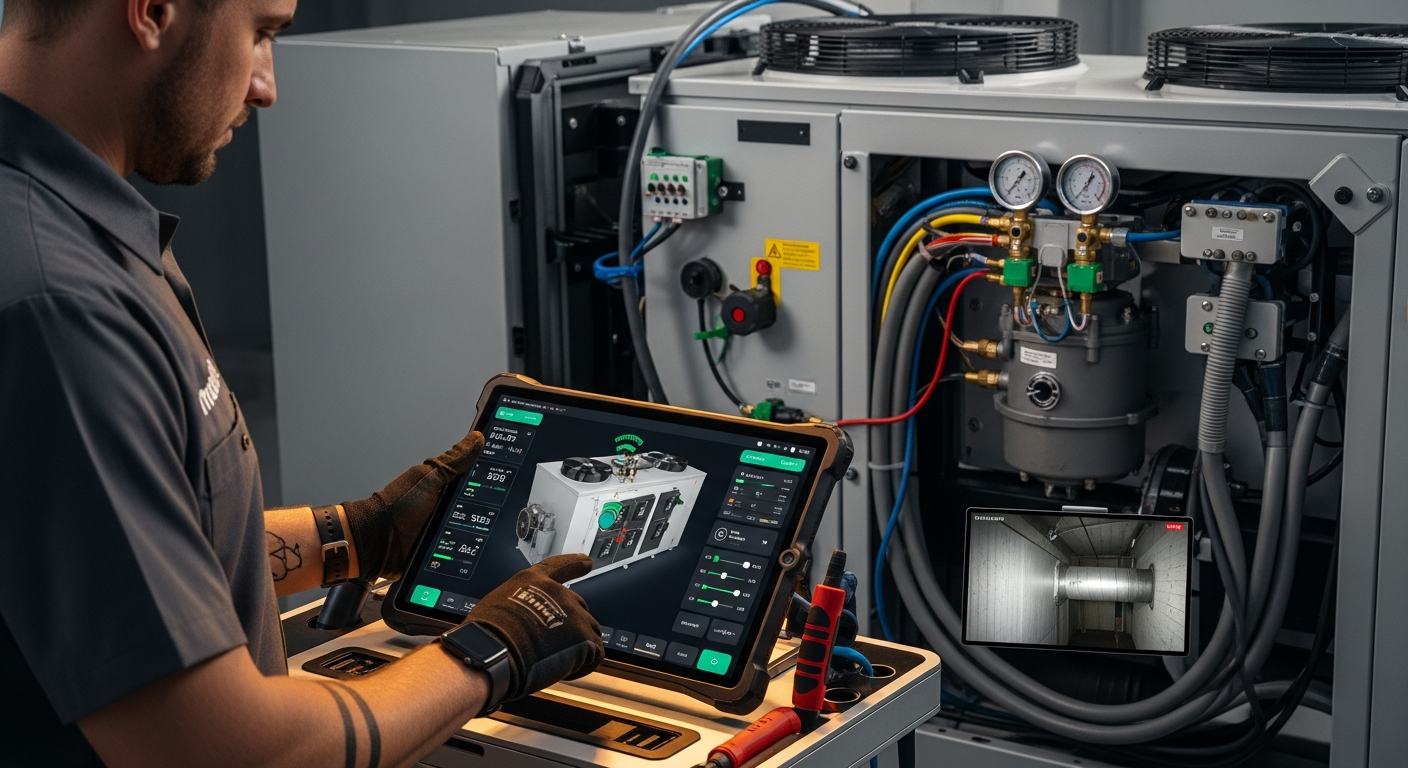
How to Implement a Whole Home Energy Management System
Integrate smart tech and HVAC controls to cut energy waste. This guide shows how to audit, upgrade, and automate your home's energy use, with real savings estimates.

How to Set Up Thermostat Geofencing
Set up thermostat geofencing to automatically adjust home temperature as you come and go. Save energy, extend equipment life, and never return to an uncomfortable house. Get our quick-start guide now.
How to Troubleshoot Smart Thermostat WiFi Issues
Your smart thermostat offline? Most WiFi drops can be fixed with power checks, router adjustments, and simple restarts. Follow our step-by-step guide to regain remote control and energy savings.