How to Lubricate Your AC Fan Motor
A squeaky AC fan motor may just need lubrication—but only if it has oil ports. Our guide helps you decide when DIY is safe, steps to follow, and when to replace the motor or call a tech.
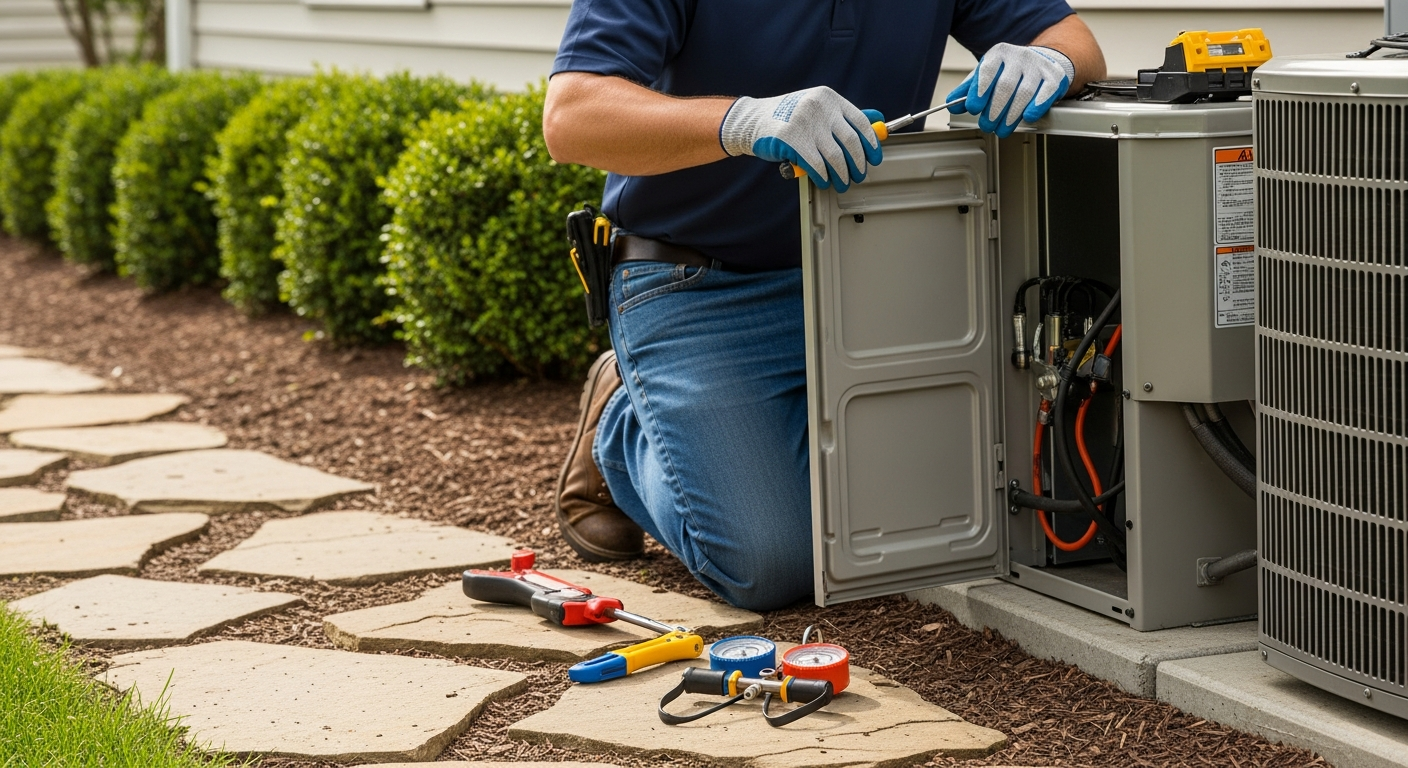
Quick Answer: Should You Lubricate Your AC Fan Motor?
A noisy outdoor condenser unit often points to dry fan-motor bearings. You can safely lubricate the motor only if it has visible oil ports—small rubber or plastic plugs near the shaft. Use SAE 20 non-detergent electric motor oil, not WD-40. If there are no ports, the motor is sealed and cannot be lubricated; forcing oil in will ruin it. After lubricating, noise should fade within minutes. If it persists, the bearings are likely damaged, and motor replacement is almost always needed (typical cost: $500–$1,500). Use our tools below to weigh repair vs. replacement.
Decision Table: AC Fan Motor Noise
| Scenario | Usually Do | Why |
|---|---|---|
| Outdoor unit is screeching or grinding; motor has oil ports. | Lubricate with SAE 20 oil yourself. | Dry bearings cause noise and overheating; oil restores smooth operation. |
| Motor has no visible oil ports. | Do not attempt to oil; plan for motor replacement when it fails. | Sealed bearings cannot be serviced; drilling holes will destroy the motor. |
| Noise returns within days of lubrication. | Schedule professional motor replacement. | Bearings are likely pitted or worn; temporary silence will not last. |
| Fan blades are hard to turn by hand (power off). | Call for diagnosis; motor may be seized. | Forcing a seized motor can damage other components and is a fire risk. |
| Unit is over 12 years old and noisy. | Use our Repair or Replace Calculator. | A new motor may not be cost-effective if the system is near end of life. |
Safety Boundaries and DIY Scope
What you can safely do:
- Visually inspect the motor for oil ports.
- Shut off all power at the disconnect and breaker.
- Remove the top grille to access the motor, taking care not to pull on wires.
- Apply SAE 20 oil to accessible ports and reassemble.
Do NOT attempt if:
- The motor has no plugs—it is permanently lubricated.
- You must drill, disassemble, or bypass seals.
- You are not comfortable de-energizing the unit completely.
- Wiring is frayed, brittle, or shows signs of overheating.
Always leave these to a licensed HVAC technician: refrigerant handling, gas connections, compressor work, capacitor/contactor replacement, control board repair, and any task that requires removing the motor from its mount or accessing internal wiring.
Safe Lubrication Steps (Only if Ports Are Present)
- Turn off power. Switch off the disconnect box near the unit and the breaker inside. Confirm power is off by setting the thermostat to “off” and checking the unit doesn’t hum.
- Access the motor. Remove screws securing the top grille or fan guard. Lift the top carefully—do not let the motor hang by its wires.
- Clean the area. Use a soft brush or vacuum to remove dirt, leaves, and cobwebs from the motor casing.
- Locate oil ports. Find two small rubber or plastic plugs, usually on the top and bottom of the motor near the shaft ends.
- Apply oil. Pop out the plugs, add 3–5 drops of SAE 20 non-detergent electric motor oil into each port (never WD-40 or 3-in-1 household oil), wipe drips, and replace plugs.
- Reassemble and test. Secure the grille, restore power, and listen. The noise should quiet down within minutes.
Decision Rules: Lubricate, Replace, or Call?
Use this simple logic tree:
- Is the outdoor unit making a squealing or grinding noise? → No: no action needed. Yes: continue.
- Can you clearly see two small rubber or plastic plugs on the motor housing? → No: motor is sealed; start budgeting for replacement. Yes: lubricate.
- After lubrication, does the noise go away and stay away for at least a week? → No: bearing damage is likely; schedule motor replacement. Yes: success—plan to lubricate annually.
- Is the unit older than 10–12 years and making new noise? → Use the Repair or Replace Calculator to compare a new motor against system replacement.
Tools & Cost Calculators
Before you spend, run the numbers. A serviceable motor lubrication costs only a few dollars in oil. A new condenser fan motor, installed, typically ranges from $500 to $1,500 depending on system size, brand, and local rates.
- HVAC Cost Estimator — get a localized price range for motor replacement or maintenance visits.
- Repair or Replace Calculator — decide if an aging system is worth fixing.
- System Age Decoder — find out how old your unit is from the serial number.
- Quote Checker — verify a contractor’s bid is fair.
Contractor Checklist: Questions to Ask Before a Motor Replacement
If you’ve reached the point of calling a pro, ask these questions to filter out poor value:
- “Is my current motor sealed or does it have oil ports? Can you show me?” (Confirms diagnosis)
- “What is the exact part number and can I see the OEM vs. aftermarket options?” (Quality matters)
- “What is the total installed price, broken into parts and labor?” (Compare with our estimates)
- “Does the new motor come with a warranty, and what does it cover?” (1–3 years is typical)
- “Will you also inspect the capacitor, contactor, and fan blade for wear?” (Bundle work saves future trips)
- “Is the motor’s amp draw within spec after installation?” (Ensures quality install)
Regional Tips
- Hot climates (Phoenix, Las Vegas): Motor failure peaks in mid-summer. Lubricate in late spring and consider a second check before July. Keep a spare capacitor on hand—heat kills them.
- Humid/coastal areas (Miami, Houston): Salt and moisture accelerate bearing corrosion. Inspect ports for rust and use marine-grade lubricant if recommended by manufacturer.
- Cold winter regions (Chicago, Minneapolis): Motors can seize after months of disuse. Test before cooling season and listen for stiction. If you hear a “hum” but no spin, shut off immediately.
- Older homes (pre-1990): Wiring may not have a ground fault or proper disconnect. If the motor is hardwired with no pull-out disconnect, have an electrician install a safety switch before DIY work.
FAQs
Can I use WD-40 or 3-in-1 household oil?
No. WD-40 is a solvent that will dissolve the remaining grease and accelerate bearing failure. 3-in-1 household oil is too light and not designed for high-temperature motor bearings. Use only SAE 20 non-detergent electric motor oil, available at hardware stores and online.
How often should I lubricate my AC fan motor?
If your motor has oil ports, lubricate once a year before cooling season. In dusty or coastal environments, do it twice a year. Sealed motors require zero lubrication; if they get noisy, replacement is the only fix.
My outdoor unit is screeching loudly. Is it definitely the fan motor?
Not always. A failing compressor, loose fan blade rubbing the shroud, or debris can cause similar noises. However, a high-pitched squeal that changes with fan speed is classic dry bearings. A technician can isolate the source quickly; a simple motor lubrication is far cheaper than chasing a phantom problem.
What if I add too much oil?
Excess oil can seep out and attract dirt, eventually gumming up the bearings. If you over-oil, wipe away visible excess and monitor for any new noise. In severe cases, a blower motor cleaning may be needed, but that’s a job for a pro.
How much should a condenser fan motor replacement cost?
Editorial estimate: $500–$1,500 installed. The motor itself runs $150–$400, labor 1–3 hours at $100–$200/hr, plus markup and possible ancillary parts. Use our cost estimator to see what’s typical in your area and avoid overpaying.
Related articles
Explore related maintenance, equipment, and hiring questions.

How to check an HVAC contractor before hiring
Use a documented shortlist: business identity, applicable credentials, job experience, a written scope, and a clear handover.

How to compare HVAC quotes using the same scope
Use an itemized comparison worksheet to separate equipment, labor, exclusions, allowances, and warranty terms before choosing a contractor.

Nest Learning Thermostat (4th gen) vs ecobee Premium
Both models offer remote room sensors. Compare the exact generation, wiring compatibility, controls, and installed quote before choosing.