How to Set Up HVAC Zoning With Smart Thermostats
Zoning with smart thermostats divides your home into independently controlled areas, reducing energy bills by up to 30% and eliminating hot/cold spots. Get practical steps, costs, and hiring advice.

Zoning with smart thermostats is a high-value upgrade for homes with persistent temperature imbalances or high energy bills.
If your home has multi-story hot/cold spots or you’re conditioning rarely used rooms, a professional retrofit typically pays back in 3–7 years. Always insist on a Manual J load calculation and proper static pressure management.
What Matters Most
- Plan for a total investment of $2,000–$5,000 for a 2‑zone retrofit.
- Use a pro for damper and ductwork work; DIY is limited to thermostat mounting and scheduling.
- Verify that contractors perform a Manual J and include a bypass or variable-speed system.
- Smart thermostats with remote sensors enhance comfort and payback.
- Get multiple quotes and use HVACDatabase tools to verify fairness.
Strengths
- Eliminates hot/cold spots for good.
- Cuts heating/cooling bills by up to 30%.
- Increases equipment lifespan by reducing unnecessary cycles.
- Allows per‑room scheduling and geofencing via smart thermostats.
Weaknesses
- High upfront cost; not cost‑effective for small or open‑plan homes.
- Incorrect installation can damage your HVAC unit or void warranties.
- DIY potential is very limited; must hire a competent contractor.
- May require duct modifications that are invasive.
- Payback is longer in mild climates.
Zoning vs. Alternatives
| Scenario | Usually do | Why |
|---|---|---|
| Multi-story home with hot upstairs in summer | Install two‑zone system (up/down) | Stops stacking effect; saves up to 30% on cooling. |
| Small ranch with open floor plan | Stick with single‑zone programmable thermostat | Zoning adds cost with minimal comfort or savings benefit. |
| Old HVAC system (12+ years) needing major repairs | Replace with modern multi‑zone capable system | Repairing old unit plus adding zoning often costs more than a new, more efficient system. |
| Rooms rarely used (guest suite, basement) | Zone those spaces separately | Stop heating/cooling empty areas; quickest payback. |
| Seeking a DIY project | Limit to thermostat upgrades and scheduling | Ductwork and panel wiring carry safety and equipment risks. |
Introduction
Tired of upstairs bedrooms that are 10°F hotter than the main floor? A single thermostat can’t balance a multi-story or sprawling home. HVAC zoning with smart thermostats solves this by splitting your ductwork into separate areas, each with its own temperature control. The result: personalized comfort, 20–30% lower heating and cooling costs, and less wear on your equipment. This guide covers planning, costs, safety rules, and vetting a pro—no fluff.
Quick Answer
HVAC zoning with smart thermostats uses a central zone control panel, motorized duct dampers, and multiple smart thermostats (or sensors) to independently manage temperatures in different areas of your home. A full retrofit typically costs $2,000–$5,000+ depending on the number of zones and duct modifications. Payback is usually 3–7 years through energy savings. Homeowners can map zones and program schedules, but damper installation and zone panel wiring must be done by a qualified HVAC technician to avoid equipment damage or safety hazards.
How HVAC Zoning Works
In a zoned system, your existing furnace or air conditioner connects to a zone control panel. The panel receives signals from multiple thermostats and tells motorized dampers inside your ductwork to open or close as each zone calls for heating or cooling. This prevents wasted energy and eliminates temperature swings between rooms.
| Component | What It Does | Homeowner Role |
|---|---|---|
| Smart Thermostats | Senses temperature, runs schedules, and communicates wirelessly with the zone panel. | Choose, mount (low-voltage), and program. |
| Zone Control Panel | Central hub that connects all thermostats and dampers to the HVAC equipment. | Mounting may be DIY‑friendly, but wiring to the HVAC unit is pro‑only. |
| Motorized Dampers | Install inside ductwork to control airflow to each zone. | Must be installed by a licensed pro. |
| Bypass Damper / Variable‑Speed Blower | Manages excess air pressure when only one zone is calling, protecting the system. | Pro‑only specification and installation. |
| Remote Sensors | Place in rooms to average temperature or detect occupancy. | DIY placement and pairing. |
Choosing Smart Thermostats for Multi‑Zone Control
Not all smart thermostats play nice with zone panels. Look for models that explicitly support multi‑zone setups and offer remote sensors. Features like geofencing (learn more), schedules, and energy reports maximize savings. Brands such as ecobee and Honeywell have dedicated zoning‑compatible product lines. Verify that the thermostat can communicate with your selected zone panel—most use 24 VAC signaling, but some proprietary systems require matching hardware. After installation, remember to calibrate your thermostat so temperature readings are accurate.
Step‑by‑Step Planning for Homeowners
- Map your zones. Group rooms by similar heating/cooling loads and occupancy patterns. Common splits: upstairs vs. downstairs, living areas vs. bedrooms, or sun‑exposed rooms vs. shaded ones.
- Get a professional Manual J load calculation. This determines the heating and cooling capacity each zone needs, ensuring dampers and equipment are sized correctly.
- Obtain multiple quotes. Ask contractors to detail the number of dampers, zone panel model, thermostat recommendations, and whether a bypass damper or variable‑speed blower is needed.
- Schedule installation. The pro cuts into your ductwork to install dampers, mounts the zone panel, wires everything, and tests the system.
- Program your smart thermostats. Set schedules for each zone, enable geofencing, and integrate with your home automation if desired.
Safety Boundaries: What You Can and Cannot Do
HVAC zoning involves ductwork, low‑voltage wiring, and—if done incorrectly—risks like high static pressure that can destroy your blower motor. Follow these rules to stay safe and protect your equipment.
✅ Safe Homeowner Actions
- Map zones and decide where thermostats will go.
- Install smart thermostats on the wall using the color‑coded low‑voltage wires (turn off power first).
- Pair remote sensors and set up schedules via the thermostat app.
- Replace standard air filters (guide here) and vacuum vent covers.
- Monitor energy reports and adjust schedules for efficiency.
🚫 Pro‑Only Work (Do Not Attempt Yourself)
- Cutting into ductwork or installing motorized dampers.
- Wiring a zone control panel to your furnace, air conditioner, or heat pump (high‑voltage terminals are inside).
- Adjusting refrigerant charge or opening refrigerant lines.
- Any work involving gas supply lines, combustion chambers, or capacitors/contactors.
- Bypassing safety interlocks or installing a bypass damper without calculating air pressure.
If a contractor pressures you to “save money” by doing some of these yourself, walk away. Improper damper installation can cause duct leaks, frozen coils, or even fire hazards.
Decision Tree: Is Zoning Worth the Cost for Your Home?
Answer these questions in order. If you reach a “No” on a high‑priority item, zoning may not pay back.
- Do you have a multi‑story home or rooms that are consistently too hot in summer and too cold in winter?
- Yes → Move to step 2.
- No → Zoning is unlikely to solve a comfort problem. Consider checking your insulation or duct sealing first.
- Do you have rooms that are rarely used (guest bedroom, basement) that you are still heating/cooling fully?
- Yes → Strong case for zoning—potential energy savings of 20‑30%.
- No → Savings may be modest. Move to step 3.
- Is your HVAC system less than 10 years old and in good working order?
- Yes → Good candidate for a retrofit. If the system is older or failing, use our Repair or Replace Calculator first to decide whether to invest in the current unit.
- No → Replacing the HVAC system with a multi‑zone capable unit may be smarter long‑term.
- Is your ductwork accessible and in decent shape?
- Yes → Proceed to get contractor quotes. Use our Cost Estimator to ballpark your budget.
- No → If ducts are buried in finished ceilings or walls, zoning costs escalate quickly. Get a duct inspection first.
Cost Guidance: What to Expect
Zoning projects have wide cost ranges. Always get at least three itemized quotes. Below are editorial estimates based on industry surveys and HVACDatabase research. Actual prices vary by region, home size, and access.
| Item | Typical Range | Notes |
|---|---|---|
| Diagnostic visit & Manual J | $150 – $400 | Often rolled into project cost if you proceed. |
| Zone control panel | $250 – $800 | Panel only; 2‑zone panels start lower, 4+ zones higher. |
| Motorized dampers (each) | $150 – $350 | Installed cost; you typically need 2‑4 dampers for a 2‑zone system. |
| Smart thermostat (each) | $150 – $300 | Plus $100‑$150 for additional remote sensors if needed. |
| Installation labor | $800 – $2,000 | Includes duct cutting, wiring, panel setup, and testing. |
| Crawlspace/attic surcharge | $200 – $600 | For tight or hot working conditions. |
| Total Estimated Project | $2,000 – $5,000+ | For a typical 2‑zone retrofit in a mid‑sized home. |
These are editorial estimates, not guaranteed prices. Use our HVAC Cost Estimator to refine numbers for your location.
Use These Free Tools Before You Commit
- HVAC Cost Estimator – Get a localized ballpark cost.
- Quote Checker – Upload your written estimates for an expert sanity check.
- Repair or Replace Calculator – If your system is old, see if replacement with zoning makes more sense.
- Rebate Finder – Many utilities offer incentives for smart thermostats and duct sealing that can offset zoning costs.
Contractor Checklist: Questions to Ask Before You Sign
Use these questions when interviewing contractors. A skilled pro will answer them clearly and without hesitation.
- “Do you perform a Manual J load calculation for each zone?” If they skip this, the zones may be unbalanced.
- “What brand of zone panel and dampers do you use? Why?” Ask for warranties and parts availability.
- “Will the design include a bypass damper or variable‑speed blower control?” This is critical to prevent high static pressure. Make sure they explain how they will avoid it.
- “Can you show me pictures of a similar project you completed?” Check for neat ductwork and professional wiring.
- “What is your commissioning process?” They should balance airflow, verify damper operation, and test temperatures in each zone.
- “Do you offer a written performance guarantee?” Some contractors promise a maximum temperature differential between zones.
- “Are you licensed and insured in my state? Can you provide proof?” Always verify.
- “What rebates do I qualify for, and will you help with the paperwork?” Good contractors know local utility programs.
Start your search on HVACDatabase and use our Contractor Comparison Tool to weigh your options.
Local Considerations: Climate and Home Type Matter
- Hot, humid climates (e.g., Phoenix, Houston): Zoning helps upstairs cooling; also consider zoning that separates living areas from kitchens/baths to manage humidity. Check Phoenix AC contractors for desert‑specific experience.
- Cold climates (e.g., Chicago, Milwaukee): Heating imbalance between upper and lower floors is common. Zoning with smart setbacks can save significantly. Find Chicago heating pros who understand cold‑weather static pressure management.
- Older homes: Ductwork may be undersized or leaky. A pro may recommend duct sealing or replacement before adding dampers.
- Coastal areas: Corrosion‑resistant dampers and outdoor sensors may be needed.
Methodology
Our recommendations and cost ranges draw on aggregated contractor pricing data, ASHRAE standards for zoning design, manufacturer best practices, and field interviews with HVAC technicians. Safety boundaries follow EPA guidelines for refrigerant handling and NEC electrical safety codes. All estimates are editorial and should not replace on‑site evaluations by licensed professionals.
Frequently Asked Questions
Can I add zoning to my existing HVAC system?
Most systems can be retrofit, provided the ductwork is accessible and in good condition. The age and condition of your HVAC unit matter—if it’s over 12 years old, run the numbers with our Repair or Replace Calculator to see if a new system with integrated zoning is smarter.
How much energy can zoning really save?
The Department of Energy reports that zoning can reduce heating and cooling costs by up to 30% when used with programmable or smart thermostats. Real‑world savings depend on how often zones are unoccupied and climate severity.
Do I need a separate thermostat for each zone?
Yes. Each zone requires its own thermostat or a sensor that reports to a multi‑zone smart thermostat. For example, ecobee’s room sensors can average temperature across one zone, but you still need one main thermostat per zone plus sensors as needed.
Can I DIY a smart zoning installation?
You can handle planning, thermostat mounting, and app setup. Cutting into ducts and wiring a zone control panel is pro‑only. Incorrect static pressure can ruin your blower motor or cause ducts to pop off. Always hire a licensed HVAC contractor for the mechanical work.
Will zoning work with my single‑stage furnace?
Yes, but it’s less efficient than with a two‑stage or variable‑speed blower. A single‑stage system requires a properly sized bypass damper to dump excess airflow when only one zone calls. Without it, the furnace can overheat and short cycle. A variable‑speed system adjusts airflow automatically, making it a better match for zoning.
Related articles
Connect this page to adjacent guides so readers keep moving deeper into the topic cluster.
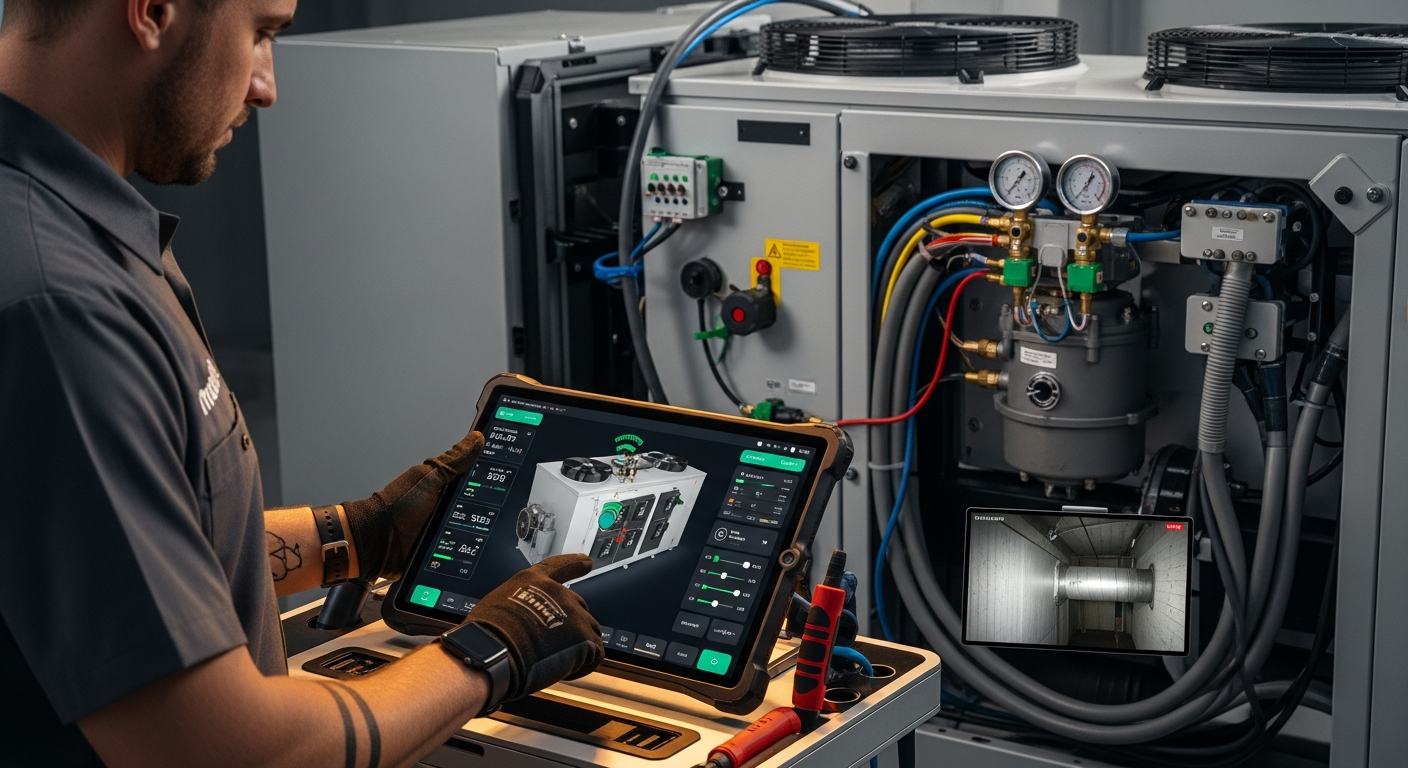
How to Implement a Whole Home Energy Management System
Integrate smart tech and HVAC controls to cut energy waste. This guide shows how to audit, upgrade, and automate your home's energy use, with real savings estimates.
How to Set Up Thermostat Geofencing
Set up thermostat geofencing to automatically adjust home temperature as you come and go. Save energy, extend equipment life, and never return to an uncomfortable house. Get our quick-start guide now.
How to Troubleshoot Smart Thermostat WiFi Issues
Your smart thermostat offline? Most WiFi drops can be fixed with power checks, router adjustments, and simple restarts. Follow our step-by-step guide to regain remote control and energy savings.