How to Stay Cool When Your AC Breaks Down
Discover immediate, safe strategies to stay cool when your air conditioner fails. From quick DIY checks to professional repair costs and temporary cooling options, this guide helps you make informed decisions fast.
Prioritize personal cooling and safety, then assess repair vs. replace with data, not panic
Homeowners should immediately block solar heat, use fans for evaporative cooling, and evaluate the cost-benefit of emergency repair versus temporary alternatives using our tools.
What Matters Most
- Many AC outages can be temporarily managed with no-cost behavioral changes.
- Know the safety limits—don't touch refrigerant or electrical components.
- Use our cost tools to avoid overpaying for emergency repairs.
- In extreme heat, don’t hesitate to seek off-site cooling if health is at risk.
- Schedule annual maintenance to prevent future failures.
Strengths
- Empowers homeowners with immediate, actionable steps.
- Clear safety boundaries protect from dangerous DIY.
- Data-driven repair/replace decisions save money.
- Contractor checklist builds consumer confidence.
Weaknesses
- Not all temporary cooling methods work in all climates (e.g., evaporative coolers in humidity).
- Emergency costs can be unpredictable; our estimates are national averages.
- Some older homes may require electrical upgrades for portable ACs.
- Waiting for a pro during a heatwave can test patience.
Decision Summary
| Scenario | Usually do | Why |
|---|---|---|
| AC dead, outdoor temp < 90°F | Schedule same-day diagnostic; use fans | Emergency surcharges not justified; cool night air can help |
| AC dead, outdoor temp > 95°F | Call for emergency repair + plan temporary cooling | Heat illness risk; prioritize safety |
| Repair estimate > $1,500 on 12+ yr old unit | Run repair/replace calculator; likely replace | Avoid throwing good money after bad; new units more efficient |
| Breaker trips repeatedly | Shut off power, call pro | Persistent short indicates serious electrical fault |
| System still cooling but weakly | Check filter first; if unchanged, schedule service | Often a simple fix; delay can lead to bigger breakdown |
Quick Answer: What to Do Right Now
If your AC stops working in extreme heat, first check the thermostat batteries and breaker. Then, focus on blocking heat entry: close curtains, seal gaps, and avoid using heat-producing appliances. Use fans for evaporative cooling on skin, stay hydrated, and apply cold compresses to pulse points. If basic resets don’t work, find a vetted local contractor via HVACDatabase’s search for urgent diagnosis. Expect a diagnostic fee of $80–$200 (higher after hours). While waiting, consider temporary spot cooling with a portable AC or window unit.
Emergency Cooling Options & Editorial Cost Ranges
| Option | Typical Cost | Best For |
|---|---|---|
| Window/portable AC unit rental | $30–$60/day or $200–$600 purchase | Single-room relief for multi-day outage |
| Evaporative (swamp) cooler | $100–$700 purchase | Dry climates; works best below 90°F |
| Whole-house fan rental | $50–$100/day | Nighttime flushing if you lack box fans |
| Hotel/motel stay | $80–$200/night | Extreme heat when health at risk |
| Emergency HVAC diagnostic visit | $80–$200 (standard); after-hours higher | When quick professional assessment is needed |
Editorial estimates only; actual costs vary by region, season, and availability. Check our HVAC Cost Estimator for localized pricing.
Safety Boundaries: What You Can and Cannot Do
Your safety is paramount. As a homeowner, you can:
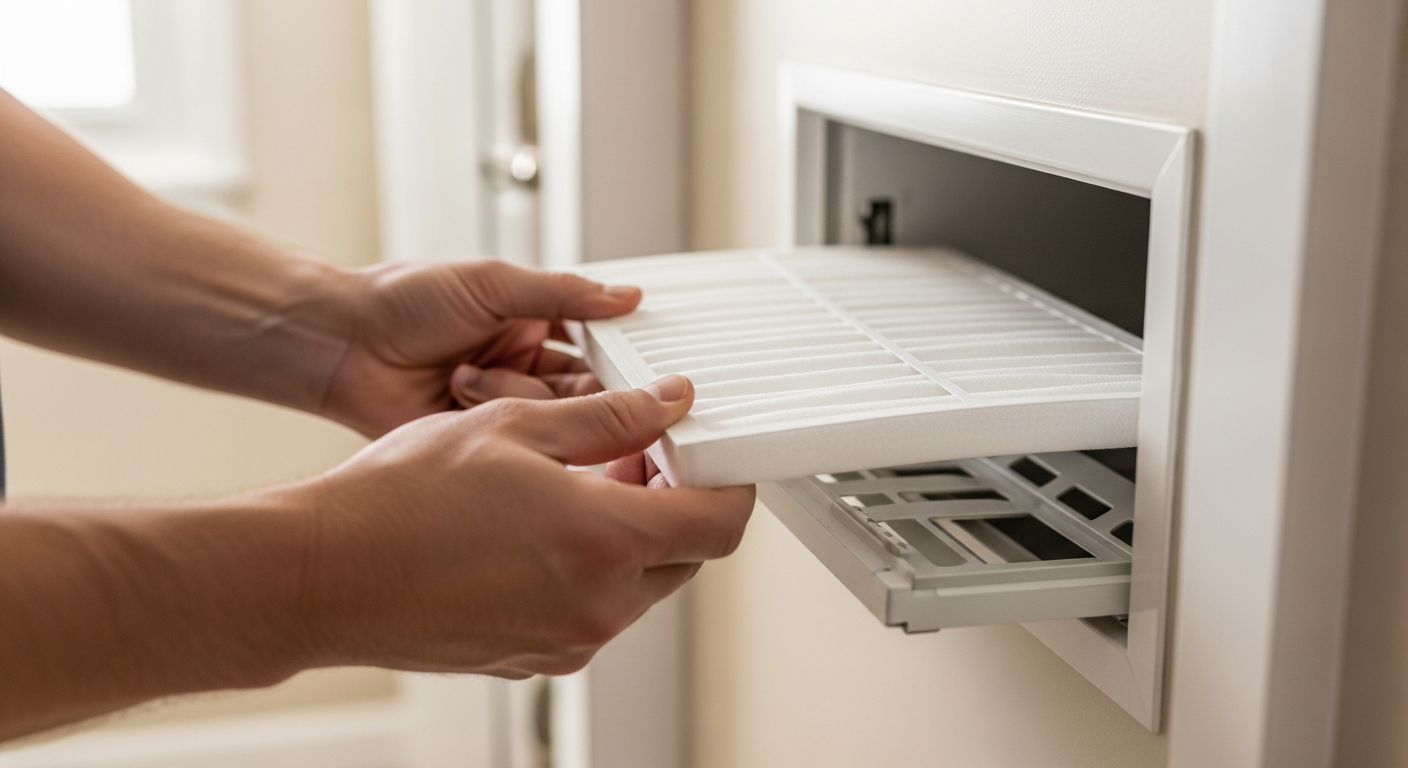
- Check and replace a dirty air filter (see step-by-step guide)
- Inspect the thermostat for dead batteries
- Reset a tripped circuit breaker (once)
- Clear debris from the outdoor unit (vegetation at least 2 ft away)
Do not attempt:
- Refrigerant handling or adding refrigerant
- Opening sealed compressor compartments
- Testing or replacing capacitors, contactors, or control boards
- Bypassing safety switches or limit controls
- Any work involving natural gas lines
If you smell burning, see sparks, or hear grinding noises, shut off the system at the breaker and call a pro immediately. Use our Emergency HVAC page to find qualified help.
Use Our Tools to Make Smart Decisions
Before you commit to a costly emergency repair, run these numbers:
- Repair or Replace Calculator – Compare repair cost vs. new system based on age and SEER.
- System Age Decoder – Decode your unit’s serial number to see its manufacturing date.
- Emergency Cost Tool – Estimate total emergency visit and temporary cooling expenses.
- BTU Calculator – Right-size a temporary AC to your space.
Decision Tree: When to Call for Emergency Repair vs. Temporary Fix
Use these thresholds to decide your next move:
- If outdoor temp is below 90°F – Use fans and nighttime ventilation; schedule a standard diagnostic on the same day. Emergency surcharges may not be justified.
- If outdoor temp is above 95°F and high humidity – Seek emergency service immediately; consider temporary cooling for vulnerable occupants.
- If system is over 12 years old and repair estimate exceeds $1,500 – Strongly consider replacement; use the Repair/Replace calculator.
- If the fix is a simple filter change or thermostat battery – DIY in 10 minutes; no pro needed.
- If you reset the breaker and it trips again immediately – Stop and call a professional; do not keep resetting.
Contractor Checklist: Questions to Ask Before Approving an Emergency Repair
When an HVAC tech arrives, verify the following:
- Are you licensed, bonded, and insured for this work? (Ask for proof)
- What is the total cost estimate, including diagnostic fee, labor, and parts? Is it a firm quote or an hourly rate?
- Do you have experience with my specific brand and model?
- Is the repair covered by any existing warranty on parts or labor?
- Can you provide a written breakdown of findings and recommendations before starting?
- If a replacement is recommended, can you offer multiple SEER/efficiency options?
Cross-check quotes from at least two contractors using our Contractor Comparison tool.
Local Climate Considerations
Different regions require different tactics:
- Hot/humid (Southeast, Gulf Coast): Prioritize dehumidification; even a small portable AC can help, but it must have a drain. Beware of mold if humidity stays high for days.
- Dry heat (Southwest): Evaporative coolers work well if you have them. Open windows at night widely; the low-humidity air cools fast.
- Moderate/cool climates (Pacific Northwest, Northeast): Nighttime flushing with fans might suffice; you might not need emergency AC if the heatwave is short.
- Older homes with poor insulation: Focus on window shading and sealing; consider attic insulation long-term. See our cooling strategies for older homes.
For example, Phoenix homeowners can find quick-response AC repair at Phoenix AC contractors, while Chicago residents facing a summer blackout can check Chicago heating & cooling pros (many handle AC too).
How We Develop Our Recommendations
HVACDatabase’s editorial team combines data from thousands of real contractor quotes, manufacturer maintenance guidelines, and U.S. Department of Energy best practices. Cost ranges are editorial estimates based on national averages and are not guaranteed. We regularly update our tools and calculators with region-specific data to help homeowners compare fair-market pricing. Our safety boundaries align with EPA refrigerant handling regulations and NFPA electrical safety standards. Always verify conditions with a licensed professional for your specific situation.
Frequently Asked Questions
Is it safe to run a portable AC continuously?
Yes, most portable ACs are designed for continuous operation if properly vented and drained. Ensure the exhaust hose is tightly sealed and the unit is on a dedicated circuit to avoid tripping breakers.
Can I use my oven or stove to cook during a heatwave if the AC is out?
Avoid it. Cooking indoors adds significant heat and humidity. Use a microwave, slow cooker, or grill outdoors instead.
How can I tell if my AC failure is just a tripped breaker?
Check your electrical panel for a breaker that’s in the middle position or labeled "AC." Flip it fully off, then on. If it trips again immediately, stop and call a pro—there’s likely a short or overload.
Does homeowners insurance cover a broken AC and temporary hotel stays?
Typically no—standard policies exclude mechanical breakdown. You may have an equipment breakdown or home warranty endorsements. Check your policy or call your agent.
How long can I expect a typical AC repair to take during a heatwave?
Simple repairs (capacitor, contactor) can be done in 1–2 hours if parts are on hand. Major issues like a compressor replacement may take 4–8 hours. In peak season, you might wait 24–48 hours for a technician to arrive.
Methodology
HVACDatabase estimates combine common contractor price patterns, service-category pricing ranges, equipment complexity, urgency, regional labor variation, and known HVAC safety boundaries. Actual prices vary by city, brand, system size, access, warranty status, permit requirements, and whether the visit discovers ductwork, electrical, refrigerant, gas, or drainage issues. Use these numbers to sanity-check quotes, not as a guaranteed price.
Related articles
Connect this page to adjacent guides so readers keep moving deeper into the topic cluster.
How to Implement a Whole Home Energy Management System
Integrate smart tech and HVAC controls to cut energy waste. This guide shows how to audit, upgrade, and automate your home's energy use, with real savings estimates.

How to Set Up Thermostat Geofencing
Set up thermostat geofencing to automatically adjust home temperature as you come and go. Save energy, extend equipment life, and never return to an uncomfortable house. Get our quick-start guide now.
How to Troubleshoot Smart Thermostat WiFi Issues
Your smart thermostat offline? Most WiFi drops can be fixed with power checks, router adjustments, and simple restarts. Follow our step-by-step guide to regain remote control and energy savings.