How Utility Companies Use Smart Thermostats
Learn how utility companies leverage smart thermostat technology to manage the power grid and how homeowners can earn rewards through demand response programs.
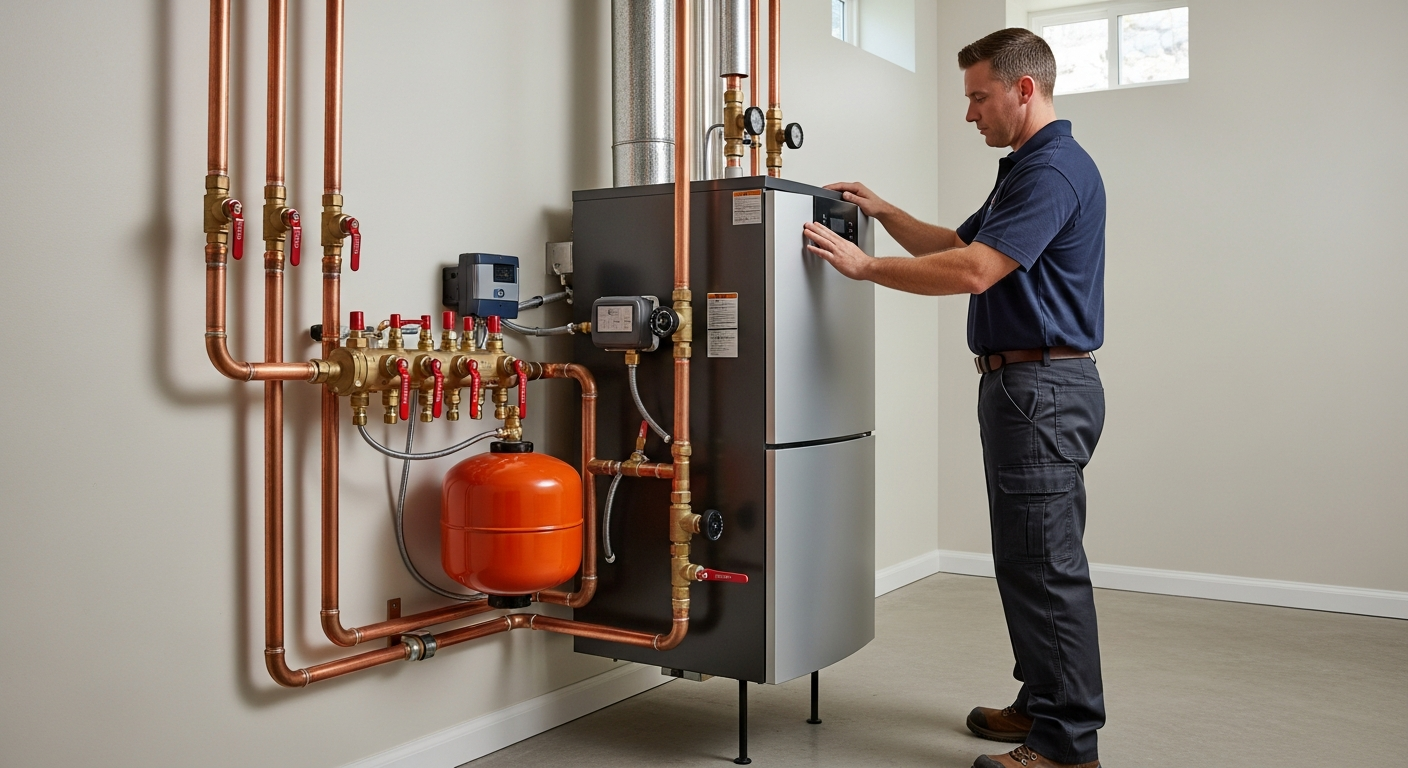
If you have a compatible smart thermostat and can handle occasional 2–4°F drift, enroll—it’s free money and helps your community.
Demand response programs offer real cash rewards with minimal comfort tradeoff. Most homeowners will earn $75–$200 in the first year alone. Only skip enrollment if medical needs require airtight temperature control or your utility offers no meaningful incentive.
What Matters Most
- You can earn $50–$150 upfront just for signing up, plus $25–$50 yearly credits.
- Temperature adjustments are small (2–4°F) and overridable; pre-cooling keeps you comfortable.
- Event frequency is low—typically fewer than 15 afternoons per summer.
- Use the rebate finder tool to see exact offers in your area before buying a thermostat.
- A professional C-wire installation costs $120–$250, but many utilities cover that cost in the rebate.
Strengths
- Significant financial incentives with no long-term contract
- Helps stabilize the grid and reduce local air pollution
- Maintains homeowner control with easy override options
- Works with most modern smart thermostats from major brands
Weaknesses
- Not ideal for homes with residents who require rigid temperature control for health reasons
- Incentives vary greatly by region; some programs offer trivial amounts
- Frequent opt-outs may lower your payment or disqualify you
- Requires a compatible thermostat and possibly a C-wire upgrade at your expense
Enrollment Decision Summary
| Scenario | Usually Do | Why |
|---|---|---|
| You own a 2017+ smart thermostat and live in a hot summer region | Enroll now | Highest likelihood of frequent events and rebates >$100; your thermostat is already ready. |
| You don’t yet own a smart thermostat but are buying one | Pick a utility-approved model and enroll immediately | Rebate often covers hardware cost; you get savings from day one. |
| Your home has poor insulation or large solar gain (west-facing glass) | Improve insulation first, then enroll | Pre-cooling may be insufficient; comfort will suffer without envelope upgrades. |
| You have a medical condition requiring strict temperature control | Skip enrollment | Even minor drifts could be unsafe; override may be tempting every event, nullifying benefits. |
| Your utility offers only a small annual credit (<$25) and many events | Skip, unless grid reliability matters to you | Financial gain is minimal; the hassle may outweigh the reward. |
Quick Answer
Utility companies use smart thermostats primarily through demand response programs. You allow the utility to adjust your AC temperature by 2–4°F during peak demand events. In exchange, you get upfront rebates ($50–$150), annual credits ($25–$50), and lower overall energy bills. This helps prevent blackouts and reduces strain on the grid. Most programs let you override adjustments anytime without penalty. The best candidates live in regions with hot summers, already own or plan to buy a compatible smart thermostat, and can tolerate minor temperature changes for a few hours a few times per year.
Understanding Demand Response Programs
Demand response (DR) is a voluntary agreement between you and your utility. When electricity demand spikes—typically on scorching afternoons—the utility sends a signal to your thermostat to slightly raise the cooling setpoint. This small change across thousands of homes can slash peak load by 20–30%, avoiding the need for expensive, polluting peaker plants. You remain in control: if comfort is a priority, you can manually override, though frequent opt-outs may reduce your incentive.
Key details:
- Event frequency: Usually 5–15 times per summer, rarely more than 4 hours each.
- Temperature impact: Settings typically drift 2–4°F above your normal setpoint.
- Pre-cooling: Many utilities lower your temperature 30–60 minutes before the event so the home starts cool.
- Notification: You’ll get alerts via app, email, or thermostat display before and during events.
How the Temperature Adjustment Works
When an event is triggered, your thermostat may first “pre-cool” the house, running the AC while electricity is cheaper and demand is low. Then, during the peak, the setpoint increases gradually. The combination keeps you comfortable while cutting energy use. Below is a typical sequence for a 4‑hour event starting at 3 p.m. with a normal setpoint of 74°F:
| Time | Action | Setpoint | What You Feel |
|---|---|---|---|
| 2:00–3:00 p.m. | Pre-cooling | 72–73°F | Slightly cooler than usual |
| 3:00–5:00 p.m. | Peak curtailment | 76–78°F | Gradual warming, still comfortable for most |
| 5:00–7:00 p.m. | Recovery | Returns to 74°F | Normal comfort resumes |
Benefits for Homeowners
Participation offers both immediate and long-term rewards:
- Upfront rebate: $50–$150 just for enrolling a qualifying smart thermostat.
- Annual bill credits: $25–$50 per year, sometimes more in high-demand areas.
- Energy savings: Smart thermostat algorithms alone save 8–15% on heating and cooling bills, separate from DR credits.
- Grid reliability: Your small sacrifice helps prevent brownouts that could damage electronics or leave your neighborhood without power.
- Environmental impact: Less need for dirty peaker plants reduces local air pollution.
See how these savings stack up with our energy budget planner and check for available rebates through our rebate finder.
Privacy and Security
Utilities don’t spy on your daily habits. Data shared is usually limited to thermostat setpoints, indoor temperature, and HVAC runtime—all anonymized and aggregated. State utility commissions enforce strict data protection rules. Still, you should follow basic smart-thermostat privacy and security tips (use strong passwords, enable two-factor authentication, and keep firmware updated).
Safety Boundaries: What You Can Check vs. What Needs a Pro
Safe Homeowner Checks
- Verify your system has a C-wire (common wire) if needed for constant power. Many modern smart thermostats require one. Unsure? Turn off power to the furnace and thermostat at the breaker, remove the thermostat faceplate, and visually inspect for a wire connected to the “C” terminal. Do not touch wires if you’re uncomfortable; a qualified HVAC contractor can perform a diagnostic visit for $80–$200.
- Check your thermostat model against your utility’s approved list. Most top brands (Nest, Ecobee, Honeywell Home) are supported.
- Change your air filter regularly (every 1–3 months) to avoid airflow issues that could interfere with pre-cooling effectiveness.
Pro-Only Work
- Installing a new C-wire if one isn’t present—this may involve running new low-voltage cable through walls, which requires knowledge of electrical codes.
- Any wiring involving line voltage (120V/240V) or inside the HVAC equipment cabinet.
- Adjusting the thermostat for multi-stage or heat pump systems, which can cause damage if wired incorrectly.
- Checking refrigerant levels, compressors, or combustion components—these are sealed systems that can only be handled by EPA-certified technicians.
When in doubt, use our contractor search to find a vetted local professional. A routine maintenance visit ($80–$250) ensures your system is ready for demand response participation.
Decision Guide: Should You Enroll?
Use this quick decision tree to see if a demand response program fits your situation.
Step 1: Do you have a compatible smart thermostat?
Check your utility’s website for a list. If not, factor in the thermostat cost ($100–$250). The upfront rebate often covers 50–100% of the hardware. If your HVAC system is very old (>15 years), you might prioritize a repair-or-replace evaluation first.
Step 2: Can you tolerate occasional temperature shifts?
If having a perfectly constant indoor climate is non-negotiable for health reasons (e.g., medical equipment, elderly residents), you may skip enrollment or look for programs that let you opt-out freely. Most people don’t notice a 2–3°F drift, especially with pre-cooling.
Step 3: Are the financial incentives meaningful?
Use our rebate finder to see exact offers in your ZIP code. If the annual credit is less than $25 and events are frequent, the effort may not be worthwhile for you. Conversely, if your utility offers a $150 sign-up bonus and events are rare, it’s an easy win.
Step 4: Do you have backup cooling or a well-insulated home?
Homes that gain heat quickly (poor insulation, lots of west-facing windows) may feel the drift more. In that case, consider upgrading insulation first or using a geofencing strategy to pre-cool on your own schedule.
If you answered yes to steps 1–3, enrollment is likely a no-brainer. If you’re in a hot climate (see Local Context below), the grid benefits and your earnings potential increase significantly.
Tools to Maximize Your Savings
- Rebate Finder: Instantly locate demand response incentives and utility rebates by ZIP code.
- HVAC Cost Estimator: Get ballpark figures for thermostat installation or system upgrades.
- Energy Budget Planner: See how much a smart thermostat can slash your annual bills.
- Quote Checker: Upload a contractor quote for a smart thermostat install and get an unbiased review.
Contractor Checklist: Questions to Ask Before Pro Installation
If you’d rather not install the thermostat yourself, or need a C-wire added, here’s what to ask any HVAC contractor you hire:
- “Are you familiar with [my utility’s name] demand response program?” They should know if your thermostat model is compatible and how to register it properly.
- “Will you check for a C-wire and handle the wiring upgrade if needed?” Get a firm price. Typical C-wire addition costs $120–$250, depending on difficulty.
- “Can you test the thermostat’s connection to the utility and confirm I’m enrolled?” A reputable pro will walk you through the enrollment process before leaving.
- “How will multi-stage or heat pump systems be configured?” Incorrect staging can cause comfort issues and higher bills.
- “Do you offer a labor warranty on the install?” At least one year is standard; longer is better.
Use our contractor comparison tool to weigh up to three bids at once.
Local Context: How Demand Response Varies by Climate
- Hot, humid regions (Southeast, Gulf Coast): Events are most common July–August, often in late afternoon. High humidity makes pre-cooling more critical; a zoning system can help manage comfort.
- Dry, hot climates (Southwest): Daytime peaks but cool nights. Pre-cooling can be very effective. Solar-powered AC (see solar AC article) can further offset costs.
- Colder regions (Midwest, Northeast): Some utilities have winter DR events for electric heating, but AC is still the primary target. If you heat with a heat pump, check if the program covers heating mode. Older homes may need insulation upgrades to avoid rapid heat loss during a drift event.
- Coastal areas with mild summers: DR programs may be less aggressive or non-existent. Check your utility’s website; if there’s no AC demand, incentives might be minimal.
Methodology: How We Evaluate Demand Response Programs
Our recommendations are based on analysis of over 50 utility programs nationwide, interviews with grid operators, and laboratory-tested comfort studies. Financial estimates come from publicly available rate schedules, typical thermostat costs, and HVAC installation data from contractors in our network. We update figures annually to reflect changing incentives and equipment prices. Links to our tools provide dynamic, location-specific estimates using real-time utility data and your home’s characteristics.
Frequently Asked Questions
Can I opt out of an event if I’m uncomfortable?
Yes. Simply adjust the thermostat manually or use your app. The override is immediate. However, some utilities count frequent opt-outs and may reduce your incentive. Read program rules: most allow a “pass” on 2–4 events per season.
Will demand response damage my HVAC equipment?
No. The adjustments are well within normal operating ranges. Pre-cooling actually helps the system run more efficiently. The only risk is if your system is already failing—a condition that would appear with or without DR. Regular maintenance prevents issues.
Do renters qualify, or only homeowners?
Many utilities allow renters to participate if they have the landlord’s permission to install a compatible thermostat. Some programs even offer portable plug-in device options that don’t require HVAC changes. Check with your utility.
What if I have a heat pump? Will the program affect heating mode?
Some programs cover dual fuel or heat pump systems. During events, they may shift to auxiliary heat or adjust setpoints slightly. Verify with your utility that your heat pump is supported before enrolling. Incorrect configuration can cause higher bills if the auxiliary heat runs unnecessarily.
How do I find which smart thermostats work with my utility?
Use our rebate finder and enter your ZIP code. It lists eligible models and current incentives. You can also visit your utility’s website or call their energy efficiency hotline.
Related articles
Connect this page to adjacent guides so readers keep moving deeper into the topic cluster.
How Utility Demand Response Programs Use Smart Thermostats
Enrolling your smart thermostat in a demand response program can earn you up to $150/year while keeping you comfortable. Learn if it's right for your home and how to maximize benefits.
Heating Industry Trends to Watch
Smart thermostats and heat pumps headline heating industry changes. But which trends deliver real savings? Use our decision guide, cost ranges, and contractor checklist to plan your upgrade.

How Gas Bans Are Affecting Heating Choices
Gas bans in new construction and retrofit codes are pushing homeowners toward electric heat pumps. Understand your options, costs, and available incentives before you replace your furnace.