HVAC Financing Options and Costs
Learn how to finance a new heating/cooling system with loans, HELOCs, or rebates. Compare costs, avoid hidden fees, and use free tools to make a confident decision.
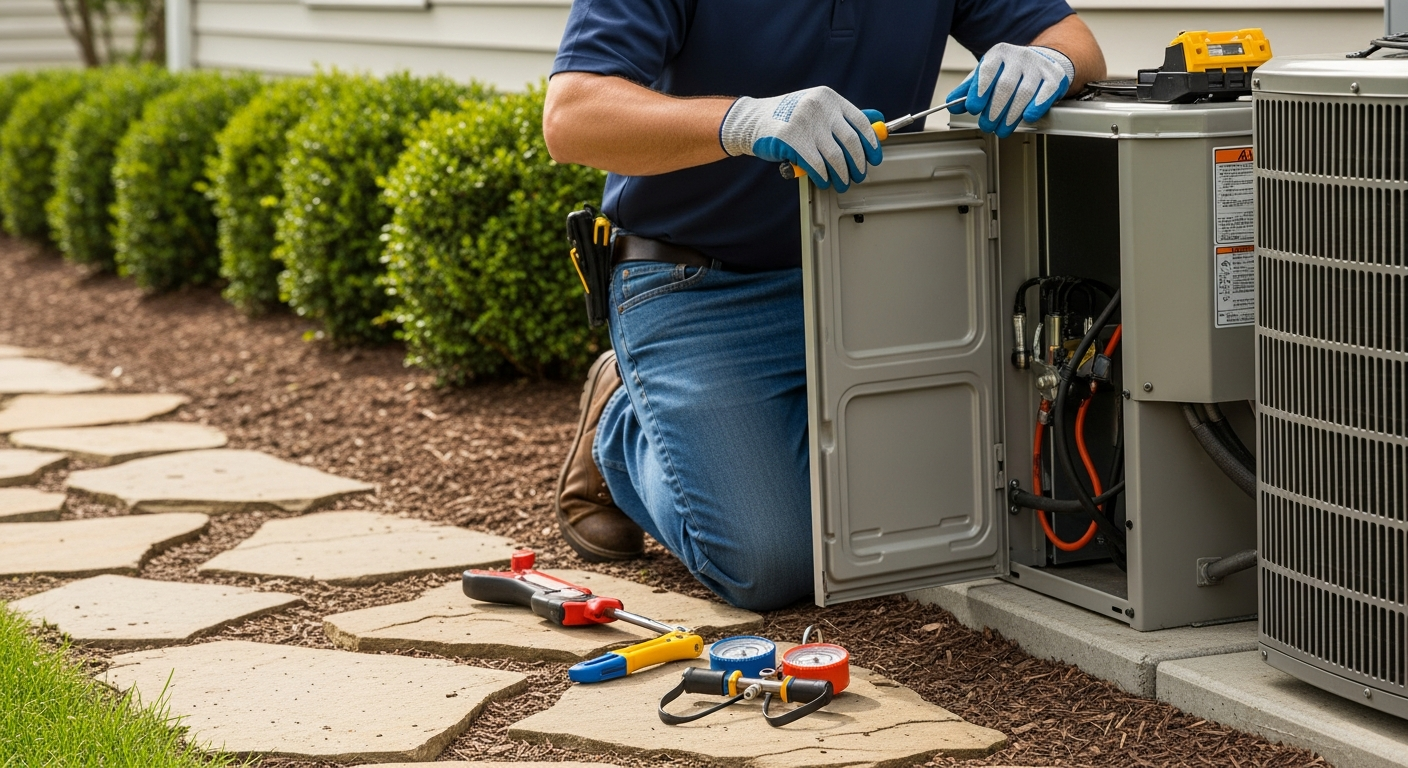
Blend Smart Financing with Rebates
We recommend homeowners first estimate their total project cost using our tools, then layer a fixed-rate financing product with any available manufacturer or utility rebates. This approach minimizes total interest while maximizing upfront savings, avoiding the traps of deferred-interest promotional plans unless you ca
What Matters Most
- Always get a Manual J load calculation before accepting a quote.
- HELOCs and home equity loans generally offer the lowest interest for those with sufficient equity.
- Contractor 0% promotions work only if you clear the balance within the promo window.
- Use at least three free HVACDatabase tools to check cost fairness and regional rebates.
- Factor ductwork, permits, and noise regulations into your total financing request.
Strengths
- Predictable monthly payments with fixed-rate loans
- Potential for zero-interest borrowing with disciplined repayment
- Ability to keep emergency savings intact
- Higher efficiency equipment earns long-term utility savings
Weaknesses
- Deferred-interest loans can backfire with massive retroactive charges
- Home equity products risk foreclosure if payments are missed
- High credit score requirements for the best rates
- Rebates may require specific contractor certifications limiting choice
Decision Summary: Which Financing Fits Your Situation?
| Scenario | Usually do | Why |
|---|---|---|
| You have 20%+ home equity and a 700+ credit score | Home equity line of credit (HELOC) | Lowest interest; flexible draw period; potential tax deduction |
| You have good credit but little home equity | Fixed-rate personal loan from a credit union | No collateral needed; predictable payments |
| You have fair credit and can pay within 12 months | Contractor promotional financing (0% intro) | Avoid interest entirely if discipline holds; quick approval |
| You need a system urgently but have poor credit | Contractor financing with credit-building terms + rebates | May accept lower scores; rebates reduce principal |
Affording a New HVAC System: Your Financing Roadmap
Aim to replace your furnace or AC without draining savings? Most homeowners pay $5,000–$12,000 for a full system, but rarely in cash. In this guide, we’ll lay out concrete financing paths—contractor loans, HELOCs, personal loans, and rebates—so you can compare real costs, not just monthly payments. Use our free tools to estimate your total project cost and check if a repair makes more sense. Skip the guesswork: the Repair or Replace Calculator benchmarks your system’s age and repair bills against replacement.
Quick Answer: Which Financing Is Best for Me?
If you have at least 15–20% home equity and a credit score above 670, a home equity line of credit (HELOC) typically offers the lowest interest rates. If you need funds fast and have good credit, a personal loan from a credit union works. If you lack equity or want promotional terms, contractor financing with 0% intro periods can help, but watch deferred interest traps. Always layer manufacturer rebates and utility incentives before finalizing any loan—our Rebate Finder can uncover hidden savings.
Financing Options at a Glance
| Financing Option | Typical APR Range | Best For | Key Consideration |
|---|---|---|---|
| Contractor Loan (Promo) | 0% for 12–18 months, then 18–30% | Disciplined payers who can clear balance in promo period | Deferred interest: if not paid in full, interest accrues from day one |
| Home Equity Loan / HELOC | 6–9% (as of 2025) | Homeowners with ≥15% equity and stable income | Secured by your home; closing costs may apply |
| Unsecured Personal Loan | 8–18% based on credit | Tenants or those with minimal equity | No collateral, but higher rates for lower credit scores |
| Cash + Rebates Only | N/A | Those with emergency funds or minimal debt | Misses opportunity to keep cash for other investments |
Estimate your full system cost before comparing loans: use the HVAC Cost Estimator to see regional, efficiency, and ductwork factors.
Decision Rules: Pick a Path
Answer these three questions to narrow your choices:
- Is your current system over 12 years old or has a repair bill exceeding $1,500? If yes, replacement often beats repair—confirm with the Repair or Replace Calculator.
- Do you have at least 15% home equity and a credit score above 680? → Explore a HELOC. If no, jump to question 3.
- Can you pay off the entire loan within 12–18 months? → Contractor promotional financing may work. Otherwise, opt for a fixed-rate personal loan or home equity loan to avoid deferred interest.
If you live in a hot climate (Phoenix AC example), prioritize high SEER2 ratings; in cold climates, focus on high AFUE or HSPF. Coastal corrosion? Ask contractors about coil coatings. Older homes may need ductwork upgrades—factor in those costs early.
Safety Boundaries: What You Can (and Cannot) Touch
HVAC systems involve risks. Keep these lines clear:
- Safe homeowner checks: Inspect air filters monthly, clear debris around outdoor units, listen for unusual rattles, and monitor thermostat behavior. You can also check your condensate line for clogs by observing if water drains properly.
- Pro-only work: Never attempt refrigerant handling, gas line modifications, combustion system repairs, electrical capacitor/contactor swaps, compressor work, or control board troubleshooting. These carry shock, fire, and carbon monoxide dangers. Always hire a licensed contractor.
Free Tools to Nail Your Budget
- HVAC Cost Estimator: Get a localized price range in minutes.
- Rebate Finder: Discover manufacturer and utility rebates you may qualify for.
- Quote Checker: Upload bids and see if the price aligns with fair market rates.
- Repair or Replace Calculator: Weigh age, efficiency, and repair costs.
- BTU Calculator: Confirm the right system size before financing a unit that’s too large or small.
- System Age Decoder: Check your unit’s manufacture date to anticipate end-of-life.
Contractor Checklist: 9 Questions Before You Sign
- “Will you perform a Manual J load calculation?” A required step to size the system properly. Skip any contractor who doesn’t.
- “What financing partners do you work with, and what are the exact terms?” Request the loan agreement summary early.
- “Are rebates and incentives already factored into this quote, or do I apply separately?” Clarify so you don’t double-count savings.
- “What hidden fees could arise during installation?” Ask about ductwork repairs, permits, or code upgrades.
- “Do you offer a workmanship warranty, and for how long?” Separate from manufacturer parts warranty.
- “Can I see proof of licensing, insurance, and bonding?” Verify via your state’s licensing board.
- “What is the payment schedule?” Avoid large upfront deposits; tier payments to milestones.
- “How do you handle noise regulations in my area?” Some municipalities require sound blankets or specific placement—soundproofing guide.
- “Will you register my equipment for the full manufacturer warranty?” Many warranties shorten if not registered within 60 days.
Collect at least three quotes and run them through our contractor comparison tool. For emergency repairs, use Emergency HVAC to find rapid-response pros.
How We Form These Recommendations
Cost ranges are editorial estimates drawn from aggregated contractor data, public pricing surveys, and regional labor rates as of 2025. They are not guaranteed quotes. Financing APR ranges reflect current national averages; individual offers depend on creditworthiness and lender policies. We prioritize paths that balance upfront costs, total interest paid, and long-term system efficiency—not just monthly payment size. Use our tools to personalize the numbers to your home and credit profile.
Frequently Asked Questions
1. Can I finance an HVAC system with bad credit?
Yes, but expect higher interest rates. Contractor promotional plans sometimes accept scores as low as 600, but read the deferred interest terms carefully. Some local credit unions offer credit-builder loans. Pair with as many rebates as possible to reduce the financed amount.
2. Is a HELOC better than a personal loan for HVAC?
Generally, yes—HELOCs offer lower rates because your home secures the debt. However, closing costs and variable rates can offset savings. Compare APRs, fees, and your comfort with collateral risk. If you plan to sell within two years, a personal loan may be simpler.
3. How do I qualify for manufacturer rebates?
Rebates often require purchasing a full system (indoor + outdoor units) and installation by a certified contractor. Efficiency tiers (SEER2, AFUE) determine the amount. Use our Rebate Finder and ask your contractor to list all active promotions.
4. Should I replace my ductwork when financing a new HVAC?
If your ducts are over 20 years old, leaking, or poorly sized, replacing them improves efficiency 20–30% and prevents early blower failure. Get a duct inspection and include that cost in your financing package. See typical cost guides for ductwork.
5. What’s the best time to buy an HVAC system to save money?
Late spring and early fall typically see lower demand and seasonal promotions. Combine off-season buying with manufacturer rebates and utility incentives. Avoid peak summer/winter emergencies when labor rates spike. Use our Cost Estimator to see seasonal trends.
Methodology
HVACDatabase estimates combine common contractor price patterns, service-category pricing ranges, equipment complexity, urgency, regional labor variation, and known HVAC safety boundaries. Actual prices vary by city, brand, system size, access, warranty status, permit requirements, and whether the visit discovers ductwork, electrical, refrigerant, gas, or drainage issues. Use these numbers to sanity-check quotes, not as a guaranteed price.
Related articles
Connect this page to adjacent guides so readers keep moving deeper into the topic cluster.

Cost to Install Multiple Smart Thermostats
Get a clear cost breakdown for installing 2–4+ smart thermostats. Includes equipment, labor, zoning upgrades, and how to save with utility rebates. Practical checks and contractor questions inside.
Duct Booster Fan Installation Cost
Uneven room temps? Duct booster fan installation costs: register fans $30–$100 DIY, inline fans $500–$800+ with pro. Learn when a booster works and when you need a bigger fix.
Makeup Air Unit Installation Cost Guide
Expect to pay $1,500–$4,500 for a pro-installed makeup air unit. Discover passive vs. tempered options, code triggers, and money-saving decision rules.