How to Soundproof Your HVAC System
Is your HVAC keeping you awake? Learn how to identify noise sources, apply safe soundproofing measures, and when to call a professional. Get peace back with actionable tips and cost guidance.
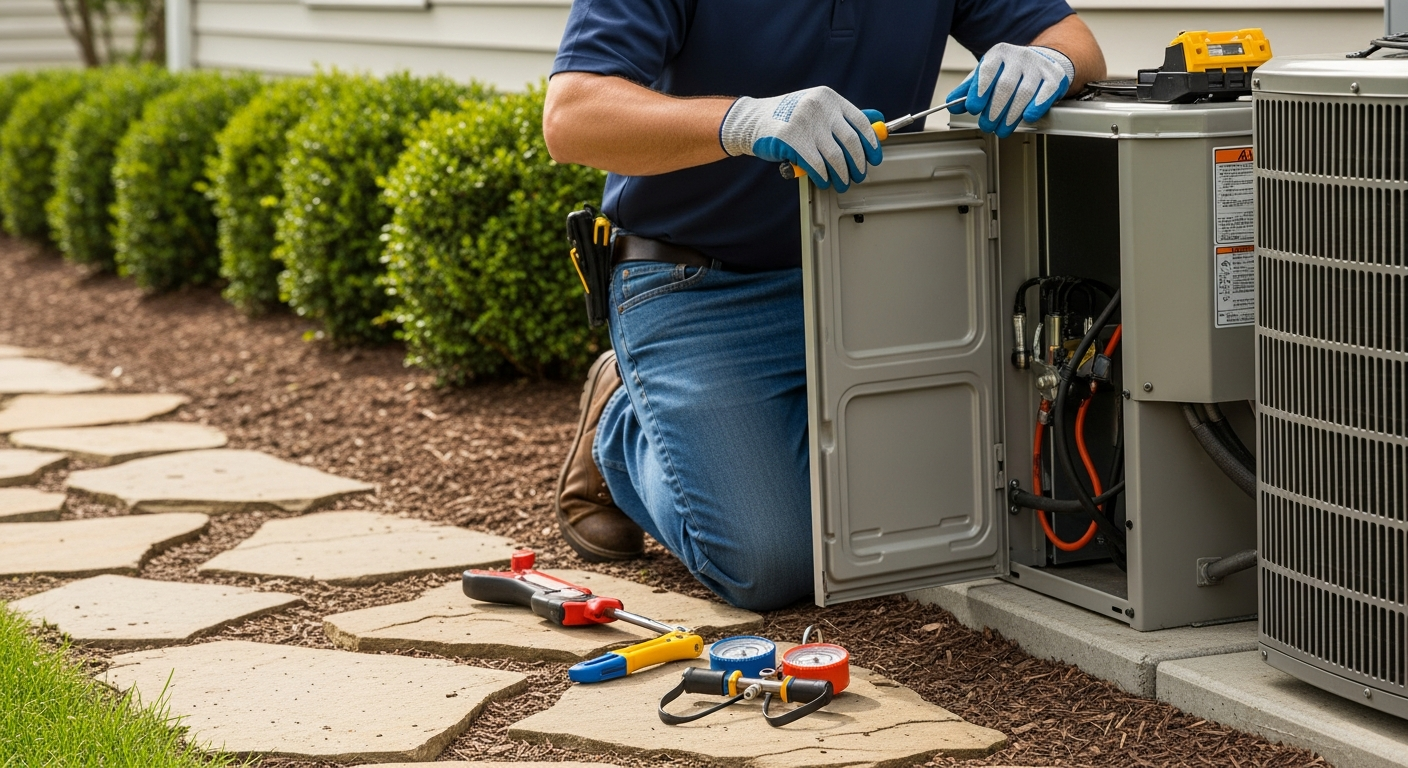
Start with low-cost, safe fixes; escalate systematically
Begin by identifying noise type and trying simple, non-invasive solutions like vibration pads and tightening panels. If noise persists or is mechanical, consult a qualified HVAC technician. Avoid disabling any safety features.
What Matters Most
- Every HVAC noise has a source—classify it before acting.
- Homeowners can safely install sound blankets, vibration pads, and seal duct leaks with mastic.
- Sounds like banging, screeching, or grinding require immediate professional diagnosis.
- A -5 dBA reduction can make a noticeable difference in perceived loudness.
Strengths
- Clinically tested sound reduction methods exist (up to 40% noise drop with compressor blankets).
- Many fixes are affordable and DIY-friendly, like adding isolation pads.
- Strategic landscaping offers natural sound buffering.
- Professional duct modifications can deliver dramatic silence.
Weaknesses
- DIY soundproofing may mask underlying mechanical problems.
- Improper sound blanket installation can trap heat and shorten equipment life.
- Complete silence is unrealistic—balance expectations with equipment design.
- Some high‑end solutions (acoustic duct liner, high‑velocity systems) require substantial investment.
Decision summary
| Scenario | Usually do | Why |
|---|---|---|
| Steady humming with no vibration | Check for loose panels; tighten if safe | External panels may vibrate; homeowner can inspect with power off. |
| Intermittent banging or popping | Call an HVAC technician | Could signal failing motor, loose parts, or duct issues that need pro tools. |
| Whistling from vents | Seal accessible duct joints with mastic | Air leaks cause high‑frequency noise; sealing reduces it and improves efficiency. |
| Loud compressor noise outdoors | Install a manufacturer‑approved sound blanket | Blankets cut noise up to 40% without affecting operation if installed per instructions. |
| Vibration felt through floors | Place vibration isolation pads under indoor unit | Pads decouple the unit from the structure, stopping structural noise transmission. |
Why Your HVAC System is Noisy (and Why It Matters)
A loud HVAC system disrupts sleep, wrecks focus, and can signal expensive damage. Sound levels above 60 dBA indoors are considered intrusive. While normal operation hums at 40–55 dBA, rattles, bangs, or whistles indicate air leaks, loose parts, or failing components. The good news: many noise issues have safe, effective fixes you can apply this weekend. This guide helps you pinpoint the source, choose the right solution, and know exactly when to call a professional—so you can enjoy a quieter home without compromising safety or equipment life.
Quick Answer: How to Quiet Your HVAC System
- Identify the noise: airborne (whistling, rushing) vs. structural (vibration, humming through floors).
- Try safe DIY: tighten panels, install vibration pads, apply mastic to duct leaks, add a compressor blanket.
- Never ignore: banging, grinding, or screeching—these need a pro immediately.
- Use our HVAC noise guide to measure and compare your sound levels.
- Estimate costs with our cost estimator before hiring.
Noise Diagnosis Table
| Noise you hear | Probable cause | Safe homeowner check | Professional fix |
|---|---|---|---|
| Steady hum, no vibrations | Loose access panel | Power off, visually inspect panels, tighten screws if accessible | If noise persists, technician may balance blower or check compressor mounts |
| Rattling during operation | Loose hardware or debris on fan | Inspect outdoor unit for leaves/sticks; do not remove fan guard | Tighten components, replace worn fan blades or motors |
| Whistling or hissing from vents | Duct leaks or undersized returns | Feel for air escaping around seams, listen for hissing | Seal ducts with mastic or replace sections; resize returns |
| Banging when starting/stopping | Duct expansion (oil-canning) | Observe when noise occurs (on start-up?) | Add cross-breaks, acoustic liner, or reinforce ducts |
| Screeching or grinding | Blower motor bearings or failing compressor | Shut system off immediately; do not attempt repair | Replace motor, compressor, or entire unit—major repair |
Safe DIY Soundproofing Tactics That Work
These methods do not require opening the unit, handling refrigerants, or touching electrical components. Always turn off power at the breaker before inspecting.
Vibration Isolation Pads
Place dense rubber pads (e.g., neoprene) under indoor air handler legs or outdoor condenser feet. They decouple the unit from the floor/slab, stopping structural vibration. Cost: $30–$80 for a set of four. No tools required beyond a lift—get help for heavy units.
Compressor Sound Blankets
A custom-fit, insulation-filled jacket wraps around the compressor to muffle humming. Must not block airflow or contact hot surfaces. Reduces noise up to 40%. Universal blankets cost $50–$150; manufacturer-specific ones $100–$300. Professional installation adds $100–$200. Check our cost estimator for local pricing.
Duct Sealing
Use mastic sealant (not duct tape) on accessible metal seams. For small gaps, foil-backed tape. Never seal internally or near fans. Reduces whistling and improves efficiency. Cost: $10–$30 for mastic. For extensive leaks, hire a pro; a duct leakage test costs $150–$300.
Strategic Landscaping
Plant dense evergreens or build a solid fence 3+ feet from the outdoor unit. A wooden fence or masonry wall can reduce sound by 5–10 dBA. Ensure 18-inch clearance on all sides for airflow. Avoid bushes that shed leaves into the unit.
Acoustic Curtains
Hang sound‑dampening curtains over nearby windows. They add mass and absorb airborne noise. Budget option: $25–$75 per panel.
Safety Boundaries: What You Must Leave to a Pro
HVAC systems involve high voltage, pressurized refrigerants, and moving parts. Never attempt these repairs:
- Opening refrigerant lines—requires EPA certification.
- Accessing electrical panels beyond the main breaker.
- Removing fan guards or touching capacitors (fire/electrocution risk).
- Adjusting gas valves, igniters, or combustion components.
- Replacing control boards, contactors, or relays.
Safe homeowner tasks:
- Tighten external cabinet screws with power off.
- Apply externally mounted soundproofing (blankets, pads).
- Seal visible ductwork with mastic.
- Keep outdoor unit clear of debris; gently clean coils with water (no high pressure).
- Reset breakers (turn off then on) and restart system per manual.
When to Call a Professional: Decision Rules
If any of these are true, call an HVAC technician (find one here):
- Noise is banging, grinding, or screeching—metal‑on‑metal suggests failure.
- Sound level exceeds 65 dBA at 3 feet from the unit (normal: < 60 dBA). Use a smartphone app for reference.
- Vibration is strong enough to rattle dishes or furniture.
- Noise appeared suddenly after a power outage or storm (possible electrical damage).
- The system runs but makes noise, and the unit is over 10 years old (likely component wear).
- You smell burning or see smoke—shut off immediately and call.
For a diagnosis, expect to pay $80–$200 (editorial estimate).
Tools to Help You Decide
- HVAC Noise Guide: Compare your sound levels to normal ranges.
- Cost Estimator: Get personalized soundproofing estimates based on your zip.
- Repair or Replace Calculator: If noise signals major failure, see if a new unit is smarter.
- System Age Decoder: Older units are noisier; check your manufacture date.
- Phone Monitoring Setup: Use your phone to track noise and system performance over time.
Local Climate and Home Type Notes
Noise solutions may need tailoring:
- Hot, humid areas: Corrosion can loosen parts. Inspect for rust and tighten annually. Consider a protective coating.
- Cold climates: Ice accumulation on outdoor coils causes imbalance and noise. A unit cover (when off) or raised pad helps.
- Coastal homes: Salt air speeds wear; inspect fasteners and cabinets yearly. Stainless steel hardware may last longer.
- Older homes: Metal ducts are often uninsulated. Adding 1‑inch duct liner on the first few feet of supply/return can dramatically reduce blower noise echoing through the house.
Contractor Checklist: Questions to Ask Before Hiring
When you compare contractors, use these questions:
- Are you licensed and insured for HVAC work in my state? (Ask for proof.)
- Will you take before‑and‑after sound measurements with a decibel meter?
- Have you installed sound blankets, vibration pads, or duct lining before? Can I speak with past clients?
- Do you offer a written estimate that includes materials, labor, and cleanup?
- What warranty do you provide on soundproofing materials and installation? (Minimum 1 year labor.)
- If duct sealing, will you perform a duct blast test to quantify leakage before/after?
- How do you ensure soundproofing doesn't void my equipment warranty or restrict airflow?
Methodology: How We Form Estimates and Recommendations
Our cost ranges are editorial estimates based on aggregated data from contractor price books, public databases, and industry surveys. They represent typical pricing for a non‑emergency residential job in a mid‑sized metro area. Factors like season, complexity, and local labor rates cause variation. Always obtain three competitive quotes. Use our cost estimator for a starting point tailored to your zip code.
Frequently Asked Questions
Can I install a compressor sound blanket myself?
Yes, if it’s a universal blanket, you can wrap it around the compressor and secure with the straps provided—without tools. Turn off the unit at the thermostat and breaker first. Ensure the blanket does not touch any moving parts or hot discharge lines. For custom‑fit models or if you’re unsure about clearance, hire a pro. Total pro installation cost: $200–$400 (estimate).
Will a fence or plants really reduce AC noise?
A solid fence or dense hedge can reduce perceived loudness by 5–10 dBA. The key is mass and distance—a wooden fence 3‑4 feet from the unit helps block direct sound paths. Keep the fence at least 18 inches from the unit for airflow. Use the principle: solid, tall, and close (without choking airflow).
Why do my metal ducts pop when the furnace kicks on?
Thermal expansion causes the metal to flex, creating a “oil‑canning” pop. This is common in unconditioned spaces like attics or basements. Adding cross‑breaks (stiffening grooves) or rigid duct insulation can stop it. A professional fix costs $600–$1,200 depending on access and duct size.
How much does professional soundproofing typically cost?
Costs vary widely. Here are editorial ranges for common work:
- Vibration pads: $80–$120 installed
- Compressor blanket: $200–$400 installed
- Duct sealing (a few seams): $200–$500; full system: $600–$2,000+
- Acoustic duct liner: $600–$2,500 depending on duct length
- Custom sound enclosure for outdoor unit: $1,000–$3,000+
Use our cost estimator for a personalized range.
Does a noisy HVAC always mean something is broken?
Not necessarily. All mechanical systems produce some sound. However, any new or changing noise, or sounds beyond the typical hum, should be checked. A maintenance visit ($80–$200) can catch early wear and prevent a breakdown. Set up a maintenance schedule to stay ahead.
Related articles
Connect this page to adjacent guides so readers keep moving deeper into the topic cluster.
How to Implement a Whole Home Energy Management System
Integrate smart tech and HVAC controls to cut energy waste. This guide shows how to audit, upgrade, and automate your home's energy use, with real savings estimates.

How to Set Up Thermostat Geofencing
Set up thermostat geofencing to automatically adjust home temperature as you come and go. Save energy, extend equipment life, and never return to an uncomfortable house. Get our quick-start guide now.

How to Troubleshoot Smart Thermostat WiFi Issues
Your smart thermostat offline? Most WiFi drops can be fixed with power checks, router adjustments, and simple restarts. Follow our step-by-step guide to regain remote control and energy savings.