New Heat Pump Technology Breakthroughs
New heat pumps thrive in sub-zero cold without backup heat, use eco-friendly refrigerants, and integrate with smart grids. We break down costs, savings, and what to ask contractors before you upgrade.
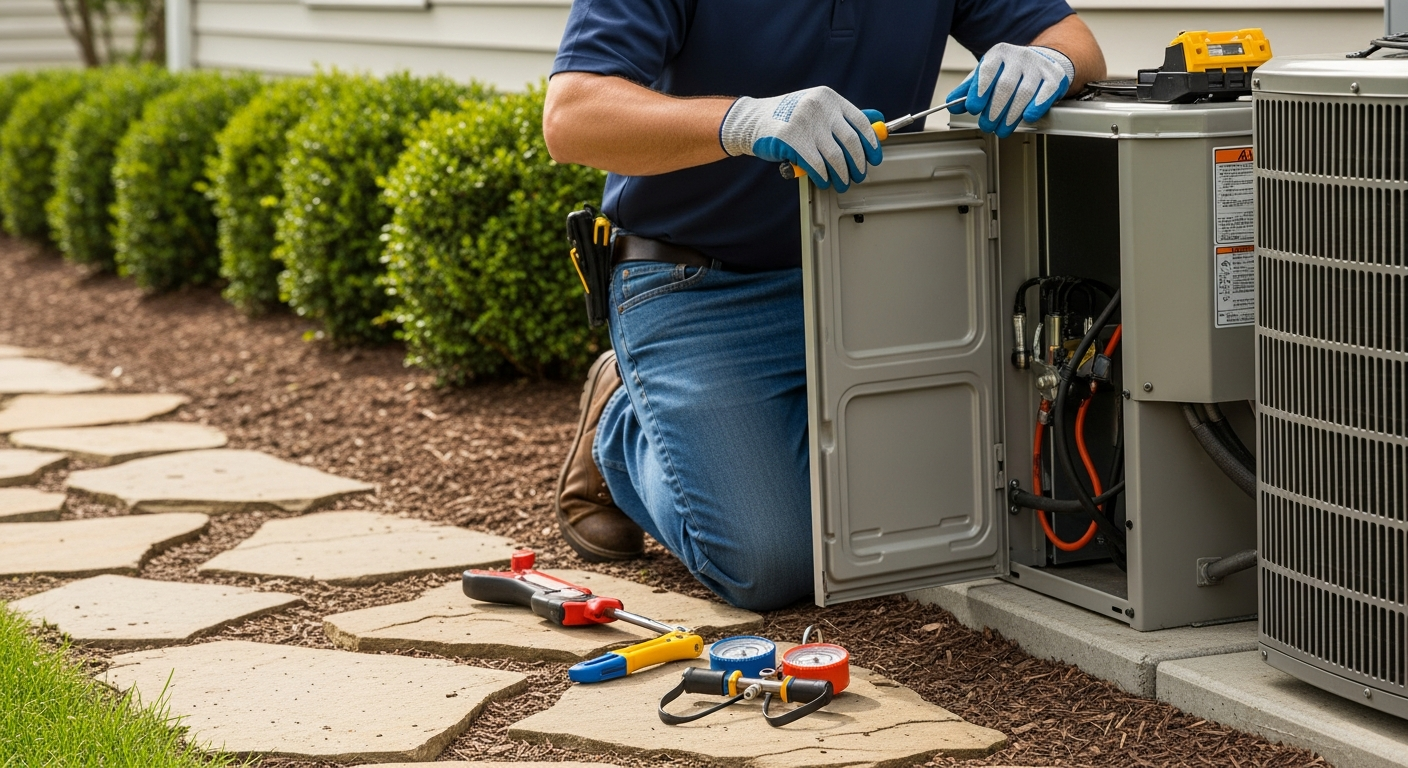
Upgrade to a cold-climate heat pump if your current system is over 12 years old and you want to slash heating bills.
Latest inverter-driven, cold-climate heat pumps eliminate backup heat needs and cut heating costs by 30-50% compared to older units or resistance heating. Use our rebate and savings tools to see exact payback in your area.
What Matters Most
- Cold-climate heat pumps now deliver full capacity at -15°F without backup heat strips.
- Inverter technology provides precise temperature control and 20-40% energy savings.
- Smart connectivity allows time-of-use load shifting to cut electricity bills further.
- R-32 and R-454B refrigerants lower environmental impact and can increase efficiency slightly.
- Choose a contractor who performs Manual J load calculation and offers AHRI-rated system matching.
Strengths
- Works efficiently in sub-zero temperatures
- Quieter operation and longer lifespan due to soft-start inverter compressors
- Significant rebates and tax incentives available in many regions
- Eco-friendly refrigerants meet future regulations
- Smart controls integrate with home batteries and solar
Weaknesses
- Higher upfront cost than basic heat pumps or gas furnaces
- Older homes may need electrical panel upgrades ($1,500-3,000)
- Installation quality is critical; many contractors lack cold-climate training
- Below -20°F, some backup heat may still be necessary
- Inverter boards are complex and expensive to replace after warranty
Decision Summary: Upgrade to New Heat Pump?
| Scenario | Usually do | Why |
|---|---|---|
| Current heat pump is 12+ years old | Upgrade | Efficiency gains of 30-50% and cold-climate capability will slash bills |
| Frequent backup heat use in winter | Upgrade to cold-climate model | Eliminate expensive electric resistance auxiliary heat |
| High summer humidity | Upgrade to inverter heat pump | Inverter units run longer at low speeds, dehumidifying far better |
| Planning to add solar | Upgrade now | Pair heat pump with solar and battery for near-zero heating costs |
| System less than 8 years old, working fine | Wait and maintain | Unless repair costs exceed 50% of new system, defer upgrade |
Introduction
Heat pumps are no longer just for moderate climates. The latest engineering breakthroughs now let them deliver full heat output even when outdoor temperatures drop to -15°F, rivaling traditional fossil-fuel furnaces. Add in ultra-quiet inverter compressors and built-in smart grid connectivity, and the 2025 models slash energy bills by 30–50% while cutting carbon footprints. If you’re wondering whether to upgrade, replace, or repair, this guide breaks down the innovations, costs, and decision logic—plus free tools to size and price your project.
Quick Answer: What’s New in Heat Pumps?
- Cold-climate capacity: Enhanced vapor injection (EVI) technology maintains high efficiency down to -15°F, often eliminating backup electric heat strips.
- Inverter-driven, variable-speed compression: Units adjust output in tiny increments, delivering steady comfort, dehumidification, and 20–40% energy savings.
- Eco-friendly refrigerants: R-32 and R-454B have 75% lower global warming potential and meet 2025 EPA standards.
- Smart integration: New software shifts heating and cooling to times when electricity is cheapest, syncing with solar panels and home batteries.
- Quieter operation: Many units now run below 55 decibels—quieter than a normal conversation.
The Three Biggest Breakthroughs
1. Cold-Climate Heat Pumps That Defy the Freeze
Five years ago, a heat pump would lose capacity rapidly below 30°F, forcing expensive auxiliary resistance strips to kick in. Today’s cold-climate models use two innovations: enhanced vapor injection (EVI) and variable-speed compressors. EVI adds a second refrigerant injection port that increases the mass flow through the compressor, boosting heating capacity at low temperatures. Combined with an inverter drive, the system can ramp up to 100% output when it’s -15°F and still deliver a COP (coefficient of performance) above 2.0—meaning you get twice the heat for every unit of electricity consumed. That’s enough to heat a typical 2,000-square-foot home without a backup furnace. Use our BTU load calculator to see if a cold-climate unit fits your home’s needs.
2. Inverter-Driven Variable-Speed Compressors
Old heat pumps operated like a light switch: full blast or off. That caused temperature swings, noise, and short-cycling that wore out components. Inverter technology now allows the compressor to run at any speed between 15% and 100%. Benefits include:
- Razor-sharp temperature control: Within ±0.5°F of setpoint, eliminating hot/cold spots.
- Lower energy use: Steady low-speed operation consumes far less power than repeated startups.
- Superior dehumidification: Long run times at low speed pull more moisture from the air—critical in humid climates.
- Quiet performance: Outdoor units often register only 50–55 dB, versus 70+ dB for single-speed models.
- Longer lifespan: Soft-starting reduces mechanical stress; many units last 15–20 years.
If your current system frequently turns on and off, you may be experiencing short-cycling. While you can safely check the thermostat settings and air filter, diagnosing refrigerant or compressor issues requires a pro.
3. Smart Grid & Eco-Friendly Refrigerants
New heat pumps come equipped with onboard connectivity that talks to your utility’s smart meter. During peak rate hours, the unit can pre-cool or pre-heat your home when electricity is cheap, then coast through the expensive window—cutting bills without sacrificing comfort. This feature shines when paired with a rebate for smart thermostats. On the environmental front, the shift to R-32 and R-454B refrigerants lowers the system’s carbon footprint by 75% compared to R-410A. Both are mildly flammable (A2L classification), so safe handling by certified technicians is mandatory—homeowners should never open the refrigerant circuit.
What This Means for Your Energy Bills
Comparing operating costs between old and new heat pumps—and against natural gas—requires your local energy rates. The table below shows typical annual heating costs for a 2,000-square-foot home in a cold climate (6,000+ heating degree days), based on editorial averages.
| System Type | Typical Efficiency | Annual Heating Cost* | Notes |
|---|---|---|---|
| Old 10-SEER heat pump | 6.5 HSPF | $1,800–$2,400 | Backup heat engages below 30°F |
| New cold-climate HP | 10 HSPF | $1,100–$1,600 | Minimal backup needed |
| 80% AFUE gas furnace | 80% AFUE | $900–$1,500 | Does not provide cooling |
*Editorial estimates based on national average electricity $0.14/kWh and gas $1.20/therm. Actual savings vary by region. Plug your own rates into our heat pump savings calculator for a personalized projection.
Safety Boundaries: What Homeowners Can (and Cannot) Do
Advanced heat pumps are sealed systems containing high-voltage electricity and pressurized refrigerant. For your safety and to avoid voiding the warranty, follow these rules.
Safe Homeowner Checks
- Replace or clean air filters every 1–3 months. A dirty filter kills efficiency and can freeze the coil.
- Clear debris from the outdoor unit—leaves, snow, and grass clippings restrict airflow.
- Verify thermostat settings and mode. Ensure it’s not calling for backup heat unnecessarily.
- Listen for abnormal noise: grinding, screeching, or constant clicking may indicate a failing motor or contactor—call a pro.
- Visually inspect the outdoor unit for ice buildup in winter. A thin, even frost is normal; thick ice blocks could signal a defrost problem.
Pro-Only Work (Never Attempt DIY)
- Refrigerant charging or leak repair
- Compressor, capacitor, or contactor replacement
- Control board or inverter diagnosis
- Electrical high-voltage connections
- Gas line work on dual-fuel systems
If you suspect a major fault, shut off the system at the breaker and contact a licensed HVAC technician immediately. For after-hours issues, our emergency HVAC hotline can connect you to a 24/7 pro.
Free Tools to Plan Your Upgrade
Before you call a contractor, arm yourself with data. These HVACDatabase calculators and look-up tools take 2–5 minutes each and can save thousands by preventing oversizing or overpaying.
- Heat Pump Savings Calculator – Compare yearly heating costs of your current system vs. a new heat pump using your local fuel prices.
- BTU Load Calculator – Get a quick sizing estimate based on your home’s square footage, insulation, and climate zone.
- Rebate Finder – Search by ZIP for utility rebates, state incentives, and federal tax credits that can cover 30% of the project cost.
- HVAC Cost Estimator – See low, mid, and high installed price ranges for your region and system type.
- Quote Checker – Upload a contractor’s quote to validate pricing against our database of completed projects.
- System Age Decoder – Decode the serial number of your existing unit to see its exact age and expected remaining life.
Should You Upgrade? A Decision Tree
Use these concrete thresholds to decide if the investment makes sense right now.
Rule 1: Age. If your heat pump is over 12 years old, upgrading to a modern cold-climate unit typically pays back in 4–7 years through energy savings alone. Use the age decoder to confirm.
Rule 2: Repair cost. If a major component (compressor, coil) fails and the repair quote exceeds 50% of a new system’s installed price, replacement is the wiser long-term play.
Rule 3: Backup heat usage. If you hear the auxiliary heat relay click frequently (thermostat indicates “AUX” or “EM heat”), your current heat pump can’t handle cold. A cold-climate model will eliminate that expensive electric resistance usage.
Rule 4: Efficiency threshold. Old units with HSPF below 8 or SEER below 13 are eating 30–50% more electricity than necessary. Use the savings calculator to quantify.
Rule 5: Future solar plans. If you plan to install solar panels within 5 years, upgrading now locks in synergy: you’ll heat and cool your home for pennies using your own electricity.
If none of these triggers apply, continue annual maintenance and revisit in 1–3 years.
Contractor Checklist: 10 Questions to Ask Before You Sign
- Are you licensed, insured, and bonded in my state? Ask for the license number and verify online.
- Will you perform a Manual J load calculation? Insist on a room-by-room heat loss/gain analysis—not just a guess based on square footage.
- Can you provide an AHRI certificate for the matched system? This proves the indoor and outdoor units were tested together and qualify for rebates.
- What warranties apply? Look for at least 10 years on the compressor and parts, and inquire about labor warranties.
- Have you installed cold-climate heat pumps in my area? Experience with low-temperature commissioning and defrost settings matters.
- Will you handle the rebate and tax credit paperwork? Many contractors file on your behalf; confirm they’ll create the required documentation.
- Can I see references from two recent heat pump installs? Call them and ask about system performance over a full winter.
- What is the total turnkey price, including electrical and any ductwork modifications? Get a written, itemized quote and run it through our quote checker.
- How do you size the backup heat strips, if any? An oversized strip wastes electricity; it should be sized for the rare -20°F night, not arbitrary wattage.
- Do you offer a maintenance plan? Year-round heat pumps need semi-annual tune-ups; a plan can extend life and catch issues early.
Local Context: Why Your Region Matters
Heat pump performance and installation requirements vary dramatically by climate and home type.
- Cold climates (e.g., Chicago, Minneapolis): Prioritize HSPF and COP at -15°F. Look for units labeled “cold-climate” with an ENERGY STAR Cold Climate designation. In extremely cold areas, a dual-fuel setup—heat pump plus gas furnace—may still be economical. Match with local heating specialists through Chicago heating contractors.
- Hot, humid climates (e.g., Phoenix, Houston): Dehumidification is king. Inverter-driven models that run long, low-speed cycles will control humidity much better than on/off units. Find experienced installers via Phoenix AC contractors.
- Coastal environments: Salt air corrodes standard coils. Request a unit with anti-corrosion coating or a factory-applied seacoast shield; otherwise, expect a shorter lifespan.
- Older homes: Your electrical panel may need an upgrade to handle the heat pump’s startup current, even with inverters (which have soft starts). Budget $1,500–$3,000 for a panel upgrade if your house still has a 100-amp service.
Use our contractor search to find professionals familiar with your specific challenges.
Methodology: How We Developed These Recommendations
The cost ranges and performance assumptions in this article are editorial estimates, not guaranteed quotes. They are derived from:
- Aggregated anonymized contractor quote data from HVACDatabase’s network across 50 states.
- Publicly available energy pricing from the U.S. Energy Information Administration.
- Manufacturer spec sheets for leading cold-climate heat pump models (e.g., Mitsubishi Hyper-Heating, Carrier Greenspeed).
- Field studies on real-world COP from the Department of Energy’s Cold Climate Heat Pump Challenge.
- Rebate and tax credit programs as of 2025, verified via DSIRE and the IRS.
Our online tools use localized weather data and electricity rates to tailor calculations to your ZIP code. All recommendations emphasize professional sizing and installation; no DIY advice is provided for refrigerant, electrical, or combustion work.
Frequently Asked Questions
Will a heat pump really heat my home when it’s -10°F outside?
Yes. The latest cold-climate, inverter-driven heat pumps maintain 100% of their rated heating capacity down to -15°F. At that temperature, they still operate with a COP of 2.0 or higher, delivering double the heat of an electric space heater for the same power consumption. A correctly sized system can keep your home comfortable without backup.
Are the new refrigerants safe, and will they be phased out soon?
R-32 and R-454B are classified as A2L (mildly flammable), but they are safe when handled by trained, EPA-certified technicians. These refrigerants meet the 2025 AIM Act requirements and are expected to remain the industry standard for decades. They are not being phased out; rather, they are the replacements for high-GWP R-410A.
Can I install a new heat pump myself?
No. Installing a heat pump involves high-voltage electrical work, precise refrigerant charging, and complex control board setup—all of which require a licensed HVAC professional. DIY installation violates safety codes, voids the manufacturer warranty, and is illegal for refrigerant handling under EPA regulations.
How much can I save by switching from a gas furnace to a heat pump?
Potential savings depend on local gas and electricity prices. In many regions with relatively low electricity and high gas rates, a heat pump can cut annual heating costs by 30–50% over an older furnace. Use our heat pump savings calculator to plug in your specific rates and see a side-by-side comparison.
Will I still need backup heat if I buy a cold-climate heat pump?
In most U.S. climates, no. If your area occasionally drops below -20°F for extended periods, a small electric resistance backup may be integrated for those rare extremes. A dual-fuel system (heat pump + gas furnace) can also be configured to switch at a custom outdoor temperature. Discuss your local climate with a qualified contractor.
Ready to start? Use our free tools above to estimate your costs and savings, then connect with a vetted technician through our contractor directory. Remember, a high-quality installation is just as important as the equipment itself—take time to ask the right questions and compare bids with our contractor comparison tool.
Related articles
Connect this page to adjacent guides so readers keep moving deeper into the topic cluster.
How Utility Demand Response Programs Use Smart Thermostats
Enrolling your smart thermostat in a demand response program can earn you up to $150/year while keeping you comfortable. Learn if it's right for your home and how to maximize benefits.
Heating Industry Trends to Watch
Smart thermostats and heat pumps headline heating industry changes. But which trends deliver real savings? Use our decision guide, cost ranges, and contractor checklist to plan your upgrade.

How Gas Bans Are Affecting Heating Choices
Gas bans in new construction and retrofit codes are pushing homeowners toward electric heat pumps. Understand your options, costs, and available incentives before you replace your furnace.