The Future of HVAC Technology
From AI thermostats to cold-climate heat pumps, discover which HVAC innovations actually pay off—and get decision tools for cost, sizing, and hiring.
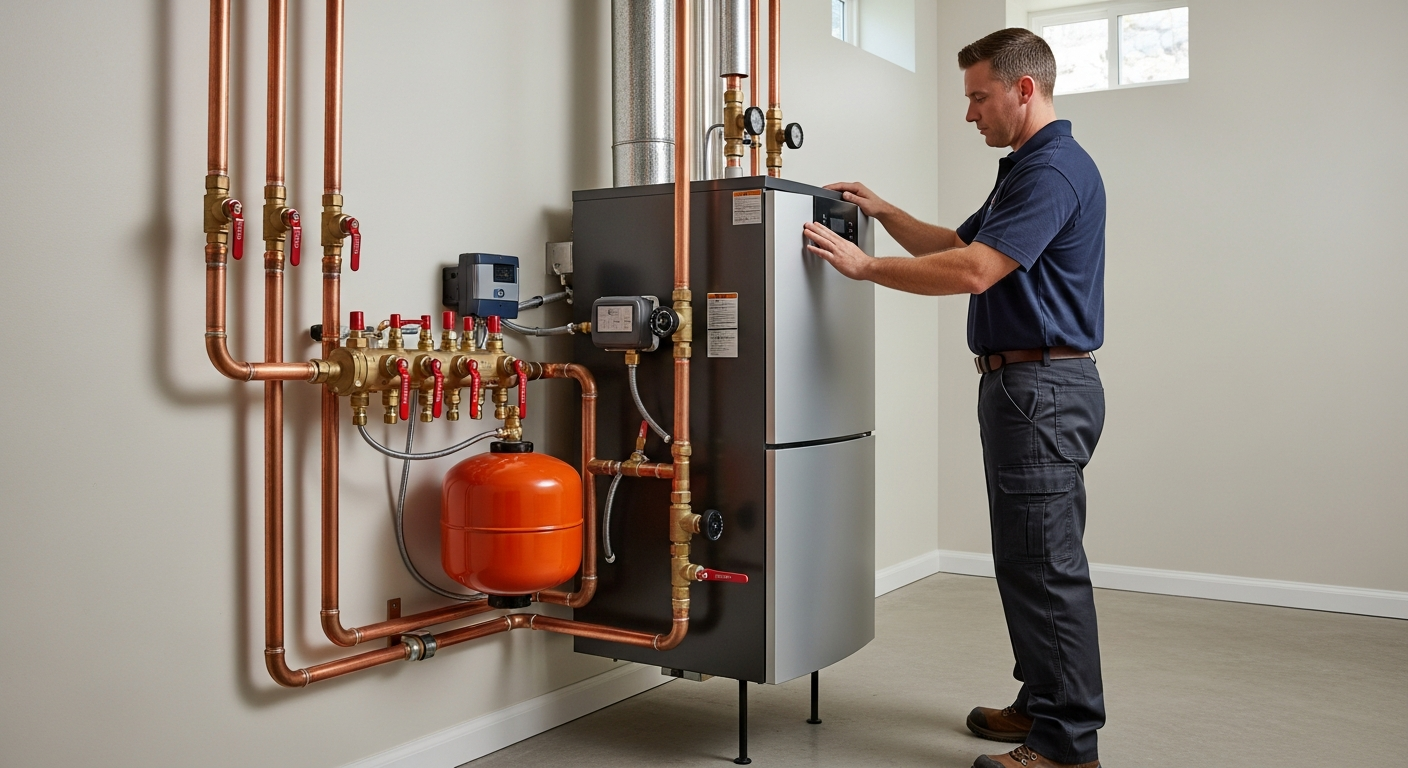
Upgrade strategically: match technology to your home, not the hype
Future HVAC tech delivers real savings and comfort, but only when properly sized and installed. Use free calculators and a vetted contractor who performs a load calculation to avoid overspending.
What Matters Most
- AI thermostats and variable-speed motors can cut annual energy costs by 20–40%
- Cold-climate heat pumps now work in sub-zero weather, often eliminating oil/propane
- Smart zoning and improved filtration solve comfort and allergy issues in specific rooms
- Use the 50% repair-cost rule and age threshold (12+ years) to decide on replacement
- Always verify contractor licensing, Manual J commitment, and rebate handling before signing
Strengths
- Quantifies efficiency jumps with achievable savings ranges
- Provides concrete decision thresholds (age, cost, comfort) instead of vague advice
- Links directly to tools that generate personalized estimates, reducing guesswork
- Emphasizes climate-specific equipment selection to maximize ROI
Weaknesses
- Upfront cost premium for variable-speed and AI systems ($1,500–$4,000 more than basic models)
- Payback periods extend beyond 7 years in mild climates with cheap electricity
- Older ductwork may require expensive modifications to support zoning or high-efficiency blowers
- Incorrect DIY tinkering with advanced electronics can void warranties and create safety hazards
Decision Summary: When to Invest in Future Tech
| Scenario | Usually Do | Why |
|---|---|---|
| System 10+ years old, frequent repairs, rising bills | Replace with high-efficiency variable-speed heat pump or dual-fuel | Prevents repeated breakdown costs; captures maximum rebates |
| Comfort uneven, humidity high despite central AC | Install zoning dampers or ductless mini-split in problem rooms | Targets specific areas without replacing entire system |
| Good system, just want savings | Add AI thermostat, seal ducts, improve insulation | Low-cost moves that pay back in 1–2 years |
| Severe winter location, furnace still working | Keep furnace, add cold-climate heat pump for shoulder seasons | Cuts fossil fuel use 60–70% without risking backup heat |
| Renovating or adding a room | Design ductless or small-duct system during construction | Sidesteps expensive duct retrofits later |
Quick Answer: Future HVAC in 60 Seconds
The next generation of heating and cooling centers on efficiency, connectivity, and precision. AI thermostats learn your schedule to pre-cool or heat only when needed. Heat pumps now work reliably in sub-freezing climates, cutting fossil fuel use. Variable-speed motors maintain steady temperatures and humidity without loud cycling. Smart zoning tailors comfort room by room. Upgrading can reduce energy bills 20–40%, but the right choice depends on your home’s age, climate, and budget. Use our tools below to compare costs, find local incentives, and hire a vetted contractor who won’t oversize the equipment.
What’s New: AI, Heat Pumps & Variable‑Speed Motors
AI‑Driven Smart Thermostats and Predictive Control
Today’s premium thermostats go far beyond schedule programming. They track occupancy patterns, local weather forecasts, and even time-of-use electricity rates to shift runtime to cheaper, off‑peak hours. Some systems integrate with window sensors, so they pause when a door is left open. You can monitor and adjust settings from a phone app—learn how to set up HVAC monitoring with your phone. These devices typically pay for themselves within two years through energy savings alone.
Cold‑Climate Heat Pumps: No Furnace Needed?
Modern heat pumps extract heat from outdoor air even when temperatures drop to −15°F (–26°C). For many homes historically dependent on oil or propane, a cold‑climate heat pump can now handle 100% of heating demand. Pairing one with an existing furnace as a dual‑fuel system can be a cost‑effective bridge. Efficiency ratings (SEER2 and HSPF2) are mandatory; our load calculation guide explains why proper sizing prevents energy waste.
Variable‑Speed Everything: Comfort Without the Noise
Unlike older single‑stage motors that constantly start and stop, variable‑speed compressors and blowers ramp up or down in tiny increments. This delivers three key benefits: whisper‑quiet operation, far better humidity control in summer, and elimination of hot/cold spots. A system running at 30% capacity for longer can use less energy than one blasting at 100% briefly. For a deeper dive, see how HVAC systems work explained simply.
Old vs. New Technology: What You Gain
| Feature | Typical Pre‑2015 System | Future‑Ready System | Why It Matters |
|---|---|---|---|
| Efficiency | 13–16 SEER, single‑stage | 18–26 SEER2, variable‑speed | Up to 40% lower seasonal cooling costs |
| Heating | 80–92% AFUE gas furnace | Cold‑climate heat pump (HSPF2 ≥8.5) + optional dual‑fuel | Eliminates or drastically reduces fossil fuel use |
| Comfort | Noticeable temperature swings, dry air in winter | Steady temperature ±1°F, better humidity control | Fewer cold drafts and sticky summer nights |
| Noise | Loud startup and shutdown | Gradual ramp‑up, often below 55 dB outdoors | Conversation outside near the unit is easy |
| Air Quality | Basic 1‑inch filter | MERV 13+ filtration, UV‑C, ionization options | Reduced allergens, viruses, VOCs |
| Controls | Programmable thermostat | AI‑learning, geofencing, mobile alerts | Never heat an empty house; lower peak demand |
Safety Boundaries: What Homeowners Can—and Cannot—Do
Modern HVAC systems contain high‑voltage electricity, pressurized refrigerant, and combustible gases. You should never attempt repairs involving refrigerant lines, gas piping, circuit boards, capacitors, or compressor terminals. These require EPA‑certified, licensed technicians. However, you can safely perform these checks:
- Replace air filters every 1–3 months; use the MERV rating your system supports.
- Inspect visible ductwork for disconnected joints or crushed sections.
- Keep outdoor units free of leaves, debris, and at least 2 feet of clearance.
- Test thermostat batteries and verify it reads room temperature accurately.
- Listen for sudden, unusual noises (screeching, banging) and schedule a diagnostic visit early—early intervention avoids costly damage.
If you suspect a refrigerant leak, gas odor, or repeated breaker trip, shut the system off at the thermostat and call an HVACDatabase‑vetted contractor. Use our emergency HVAC service finder if it’s after hours.
Use These Free Tools to Size Up Your Upgrade
Before you call contractors, get your own baseline with HVACDatabase calculators:
- Repair or Replace Calculator – Input age, repair cost, and efficiency to get a recommendation based on the 50% rule.
- HVAC Cost Estimator – See regional price ranges for heat pumps, gas furnaces, and ductless systems.
- BTU Calculator – Estimate the heating/cooling load of your home to avoid oversizing.
- Rebate Finder – Discover federal, state, and utility incentives that can offset 30–50% of upgrade costs.
- Quote Checker – Upload your contractor quotes and get a side‑by‑side comparison of scope, brand, and labor warranty.
Decision Tree: Should You Upgrade to Future Tech?
Answer these questions; if you hit a “replace” trigger, gather quotes and use the contractor comparison tool.
- Age: Is your system over 12 years old? Yes → likely replace, especially if efficiency is below 14 SEER.
- Repair cost: Did a diagnostic visit ($80–$200) reveal a compressor, coil, or heat exchanger failure with a quote exceeding 50% of a new system? Yes → replace.
- Comfort: Do you have rooms that are always too hot or too cold, or humidity above 60% in summer despite running the AC? Yes → zoning or variable‑speed upgrade can solve it.
- Energy bills: Are annual heating/cooling costs over $2,000 and rising? Yes → modern equipment can cut that by $400–$800/year.
- Noise: Is the outdoor unit loud enough to disturb neighbors or sleep? Yes → a variable‑speed unit is significantly quieter.
- Air quality: Have household members with allergies or asthma noticed worsening symptoms indoors? Yes → integrated HEPA/UV purification may be worth it.
Contractor Checklist: 8 Questions Before You Hire
- Are you licensed and insured in my state? Ask for license number and verify online.
- Will you perform a Manual J load calculation? Refuse any contractor who sizes by “rule of thumb.”
- Do you offer multiple brands and explain the differences? Avoid those pushing a single leftover unit.
- What is the labor warranty duration? 1‑year minimum; 2‑5 years for premium installations.
- Can you provide a line‑item quote separating equipment, labor, duct modification, and permits?
- Which rebates am I eligible for, and will you handle the paperwork?
- Will you pull all required permits and schedule the inspection?
- Do you offer a maintenance plan, and what does it include? Compare annual plans ($150–$500) that include tune‑ups and priority service.
After interviews, run your quotes through our Quote Checker and use Contractor Comparison to see reviews and credentials side by side.
Regional Fit: Hot, Cold, Coastal, or Older Home?
Hot, humid climates (Southeast, Gulf Coast): Prioritize variable‑speed air conditioners or heat pumps with enhanced dehumidification modes. Look for units with a dedicated dehum terminal that slows the blower to remove more moisture. Whole‑home dehumidifiers integrated into ductwork are also a strong add‑on.
Cold climates (Midwest, Northeast, Mountain West): Select cold‑climate heat pumps labeled “Hyper Heat” or equivalent, tested down to −15°F. A dual‑fuel setup (heat pump + high‑efficiency gas furnace) is ideal for severe winters where backup heat is essential.
Coastal regions (salt spray): Request units with coastal corrosion protection—epoxy‑coated coils and stainless‑steel hardware. Same for mounting brackets and fasteners. Annual corrosion inspections matter as much as the equipment choice.
Older homes (pre‑1990, often with narrow ductwork or none): Ducted systems may require major retrofits. Ductless mini‑splits or high‑velocity small‑duct systems are often better solutions. Zoning becomes easy with multiple indoor heads.
Find a local contractor who understands your climate’s nuances. Start with our contractor search or, for example, Phoenix AC repair pros if you’re in a hot desert area.
How We Estimate Costs and Performance
HVACDatabase editorial estimates are based on aggregated installer pricing data, equipment manufacturer suggested retail prices, and regional labor surveys. Typical diagnostic visits range from $80–$200 during normal hours; emergency calls may exceed $250. Common repair costs span $150–$650 for control or capacitor work, $500–$1,500 for refrigerant or motor repairs, and $1,500–$4,000+ for compressor or coil replacements. These ranges reflect a mid‑range home with accessible equipment and standard electrical; actual prices vary with location, season, and specific model. Our calculators use national averages and regional multipliers to give you a starting point, not a final bid. All recommendations follow the 50% repair‑vs‑replace rule and Energy Star sizing guidelines.
Frequently Asked Questions
Are AI thermostats really worth it for an older system?
Yes, even a basic programmable thermostat can save 10% annually. AI models (Nest, Ecobee) add occupancy sensing and weather adaptation, possibly saving another 5–8%. However, they can’t fix underlying duct leaks or grossly oversized equipment. Pairing one with an efficient variable‑speed system yields the best payback.
Can a heat pump replace my furnace in a very cold climate?
Modern cold‑climate heat pumps operate efficiently down to −15°F, but many homes still keep a backup heat source for extreme cold snaps. A dual‑fuel system (heat pump plus gas furnace) provides the lowest operating cost by switching to gas only when electricity prices spike or temperatures plummet below the heat pump’s balance point. Have a contractor run an economic balance‑point analysis.
How much more does a variable‑speed system cost?
Variable‑speed air conditioners or heat pumps typically add 20–40% to equipment cost versus equivalent single‑stage models. However, the premium is often offset by higher rebates, lower energy bills, and extended lifespan due to reduced cycling stress. Use our cost estimator to compare mid‑range and premium options.
What is the expected lifespan of new HVAC technology?
Well‑maintained modern heat pumps and air conditioners last 12–18 years, while gas furnaces can reach 15–20 years. The control board and sensors are the most failure‑prone electronics; they generally outlast the mechanical warranty but can be costly if not covered. Annual maintenance visits ($80–$250) preserve performance and catch small issues early.
Do smart zoning systems work with my existing ductwork?
Motorized dampers can often be retrofitted into existing ducts if there is access. However, homes with badly sized or leaky ducts may need repairs first. A Manual J and Manual D evaluation by a qualified contractor will determine whether your current duct system can handle zoning without compromising airflow. Ductless mini‑splits are an alternative when ductwork is insufficient.
Methodology
HVACDatabase estimates combine common contractor price patterns, service-category pricing ranges, equipment complexity, urgency, regional labor variation, and known HVAC safety boundaries. Actual prices vary by city, brand, system size, access, warranty status, permit requirements, and whether the visit discovers ductwork, electrical, refrigerant, gas, or drainage issues. Use these numbers to sanity-check quotes, not as a guaranteed price.
Related articles
Connect this page to adjacent guides so readers keep moving deeper into the topic cluster.

How Utility Demand Response Programs Use Smart Thermostats
Enrolling your smart thermostat in a demand response program can earn you up to $150/year while keeping you comfortable. Learn if it's right for your home and how to maximize benefits.
How to Implement a Whole Home Energy Management System
Integrate smart tech and HVAC controls to cut energy waste. This guide shows how to audit, upgrade, and automate your home's energy use, with real savings estimates.
Cost to Install Multiple Smart Thermostats
Get a clear cost breakdown for installing 2–4+ smart thermostats. Includes equipment, labor, zoning upgrades, and how to save with utility rebates. Practical checks and contractor questions inside.