What Makes a Premium HVAC System Worth It
Premium HVAC systems promise superior comfort and lower bills, but the upfront cost is higher. Use our cost estimator, decision rules, and contractor checklist to decide if a high-efficiency unit fits your budget and long-term goals.
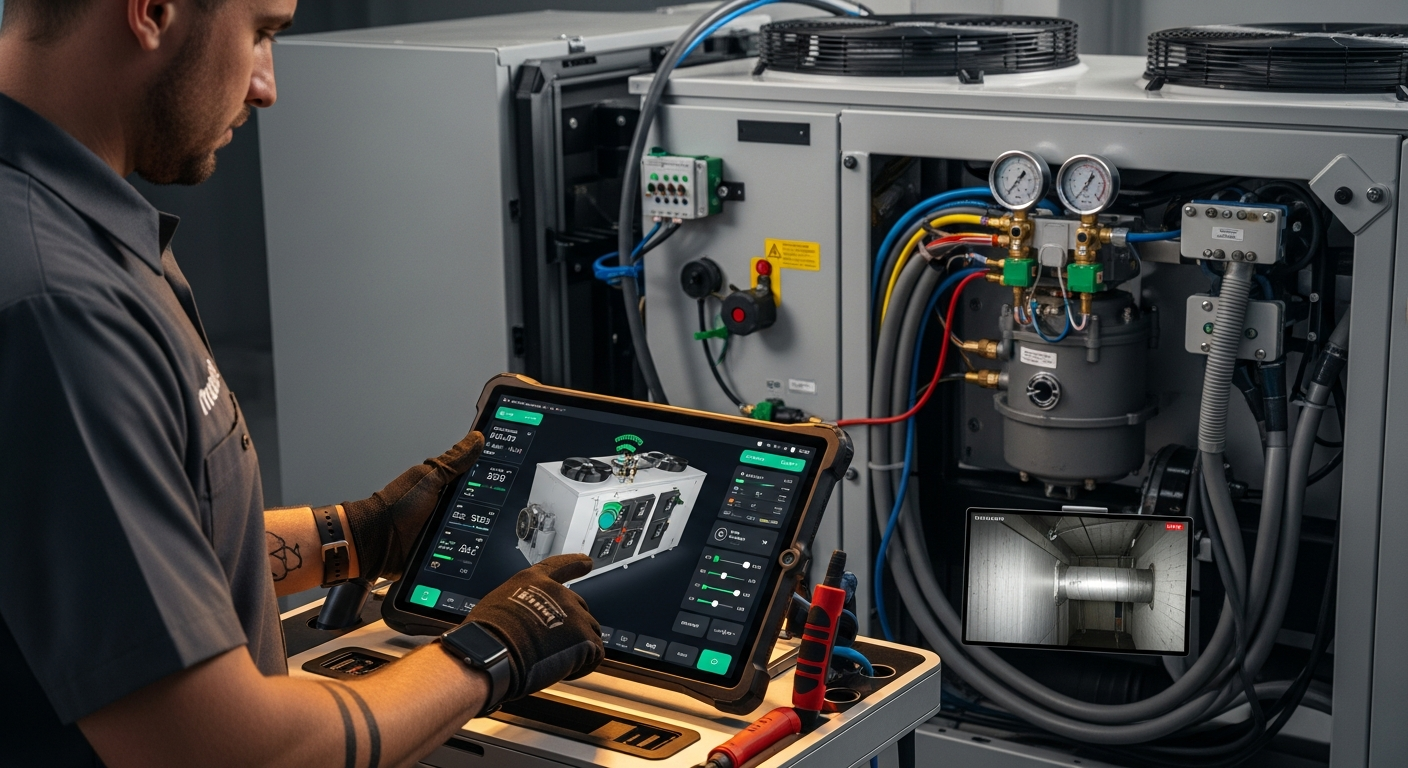
What Really Separates Premium HVAC from Standard Units?
Upgrading to a premium HVAC system can trim 20–50% off your energy bills, eliminate hot and cold spots, and run whisper-quiet—but only if the extra $2,000–$6,000 upfront makes sense for your home. This guide replaces sales fluff with hard numbers, decision thresholds, and free tools to help you shop with confidence.
Quick Answer
A premium HVAC system is worth it if you plan to stay in your home for at least 5–7 years, live in a climate with extreme heat, cold, or humidity, or suffer from allergies or uneven temperatures. Otherwise, a properly sized mid-range unit paired with smart maintenance often delivers better short-term value.
Premium vs. Standard: What’s the Real Difference?
| Feature | Standard (Single‑Stage) | Premium (Variable‑Speed) |
|---|---|---|
| Comfort | Temperature swings of 3–5°F | Holds within 1°F of setpoint |
| Sound Level | Noticeable on/off rumble (55–70 dB) | Often below 55 dB; nearly silent on low |
| Energy Efficiency | Up to 16 SEER2 / 8.5 HSPF2 | 20+ SEER2 / 10+ HSPF2 |
| Humidity Control | Minimal dehumidification | Removes 50–80% more moisture |
| Air Filtration | Often limited to 1″ filters | Accommodates 4–5″ media cabinets (MERV 11–16) |
| Typical Equipment Cost* | $3,500–$6,500 | $6,500–$12,000+ |
*Editorial estimate ranges for complete system installation, excluding ductwork. Actual prices vary by region, brand, permits, and labor.
Safety Boundaries: What You Can Safely Check vs. Pro‑Only Work
Homeowner-Check Items
- Filter inspection and replacement (every 1–3 months)
- Thermostat battery and schedule settings
- Clearing debris, leaves, and snow from around outdoor unit
- Checking circuit breakers for tripped switches
- Listening for new rattles, grinding, or hissing sounds
- Monitoring monthly energy bills for unexpected spikes
Leave to Licensed Professionals
- Refrigerant charging, leak detection, or line set work
- Compressor, capacitor, contactor, or control‑board replacement
- Gas valve adjustments, heat exchanger inspection, combustion testing
- High‑voltage electrical work or wiring modifications
- Ductwork measurements, sealing, or alterations
Run the Numbers: Use Our Free Calculators
Before you decide, plug your home’s details into HVACDatabase’s tools to see potential payback:
- HVAC Cost Estimator – Get a personalized installation price range.
- Repair or Replace Calculator – Compare the cost of fixing your current unit vs. upgrading.
- BTU Calculator – Check if your current system is oversized or undersized.
- Rebate Finder – Discover utility and federal incentives that lower your net cost.
Decision Rules: When a Premium System Makes Financial Sense
Use these concrete thresholds to guide your choice:
- Stay‑put horizon: If you’ll own the home for 5+ years, the energy savings of a premium unit typically exceed the price gap.
- Repair cost vs. system age: If your existing equipment is over 12 years old and needs a repair costing more than $2,000, a new premium installation yields better long‑term value.
- Utility‑bill trigger: If your seasonal heating or cooling bills rise 25%+ over two years, an efficiency upgrade pays back faster.
- Comfort complaint threshold: If you notice 3°F+ temperature swings or run a dehumidifier alongside your AC, variable‑speed technology is likely the fix.
Local Climate Considerations
- Hot & humid (Southeast, Gulf Coast): Variable‑speed’s moisture‑removal advantage slashes indoor humidity without overcooling. Look for SEER2 18+ and MERV 11+ filtration.
- Cold winters (Midwest, Northeast): A premium heat pump with an HSPF2 rating of 10+ can halve heating costs vs. electric resistance. Consider dual‑fuel setups with a gas furnace for sub‑freezing days.
- Coastal or high‑wind zones: Prioritize units with coated coils and reinforced cabinets. Check storm‑ready tips and confirm the manufacturer’s corrosion‑resistance warranty.
- Older homes with leaky ducts: No premium unit can overcome duct losses. Have a contractor perform a Manual J load calculation and duct leakage test before upsizing efficiency.
Contractor Checklist: 8 Questions Before You Sign
- Did you perform a Manual J load calculation? Get a copy; rule‑of‑thumb sizing voids efficiency gains.
- Will you inspect and document duct leakage? Aim for less than 10% leakage.
- What SEER2/HSPF2 rating does the quoted system deliver? Write down the specific model numbers.
- Is the warranty parts‑only, or does it include labor? Ask about warranty registration and transferability.
- Does the price include a new thermostat and filter media cabinet? Variable‑speed often needs a communicating thermostat.
- Can you provide three recent local references with similar installations? Follow up with those homeowners.
- Are there utility rebates still available for this unit? Secure pre‑approval before installation.
- What is your commissioning process? A premium system must undergo startup calibration; walk away if they skip it.
For pre‑vetted professionals near you, use our Contractor Search and Quote Comparison tools.
Methodology: How Our Recommendations Are Formed
All editorially estimated prices draw from HVACDatabase’s aggregated cost data, updated quarterly. Efficiency payback calculations assume a 15‑year lifecycle, average U.S. electricity rates of $0.14/kWh, and natural gas at $1.20/therm. ROI thresholds are based on median system prices of $9,000 (premium) and $5,000 (standard). Actual results vary with climate, usage, and utility rates. References to comfort and noise derive from manufacturer specifications and third‑party sound testing.
Frequently Asked Questions
How much more does a premium HVAC system cost upfront?
Editorial estimates show a premium system typically runs $2,000–$6,000 higher than a single‑stage alternative, depending on size, brand, and local labor. The gap narrows after utility rebates and tax credits, which can offset $500–$2,000.
Do I need variable‑speed if I only use AC a few months a year?
If your cooling season is short and mild, a two‑stage or single‑stage unit with a high SEER2 rating (16+) may be sufficient. The premium variable‑speed advantage scales with runtime, so it shines in long, hot, or humid seasons.
Will a premium system still save money if my home has leaky ducts?
No equipment can perform efficiently with duct leakage above 15%. Address duct sealing first; a $300–$1,200 duct repair often delivers a better return than a luxury HVAC upgrade alone.
Can I install a high‑efficiency unit in an older home?
Yes, but it requires careful assessment. Tight spaces may limit coil sizes; older electrical panels may need a $500–$2,000 upgrade. Always have a technician check static pressure and airflow compatibility.
Are premium HVAC rebates available?
Many states and utilities offer $100–$1,500+ for qualifying high‑efficiency equipment. Federal tax credits (25C) can cover up to $600 for AC units and $2,000 for heat pumps. Use our Rebate Finder to locate active programs.
Related articles
Explore related maintenance, equipment, and hiring questions.

Nest Learning Thermostat (4th gen) vs ecobee Premium
Both models offer remote room sensors. Compare the exact generation, wiring compatibility, controls, and installed quote before choosing.

MERV 11 vs MERV 13: check filtration and equipment compatibility
Compare particle filtration, verify the filter your equipment supports, and use a buying checklist without assuming a universal health or energy saving.

How to check an HVAC contractor before hiring
Use a documented shortlist: business identity, applicable credentials, job experience, a written scope, and a clear handover.