How to Maintain a Geothermal Heat Pump
Maximize geothermal heat pump efficiency and lifespan with this practical maintenance guide. Covers monthly DIY tasks, annual pro inspections, cost estimates, and decision tools for homeowners.
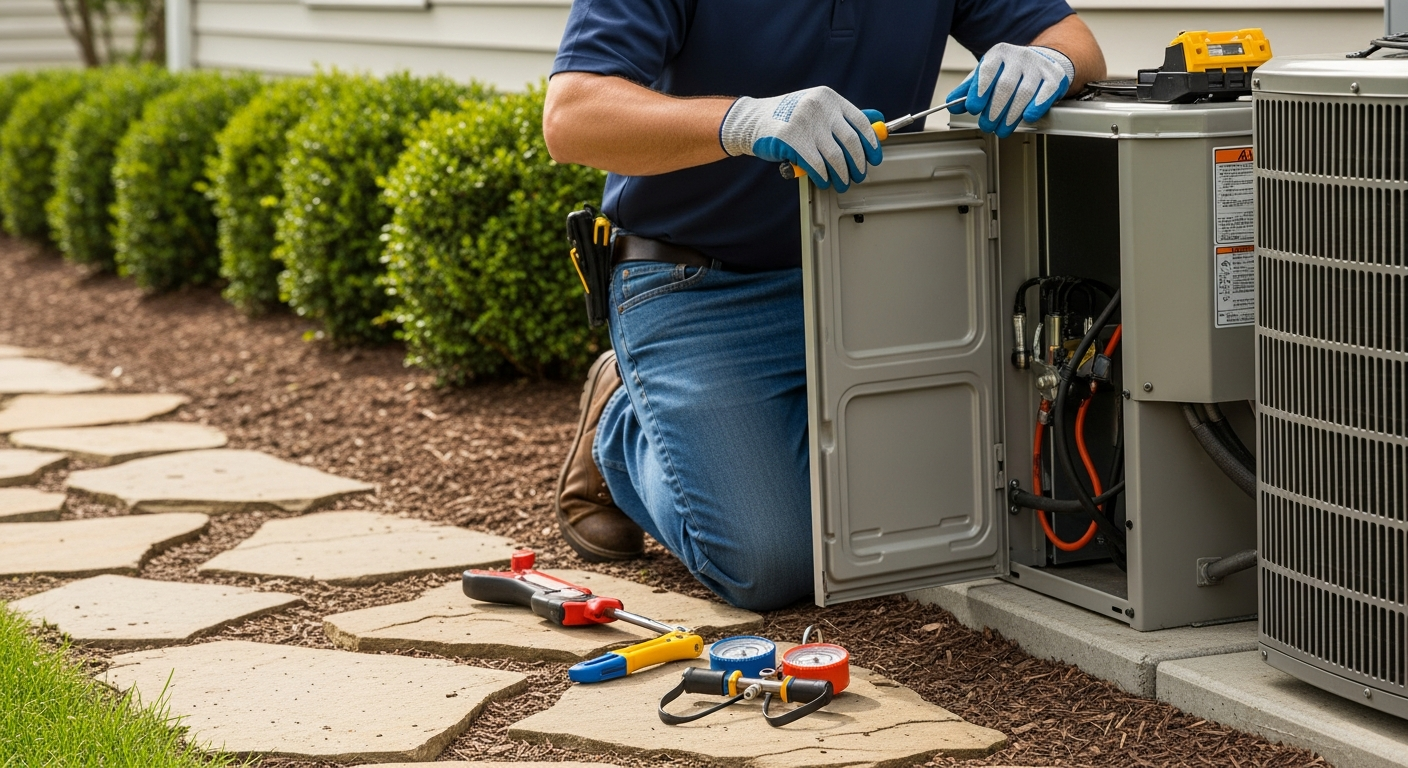
Proactive Maintenance is the Key to Long-Term Savings
Homeowners should perform monthly filter and drain checks and schedule annual professional inspections. This low-effort routine prevents 80% of common geothermal issues and extends equipment life by 5–10 years compared to neglected systems.
What Matters Most
- Change air filters every 1–3 months; a $15 filter can prevent a $200 service call.
- Book a professional loop and interior inspection annually, even if the system seems fine.
- Address unusual noises, high bills, or moisture immediately—don’t wait for a breakdown.
- Use the Repair or Replace Calculator when faced with a major repair on an older unit.
- Hire IGSHPA-certified contractors and always get three itemized quotes.
Strengths
- Lower operating costs due to maintained efficiency (up to 30% energy savings).
- Fewer emergency breakdowns; most problems caught during routine checks.
- Extended equipment life: indoor units routinely surpass 25 years with proper care.
Weaknesses
- Annual professional service costs $150–$350, higher than a standard furnace tune-up.
- Neglect can lead to antifreeze leaks or loop pressure loss, requiring expensive repairs.
- Homeowner DIY scope is limited; complex diagnostics always require a specialist.
DIY vs. Professional Maintenance Tasks
| Task | Usually a DIY Job? | Reason |
|---|---|---|
| Air filter replacement | Yes | Accessible; no special tools needed. |
| Condensate drain inspection | Yes | Visual checks and simple flushing are safe. |
| Loop pressure check | No | Requires specialized gauges and training. |
| Antifreeze concentration test | No | Hazardous fluids; pro must handle per regulations. |
| Heat exchanger flush | No | Chemical cleaning under pressure; risk of coil damage. |
| Electrical diagnostics | No | High voltage; safety switches should never be bypassed. |
Introduction
Geothermal heat pumps offer remarkable efficiency by using stable ground temperatures, but they still need regular attention. Homeowners handle simple filter and drain checks; technicians manage sealed refrigerant loops, antifreeze levels, and internal components. This guide gives you a practical maintenance schedule, warning signs, and decision tools to protect your investment and avoid costly surprises.
Quick Answer: Maintenance at a Glance
- Monthly: Check and change air filter if dirty; inspect condensate drain for clogs.
- Annually: Schedule professional inspection – loop pressure, antifreeze, heat exchanger flush, electrical connections.
- As Needed: Listen for unusual noises, monitor utility bills, check circuit breaker, clear debris around indoor unit.
Estimated Maintenance Costs
| Task | Typical Cost Range (USD) | Frequency |
|---|---|---|
| DIY air filter replacement | $10–$40 per filter | 1–3 months |
| Professional annual inspection | $150–$350 per visit | Once a year |
| Loop pressure/antifreeze service | $200–$500 (included in some plans) | Annual or as needed |
| Heat exchanger flush | $400–$900 | Every 2–5 years |
| Emergency diagnostic visit | $80–$200 (after-hours may be higher) | Only on failure |
Editorial estimates based on typical market data; actual prices vary by region and contractor. Use our HVAC cost estimator for a personalized range.
Safety Boundaries: What You Can and Cannot Do
Safe Homeowner Checks
- Replace air filter (locate slot, slide out old, insert new, note direction).
- Inspect condensate drain; pour a cup of clean water to check flow if accessible.
- Listen for rattling, grinding, or hissing from indoor cabinet.
- Verify thermostat settings and batteries.
- Check that circuit breaker is on; reset once if tripped, call pro if it trips again.
- Keep area around indoor unit clear of dust and stored items.
Pro-Only Work (Do Not Attempt)
- Refrigerant line checks, adding/removing refrigerant.
- Ground loop pressurization or antifreeze handling.
- Heat exchanger cleaning with chemical solutions.
- Any electrical component replacement (compressor, capacitor, contactor, control board).
- Diagnosing or bypassing safety switches.
Why: These areas involve high voltage, hazardous chemicals, and sealed systems that require specialized tools and certification. Improper handling can cause injury, void warranties, and damage the environment.
Use These Tools to Plan Maintenance
Make data-driven decisions with our calculators:
- Heat Pump Savings Calculator – See how maintenance affects efficiency and lowers bills.
- Repair or Replace Calculator – Decide when to retire your older unit.
- HVAC Cost Estimator – Get location-specific pricing for inspections and repairs.
- Rebate Finder – Check for incentives that offset maintenance or replacement costs.
- Quote Checker – Verify contractor bids are fair.
Decision Tree: When to Call a Pro
Follow these thresholds after performing your own basic checks (filter, breaker, thermostat):
- Unusual noise or vibration → Schedule diagnostic visit immediately.
- Significant moisture/leak around indoor unit → Call pro; may indicate coil freeze or drain failure.
- Reduced heating or cooling → Check filter first. If no improvement in 24 hours, call pro.
- Utility bill spike >20% without explanation → Pro inspection needed; system may be operating inefficiently.
- System age >15 years and repair quote exceeds 30% of new unit price → Strongly consider replacement (use calculator).
Contractor Checklist: Questions Before You Hire
When scheduling annual maintenance or a repair, ask these questions:
- Are you factory-trained and certified for geothermal heat pumps? (Look for IGSHPA or similar credentials.)
- Will you check ground-loop pressure and antifreeze chemistry? What does the service report include?
- Do you carry liability and workers’ compensation insurance?
- Can you provide a written estimate with a breakdown of labor, materials, and any diagnostic fees?
- What is your hourly rate for any additional work beyond the standard inspection?
- Do you offer an annual maintenance plan? What does it cover and at what cost?
- Will you inspect ductwork for leaks and measure airflow?
Find pre-screened geothermal contractors in your area through our HVAC contractor search and compare options.
Climate-Specific Maintenance Tips
- Cold climates (e.g., Chicago, Minneapolis): Annual antifreeze concentration check is critical to prevent loop freezing. Snow buildup can affect ground temperature; keep access points clear.
- Hot/humid climates (e.g., Houston, Miami): Condensate drain may clog frequently with algae. Consider quarterly drain cleaning and use of algae tablets (safe for HVAC).
- Coastal areas (salt air): Indoor components are protected, but any outdoor well or loop access may need corrosion protection. Ask technician about anti-corrosion measures.
- Older homes: Leaky ducts waste up to 30% of conditioned air. Annual duct inspection and sealing is highly recommended. Check duct basics for similar insulation principles.
Methodology: How We Form Estimates
Our cost ranges and recommendations are editorial, derived from industry surveys (ASHRAE, DOE data), national contractor pricing databases, and typical labor rates across regions. They are not guaranteed quotes. For a personalized estimate, use our cost estimator and always obtain three written quotes for large repairs or replacements.
Frequently Asked Questions
1. How often should I change my geothermal filter?
Check monthly and change when visibly dirty. Generally, every 1–3 months. Homes with pets or high dust may need more frequent changes. Use a filter rated MERV 8–11 unless your system is designed for higher efficiency filters; overly restrictive filters can reduce airflow.
2. Can I add antifreeze to my ground loop myself?
No. The loop is a sealed pressurized system. Only a qualified technician with proper equipment should test and adjust antifreeze. Incorrect handling can lead to leaks, fluid loss, or environmental hazard.
3. What does a professional annual inspection include?
Typically: check loop pressure and fluid, flush or inspect heat exchanger, test refrigerant levels (if applicable), inspect electrical connections, measure airflow and temperature differentials, and clean condensate pan/drain. Expect a written report summarizing findings.
4. How long do geothermal heat pumps last?
Indoor unit: 20–25 years; ground loops: 50+ years. Regular maintenance can push the indoor unit beyond 25 years. Compare this to conventional air-source heat pumps (10–15 years). Use our system age decoder if you don’t know when your unit was installed.
5. Is geothermal maintenance more expensive than conventional HVAC?
Annual professional inspection may cost slightly more ($150–$350 vs. $80–$250 for a standard furnace/AC tune-up) due to loop checks. However, fewer breakdowns and longer lifespan often mean lower total cost of ownership. DIY filter and drain work is identical in cost.
Related articles
Connect this page to adjacent guides so readers keep moving deeper into the topic cluster.
How to Implement a Whole Home Energy Management System
Integrate smart tech and HVAC controls to cut energy waste. This guide shows how to audit, upgrade, and automate your home's energy use, with real savings estimates.

How to Set Up Thermostat Geofencing
Set up thermostat geofencing to automatically adjust home temperature as you come and go. Save energy, extend equipment life, and never return to an uncomfortable house. Get our quick-start guide now.
How to Troubleshoot Smart Thermostat WiFi Issues
Your smart thermostat offline? Most WiFi drops can be fixed with power checks, router adjustments, and simple restarts. Follow our step-by-step guide to regain remote control and energy savings.