How to Check Your Home for Carbon Monoxide Risks
Carbon monoxide is an invisible threat in many homes. Learn how to identify potential hazards and keep your HVAC system running safely to protect your family.
The Silent Threat in Your Home
Carbon monoxide (CO) is often called the 'silent killer' because it is colorless, odorless, and tasteless. It is a byproduct of incomplete combustion, meaning any appliance in your home that burns fuel—such as gas, oil, or wood—is a potential source.
Protecting your family starts with understanding where these risks originate and how to monitor them effectively. While high-tech sensors are vital, a proactive approach to home maintenance is your first line of defense.
Identify Common Carbon Monoxide Sources
Most CO incidents stem from malfunctioning fuel-burning appliances. You should regularly inspect the following areas of your home:
- The Furnace: A cracked heat exchanger can leak CO directly into your home's air supply.
- Water Heaters: Improper venting or backdrafting can push exhaust back into the living space.
- Gas Fireplaces: Blocked chimneys or damaged logs can result in poor combustion.
- Attached Garages: Running a vehicle or gas-powered tool in a garage can allow gas to seep through walls and doorways.
If you are unsure how your system is wired or how it communicates with your safety sensors, you might want to learn how to read HVAC wiring diagrams to better understand your home's electrical setup.
The Importance of Professional Inspections
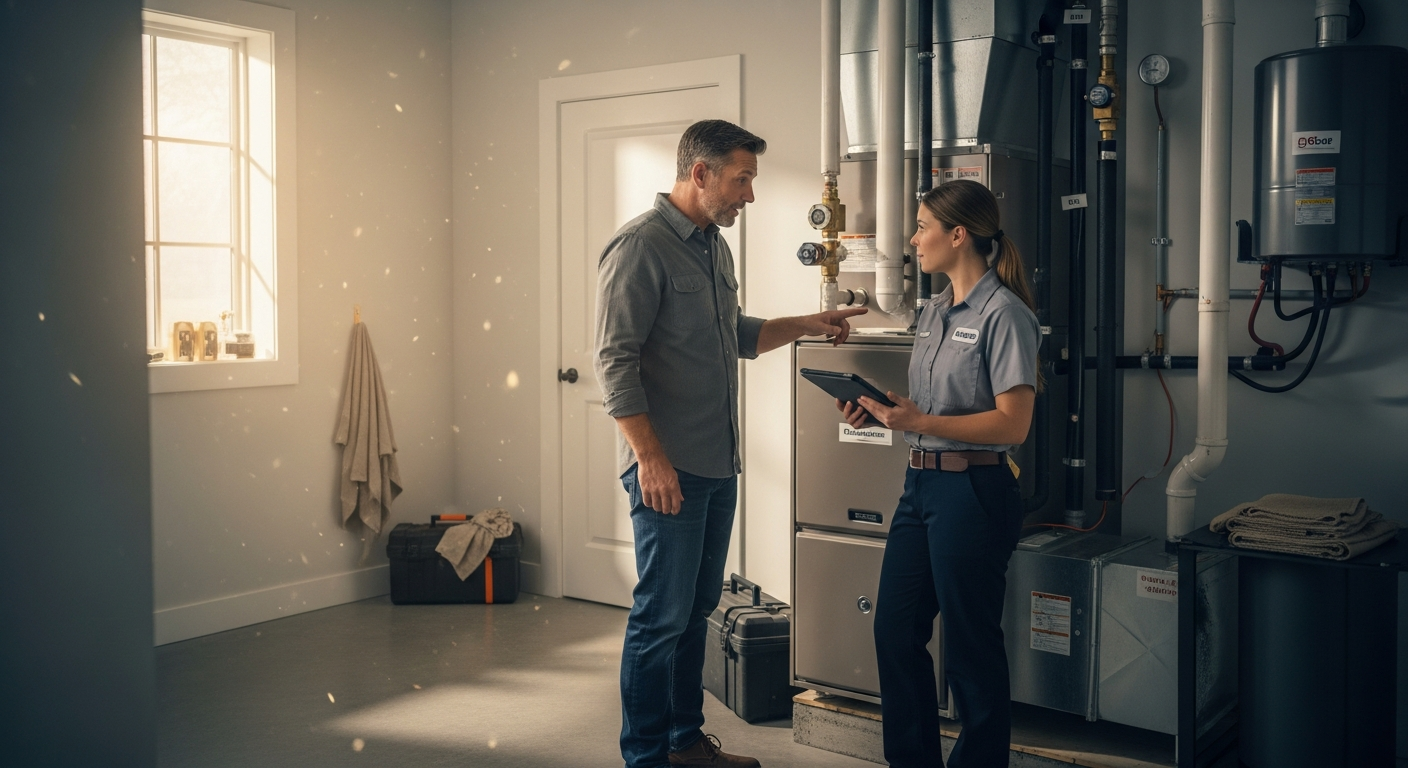
While homeowners can perform basic visual checks, some risks are invisible to the naked eye. A cracked heat exchanger, for instance, often requires specialized tools and cameras to detect.
By using HVACDatabase.com, you can connect with local, trusted professionals who perform comprehensive safety audits. Expert technicians use calibrated CO meters to measure levels at the flue and within the living spaces to ensure your system is operating within safe limits.
Signs Your HVAC System Has a CO Problem
Your heating system often gives off subtle clues that something is wrong with the combustion process. Look for these warning signs:
- Soot or brownish-yellow staining around the outside of the appliance.
- A pilot light that frequently blows out.
- A yellow or flickering burner flame instead of a steady blue flame.
- Heavy condensation on windows near the furnace or water heater.
Regular upkeep is the best way to prevent these issues from developing. Knowing how to schedule seasonal HVAC maintenance ensures that a professional catches these red flags before they become life-threatening.
Carbon Monoxide Safety
Optimizing Airflow and Ventilation
Proper ventilation is critical for preventing gas buildup. If your home's air isn't circulating correctly, CO levels can rise quickly even with minor leaks.
Ensure your return vents are clear of furniture or debris. If you are having trouble finding where your system pulls air from, check our guide on how to find your home's HVAC return air grilles. Clear airflow helps dilute any minor pollutants and ensures the furnace has enough oxygen for clean combustion.
Improving General Air Quality
While carbon monoxide is the most dangerous gas, other particles can affect your breathing. For those with sensitivities, understanding HEPA vs MERV filters for HVAC can help improve overall air purity. Better filtration combined with indoor air quality tips for asthma sufferers creates a safer, healthier environment for everyone in the house.
Installing and Testing CO Alarms
Detectors are non-negotiable for any home with gas appliances. You should have at least one alarm on every level of your home and near every sleeping area.
Test these alarms monthly using the 'test' button. Most units have a lifespan of 5 to 7 years; if yours is older, replace it immediately. Some smart thermostats now include CO detection or can be linked to your HVAC system. If you are upgrading your tech, you may need to know how to wire a thermostat properly to ensure all safety features are active.
What to Do if the Alarm Sounds
If your CO alarm goes off, do not ignore it. Even if you feel fine, the levels could be rising. Follow these steps:
- Evacuate the house immediately and ensure everyone is accounted for.
- Do not stop to open windows, as this could mask the source of the leak for emergency responders.
- Call 911 or your local fire department from outside the home.
- Do not re-enter the home until emergency officials tell you it is safe.
- Contact an HVAC professional through HVACDatabase.com to inspect and repair the source of the leak before turning your appliances back on.
Sometimes homeowners try to fix airflow issues by adding fans. If you have considered the cost to install register booster fans, remember that these should only be installed in a system that is already structurally sound and safely vented.
Conclusion
Carbon monoxide safety is a combination of high-quality detection tools and consistent mechanical maintenance. By staying vigilant and scheduling annual inspections, you can enjoy a warm, comfortable home without the worry of silent threats.