How to Choose Between RTU and Split Systems for Commercial
Deciding between an RTU and a split system? Get a clear, data-driven comparison of costs, performance, and space requirements to make the best choice for your commercial building.
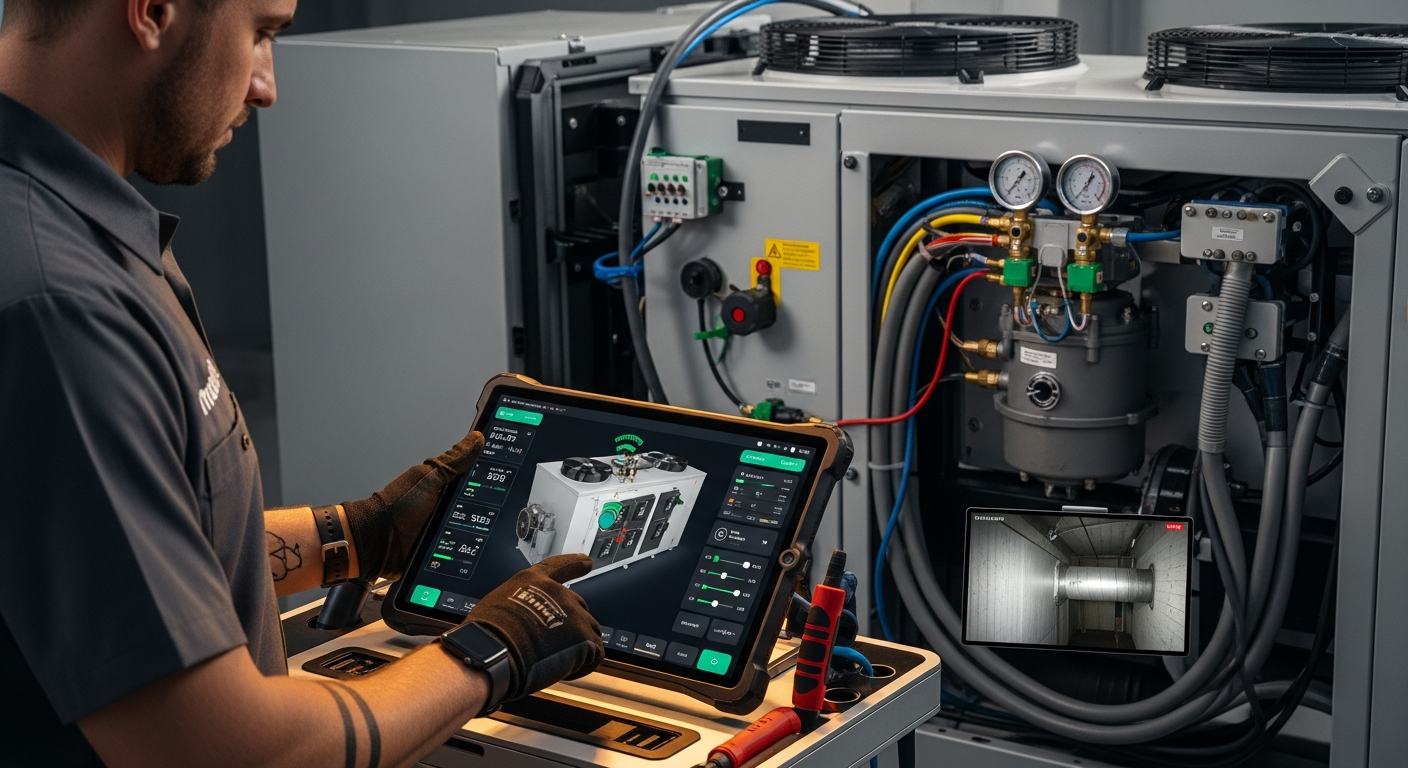
RTUs are best for large, single-story buildings with easy roof access; split systems suit smaller, multi-zone or multi-story buildings.
For commercial properties under 10,000 sq ft with multiple rooms or tenants, split systems offer more zoning flexibility and lower upfront equipment cost. For large open-plan spaces, RTUs simplify maintenance and reclaim interior square footage.
What Matters Most
- RTUs combine all HVAC components in one roof-mounted cabinet, saving indoor space and isolating noise.
- Split systems separate indoor and outdoor units, providing better zoning and protecting the air handler from weather.
- RTU installation typically costs more due to crane and roof work, but maintenance is simpler with a single access point.
- Always get a structural roof assessment before choosing an RTU, and use load calculations (Manual N) for any system.
- Use HVACDatabase tools to compare quotes, estimate sizing, and find local contractors experienced with your building type.
Strengths
- Easier maintenance access for RTUs – single point, no entry into workspace required
- Better zoning and quieter indoor operation with split systems
- Longer expected life of indoor components in split systems (sheltered from elements)
- RTUs free up valuable floor area that can be used for revenue-generating space
Weaknesses
- RTUs are fully exposed to weather, requiring more frequent coil cleaning and cabinet inspections
- Split systems need dedicated indoor mechanical room and more complex refrigerant piping runs
- RTU installation may trigger costly roof reinforcement if existing structure is insufficient
- Split system maintenance requires access to both indoor and outdoor units, doubling service time
Decision Summary: When to Pick Each System
| Scenario | Usually do | Why |
|---|---|---|
| Large, flat-roof warehouse or retail (>10,000 sq ft, open plan) | RTU | Single unit handles entire space, duct layout simpler, no indoor mechanical room needed |
| Multi-story office building with diverse tenant needs | Split system | Better zone control per floor or suite, no roof access disruption for other tenants |
| Building with no available indoor utility closet | RTU | Entire system lives on roof; only duct penetrates ceiling |
| Coastal or extreme weather location | Split system | Indoor air handler protected from salt/corrosion, longer lasting components |
| Need ultra-quiet indoors (law firm, medical office) | Split system | Compressor noise stays outside; indoor unit uses sound-dampened blower |
Quick Answer
For most small-to-midsize commercial buildings (under 10,000 sq ft) with multiple rooms or zones, a split system delivers better temperature control and lower upfront equipment cost. If you have a large, single-story open space (warehouse, retail floor) and easy roof access, a rooftop unit (RTU) wins on space efficiency and maintenance simplicity. Both can be integrated with smart controls; final choice hinges on building structure, zoning needs, and available space.
RTU vs Split System: At a Glance
| Feature | Rooftop Unit (RTU) | Split System |
|---|---|---|
| Components | All-in-one, on roof | Indoor air handler + outdoor condenser |
| Best for | Large open areas, flat roofs, spaces where saving indoor floor area matters | Multi-zone, multi-story, offices, retail with varied loads |
| Installation complexity | Crane required, roof structural check; ductwork simpler | Needs refrigerant piping, electrical between units; often no crane |
| Noise | Roof isolates most noise, but vibration possible | Quiet inside, condenser hum outside |
| Maintenance access | Single access point on roof; may require roof ladder/hatch | Two locations – indoor mechanical room and outdoor pad |
| Weather durability | Fully exposed; requires regular cleaning of coils and cabinet checks | Indoor unit protected; outdoor condenser built for exposure |
| Typical lifespan | 15–20 years with maintenance | 15–20 years (indoor air handler can outlast outdoor unit) |
Cost Breakdown: What to Expect
Note: All prices are editorial estimate ranges, not guaranteed quotes. Actual costs vary by region, building specifics, brand, labor rates, permit fees, and site conditions. Always get at least three written bids.
| Cost Item | RTU Range | Split System Range |
|---|---|---|
| Equipment (5-ton unit) | $6,000 – $12,000 | $4,500 – $8,500 |
| Installation labor & materials | $4,000 – $8,000 (crane, curb, duct tie-in) | $3,500 – $7,500 (line set, electrical, pad, indoor unit hanging/stand) |
| Roof structural reinforcement | $0 – $5,000+ (if needed) | N/A |
| Annual maintenance contract | $250 – $500 per unit | $200 – $450 per system |
| Diagnostic service call | $80 – $200 (standard visit) | $80 – $200 (standard visit) |
Use our HVAC cost estimator to get a personalized ballpark, and run your bids through the quote checker to spot overcharges or missing line items.
Decision Tree: Should You Pick an RTU or a Split System?
Answer these questions; if you say “yes” to three or more in a column, that system type is likely your better fit.
RTU path – go RTU if:
- Roof is flat or low-slope, structurally sound, and can bear the weight (>300 lbs per sq ft typical)
- Building is single-story with no occupied attic or upper floor
- Floor space is at a premium – no mechanical closet available
- Open floor plan with minimal interior walls (warehouse, big-box retail, gym)
- You want maintenance teams to work outside only, never entering the workspace
Split system path – go split system if:
- Building is multi-story or has tenants with different temperature needs
- Roof access is difficult, unsafe, or roof is not rated for heavy equipment
- You have a dedicated mechanical room or closet (even a small one)
- Zoning is critical (e.g., server rooms need colder settings, offices moderate)
- Long-term component protection from weather is a priority (coastal salt air, heavy snow)
Safety Boundaries: What You Can (and Cannot) Do
Homeowner / Property Manager Safe Checks
- Visually inspect filters monthly and replace or clean as needed – see our filter guide
- Keep outdoor condenser coils free of leaves, grass clippings, and debris (split system)
- Ensure no furniture or boxes block return air grilles indoors
- Verify thermostat batteries and settings; update occupancy schedules
- Look for ice buildup or water leaks around indoor unit – call a pro if found
Professional-Only Work (Never DIY)
- Refrigerant handling, leak repair, or adding/removing charge
- Any gas furnace or combustion component adjustment
- Electrical panel wiring, capacitor replacement, contactor service
- Compressor replacement or internal sealed‑system work
- Control board troubleshooting or any high‑voltage (>24V) work
- Roof curb adjustment or structural modifications
If a technician suggests a repair that goes beyond these safe checks, compare contractor credentials and request proof of license and insurance.
Use HVACDatabase Tools to Make a Smarter Choice
- BTU Calculator – estimate the cooling/heating load before debating system type; oversizing costs more and hurts humidity control
- Cost Estimator – put in your location and building size to see realistic installed price ranges
- Quote Checker – upload your contractor bids and get an AI‑driven fairness check
- Repair or Replace Calculator – for older equipment, see if a new system beats patching the old one
- System Age Decoder – find the manufacture date to gauge remaining life
- Rebate Finder – many commercial units qualify for utility incentives; enter your zip code
Contractor Vetting Checklist
Before you hire, ask these questions (and document answers):
- “Are you licensed, bonded, and insured for commercial work in this city?” – Verify the license number on your state’s contractor lookup site.
- “Have you installed this specific brand and model in a building like mine?” – Request photos of completed jobs.
- “Will you perform a Manual N load calculation?” – Commercial buildings require a Manual N, not a rule‑of‑thumb guess.
- “Does the quote include crane, roof curb/structural work, and permits?” – Surprise “extras” can blow the budget.
- “What is the warranty on parts, labor, and compressor?” – Standard is 5‑10 years parts, 1‑2 years labor.
- “Do you offer a maintenance plan and what is included?” – Get filter changes, coil cleaning, and diagnostics in writing.
- “Can you provide three recent customer references?” – Call them and ask about cleanup, timeline, and budget adherence.
- “How will you protect the roof during RTU installation?” – Proper walk pads and sealants are non‑negotiable for RTU work.
Use our contractor comparison tool to line up multiple proposals and spot red flags. For location‑specific help, start a contractor search.
Climate and Location Considerations
- Hot, dry climates (e.g., Phoenix, AZ): RTU coils can bake in direct sun; ensure high SEER ratings and consider reflective coatings. See Phoenix AC contractors for local expertise.
- Humid, coastal markets (e.g., Houston, Miami): Split systems allow better humidity control with variable‑speed air handlers. Coastal air corrodes outdoor coils quickly – look for epoxy‑coated fins.
- Cold climates (e.g., Chicago, Minneapolis): RTUs need low‑ambient kits and insulated ductwork. Split system outdoor units must be rated for sub‑zero conditions. Chicago heating contractors know the codes.
- Hurricane zones: If local codes require tie‑downs for rooftop equipment, budget extra for RTU anchoring. Split system condensers at ground level may need elevation pedestals.
- Older buildings: Roof load capacity may rule out an RTU. Get a structural engineer’s letter before proceeding.
How We Form Our Recommendations
The comparisons, cost ranges, and decision logic in this article are based on industry‑standard practices (ACCAs Manual N), aggregated contractor pricing data from HVACDatabase partners, and real‑world installation case studies. We sanitized the data to remove identifiable contractor information and applied regional multipliers. These are editorial guidelines, not engineering certainty. Always have a licensed professional perform a site‑specific load calculation and roof assessment before committing.
Frequently Asked Questions
1. Can I install an RTU on a sloped roof?
Yes, but it requires a prefabricated curb that levels the unit. Sloped roof installations add $1,000–$3,000 to the project and may need extra structural support. Flat roofs remain the most economical.
2. How much does a 10‑ton commercial RTU cost installed?
Expect $18,000 – $30,000 all‑in, depending on brand, efficiency (≥14 SEER), crane fees, and any ductwork modifications. This editorial range aligns with our cost estimator data for typical low‑rise commercial buildings.
3. Which system is quieter for an office environment?
Split systems place the noisy compressor outside, while the indoor air handler runs at low decibel levels (often <55 dB). RTUs can transmit low‑frequency vibration through the roof; vibration isolators on the curb help mitigate this.
4. Can I mix RTUs and split systems in the same building?
Absolutely. Many commercial properties use an RTU for a large common area and split systems or ductless units for executive offices or server rooms. This hybrid approach often optimizes both comfort and cost.
5. How often should a commercial HVAC system be serviced?
At least twice a year – pre‑cooling and pre‑heating season. RTUs may need quarterly coil cleanings in dusty areas. A preventive maintenance plan typically costs $300–$600 annually and catches 80% of failures before they occur.
For more guides on making the right commercial HVAC decision, read our article on choosing a commercial HVAC system and sizing a commercial HVAC system properly.
Methodology
HVACDatabase estimates combine common contractor price patterns, service-category pricing ranges, equipment complexity, urgency, regional labor variation, and known HVAC safety boundaries. Actual prices vary by city, brand, system size, access, warranty status, permit requirements, and whether the visit discovers ductwork, electrical, refrigerant, gas, or drainage issues. Use these numbers to sanity-check quotes, not as a guaranteed price.
Related articles
Connect this page to adjacent guides so readers keep moving deeper into the topic cluster.
How to Implement a Whole Home Energy Management System
Integrate smart tech and HVAC controls to cut energy waste. This guide shows how to audit, upgrade, and automate your home's energy use, with real savings estimates.

How to Set Up Thermostat Geofencing
Set up thermostat geofencing to automatically adjust home temperature as you come and go. Save energy, extend equipment life, and never return to an uncomfortable house. Get our quick-start guide now.

How to Troubleshoot Smart Thermostat WiFi Issues
Your smart thermostat offline? Most WiFi drops can be fixed with power checks, router adjustments, and simple restarts. Follow our step-by-step guide to regain remote control and energy savings.