How to Test an AC Compressor
Spot compressor trouble early with safe homeowner checks. Use our decision tools to compare repair quotes and find top-rated HVAC contractors in your area.
Clear Recommendation
Homeowners should never attempt compressor testing. Instead, use this guide to recognize failure signs, understand professional testing procedures, and make an informed repair-or-replace decision with our calculators.
What Matters Most
- Compressor failure often shows as no cooling, tripped breakers, or loud noises.
- Safe checks include filter, breakers, and outdoor unit debris.
- Professional testing involves multimeter checks and refrigerant assessment.
- Use our calculators to compare repair vs replacement costs before committing.
- Always verify contractor EPA certification and ask for detailed ohm reading results.
Strengths
- Empowers homeowners to make a confident decision without dangerous DIY.
- Provides clear cost thresholds and decision rules.
- Integrates free tools for cost estimation and contractor comparison.
- Includes climate-specific advice for varied regions.
Weaknesses
- Cost ranges are editorial estimates that may not match exact local quotes.
- Does not cover commercial or mini-split systems in detail.
- Requires professional confirmation for final diagnosis.
Diagnosis Path Decision Summary
| Symptom | Usually do | Why |
|---|---|---|
| No cooling, outdoor fan runs | Call a pro for capacitor/compressor test | Could be capacitor ($150–$400 fix) or compressor failure. |
| Loud grinding from outdoor unit | Shut off system immediately, call pro | Likely mechanical failure inside compressor. |
| Breaker trips instantly on AC start | Do not reset repeatedly; call pro | Short circuit or grounded compressor; fire hazard. |
| AC runs constantly but no cold air | Check filter and coils first, then call pro if persistent | Could be low refrigerant or compressor inefficiency. |
Quick Answer
If your AC isn’t cooling and you suspect the compressor, don’t open the unit. Check the thermostat, air filter, breakers, and listen for odd noises. Then use the Repair or Replace Calculator and get at least two quotes from certified local contractors. Only a pro with EPA certification can safely test and replace a compressor.
Is Your AC Compressor Failing? 5 Signs to Watch
- No cold air: The outdoor unit runs but indoor air is warm.
- Loud noises: Banging, screeching, or clicking from the outdoor unit.
- Tripped breaker: The AC circuit breaker trips immediately or frequently.
- Short cycling: The system turns on and off rapidly without completing a cooling cycle.
- Humming then silence: A hum for a few seconds followed by a click and shutdown—often a seized compressor or bad capacitor.
Safety Boundaries: What Homeowners Can (and Cannot) Check
Compressor testing involves lethal electrical voltage and stored energy inside the capacitor. You risk severe shock or death if you open the access panel without proper training and tools. Here’s what’s safe to do yourself:
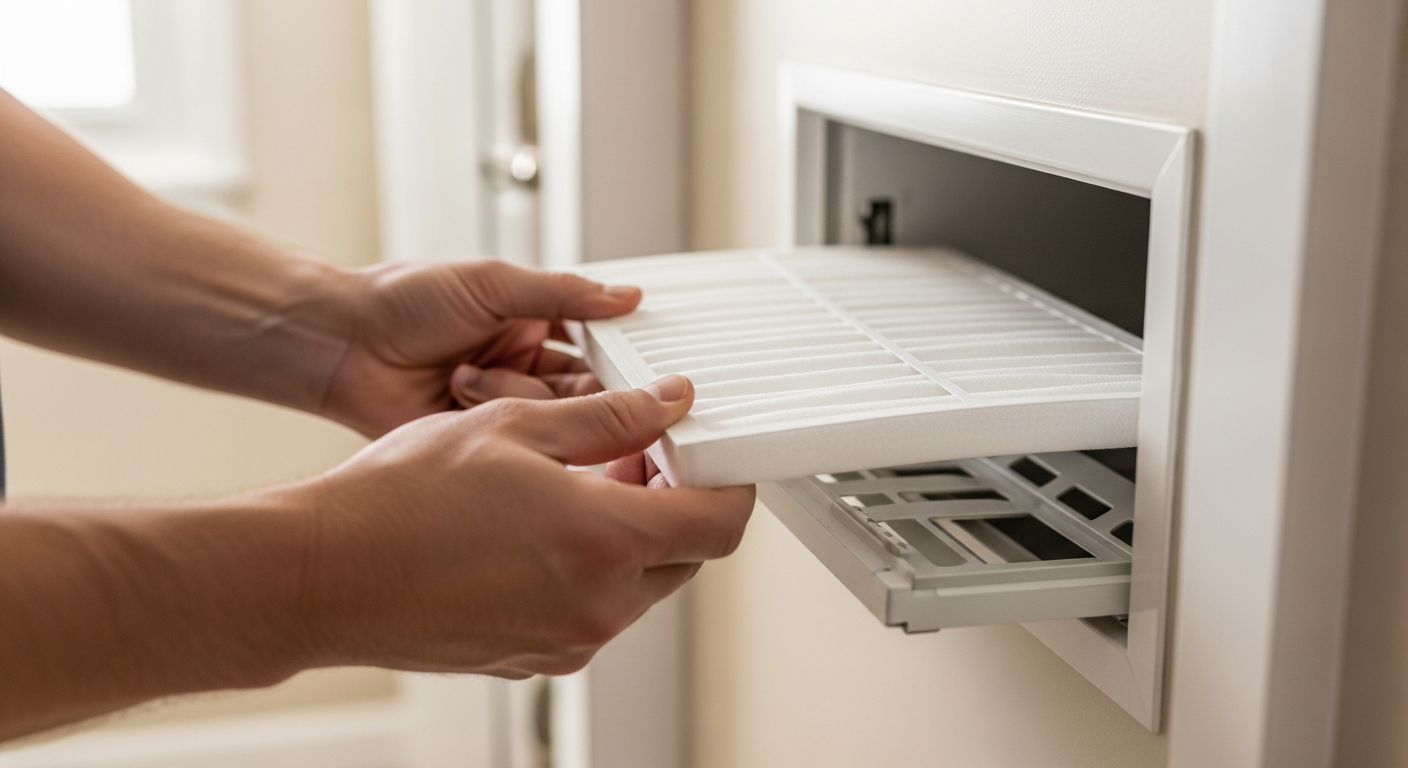
- Check the thermostat and air filter: A dirty filter causes strain that can shut down the compressor. Replace if dirty (see our filter guide).
- Inspect the outdoor unit: Remove debris, clean the condenser coils gently (coil cleaning tips), and ensure nothing blocks airflow.
- Reset breakers: Locate the AC circuit breaker and the outdoor disconnect box. Turn them off and back on—if they immediately trip, there’s a short and you need a pro.
- Listen and observe: Note any strange sounds or if the fan runs without cooling. Record symptoms to share with a technician.
Pro-only tasks (do not attempt):
- Opening the compressor terminal box or removing wires.
- Discharging or testing the capacitor.
- Using a multimeter on compressor terminals.
- Checking refrigerant pressures or adding refrigerant.
- Replacing any electrical or mechanical component.
What Happens During a Professional Compressor Test
When you call a licensed HVAC technician, they will follow a systematic process to confirm the diagnosis:
- Visual inspection: Look for burnt wires, oil leaks, or physical damage.
- Capacitor and contactor checks: Often a failed capacitor mimics compressor failure.
- Electrical tests: With power off, they’ll use a multimeter to measure ohms between the C, S, and R terminals. A healthy compressor shows that Start-to-Run resistance equals Common-to-Start plus Common-to-Run. An open line (OL) or zero reading indicates damaged windings. They’ll also test for a short to ground by probing the housing and each terminal.
- Refrigerant pressure test: Gauges reveal if the compressor is pumping correctly.
Compressor Repair vs. Replace Decision Table
| Scenario | Usually Do | Why |
|---|---|---|
| Compressor is grounded (shorted) | Replace compressor or outdoor unit | Internal motor failure; requires recovery of refrigerant and proper disposal. |
| Windings are open (OL on meter) | Replace compressor or system | Broken internal wire; repair impossible. |
| System age < 5 years, under warranty | Replace compressor only | Warranty often covers part cost; labor may be partially covered. |
| System age 5–10 years, compressor fails | Compare repair vs replacement using calculator | Consider SEER upgrade and remaining lifespan of other components. |
| System age > 10 years (especially over 12) | Replace entire outdoor unit or whole system | New system efficiency savings often offset the higher upfront cost. |
| Compressor runs but cooling is poor | Check refrigerant charge, capacitor, condenser coils first | May not be a compressor issue; could be low refrigerant or airflow. |
Tools & Calculators to Make a Smart Decision
Before committing to an expensive repair, use these free HVACDatabase tools:
- Repair or Replace Calculator: Compares lifetime costs of fixing vs upgrading your AC.
- AC Compressor Replacement Cost Estimator: Get an editorial cost range based on system size, SEER, and your region.
- System Age Decoder: Find out exactly how old your unit is using the serial number.
- BTU Calculator: Ensure any replacement system is correctly sized for your home.
- Quote Checker: Upload a contractor quote to see if it’s within a fair price range.
Decision Rules: When to Repair and When to Replace
Use these concrete thresholds:
- Age rule: If your AC is more than 12 years old and the compressor dies, replacement is usually the better long-term value. New units offer higher SEER and often a 10-year warranty.
- Cost rule: If compressor repair exceeds 40–50% of a complete outdoor unit replacement cost, go for the new unit. For instance, a $3,500 compressor job vs a $7,000 new 16 SEER condenser unit leans toward replacement.
- Efficiency rule: Upgrade if your current SEER is below 14 and you live in a hot climate where cooling costs are high—use the Rebate Finder to check for local incentives.
- Warranty rule: If the compressor is under part warranty (often 5–10 years), repair may be worthwhile. Labor warranties vary.
- Refrigerant rule: If your system uses R-22 (phased out), replacement is strongly recommended. New units use R-410A or R-32.
Contractor Checklist: Questions to Ask Before Approving Compressor Work
Don’t sign without asking:
- “Are you EPA-certified for refrigerant handling?” Required by law for any work on the sealed system.
- “Did you test the capacitor and contactor first?” These are common culprits and much cheaper to fix.
- “What exactly did the multimeter show?” Ask for the ohm reading values between terminals, and whether the compressor is grounded.
- “Is it possible the problem is just a hard start kit?” Sometimes a failing compressor can be given extra life with a hard start capacitor, but this is a temporary band-aid.
- “What warranty do you provide on parts and labor for a new compressor?” Typically 1 year from contractor, plus manufacturer part warranty.
- “Can you give me a written estimate for both repair and full system replacement?” Compare side by side using our contractor comparison tool.
- “What’s your advice on installing a new outdoor unit vs. just the compressor?” Sometimes the cost difference is small because labor is similar.
- “Do you service my area and have experience with my AC brand?” Read reviews and verify licensing.
Local Climate Considerations
- Hot, dry climates (e.g., Phoenix, Las Vegas): Compressor strain is high; failures are common. Consider a high-efficiency model designed for extreme heat. Use our Phoenix AC contractor search for local experts.
- Humid regions (e.g., Florida, Southeast): Cooling load runs long hours; compressor life may be shorter. Ensure proper airflow and coil cleaning to extend lifespan.
- Cold climates: If your AC doubles as a heat pump, compressor failure affects heating too. Replace with a cold-climate heat pump if applicable.
- Coastal areas: Salt air corrodes compressor terminals and coils. Regular coil cleaning and a protective housing may help.
Methodology: How We Estimate Costs
The price ranges in this article are editorial estimates based on national HVAC service data as of July 2025. They are not guarantees. Actual costs depend on system size, brand, accessibility, labor rates in your area, time of year, and supply chain factors. For exact pricing, we recommend obtaining at least three written quotes from vetted local contractors via our contractor search tool and using our Quote Checker to compare.
Frequently Asked Questions
1. Can I test my AC compressor myself?
No. Testing requires accessing high-voltage terminals and a charged capacitor, which can cause fatal electrical shock. Only a licensed, EPA-certified HVAC technician should perform these tests. Homeowners can safely check breakers, thermostat, air filter, and outdoor unit cleanliness.
2. What does a “grounded” compressor mean?
It means the motor winding insulation has broken down and the electrical current is leaking to the compressor’s metal casing. A technician will detect this as continuity between a terminal and the housing. A grounded compressor cannot be repaired and must be replaced.
3. How much does it cost to replace an AC compressor?
For residential central AC, compressor replacement typically ranges from $1,500 to $4,000+, including parts, labor, refrigerant, and disposal. The wide range depends on compressor type (scroll, reciprocating), system size (tons), SEER rating, warranty coverage, and local labor rates.
4. Is it worth fixing a 15-year-old AC with a bad compressor?
Usually not. A 15-year-old system is near its design life end. For $3,000+ in repair, you could invest in a new high-efficiency unit that lowers monthly bills and often comes with a 10-year warranty. Use our Repair or Replace Calculator to see the 10-year cost comparison.
5. What are signs of a bad compressor vs. a bad capacitor?
A bad capacitor often causes a humming sound followed by a click and no start, or intermittent compressor starts. A bad compressor may make grinding or knocking noises, trip the breaker immediately, or show a grounded condition on a meter. A technician can easily test the capacitor; it’s a much less expensive fix ($150–$400).
Next Steps: Get Help from a Trusted Pro
If your observations point to a compressor issue, don’t delay. A faulty compressor can strain other components. Use our Contractor Search to find top-rated, licensed professionals in your area. Read verified reviews, compare quotes, and schedule a diagnostic visit. Most standard diagnostic fees range from $80 to $200.
Related articles
Connect this page to adjacent guides so readers keep moving deeper into the topic cluster.
How to Implement a Whole Home Energy Management System
Integrate smart tech and HVAC controls to cut energy waste. This guide shows how to audit, upgrade, and automate your home's energy use, with real savings estimates.

How to Set Up Thermostat Geofencing
Set up thermostat geofencing to automatically adjust home temperature as you come and go. Save energy, extend equipment life, and never return to an uncomfortable house. Get our quick-start guide now.

How to Troubleshoot Smart Thermostat WiFi Issues
Your smart thermostat offline? Most WiFi drops can be fixed with power checks, router adjustments, and simple restarts. Follow our step-by-step guide to regain remote control and energy savings.