Geothermal Heat Pump Cost Guide
Learn true geothermal heat pump costs, loop options, and ROI with the federal tax credit. Use our tools and checklist to get honest quotes and decide if going underground is worth it.
Geothermal Is a Long‑Term Winner if You Can Handle the Upfront Cost
For homeowners who plan to stay 10+ years and can finance or afford the installation, a geothermal heat pump delivers unmatched efficiency, comfort, and resale value. The 30% federal credit turns a premium system into a solid investment.
What Matters Most
- Net installed cost after incentives typically $10,500–$28,000.
- Energy savings of 40–70% pay back the extra cost in 7–10 years.
- Horizontal loops are cheaper but need land; vertical loops fit small lots but cost more.
- Loop life exceeds 50 years; indoor unit lasts 20–25 years.
- Always hire IGSHPA‑certified installers and verify with a Manual J.
Strengths
- 300–500% efficiency (COP 3–5), far above the best air‑source units.
- Stable performance in extreme cold or heat.
- Ultra‑quiet operation; no outdoor unit noise.
- Longer equipment life reduces replacement frequency.
- Can provide free or reduced‑cost hot water in summer with desuperheater option.
Weaknesses
- High upfront cost, especially with vertical loops.
- Requires professional design and installation; mistakes are expensive to fix.
- Not suitable for renters or short‑term homeowners.
- May trigger ductwork or electrical panel upgrades.
- Payback can exceed 10 years in areas with cheap natural gas.
Geothermal vs. Air‑Source Heat Pump: Which Saves More?
| Scenario | Usually better choice | Why |
|---|---|---|
| 10+ year stay, large yard | Geothermal | Lower operating costs outweigh higher upfront; loop lasts decades |
| 5–7 year stay, tight budget | Air-source heat pump | Much lower upfront cost; decent efficiency for moderate climates |
| Very cold climate (e.g., -20°F) | Geothermal | Ground temperature stays constant; no defrost losses |
| Limited outdoor space or rocky soil | Air-source heat pump | No drilling costs; simpler installation |
| Access to green financing + state rebates | Geothermal | Stacking incentives can bring net cost close to air-source |
Quick Answer: What Does a Geothermal Heat Pump Cost?
Installing a geothermal (ground-source) heat pump typically costs $15,000 to $40,000+ before incentives. After the 30% federal Residential Clean Energy Tax Credit, the net cost often falls to $10,500–$28,000. Payback through energy-bill savings usually takes 7–10 years, and the underground loop can last 50+ years. Use our cost estimator and rebate finder to see numbers for your home.
Cost Breakdown: Where Your Money Goes
| Component | Editorial Estimate Range | Key Cost Drivers |
|---|---|---|
| Heat pump unit | $4,000 – $9,000 | Capacity (tons), efficiency (EER/COP), brand |
| Ground loop – horizontal | $6,000 – $15,000 | Trench length, soil type, land access, and landscaping restoration |
| Ground loop – vertical | $12,000 – $25,000 | Borehole depth, rock hardness, grout type |
| Ductwork modifications | $1,000 – $5,000 | Existing duct condition; most often needed in older homes |
| Electrical upgrades | $500 – $2,500 | New circuit, disconnect box, or panel capacity increase |
Total installed price editorial estimate: $15,000–$40,000+. Water‑to‑water radiant systems and open‑loop configurations add complexity and cost. Soil testing, permitting fees, and landscaping repairs are typically extra.
Safety Boundaries: What Homeowners Can and Cannot Do
Safe Homeowner Checks
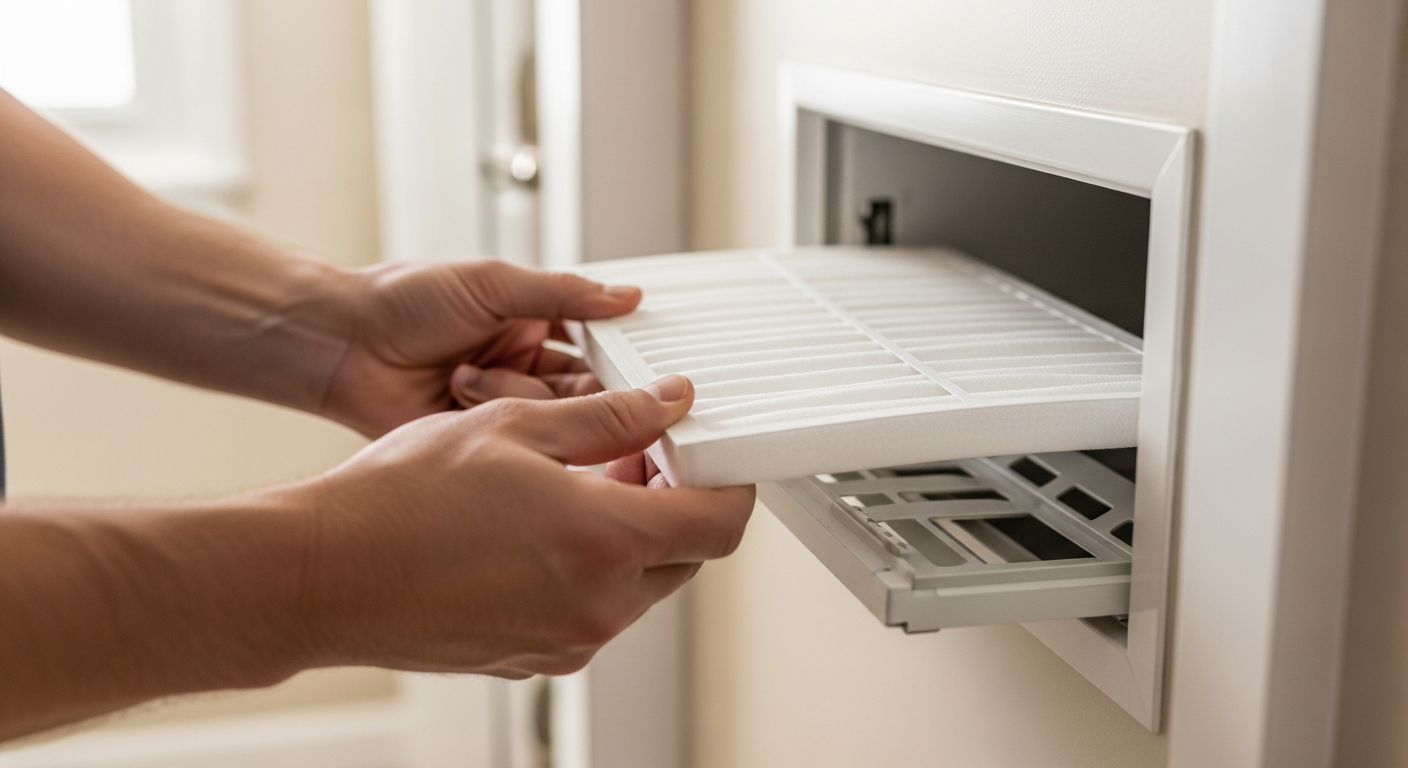
- Replace air filters every 1–3 months to maintain airflow and efficiency.
- Keep supply and return vents unblocked by furniture or drapes.
- Visually inspect the indoor unit for unusual noises, leaks, or error codes.
Professional-Only Work (Never DIY)
- Excavation, trenching, or drilling for ground loops.
- Refrigerant line modifications, charging, or leak repairs.
- Electrical wiring, panel connections, or service disconnect work.
- Compressor, control board, capacitor, or contactor repairs or replacement.
- Loop pressurization or flow balancing.
Only licensed, IGSHPA‑certified contractors should perform these tasks. Tampering can cause equipment damage, void warranties, and create safety hazards.
Decision Rules: Is Geothermal Right for Your Home?
Use these concrete thresholds to guide your choice. If most apply, geothermal is likely a strong investment.
- Long‑term stay: You plan to live in the home for 10+ years.
- Land availability: You have at least 0.5 acres of un‑landscaped yard for horizontal loops, or accept vertical drilling on a smaller lot.
- High heating/cooling loads: Your annual energy bills exceed $2,000 and you run the HVAC heavily.
- Access to financing: You can secure a low‑interest green loan or have cash for the upfront premium.
- State incentives: Check for additional state, local, or utility rebates that stack with the federal credit—use our rebate finder.
- Comfort priority: You want the quietest, most consistent heating and cooling possible.
If you plan to move within 5–7 years or have a tight upfront budget, a high‑efficiency air‑source heat pump may offer a better short‑term ROI. Our repair‑or‑replace calculator can help you weigh options.
Use Our Tools to Personalize Your Numbers
Run a free estimate tailored to your home size and region:
- HVAC Cost Estimator – Get a ballpark installation price for geothermal in your ZIP code.
- Quote Checker – Upload your contractor bids and we’ll flag red flags and overcharges.
- Heat Pump Savings Calculator – Compare yearly operating costs of geothermal vs. air‑source vs. gas.
- Rebate Finder – See all federal, state, and local incentives you qualify for.
- System Age Decoder – Check the age of your current equipment to decide on replacement timing.
Local and Regional Cost Factors
Geothermal prices shift dramatically with geography and soil. Key variables:
- Cold climates (e.g., Chicago, Minneapolis): Longer heating seasons require larger loops or deeper boreholes, adding $2k–$5k. But the savings over propane or oil can be enormous.
- Hot, humid climates (e.g., Phoenix, Houston): High cooling demand; vertical loops often needed due to hard, dry soil, increasing drilling costs.
- Coastal areas (e.g., Florida, New Jersey): High water tables or sandy soil may ease excavation but require special grouting to prevent contamination.
- Older, historic homes: Often need full ductwork retrofits ($2k–$8k+) and electrical panel upgrades. Our condenser cost guide explains similar retrofit costs.
- Rural vs. urban: Travel time for drilling rigs and permit costs can inflate bids by 10–20% in remote areas. Use contractor search to find local specialists.
Always request a Manual J load calculation specific to your home’s construction and orientation. The loop must be sized precisely; oversizing wastes money, undersizing leads to poor performance.
Contractor Checklist: What to Ask Before You Sign
- Certifications: Are you IGSHPA‑ or NATE‑certified for geothermal? How many ground‑source installations have you completed?
- Detailed quote: Does the bid itemize the heat pump model, loop type, drilling depth, and all subcontractor fees?
- Load calculations: Will you perform a Manual J (heating/cooling load) and Manual S (equipment selection) report?
- Permits & incentives: Who handles permitting and the federal/state rebate paperwork? Will you provide an itemized list of all credits?
- Warranties: What is covered on the loop piping (50‑year manufacturer’s warranty typical), the heat pump unit (10–15 years compressor, 5–10 parts), and labor (1–2 years)?
- References: Can I speak with two homeowners who had similar systems installed 3+ years ago?
- Loop verification: How do you pressure‑test and purge the loop before backfilling? (A properly done loop should hold pressure for 24 hours.)
- Post‑install support: What does the first year of service include? Do you offer maintenance plans?
Get at least three written quotes and compare them with our contractor comparison tool. A low‑ball bid often skips critical steps like grouting or proper flushing. View cost guide hub for broader regional price norms.
Frequently Asked Questions
How long does geothermal loop piping last?
High‑density polyethylene pipe buried underground can easily exceed 50 years, often outlasting the home’s ownership. The indoor heat pump unit typically lasts 20–25 years with proper maintenance.
Can I install geothermal on a tiny city lot?
Yes—vertical loops go straight down 100–400 feet, requiring as little as a 10×10 foot drilling area. However, drill‑rig access must be confirmed, and rocky soil can increase costs significantly.
Does geothermal work when it’s -20°F outside?
Yes. Because the ground stays 45–75°F year‑round, the system always has usable heat. The compressor does need to work harder, but properly sized systems maintain high efficiency even at sub‑zero air temperatures. Make sure your contractor uses a low‑temperature loop design.
How do I claim the 30% federal tax credit?
File IRS Form 5695 with your tax return. The credit applies to the full system cost (unit + loop + labor) and has no dollar cap for residential installs through 2032. It steps down to 26% in 2033 and 22% in 2034. Keep all receipts and the certification statement from your installer.
What annual maintenance does a geothermal system need?
Homeowners: change air filters quarterly, keep condensate drain clear. Professional service every 3–5 years: check refrigerant charge, loop pressure, and heat‑exchanger coil. The loop itself is sealed and maintenance‑free. An annual service contract ($150–$300) can catch issues early.
Methodology: How We Develop Cost Estimates
Our editorial estimates are built from aggregated contractor quotes, manufacturer price lists, and region‑adjusted labor rates. We survey HVACDatabase’s network of vetted contractors, cross‑reference building‑permit databases, and apply cost‑index adjustments for soil, climate, and local code requirements. Because every home is unique, these ranges are for planning purposes only; actual prices will vary. Always obtain multiple written quotes and insist on a detailed load calculation. Our Quote Checker can help you evaluate fairness.
Related articles
Connect this page to adjacent guides so readers keep moving deeper into the topic cluster.

Cost to Install Multiple Smart Thermostats
Get a clear cost breakdown for installing 2–4+ smart thermostats. Includes equipment, labor, zoning upgrades, and how to save with utility rebates. Practical checks and contractor questions inside.
Duct Booster Fan Installation Cost
Uneven room temps? Duct booster fan installation costs: register fans $30–$100 DIY, inline fans $500–$800+ with pro. Learn when a booster works and when you need a bigger fix.
Makeup Air Unit Installation Cost Guide
Expect to pay $1,500–$4,500 for a pro-installed makeup air unit. Discover passive vs. tempered options, code triggers, and money-saving decision rules.