How to Replace a Heat Pump Reversing Valve
Wondering if your heat pump needs a new reversing valve? Get clear symptoms, cost ranges, and decision tools to quickly assess repair vs. replacement and hire a trusted technician.
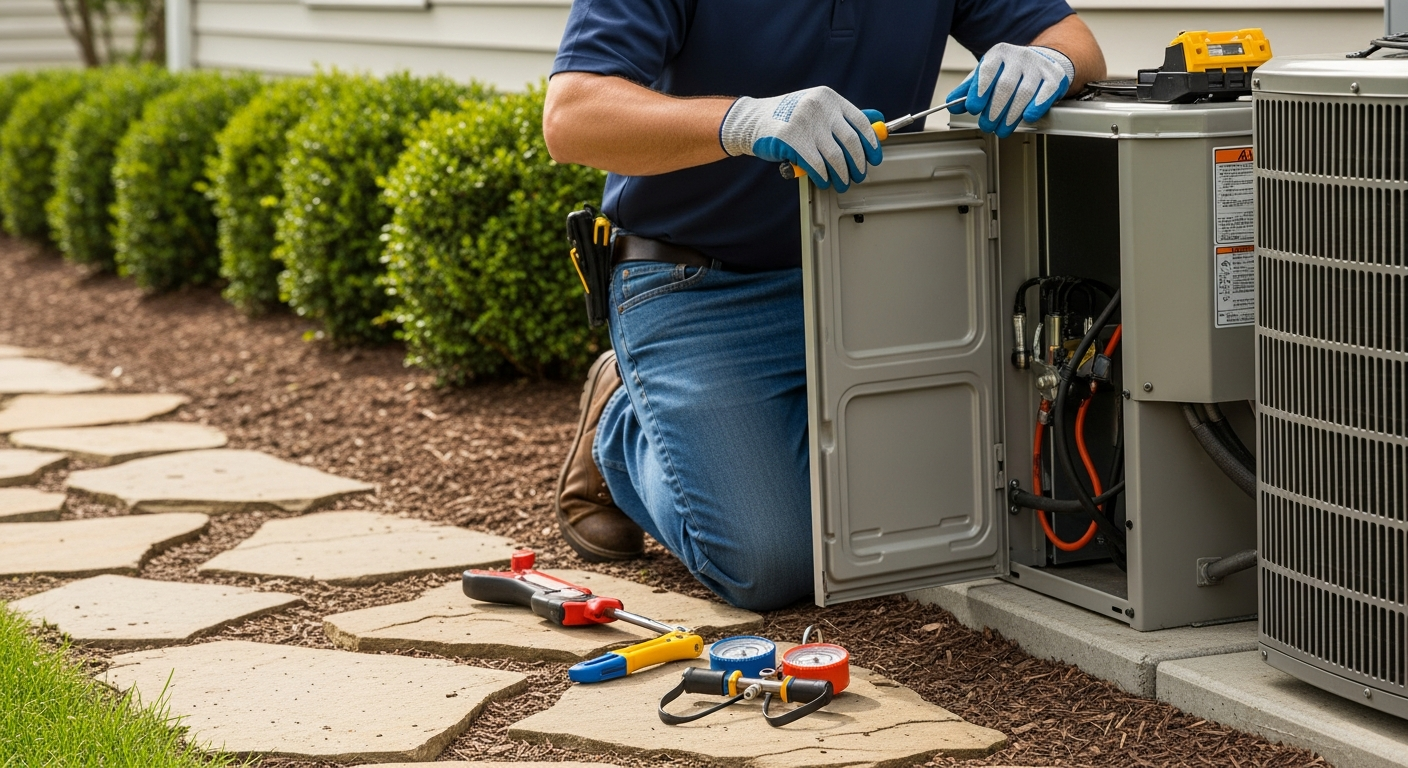
Yes, Repair Is Possible—But Often Replacing the Heat Pump Makes More Sense
For units under 10–12 years old, a reversing valve replacement ($500–$1,500) can restore function. For older systems, especially with R-22 refrigerant or other wear, investing $7,000–$18,000+ in a new, more efficient heat pump often yields better long-term savings and reliability.
What Matters Most
- A stuck reversing valve is a serious but diagnosable problem; always check the solenoid coil first.
- Never attempt DIY refrigerant or brazing work—illegal and dangerous.
- Use the Repair or Replace Calculator and get 3 quotes before deciding.
- Consider full replacement if the unit is over 12 years old or has other major issues.
- A skilled EPA-certified technician is essential for safe, effective valve replacement.
Strengths
- Saves a functioning system if caught early and cost-effective
- Solenoid coil only fix can be under $250 in many cases
- New high-efficiency heat pumps reduce energy bills and qualify for rebates
Weaknesses
- Valve repair is expensive relative to unit value on older systems
- Potential for hidden compressor damage discovered after valve replacement
- R-22 systems require expensive refrigerant or conversion, tilting toward replacement
Decision summary
| Scenario | Usually do | Why |
|---|---|---|
| Minor, safe homeowner issue | Check basics first | Filters, settings, and blocked vents can be resolved safely. |
| Mechanical, refrigerant, gas, or electrical issue | Call a qualified technician | These areas carry safety, code, and warranty risk. |
Quick Answer
A reversing valve lets a heat pump switch between heating and cooling. If it fails, the system often gets stuck in one mode or blows lukewarm air. This is a major repair requiring refrigerant recovery and brazing—not a DIY project. Homeowners can safely check thermostat settings, confirm the valve moves, and look for ice, but professional diagnosis is strongly recommended. Costs range from $500–$1,500 for a skilled technician repair, while older units may call for full heat pump replacement ($5,000–$18,000+). Use our cost estimator and decision tools below to plan your next step.
What Is a Reversing Valve?
A reversing valve is a brass-and-steel slider valve on the outdoor unit that redirects hot refrigerant gas between indoor and outdoor coils. A solenoid coil (electromagnet) moves a slide inside, routing gas to provide cooling in summer and heating in winter. When the valve sticks, leaks internally, or the coil fails, mode switching becomes erratic or stops entirely.
Symptoms and What They Usually Mean
| Symptom | Most Likely Cause | What to Do |
|---|---|---|
| Unit stays in one mode regardless of thermostat | Bad solenoid coil or stuck valve | Test coil (pro), if coil good then valve likely needs replacement |
| Lukewarm air in both modes | Internal leak in valve (refrigerant bypassing) | Professional valve replacement; check compressor health |
| Hissing or hammering sound from valve | Internal wear, loose slide | Shut off system, schedule diagnostic visit |
| Frequent cycling of outdoor unit | Low refrigerant from valve leak or other | Full system check; valve may be part of larger issue |
| Coil ohms out of range (multimeter test) | Failed solenoid coil | Replace coil only (~$80–$250), no brazing required |
Safety Boundaries: What’s Safe to Do Yourself
The reversing valve repair process involves handling pressurized refrigerant, high-temperature brazing, and potential exposure to harmful chemicals. Only EPA-certified technicians with proper equipment should attempt it. However, homeowners can:
- Check thermostat settings and ensure it’s set correctly for desired mode.
- Listen for the “whoosh” sound when the valve shifts (stand near outdoor unit during mode change; you may hear a faint slide).
- Inspect the outdoor coil for ice buildup (possible refrigerant or airflow issue, not necessarily valve).
- Verify the indoor filter is clean and registers are open — poor airflow can mimic valve problems.
Do NOT attempt to open refrigerant lines, use torches, or replace the valve yourself. These actions are illegal for unlicensed individuals, can void warranties, and pose serious safety risks.
When to Call a Professional
If you’ve ruled out thermostat misconfiguration and basic airflow problems, a technician should be called. Key indicators: system stuck in one mode for over 24 hours, persistent hissing from outdoor unit, tripped breakers, or prior repair attempts that didn’t work. Early diagnosis can prevent compressor damage (which raises repair cost to $1,500–$4,000+).
What Replacing a Reversing Valve Involves (So You Know What to Expect)
This is a 4–7 hour job for a trained pro. Steps include refrigerant recovery, cutting and brazing four copper connections under nitrogen purge, swapping the valve while keeping internal seals cool with wet rags, pressure testing, vacuum evacuation, and recharging refrigerant. It’s delicate work—missteps can ruin the new valve or cause leaks. Because of labor and skill, it’s one of the most expensive single-component repairs outside compressor replacement.
Cost Breakdown and Whether to Repair or Replace
Cost ranges are editorial estimates and vary by system, region, and access.
| Service | Typical Range | Notes |
|---|---|---|
| Solenoid coil replacement | $80–$250 | No refrigerant work; quick fix if only electrical |
| Reversing valve replacement | $500–$1,500 | Parts $250–$600 + labor $300–$900 |
| Add compressor damage | $1,500–$4,000+ | Often pushes decision to full replacement |
| Full heat pump replacement | $7,000–$18,000+ | Depends on size, brand, efficiency, home factors |
If your heat pump is over 10–12 years old or uses R-22 refrigerant (phased out), valve replacement may not be cost-effective. Use our Repair or Replace Calculator and Heat Pump Savings Calculator to run the numbers.
Decision Tree: Should I Repair the Valve or Get a New Heat Pump?
Start here: What’s the unit age and refrigerant type?
• Less than 10 years old, R-410A → repair worth considering.
• Over 12 years old or R-22 → strongly consider full replacement.
• Between 10–12 years → compare total repair cost vs. 50% of new system cost. If repair exceeds half of new, replace.
Next: Did the compressor suffer damage?
If compressor needs work, total often exceeds $2,000. In most cases, replacement is smarter.
Next: Are there other major issues?
Leaky coils, failing fan motor, or control board problems can tilt the scale toward replacement.
Finally: Get 3 quotes.
Use our Quote Checker to compare labor and parts scope before deciding.
How to Hire a Qualified HVAC Contractor: Checklist
- Ask: “Are you EPA-certified for refrigerant handling?” (608 Type II or Universal).
- Ask: “Will you perform a solenoid coil test first?” (could save hundreds).
- Ask: “Do you do a nitrogen purge during brazing?” (essential to prevent oxidation).
- Ask: “Will you provide a written estimate with parts and labor breakdown?”
- Ask: “What warranty do you offer on the valve and labor?”
- Check online reviews on multiple platforms; look for reversing valve experience.
- Use our contractor search to find top-rated pros and compare bids.
Regional Nuances
In hot, humid Gulf Coast areas, a stuck valve in cooling mode can be an emergency. In cold northern climates, failure during winter could lead to frozen pipes. Coastal salt air can accelerate valve corrosion—ask about stainless steel components. Older homes may have mismatched system parts, complicating replacement.
Methodology
Cost ranges are editorial estimates based on national surveys of HVAC contractors, averaged over 2023–2025 data. They are not guaranteed. Actual prices depend on system size, brand, region, season, access, permits, and warranty. Always obtain multiple quotes. Our tools use industry benchmarks to provide personalized guidance.
FAQ
Can I unstick a reversing valve myself?
Possibly. Try tapping the valve body gently with a rubber mallet while the system tries to shift. This is a temporary fix—the valve likely needs replacement.
How long does a reversing valve last?
Typically 10–15 years, often matching the compressor life. Poor installation or dirty refrigerant can shorten it.
What happens if I ignore a stuck valve?
Running the system in the wrong mode can overwork the compressor, increase energy bills, and potentially damage the compressor. Quick attention avoids bigger costs.
Is it worth replacing the valve on a 15-year-old heat pump?
Usually no. A 15-year-old system is near end of life; investing $1,000+ into a valve is risky. Consider a new, more efficient heat pump with rebates (use Rebate Finder).
Does homeowners insurance cover reversing valve failure?
Not typically, unless damaged by a covered peril (e.g., power surge). Equipment breakdown coverage may help—check your policy.
Related articles
Connect this page to adjacent guides so readers keep moving deeper into the topic cluster.
How to Implement a Whole Home Energy Management System
Integrate smart tech and HVAC controls to cut energy waste. This guide shows how to audit, upgrade, and automate your home's energy use, with real savings estimates.

How to Set Up Thermostat Geofencing
Set up thermostat geofencing to automatically adjust home temperature as you come and go. Save energy, extend equipment life, and never return to an uncomfortable house. Get our quick-start guide now.
How to Troubleshoot Smart Thermostat WiFi Issues
Your smart thermostat offline? Most WiFi drops can be fixed with power checks, router adjustments, and simple restarts. Follow our step-by-step guide to regain remote control and energy savings.