DIY HVAC Mistakes That Cost Homeowners Money
DIY HVAC repairs can cost more than hiring a pro. Discover the most expensive mistakes, safe maintenance tasks, and tips to choose a reliable contractor.
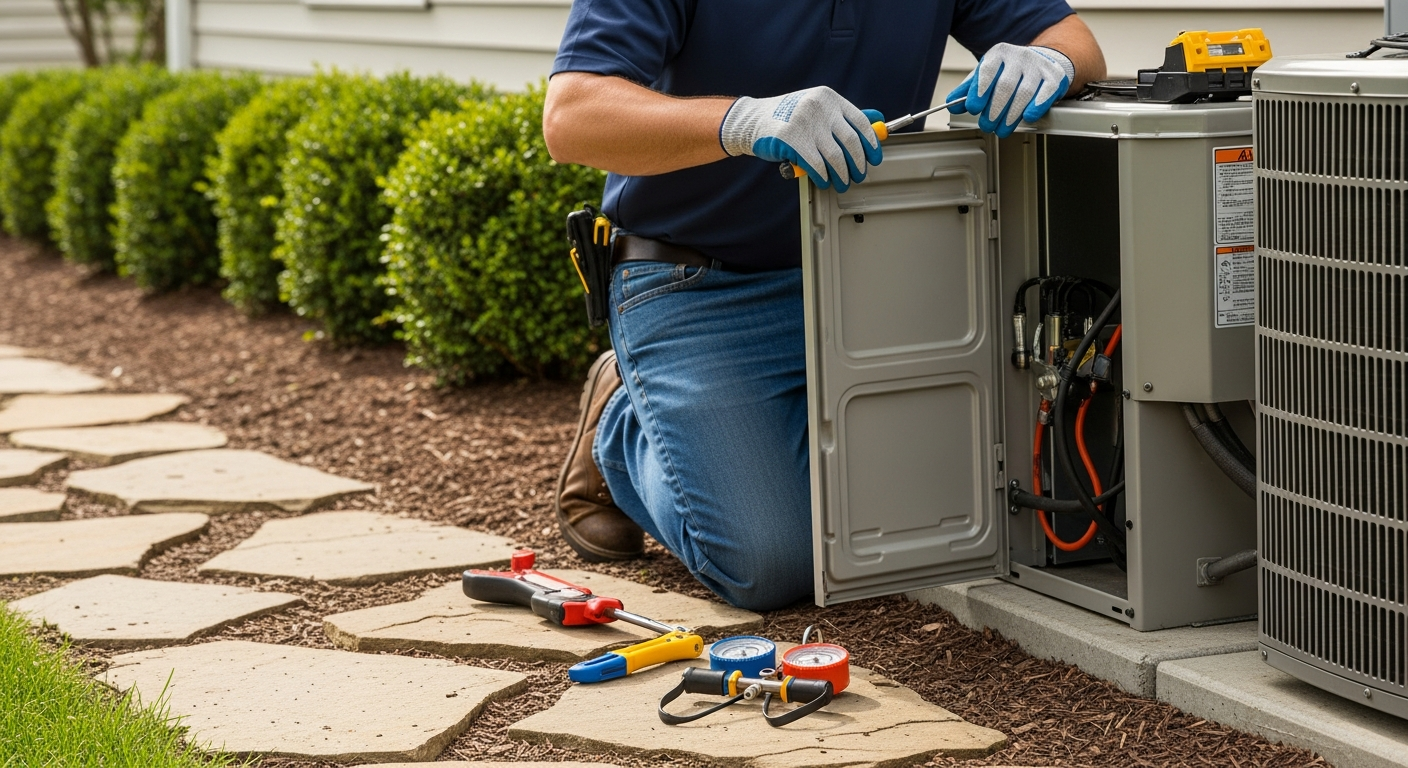
Your home’s heating and cooling system is complex—a single wrong move can turn a $200 repair into a $5,000 replacement. This guide gives you clear rules to decide when a DIY fix makes sense and when to call a licensed pro. You’ll get cost benchmarks, a safety boundary chart, and links to tools that help you avoid the most common and expensive HVAC mistakes.
Quick Answer: Should You DIY or Call a Pro?
For basic maintenance like filter changes, coil cleaning, and drain line flushing, DIY is safe and saves money. But for anything involving refrigerant, natural gas, high-voltage electrical, or opening sealed components, always hire a licensed HVAC contractor. The risk of injury, code violations, and catastrophic equipment damage far outweighs any savings.
DIY vs. Pro: What’s at Stake?
| Task | DIY Risk Level | Typical Pro Cost Range* | Potential DIY Cost If Mistake |
|---|---|---|---|
| Air filter replacement | Very Low | $15–$40 (filter cost) | $0 additional |
| Outdoor coil cleaning | Low–Moderate | $80–$150 | $500+ for damaged fins |
| Drain line clearing | Low | $75–$200 | $500+ for water damage |
| Thermostat swap (low-voltage) | Moderate | $150–$350 | $200–$600 (blown transformer/fuse) |
| Refrigerant leak repair | Extremely High | $500–$1,800 | $2,000–$5,000 (compressor failure) |
| Capacitor replacement | High (shock/burn risk) | $150–$400 | $500–$1,500 (motor damage) |
*Editorial cost ranges for a typical single-family home; actual costs vary by region and system.
The 5 Most Expensive DIY HVAC Mistakes
1. Adding Refrigerant Without Finding the Leak
Your AC is a closed system; it doesn’t “use up” refrigerant. Low charge means a leak. DIY recharge kits can overpressurize and destroy the compressor instantly—a $1,500–$4,000 repair. It’s also illegal without EPA certification. Instead, learn to check for airflow issues like dirty coils or blocked vents that mimic low refrigerant symptoms.
2. Installing the Wrong Replacement Part
Parts like capacitors and motors have precise specs (microfarads, RPM, voltage). A physically similar part can cause overheating, compressor failure, or fire. Always use OEM parts matched to your model. Use our HVAC cost estimator to understand fair pricing for professional diagnostics and repairs—so you’re not tempted to gamble on an online part.
3. Creating a Gas or Carbon Monoxide Hazard
Furnace and boiler DIY is especially dangerous. Disturbing the flue, gas line, or burner without proper combustion testing can lead to gas leaks or carbon monoxide poisoning. Never attempt to open a sealed combustion chamber. If you suspect a furnace issue, find emergency HVAC help immediately.
4. Skipping Simple, Safe Maintenance
The most costly mistake is doing nothing. Neglected systems work harder and fail sooner. These safe DIY tasks can lower bills and prevent breakdowns:
- Change air filters every 30–90 days (or as needed). See our filter guide.
- Gently clean outdoor condenser coils annually. How to clean coils safely.
- Flush the condensate drain line with vinegar to prevent clogs. Step-by-step drain cleaning.
- Inspect insulation on refrigerant lines near the outdoor unit.
5. Voiding the Manufacturer’s Warranty
Most HVAC warranties require proof of annual professional maintenance. If you self-repair and something breaks later, the warranty may not cover a $1,000+ compressor. Keep records of all pro service visits. Use our Repair or Replace Calculator if you’re facing a big repair to see if a new system makes more financial sense.
Safety Boundaries: What You Can and Cannot Touch
| Safe Homeowner Checks & Tasks | Leave to a Licensed Pro |
|---|---|
| Change air filters | Refrigerant handling or recovery |
| Clean outdoor unit fins (gently with water hose) | Capacitor, contactor, or relay replacement |
| Flush condensate drain line | Compressor diagnostics or replacement |
| Inspect ductwork for visible leaks and seal with mastic | Gas valve, burner, or heat exchanger work |
| Check thermostat settings and batteries | High-voltage wiring or circuit board repair |
| Clear debris and vegetation around outdoor unit | Adding or recharging refrigerant |
Should You Repair or Replace? Use Our Tools
Before spending on a major repair, run the numbers. Our Repair or Replace Calculator uses industry benchmarks to show if fixing an older system is a good investment. For accurate pricing in your area, try the HVAC Cost Estimator. If you need a pro, compare local contractors with verified reviews.
Decision Rules: When to DIY vs. Hire a Pro
Use these concrete thresholds to make the right call:
- If the task appears in the “Safe Homeowner” column above → DIY, following product instructions.
- If the problem involves no heat or no cooling and the thermostat batteries are fresh, the filter is clean, and the outdoor unit is clear → call a pro for diagnostics (expect $80–$200).
- If the system is over 10 years old and repair estimate exceeds 50% of replacement cost → strongly consider replacement. Use the calculator.
- If you smell gas or suspect a refrigerant leak → evacuate and call a pro or emergency services.
- If you have a manufacturer’s warranty → only use factory-authorized contractors for repairs.
Contractor Checklist: Questions to Ask Before Approving Work
When you call an HVAC pro, use this checklist to avoid overpaying or unsafe work:
- Are you licensed and insured in this state? (Ask for license number and verify online.)
- Do you have EPA Section 608 certification for handling refrigerant?
- Can you provide a written estimate with a breakdown of parts, labor, and emergency fees?
- What is the warranty on the repair and parts? (Typically 1 year labor, 5–10 years parts.)
- Will you show me the problem and explain the repair? (Avoid technicians who won’t demonstrate the issue.)
- Are you a factory-authorized dealer for my system’s brand? (Important for warranty.)
Start your search with HVACDatabase’s contractor search to find vetted pros near you.
Local Considerations: Climate and Home Age Matter
Your location affects what you can DIY and what risks are highest:
- Hot, humid climates (Southeast U.S.): AC runs hard; coil cleaning and drain line maintenance are essential to prevent mold and failure. Consider a BTU calculation to ensure your system isn’t oversized (which leads to short cycling and humidity issues).
- Cold climates (Midwest, Northeast): Gas furnace safety is paramount. Never block or seal combustion air openings. Schedule professional furnace inspections before winter.
- Coastal areas: Salt air corrodes coils quickly. Gently rinse outdoor coils twice a year, but let a pro handle deep chemical cleaning to avoid damage. Check your system’s age; coastal units often last 7–12 years vs. 15–20 inland.
- Older homes: May have asbestos insulation on ducts or old wiring. DIY duct sealing can be risky. Always check for hazards before starting.
Methodology: How We Estimate Costs and Risks
Our editorial cost ranges are drawn from actual contractor pricing data across U.S. regions, adjusted seasonally. They assume a typical single-family home with standard efficiency equipment. Repair cost ranges include labor and basic materials but not major ductwork or electrical upgrades. DIY risk levels consider common homeowner skill, tool availability, and the cost of likely mistakes. Always consult local codes and manufacturer manuals. These are estimates; get at least 3 quotes for firm pricing.
FAQs
Can I add refrigerant to my AC myself?
No. Federal law requires EPA certification to handle refrigerant. Overcharging can destroy your compressor. If you think your system is low, it has a leak that needs professional repair.
How often should I change my HVAC filter?
Generally every 30–90 days. Pleated 1-inch filters may need changing more often in dusty or pet-friendly homes. Check monthly and replace when visibly dirty.
Is it safe to clean my outdoor AC unit with a garden hose?
Yes, if you follow precautions: turn off power at the disconnect box, gently rinse coils from top to bottom at an angle (not head-on to avoid bending fins), and avoid spraying the electrical compartment. Full instructions in our coil cleaning guide.
What should I do if my furnace is blowing cold air?
First, check thermostat settings (heat mode, temperature set above room temp), change the filter, and make sure the gas valve is on (if applicable). If still not heating, shut it off and call a pro—it could be a faulty ignitor, gas valve issue, or tripped safety switch.
How do I find a trustworthy HVAC contractor?
Use HVACDatabase’s contractor search to see licensed, insured pros with verified reviews. Always get multiple quotes and ask the questions in our contractor checklist above. Avoid any contractor who pressures you or won’t provide a written estimate.
Related articles
Explore related maintenance, equipment, and hiring questions.

Nest Learning Thermostat (4th gen) vs ecobee Premium
Both models offer remote room sensors. Compare the exact generation, wiring compatibility, controls, and installed quote before choosing.

MERV 11 vs MERV 13: check filtration and equipment compatibility
Compare particle filtration, verify the filter your equipment supports, and use a buying checklist without assuming a universal health or energy saving.

How to check an HVAC contractor before hiring
Use a documented shortlist: business identity, applicable credentials, job experience, a written scope, and a clear handover.