How Online HVAC Communities Help DIYers
Discover how online HVAC communities empower homeowners with safe DIY tips. Learn when to fix yourself, when to call a pro, and how to vet advice. Includes cost estimates and tools.
Quick Answer
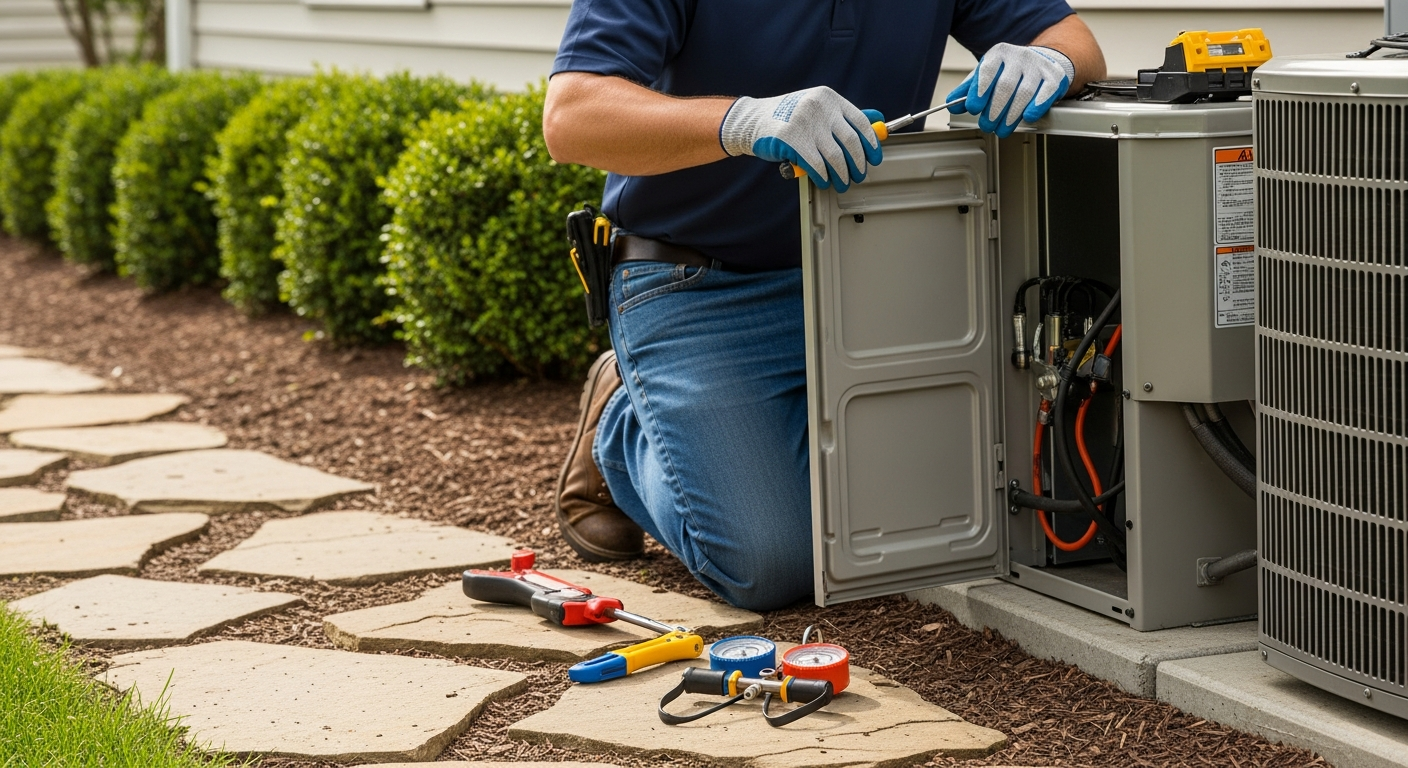
Online HVAC communities like r/HVACadvice and HVAC-Talk are excellent for safe, low-risk tasks: changing air filters, resetting circuit breakers, cleaning condensate drain lines, and installing smart thermostats. For anything involving refrigerant, gas, high‑voltage electrical components, or the sealed system, stop and call a licensed pro. Always verify advice and use our cost estimator or repair-or-replace calculator before spending on a major repair.
What Online HVAC Communities Can Help You Do
When your AC stops cooling on a 95°F day, a few minutes on the right forum can get you a diagnosis, a safe fix, or a clear signal to call a pro. But you have to know where the line is. The table below separates tasks you can handle yourself from those that need a technician’s license and tools.
| Task | Most Homeowners Can DIY | Usually Requires a Pro | Notes |
|---|---|---|---|
| Replace air filter | ✅ | Do every 1–3 months; see guide | |
| Clean condenser coils (water rinse) | ✅ | Gentle hose spray only; no chemicals | |
| Clear condensate drain line | ✅ (vinegar, shop vac) | If blockage returns, proactive cleaning may be needed | |
| Install smart thermostat | ✅ (low‑voltage systems) | Turn off power; follow manufacturer manual | |
| Reset tripped breaker | ✅ (once only) | Repeated trips mean a serious fault—call a pro | |
| Tighten loose panels or screws | ✅ | Use hand tools only; do not open electrical enclosures | |
| Diagnose capacitor | ✅ | Lethal voltage persists even with power off | |
| Handle refrigerant | ✅ | Illegal without EPA certification; risk of burns and environmental harm | |
| Gas furnace repair | ✅ | Fire, explosion, and carbon monoxide risks | |
| Compressor or control board work | ✅ | Complex diagnostics; wrong part can destroy entire system |
Safety Boundaries: What You Can Check vs. Touch
Online forums often share step‑by‑step repair guides, but some of those steps can kill you or ruin your equipment. Follow these hard limits:
- Safe checks: Listen for unusual noises, verify thermostat settings, inspect the air filter, look for ice on refrigerant lines (shut off system and call pro), check that circuit breakers are in the ON position. You can also inspect visible components without removing panels.
- Never touch: Capacitors, contactors, circuit boards, any wire connected to a terminal, refrigerant lines or valves, gas valves, combustion chambers, or the compressor. Even if power is off, capacitors store a charge that can electrocute you.
- Visual inspection only: Do not remove access panels unless you are a qualified person using a non‑contact voltage tester and following lock‑out/tag‑out procedures. If you smell gas, leave the house and call your utility.
DIY or Pro? A Decision Guide
Before you post on a forum, run through these rules. If any “call a pro” condition matches, skip the online sleuthing and get a qualified technician.
- System won’t turn on? Replace thermostat batteries, check breaker at main panel. If still dead → pro.
- Weak or no airflow? Check and replace filter, open all supply vents. If unchanged → pro.
- Loud squealing or grinding? Do not run the system; call a pro (blower motor or bearing failure).
- Ice on refrigerant line or outdoor coil? Shut system off, check filter and vents. If ice returns → pro (likely low refrigerant, illegal to fix DIY).
- Breaker trips more than once? Stop resetting; fire hazard → pro immediately.
- System short‑cycles (turns on/off rapidly)? Check thermostat location (away from heat sources) and filter. If problem continues → pro.
- Age + cost threshold: If your unit is over 10 years old and the repair estimate exceeds $500, use our repair or replace calculator to see if a new system makes more long‑term financial sense. For systems older than 12 years, major repairs are rarely worth it; efficiency gains alone can offset a replacement within 5–7 years.
Tools to Estimate Costs and Savings
Before you spend a dime, use these free tools to plan your next move. They’ll give you editorial estimate ranges based on current market data—not guaranteed quotes, but realistic starting points.
- HVAC Cost Estimator: Ballpark diagnostic, repair, and replacement costs in your area.
- Repair or Replace Calculator: Weigh fix vs. upgrade using age, efficiency, and repair price.
- System Age Decoder: Enter your unit’s serial number to find its manufacture date—forums will ask for this.
- BTU Calculator: Right‑size a replacement before talking to contractors.
- Rebate Finder: See if heat pump or high‑efficiency system incentives apply where you live.
When Online Advice Says “Call a Pro”: Your Hiring Checklist
Use this list to filter contractors and avoid overpaying. Typical market ranges: diagnostic visit $80–$200; standard maintenance $80–$250; common AC repair $150–$650; refrigerant or motor work $500–$1,500; compressor or coil replacement $1,500–$4,000+. All vary by region, season, and access.
- License check: Get their state HVAC license number and verify it online. For commercial‑grade work or gas piping, confirm they hold the required specialty license.
- Insurance: Ask for proof of liability and workers’ compensation. If a worker gets hurt on your property without comp, you could be liable.
- Written estimate: Should detail diagnostic fee (often waived if you proceed), parts, labor, and any potential extra charges. Use our quote comparison guide to spot outliers.
- Warranty: At least 1 year parts and labor is standard. Compressor replacements often come with a 5‑10 year manufacturer part warranty, but labor must be spelled out.
- References / reviews: Ask for recent local jobs similar to yours. Check multiple review platforms; look for patterns, not isolated complaints.
- Safety practices: After any furnace work, the tech should perform a carbon monoxide test and share the reading. If they don’t, ask why.
- Permits: Many localities require a permit for replacement or new installation. Make sure the contractor pulls it—don’t let them skip this.
- Contracts: Don’t sign under pressure. Get at least 2–3 quotes. Search our directory for vetted pros in your ZIP code.
Local Climate Matters
Online communities are global, but your house isn’t. Tailor your approach:
- Hot‑humid (Southeast, Gulf Coast): Drain line clogs are your number‑one DIY battle. Consider adding a safety float switch. Clean coils annually; humidity makes them foul faster.
- Cold (Midwest, Northeast, Upper Plains): Check furnace filters monthly in winter. Look for rust or water around the unit—flue issues can introduce moisture. Heat pump owners should search forum threads on defrost cycle troubleshooting.
- Coastal (salt air): Corrosion eats outdoor coils. When posting, note your location—pros may recommend factory‑applied corrosion protection. Ask about coil coatings when quoting replacements.
- Older homes (pre‑1970s wiring): Many online fixes assume modern electrical panels. If your home still has fuses or 60‑amp service, any major HVAC work likely requires an electrical upgrade—budget accordingly.
- Dry climates (Southwest): Evaporative coolers are common but less discussed on AC‑focused forums; specify your equipment type when asking for help.
Frequently Asked Questions
Can I change my own air filter?
Yes, and you should do it every 1–3 months. It’s the simplest, most cost‑effective maintenance task. A clogged filter is the root cause of many cooling and heating failures. For step‑by‑step, see our air filter guide.
Is it safe to clean my AC coils with a hose?
For outdoor condenser coils, a gentle water spray (no pressure washer) can remove dirt and grass clippings. Avoid bending the aluminum fins. Indoor evaporator coils are harder to access; if you’re not comfortable, have a pro do a deep clean. See our coil cleaning safety tips.
Can online forums help me diagnose a refrigerant leak?
They can help you recognize signs: ice on lines, hissing sounds, warm air blowing. But adding refrigerant requires EPA certification—it’s illegal for a homeowner to buy or handle it. If a leak is suspected, call a pro. Don’t try to top off refrigerant yourself.
How do I know if a noise is serious?
Squealing usually indicates a failing blower motor or belt; grinding means a motor bearing is shot. Both need a technician. Rattling could be a loose panel—inspect visually without removing anything. Buzzing from the thermostat is often normal. Never open the unit while it’s running or powered.
What should I do if my AC keeps tripping the breaker?
Reset it once. If it trips again, there’s an electrical short or overload—often the compressor, capacitor, or a damaged wire. Repeated resetting risks fire or electrocution. Turn the system off and call a licensed electrician or HVAC technician immediately.
Related articles
Explore related maintenance, equipment, and hiring questions.

Nest Learning Thermostat (4th gen) vs ecobee Premium
Both models offer remote room sensors. Compare the exact generation, wiring compatibility, controls, and installed quote before choosing.

MERV 11 vs MERV 13: check filtration and equipment compatibility
Compare particle filtration, verify the filter your equipment supports, and use a buying checklist without assuming a universal health or energy saving.

How to check an HVAC contractor before hiring
Use a documented shortlist: business identity, applicable credentials, job experience, a written scope, and a clear handover.