How to Troubleshoot an AC Thermostat
Before you call for AC repair, try these 5 thermostat troubleshooting steps. From battery swaps to setting checks, small fixes can save you $150+ on a service visit.
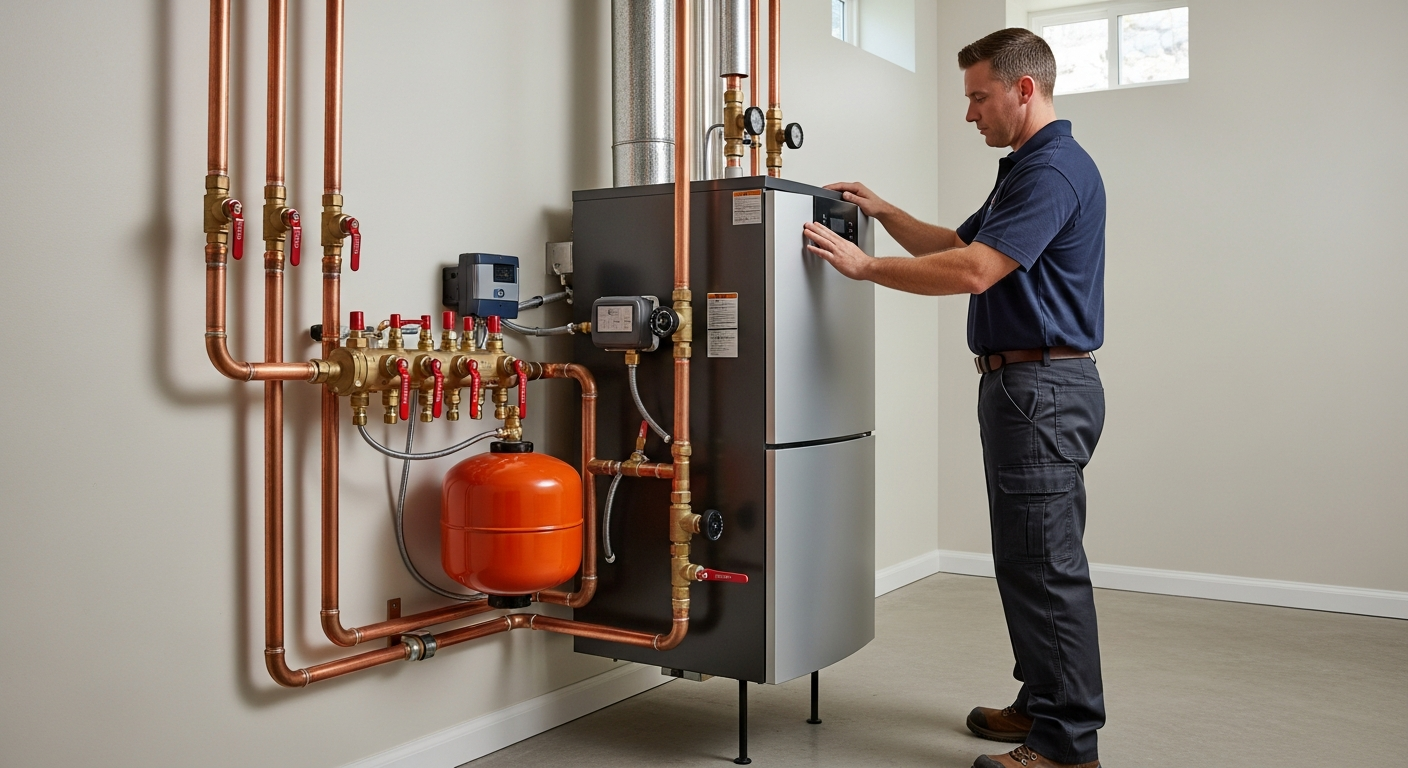
Start with simple DIY checks before calling a pro
Nine out of ten thermostat problems are solved by new batteries or correct settings. Safely check power, settings, and wiring before paying $80–$200 for a service visit. If those checks pass, use our tools to decide whether to repair or replace.
What Matters Most
- Always replace AA/AAA batteries first – even if they look good.
- Make sure the thermostat is set to 'Cool' and target is 5°F below room temp.
- If the fan runs in 'On' mode but not 'Auto', the thermostat is likely communicating fine.
- A blank display after new batteries usually means a tripped breaker or a wiring issue.
- Don't overlook the filter: a clogged filter can cause the system to shut down and mimic a thermostat fault.
Strengths
- Cost-effective: most fixes involve no parts cost or a small battery cost.
- Immediate resolution: you can often get cooling back in minutes.
- Avoids unnecessary service fees for trivial issues.
- Empowers homeowners to understand and maintain their HVAC system.
- Identifies when a professional is truly needed, preventing wasted effort.
Weaknesses
- Some checks require turning off the breaker; if you're uncomfortable, that's a limitation.
- Visual wiring inspection may not reveal hidden breaks in the wall.
- Mechanical thermostats can be tricky to level without a small bubble level.
- If the issue is a failed control board or contactor, no amount of thermostat fiddling will fix it.
- Smart thermostat installation can be complex and may void warranty if DIY.
DIY vs. Pro: Thermostat Issue Decision
| Scenario | Usually do | Why |
|---|---|---|
| Blank display with new batteries | Call pro or investigate breaker | Dead display often means a tripped breaker or a blown low-voltage fuse; if breaker resets and trips again, it's a short – pro needed. |
| Thermostat set incorrectly (Heat/Off) | DIY | Flip to Cool and lower temperature; no tools required. |
| Fan runs in On but not Auto | DIY | Likely a thermostat setting or a minor switch malfunction. Try replacing batteries and re-selecting Auto. |
| AC short-cycling | Check filter and then call pro | If filter's clean, it could be an oversized unit or low refrigerant – pro diagnosis needed. |
| Thermostat clicks but outdoor unit doesn't run | Call pro | This often indicates a failed contactor or capacitor; dangerous to test without training. |
| Old mercury thermostat reading wrong | DIY level and clean, or replace | If leveling and cleaning don't fix it, upgrade to a modern programmable model. |
Introduction
When your AC doesn't turn on, the thermostat is the first place to look. Nine out of ten no-cooling calls that start as "thermostat problems" are fixed with a new battery or a setting correction. This guide helps you rule out simple issues before spending $80-$200 on a diagnostic visit. We cover safe homeowner checks, signs that mean it's time to call a pro, and questions to ask if you need a replacement.
Quick Answer
Thermostat Troubleshooting in 60 Seconds
- Check the display: Blank? Replace batteries or reset breaker. Still blank? Possible wiring or system issue.
- Verify mode: Set to "Cool" and target temperature at least 5°F below room temp.
- Test fan: Switch fan from "Auto" to "On." If fan runs, thermostat has power and is communicating. If not, likely wiring or board.
- Inspect for obstructions: Heat sources (lamps, sun) near thermostat can cause false readings.
- Visual wiring check: Pop off faceplate (after turning off breaker) and look for loose or corroded wires—especially R (power) and Y (cooling).
If all look good, the problem is likely with the HVAC equipment, not the thermostat. Use our Repair or Replace calculator to decide next steps.
Safety Boundaries: What a Homeowner Can and Cannot Touch
Thermostats are low-voltage devices, but you're still working near electrical components. Follow these limits:
- Safe: Replacing batteries, cleaning dust with canned air, changing settings, visually inspecting wires without touching them (after shutting off power).
- Risky without training: Removing wires from terminals, using a multimeter, touching circuit boards.
- Stop and call a pro (find a local HVAC technician): If you see melted plastic, burnt smell, sparking, or any high-voltage wiring. Also stop if you suspect refrigerant leaks, compressor failure, or furnace gas smell (that's a different issue). For thermostat replacement, many upgraded smart models require a common wire (C-wire) that may need professional installation.
Attempting to jumper thermostat terminals or bypass safety switches can damage equipment and void warranties. Always turn off the circuit breaker for the HVAC system before removing the thermostat faceplate.
Symptom & Cost Table
| Symptom | Likely Cause | DIY Check | Typical Pro Cost |
|---|---|---|---|
| Blank display | Dead batteries, tripped breaker, wiring fault | Replace batteries; reset HVAC breaker | $80–$200 diagnostic if breaker/wiring issue |
| AC runs but doesn't cool | Wrong mode, dirty filter, low refrigerant | Set to "Cool" and lower temp; check filter | $150–$650 for small electrical/control fix; $500–$1,500 for refrigerant/leak |
| Short cycling (on/off rapidly) | Thermostat placement near draft/heat, oversized unit, low refrigerant | Check for nearby lamps, supply vents blowing on thermostat | $150–$650 for thermostat relocation or control board repair |
| Thermostat clicks but no AC | Failed contactor, broken wire, system lockout | Visual wire check after power off; listen for click sound | $200–$500 for contactor or control board replacement |
| Uneven cooling, thermostat reading error | Old mechanical thermostat out of level, dust on sensor | Use bubble level; clean with canned air | $150–$400 for thermostat replacement (including smart thermostat) |
Decision Rules: Fix It Yourself or Call a Pro?
Use these thresholds to decide:
- DIY candidate if:
– Display is blank and fresh batteries fix it.
– Thermostat is set incorrectly (mode, fan, schedule).
– Uneven cooling is traced to a dusty mechanical thermostat (you can clean it).
– Fan runs in "On" but not "Auto" – likely a thermostat setting. - Call a pro if:
– Breaker trips repeatedly after reset.
– You see burnt, melted, or corroded wiring.
– You hear buzzing or clicking at the indoor unit but no fan start – motor or capacitor issue.
– The thermostat clicks but the outdoor unit doesn't come on – contactor or electrical problem.
– Your home has high humidity and your thermostat doesn't control it – may need a dehumidifier or upgrade.
If your AC is over 12 years old and facing a thermostat issue alongside other repairs, run the numbers: Repair or Replace calculator.
Tools & Next Steps
These free HVACDatabase tools help you decide whether a thermostat issue is worth fixing or signals a bigger problem:
- HVAC Cost Estimator – Get a range for thermostat replacement or system repair in your ZIP code.
- Repair or Replace Calculator – Input system age, repair estimate, and get a recommendation.
- System Age Decoder – Find your AC's birthday to weigh repair vs. replacement.
- BTU Calculator – If your thermostat can't keep up, maybe your system's undersized.
Contractor Checklist: What to Ask Before You Book
If you're hiring a pro for a thermostat replacement or deeper repair, here's what to ask:
- "Is the problem definitely the thermostat, or could it be the control board / wiring?" – Get a clear diagnosis.
- "What thermostat models do you recommend for my system (heat pump, conventional, two-stage)?" – Compatibility matters.
- "Do I need a C-wire? If not present, can you run one, and what will that add?" – Smart thermostats often require it.
- "Will this new thermostat help with dehumidification or energy savings?" – Especially in humid climates.
- "Can you provide a written, itemized quote that includes the installation and the thermostat hardware?" – Avoid surprises.
- "Is the thermostat covered under your labor warranty?" – Manufacturers warranty the device, but labor is separate.
To compare local pros and their proposals, use HVACDatabase Compare Contractors.
Climate-Specific Considerations
Where you live changes how your thermostat behaves:
- Hot & Dry (Phoenix, Las Vegas): Outdoor heat can cause thermostats in direct sun to think it's warmer than it is. Place the thermostat on an interior wall away from windows. If your AC runs nonstop, consider a BTU recalculation – many homes here are undersized.
- Hot & Humid (Houston, Miami, Atlanta): Humidity control is half the battle. A smart thermostat with humidity sensing and variable fan control can reduce mold risk. If your AC short-cycles, it may not dehumidify enough – look into a two-stage system or a whole-home dehumidifier.
- Cold Climates (Chicago, Minneapolis, Denver): In winter, a thermostat set to "Heat" demands a different wiring setup. If you have a heat pump, make sure the thermostat is configured for heat pump operation and outdoor temperature lockouts.
- Coastal/Salt Air (Tampa, San Diego): Corrosion on thermostat terminals can cause intermittent connections. Visual inspection every year is wise. Consider a sealed smart thermostat like the Ecobee.
- Older Homes (pre-1970s): May lack a C-wire, making smart thermostat installation trickier. They also often have original wiring that may need upgrading. Ask a pro about options.
Methodology
Our troubleshooting steps are based on HVAC industry best practices and common failure patterns observed in residential systems. Cost ranges are editorial estimates drawn from aggregated contractor pricing data across major U.S. metro areas for 2025. Actual costs vary by region, system complexity, and season. When we suggest a tool like the Repair or Replace calculator, it uses a proprietary algorithm considering system age, repair cost, and efficiency gains to return a net-present-value recommendation. Always get multiple quotes from vetted local contractors before making a final decision.
Frequently Asked Questions
Why is my thermostat blank even with new batteries?
If you've replaced batteries and the display is still blank, the thermostat likely isn't receiving power from the HVAC system. This could mean a tripped breaker, a blown low-voltage fuse on the control board, or a disconnected wire. Turn off the HVAC breaker, remove the faceplate, and look for a loose R or C wire. If the breaker tripped repeatedly, call a pro – there may be a short circuit. Estimate the diagnostic cost here.
Can I replace my thermostat myself?
If you're comfortable with basic tools and your wiring is standard (R, W, Y, G), a simple swap to a basic thermostat is doable. However, smart thermostats often need a C-wire or an adapter, which can confuse DIYers. Always turn off power, take a photo of the existing wiring, and label wires before disconnecting. If you're unsure, a pro installation typically costs $150–$350 plus the thermostat price. Many manufacturers void the thermostat warranty if self-installed, so check the fine print.
Why does my AC keep turning on and off every few minutes?
Short cycling can be caused by an oversized AC, a thermostat placed near a supply vent, a dirty air filter (causing overheating shutdown), or low refrigerant. First, ensure no lamps, TVs, or heat sources are within 3 feet of the thermostat. Then check the filter (learn how). If those are fine, a technician should check for airflow restrictions and system sizing. Short cycling stresses the compressor and can lead to early failure.
Is a smart thermostat worth it compared to my old mechanical one?
Smart thermostats offer scheduling, remote control, and energy-use reports that can save 8–15% on cooling costs. They learn your patterns and avoid overcooling. However, they require a stable Wi-Fi connection and a C-wire. For older homes without a C-wire, installation may add $100–$200. If your AC is older than 15 years, upgrading the thermostat won't fix efficiency issues – use our Repair or Replace calculator to decide.
My thermostat is set to 72° but the house stays at 78°. What's wrong?
If the thermostat shows a reading of 78° while set to 72, the system may be undersized, have low refrigerant, or have dirty coils causing poor heat exchange. Start by checking the filter and cleaning the outdoor condenser coils (guide here). If that doesn't help, a technician should measure temperature drop across the coil (ideally 15–20°F) and check refrigerant pressures. This often costs $200–$400 to diagnose and repair.
Related articles
Connect this page to adjacent guides so readers keep moving deeper into the topic cluster.
How to Implement a Whole Home Energy Management System
Integrate smart tech and HVAC controls to cut energy waste. This guide shows how to audit, upgrade, and automate your home's energy use, with real savings estimates.

How to Set Up Thermostat Geofencing
Set up thermostat geofencing to automatically adjust home temperature as you come and go. Save energy, extend equipment life, and never return to an uncomfortable house. Get our quick-start guide now.
How to Troubleshoot Smart Thermostat WiFi Issues
Your smart thermostat offline? Most WiFi drops can be fixed with power checks, router adjustments, and simple restarts. Follow our step-by-step guide to regain remote control and energy savings.