HVAC Trends Shaping the Industry
Cut through the hype: learn which HVAC innovations—from cold-climate heat pumps to predictive maintenance—will lower bills and boost comfort in your home, with direct cost comparisons and contractor checklists.
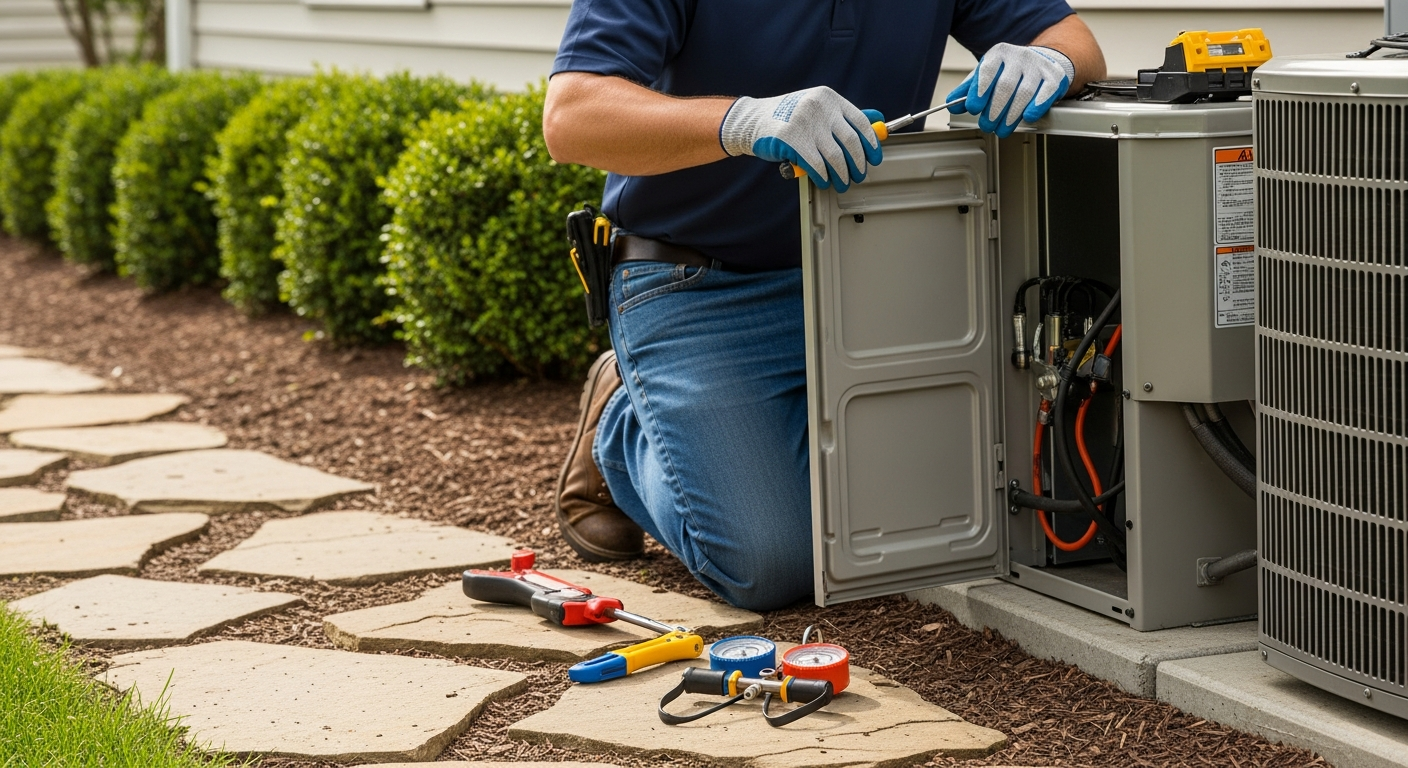
Quick Answer: Which HVAC Trends Matter for Your Home?
Three shifts are worth your attention right now: cold-climate heat pumps that can replace furnaces in freezing weather, smart home integration that automates savings, and variable-speed technology that delivers consistent comfort while cutting energy use. These are not just buzzwords—they can reduce annual heating and cooling bills by 20–50% and qualify for utility rebates or federal tax credits up to $2,000. Before you invest, compare your options with our repair-or-replace calculator and HVAC cost estimator.
1. Smart Home Integration & the Matter Standard
Modern HVAC systems can now talk to your lights, blinds, and appliances through the Matter standard. This interoperability means a single app can coordinate shading and cooling to reduce solar heat gain automatically. When interviewing contractors, ask: “Does this system support Matter or a proprietary hub?” Systems that follow the standard future-proof your home and prevent vendor lock-in. Expect to spend $80–$250 for a professional smart thermostat installation (more on phone monitoring).
2. Predictive Maintenance: Fewer Breakdowns
Newer equipment includes sensors that track refrigerant pressure, motor performance, and airflow. These can send alerts to your phone before a minor issue becomes a $1,500 compressor failure. Most manufacturers now offer companion apps with maintenance reminders. Consult our maintenance schedule guide to pair with these alerts. Annual maintenance plans range from $150–$500 depending on visits and coverage; diagnostic visits cost $80–$200. All figures are editorial estimates, not guaranteed prices.
3. Electrification & Heat Pumps: Beyond Mild Climates
Cold-climate heat pumps now deliver steady warmth down to -22°F. They eliminate on-site combustion, slash carbon output, and often halve heating costs versus oil or propane. A $2,000 federal tax credit and local rebates (check our rebate finder) can cover 15–25% of the project. Pair with a load calculation to avoid oversizing. Typical installed cost: $8,000–$16,000 before incentives.
4. Variable-Speed Compressors: The End of On/Off Cycling
Traditional units run at full blast or off, causing temperature swings and poor humidity control. Variable-speed systems ramp between 25–100% capacity, maintaining ±0.5°F setpoint and removing up to 50% more moisture. The premium over single-stage equipment is $1,000–$3,000, but energy savings often recover that within 3–7 years. Learn how different compressor types work.
5. Solutions for Unique Homes
- Open floor plans & tall atriums: Multi-zone ductless minisplits or high-velocity systems prevent heat stratification. Read our tips for soundproofing these setups.
- Historic homes: High-velocity mini-duct systems preserve walls and ceilings. Always request a Manual J load calculation to respect architectural constraints.
- No existing ductwork: Ductless minisplits offer the lowest disruption and highest efficiency.
Decision Rules: When to Upgrade
Use these thresholds to decide if a modern system makes sense:
| Condition | Action | Why |
|---|---|---|
| Furnace >15 years or AC >10 years | Get quotes for a cold-climate heat pump | Efficiency has doubled; incentives available |
| Repair estimate >50% of replacement cost | Replace with variable-speed system | Long-term savings outweigh short-term fix |
| SEER <13 or HSPF <8 | Replace and use BTU calculator | Current minimum SEER2 is 15 in South, 14 in North |
| Uneven temperatures or high humidity | Consider zoned or variable-speed system | Ductwork or single-stage unit is likely failing |
Always run our repair-or-replace calculator and get at least three quotes.
Safety Boundaries
Homeowner tasks (safe to do yourself):
- Replace disposable air filters every 1–3 months
- Check thermostat settings and batteries
- Keep outdoor unit clear of debris and vegetation
- Listen for unusual noises or rattles
Always hire a licensed, insured professional for:
- Refrigerant handling, leak repair, or charging
- Gas line work, combustion adjustments, or venting
- Electrical component replacement (capacitors, contactors, control boards)
- Compressor or coil replacement
- Altering refrigeration circuits or safety switches
DIY on these items can cause injury, void warranties, and violate EPA regulations.
Contractor Checklist
Before you approve any work, ask these questions and look for “yes” answers:
Click to view checklist
- Will you perform a Manual J load calculation and share the report? (Essential, not a rule of thumb)
- Are you factory-trained for the equipment brand you recommend?
- Do you pull permits and schedule the inspection?
- What rebates or tax credits apply, and will you handle the paperwork?
- Is the installation warranty at least one year labor, plus manufacturer parts?
- Can you provide local references from the last 12 months?
Use our contractor comparison tool to evaluate multiple bids side by side.
Local Climate Considerations
- Hot, dry areas (Phoenix, Las Vegas): Prioritize SEER2 ≥ 18 and variable-speed for humidity control. See Phoenix AC contractors who specialize in high-efficiency units.
- Cold regions (Chicago, Minneapolis): Cold-climate heat pumps (HSPF2 ≥ 10) with electric strip backup or dual-fuel setup. Check Chicago heating contractors for installers experienced with inverters.
- Humid coasts (Houston, Miami): Variable-speed air handlers with dedicated dehumidification cycles; consider whole-home dehumidifier.
- Older homes with radiators: Ductless minisplits preserve historic character; high-velocity systems need small duct runs.
Tools to Validate Your Decision
- Repair or Replace Calculator – inputs your system age, repair cost, and SEER to give a break-even analysis.
- HVAC Cost Estimator – see realistic installed-price ranges based on your zip code.
- System Age Decoder – decode the serial number to confirm equipment age.
- Rebate Finder – locate utility and federal incentives before you buy.
- BTU Calculator – rough-size your need; always confirm with a manual J.
Combine these with at least three contractor quotes from our installer directory.
Frequently Asked Questions
1. Are smart thermostats worth the money?
Yes, when used correctly. Models that learn your schedule and use geofencing can save 8–15% annually on heating and cooling. Professional installation ensures correct wiring and compatibility with your system; typical cost $100–$250.
2. Can a heat pump really heat my house in freezing weather?
Modern cold-climate heat pumps maintain full capacity down to 5°F and still deliver heat at -22°F. Many include backup electric resistance strips for extreme snaps. Homes in the Upper Midwest increasingly use them as primary heat.
3. What does a variable‑speed system cost compared to single‑stage?
Expect a $1,000–$3,000 premium for the outdoor unit and compatible indoor air handler. Payback typically arrives in 3–7 years through lower power bills, fewer repairs, and better humidity control.
4. How does predictive maintenance actually work?
Sensors track pressures, temperatures, and amp draws. The system compares readings to expected envelopes and alerts you (or your contractor) via an app when something drifts. Studies show this can reduce emergency repairs by 25% and extend equipment life.
5. Is it safe to self-install a heat pump or smart thermostat?
No. Heat pumps involve high-voltage wiring, refrigerant piping, and evacuation—all regulated trades. Smart thermostats may require handling low-voltage wiring; if you are not comfortable with electrical work, hire a pro. Never attempt refrigerant or high-voltage work yourself.
Related articles
Explore related maintenance, equipment, and hiring questions.

Nest Learning Thermostat (4th gen) vs ecobee Premium
Both models offer remote room sensors. Compare the exact generation, wiring compatibility, controls, and installed quote before choosing.

MERV 11 vs MERV 13: check filtration and equipment compatibility
Compare particle filtration, verify the filter your equipment supports, and use a buying checklist without assuming a universal health or energy saving.

How to check an HVAC contractor before hiring
Use a documented shortlist: business identity, applicable credentials, job experience, a written scope, and a clear handover.