Most Reliable Air Conditioner Brands
Choosing a reliable AC prevents costly repairs. Our guide compares top brands by durability, warranty, and value, with decision tools to help you pick the right system for your home.
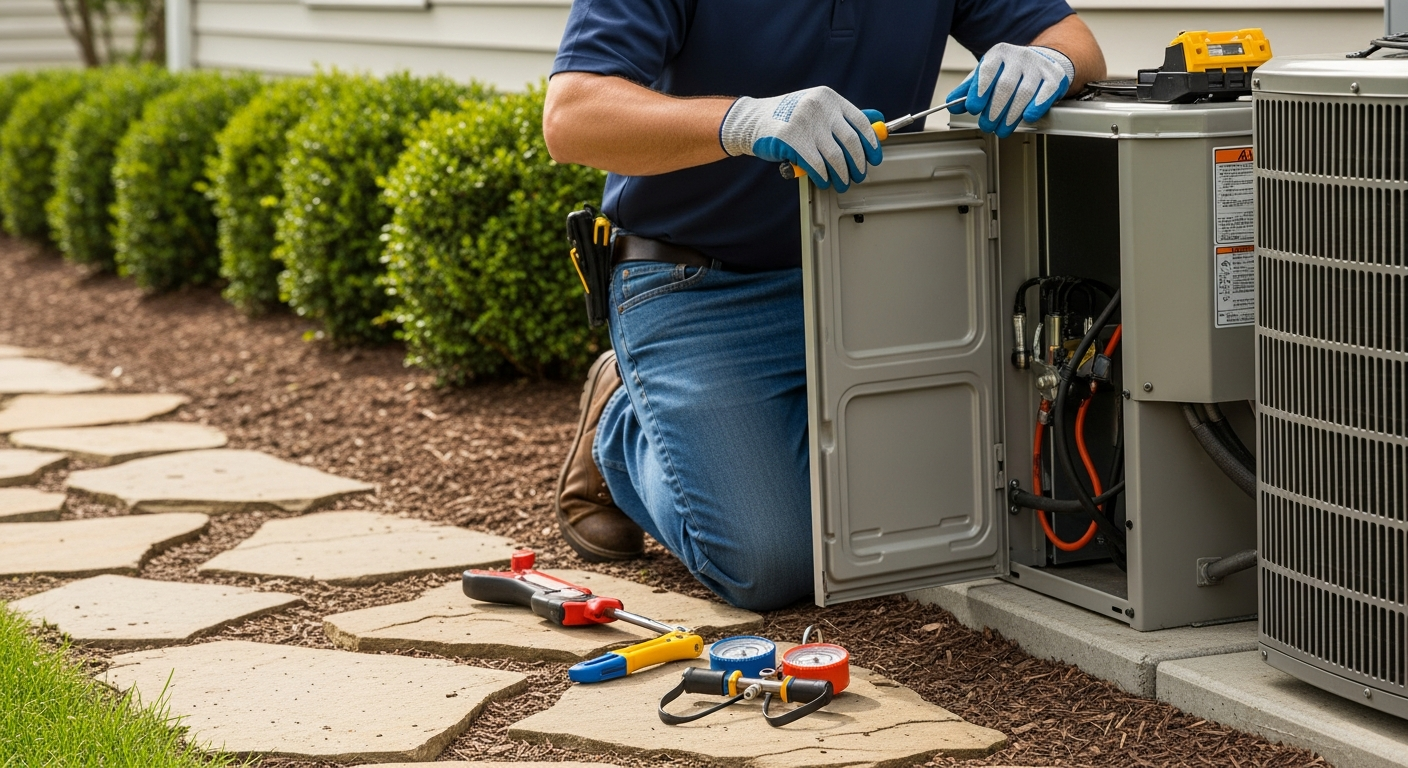
Installation and maintenance are the real reliability levers
While brand reputation matters, the skill of the installer and ongoing maintenance have a bigger impact on your AC’s longevity. This guide helps you prioritize what counts most and avoid overpaying for brand hype.
What Matters Most
- Prioritize finding a skilled, licensed installer over fixating on a brand name.
- Trane/American Standard lead in compressor durability, but Rheem/Ruud offer exceptional value.
- Always register your warranty within 60 days; without it, coverage often halves.
- Proper sizing via Manual J is non-negotiable for long-term reliability.
- Use the contractor checklist and decision rules to make a confident, informed choice.
Strengths
- Clear decision rules for different homeowner profiles
- Emphasis on installation and maintenance, not just brand
- Practical tools and checklists to take action
- Transparent cost estimates help set budget expectations
- Safety boundaries protect homeowners from dangerous DIY mistakes
Weaknesses
- Reliability data is partly anecdotal—brand performance can vary by model and year
- Cost ranges are estimates and may be higher in expensive urban markets
- Newer inverter-driven systems have less long-term track record
- Warranty terms change; always confirm with manufacturer
Quick Decision Summary
| Scenario | Usually do | Why |
|---|---|---|
| Long-term homeownership (10+ years) | Invest in Trane or American Standard | Proven compressor durability and lower lifetime repair frequency |
| Mid-range budget, want quiet & smart features | Choose Carrier or Bryant | Advanced humidity control, low sound, and broad parts availability |
| Budget under $5,000 | Rheem or Goodman | Good reliability at a lower upfront cost; service-friendly designs |
| Rental property or mild climate | York or base Goodman model | Adequate performance with minimal investment; focus on proper sizing |
Quick Answer
If you want the most reliable air conditioner overall, Trane and American Standard historically lead in longevity and build quality. For a strong balance of reliability and value, Rheem and Ruud are solid picks. Carrier and Bryant offer advanced features and wide parts availability. Goodman provides a budget-friendly option with an excellent warranty, while York gives affordable efficiency. Ultimately, installation quality matters more than the brand name—a perfectly installed mid-range unit often outperforms a poorly installed premium one.
Brand Reliability Comparison Table
| Brand | Reliability Tier | Typical Lifespan (yrs) | Key Strength | Installed Cost Range* | Best For |
|---|---|---|---|---|---|
| Trane / American Standard | Premium | 15–20+ | Climatuff compressor; rigorous testing | $4,500–$7,500 | Long-term homeowners seeking minimal repairs |
| Carrier / Bryant | Premium | 12–18 | Advanced humidity control; low noise | $4,000–$7,000 | Those wanting smart features & quiet operation |
| Rheem / Ruud | Value | 12–17 | Service-friendly design; good value | $3,500–$5,500 | Budget-conscious buyers who don’t need frills |
| Goodman | Budget | 10–15 | Strong warranty; recent quality improvements | $3,000–$5,000 | Rental properties or tight upfront budgets |
| York | Budget | 10–15 | High efficiency at a lower price | $3,200–$5,200 | Moderate climates; cost-sensitive replacements |
*Editorial estimate for a 3-ton system, including installation. Prices vary by region, complexity, permits, and labor.
What Makes an AC Reliable?
Reliability isn’t just the brand badge—it’s a combination of manufacturing quality, component design, match to your home, and the installation. Key factors:
- Compressor type: Scroll compressors (common in mid-to-premium units) tend to be more durable than reciprocating ones.
- Cabinet construction: Thicker galvanized steel and louvered coil guards protect against physical damage and improve airflow.
- Warranty coverage: A 10-year parts warranty indicates manufacturer confidence. Some brands add unit replacement if the compressor fails early.
- Parts availability: Brands with broad distributor networks (Carrier, Trane) mean faster repairs during critical seasons.
- Installation expertise: Even the best AC will fail early if mismatched with your ductwork, oversized, or sloppily installed.
Decision Rules: Which Brand Fits Your Situation?
Use these rules to narrow down your choices:
Long-Term Homeowner (10+ years planned in house)
Choose Trane or American Standard. Their higher upfront cost is often offset by fewer breakdowns over time. Estimate costs here.
Feature-Focused with Mid-Range Budget
Carrier or Bryant systems offer smart thermostats, variable-speed options, and exceptional dehumidification—ideal for hot, humid regions. See how to pick the right system.
Value-Conscious but Still Want Quality
Rheem and Ruud strike a great balance. They aren’t the quietest, but they are workhorses. Expect $3,500–$5,500 installed for a 14–16 SEER2 system.
Tight Budget but Need a Warranty Safety Net
Goodman is hard to beat on warranty alone. Just be meticulous in vetting your installer—a poor installation can negate the warranty’s value. Find a vetted contractor.
Replacing in a Mild Climate or Rental Property
A base-model York or even a lower-tier Goodman may be sufficient. Focus on proper sizing and a thorough contractor walk-through. Don’t forget to check your required BTUs.
Before finalizing your purchase, check for rebates that can offset the cost of a high-efficiency model using our Rebate Finder.
Safety Boundaries
Homeowner Maintenance You Can Safely Perform
- Change disposable air filters every 1–3 months, or clean reusable ones per manual.
- Keep the outdoor condenser unit free of leaves, grass clippings, and shrubs—maintain at least 2 feet of clearance.
- Inspect indoor vents for obstructions and dust; ensure they are open.
- Listen for abnormal noises (grinding, squealing, frequent clicking) and note when they occur to report to a tech.
- Check your thermostat battery and settings seasonally.
Prohibited DIY Work (Licensed Technician Only)
- Any refrigerant-related work (handling, adding, removing). Refrigerant is pressurized and regulated—improper handling can cause injury and environmental harm.
- Replacing capacitors, contactors, relays, or control boards—these involve high-voltage electricity and risk of shock or fire.
- Opening the compressor compartment or attempting compressor diagnostics.
- Gas furnace or heat exchanger repairs—risk of carbon monoxide leaks.
- Modifying or bypassing any safety switches.
If you suspect a problem, use our repair-or-replace tool to assess whether it’s time for a technician visit, then find a licensed pro.
Contractor Checklist
Before signing, ask these questions to protect your investment:
- "Are you licensed, bonded, and insured in [state]?" Verify online or ask for proof.
- "Will you perform a Manual J load calculation?" A "rule of thumb" guess can lead to oversizing and short-cycling, killing reliability.
- "What is your installation warranty?" Labor warranties typically range 1–5 years; 2+ is a plus.
- "Can you provide references from similar installations?" Call at least one recent client.
- "Does your quote include removal of the old unit, permit fees, and any code upgrades?" Full transparency prevents surprise charges.
- "How do you handle post-installation support if something goes wrong?" Clarify response times and whether they charge diagnostic fees during the warranty period.
Local Climate Considerations
- Hot, Dry Climates: Prioritize robust compressors (scroll-type) and high-temperature performance. A TXV expansion device improves efficiency in extreme heat. Phoenix AC professionals can advise on desert-specific setups.
- Hot, Humid Climates: Variable-speed air handlers and enhanced dehumidification controls are key. Coastal homes need corrosion-resistant coils (often an upgrade).
- Cold Climates (Dual-Fuel or AC + Furnace): Ensure the system is a matched set for communication and efficiency. Chicago heating and cooling experts can help with hybrid systems.
- Older Homes: You may need electrical panel upgrades, duct sealing, or larger return air drops. Factor these into your total budget early.
How Maintenance and Service Affect Reliability
Even the most reliable brand requires regular upkeep. Budget for:
- Annual professional maintenance: $80–$250 per visit, or $150–$500 for a service contract covering two visits. This keeps parts clean, checks refrigerant levels (pro-only), and catches small issues.
- Diagnostic visit if something breaks: $80–$200 standard, higher for after-hours emergencies. A well-maintained system is less likely to need one.
Set a calendar reminder each spring and fall, and consider a maintenance plan from a reputable local contractor.
Methodology
Our recommendations are based on aggregated data points: contractor surveys (including HVACDatabase’s network), brand market history, warranty claim trends where accessible, and technical specifications like compressor design and cabinet build. We assign reliability tiers after weighing these factors alongside real-world feedback from multiple U.S. regions. Cost estimates reflect editorial ranges for a standard 3-ton split system installed by a mid-priced contractor; your quote may differ based on scope, region, season, and equipment efficiency level. Always gather at least three quotes and compare them using our contractor comparison tool. This article does not constitute a warranty guarantee—reliability is probabilistic, not absolute.
Frequently Asked Questions
Which AC brand breaks down the least?
Based on technician sentiment and limited warranty data, Trane and American Standard have the fewest reported compressor failures in the first 10 years. However, installation and maintenance are more influential than brand alone.
Does a longer warranty mean a better AC?
Not necessarily. A long warranty can indicate manufacturer confidence, but if the unit is poorly installed, you may still face frequent breakdowns—and warranty only covers parts, not labor. Some budget brands offer strong warranties to build trust. Always register within 60 days to avoid a shortened warranty period. Learn more about registration.
What’s the most common AC failure and how can I prevent it?
Compressor failure is among the priciest, often caused by dirty coils, low refrigerant (leaks), or electrical issues. Prevention: annual professional maintenance, regular filter changes, and keeping the outdoor unit clean and clear.
Is it worth paying more for a variable-speed compressor for reliability?
Variable-speed systems reduce on-off cycling, which can extend compressor life and improve humidity control. They are more expensive to repair if something fails, but many homeowners find the comfort gains and potential energy savings worthwhile. For reliable basic cooling, a single-stage unit from a tier 1 brand is fine.
How can I tell if my AC unit is too unreliable and needs replacement?
If you’re spending over 50% of the cost of a new system on repairs in two years, or if the unit is over 12 years old and uses R-22 refrigerant, replacement is usually the more reliable path. Use our Repair or Replace Calculator to get a personalized recommendation.
Related articles
Connect this page to adjacent guides so readers keep moving deeper into the topic cluster.
Understanding C Wire Adapters for Smart Thermostats
Missing the C wire for your smart thermostat? C wire adapters solve power issues without pulling new wiring. Compare types, costs, and installation options.

Tips for Choosing a Smart Thermostat for a Heat Pump
Learn which smart thermostat features prevent expensive auxiliary heat mistakes, how to verify compatibility, and when to call a pro.
Tips for Heating a Home With Radiant Barriers
Radiant barriers can reduce winter heat loss through ceilings, but they are not a replacement for insulation. Learn when they help and what else you need for a warm, efficient home.