New HVAC Equipment Features to Watch
Not all cutting-edge HVAC features pay off. Learn which upgrades cut bills and improve comfort—and which ones to skip—with cost estimates and decision tools.
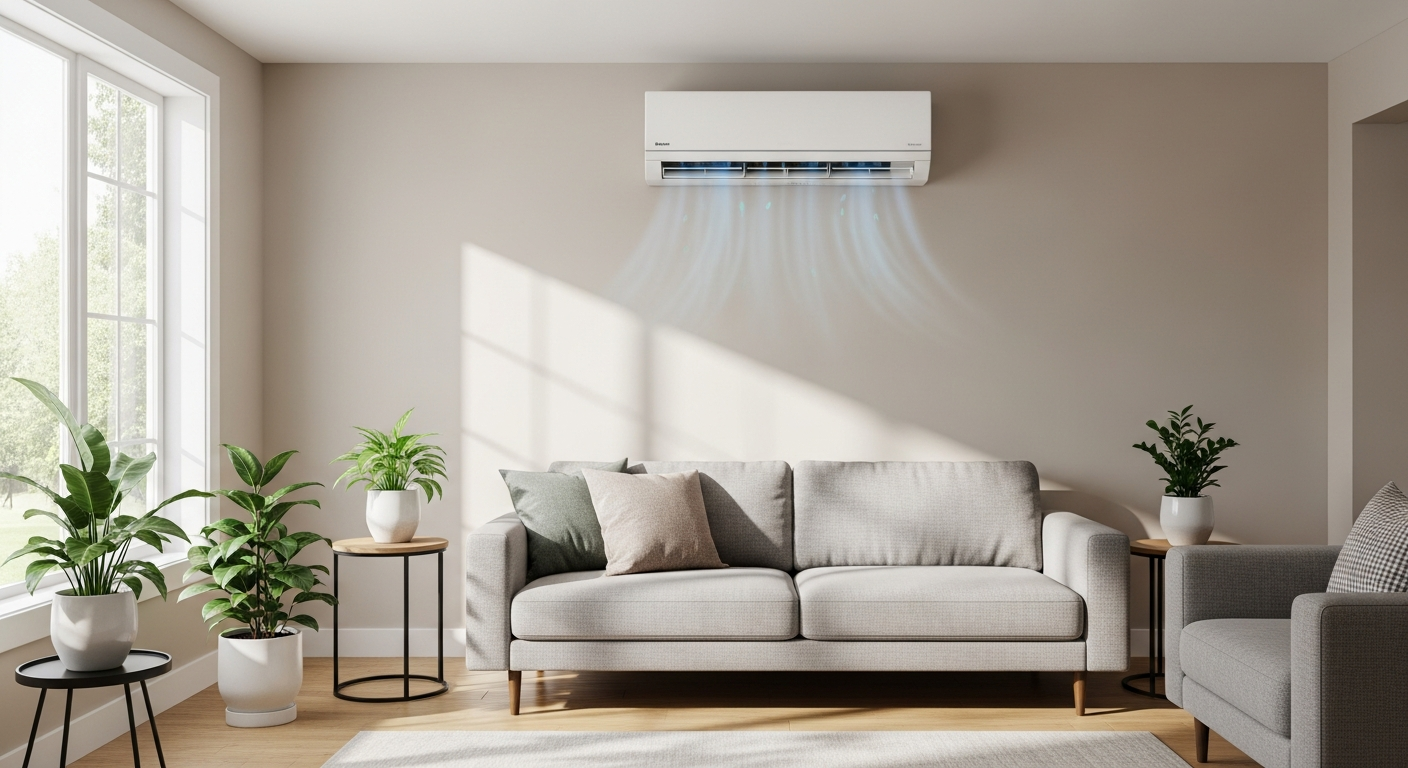
Prioritize inverter tech and smart diagnostics for long-term comfort; advanced filtration and ultra-high SEER are situational.
For most homeowners, the best value is a 16-18 SEER2 inverter system with communicating diagnostics. Features like UV lights and 20+ SEER2 often do not pay back unless specific needs exist. Always pair new tech with professional commissioning.
What Matters Most
- Choose inverter compressors for even temperatures and at least 15% cooling savings.
- Use smart diagnostics to reduce surprise breakdowns; budget $300-$800 for communicating stats.
- Limit UV/HEPA to allergy or smoke-prone homes; ozone certification matters.
- Run a repair-or-replace analysis on our tool before deciding on high SEER2.
- Get multiple quotes from factory-trained contractors for zoning or complex installs.
Strengths
- Long-term energy savings and comfort improvements
- Proactive failure alerts prevent emergency costs
- Enhanced humidity control for hot climates
- Potential federal/utility rebates offset premiums
- Customizable comfort with zoning
Weaknesses
- Higher upfront cost (inverter & zoning)
- Proprietary thermostats can limit smart-home flexibility
- Some air purification tech creates ozone or requires high maintenance
- Zoning requires ductwork compatibility
- Payback periods vary widely by climate
Decision Summary
| Scenario | Usually do | Why |
|---|---|---|
| You want lower bills and lasting comfort | Choose a 16-18 SEER2 inverter system with communicating thermostat | Optimal mix of savings and payback; enhanced diagnostics protect investment. |
| Allergies or wildfire smoke are a daily problem | Add a whole-house HEPA or high-MERV filter; consider UV-C if mold present | Must check duct static pressure; ozone risk with some ionization |
| You have hot/cold spots in a multi-story home | Install zoning dampers, but only after duct evaluation | Zoning can worsen airflow if ducts are under-sized; a mini-split may be better for a single room |
| Your system is over 12 years old and needs repair | Use Repair-or-Replace calculator; likely time to upgrade to inverter | Repair costs climb; new unit offers warranty, efficiency, and smart features |
New HVAC Features That Matter—and When to Skip Them
Modern HVAC systems boast features like variable-speed inverter compressors, AI-driven diagnostics, and hospital-grade filtration. The challenge isn’t finding these features—it’s knowing which ones will actually cut your bills, solve comfort issues, and hold up over time. Most homeowners overspend on features they don’t need while missing critical upgrades for their climate or home layout. This guide breaks down the tech, matches it to real-world scenarios, and shows you where to get reliable pricing.
Quick Answer: Top Features and Their Payoff
- Inverter (variable-speed) compressor: Best for consistent temps, humidity control, and 15-25% energy savings. Adds $1,200-$2,500 to system cost.
- Smart diagnostics & communicating thermostats: Alerts you to pending failures; often bundled with premium systems. Adds $300-$800.
- Advanced air purification (UV-C, HEPA, ionization): Pricey to install ($500-$2,500) and maintain; best for allergy sufferers or wildfire-prone regions. Oversold for normal homes.
- Higher SEER2 rating: 16-18 SEER2 is the sweet spot; above 20 SEER2 rarely pays back unless you live in extreme climate or have sky-high electric rates.
- Zoning with motorized dampers: Ideal for multi-story homes, finished basements, or seldom-used rooms. Design and ductwork must be right—budget $2,500-$5,000 for retrofit.
Feature Decision Table: When to Invest
| Feature | Best for | Overkill if | Typical added cost |
|---|---|---|---|
| Inverter/Variable-Speed | Homes with uneven temps, high humidity, or noise sensitivity | You plan to move soon, or existing single-speed unit meets needs | $1,200–$2,500 |
| Smart Diagnostics | Homeowners who want proactive alerts and fewer surprise failures | Basic thermostat control is sufficient, or you already have a maintenance plan | $300–$800 |
| UV-C / HEPA Filtration | Severe allergies, immunocompromised occupants, wildfire smoke areas | Standard MERV-11 filter keeps air clean; no specific health concerns | $500–$2,500 + $150+/yr bulbs |
| High SEER2 (>18) | Very hot/humid or very cold climates, high local electricity rates | Mild climate or low usage; 16 SEER2 often better value | $800–$3,000 over base model |
| Zoning (Dampers) | Multi-story homes, sunrooms, rarely used guest areas | Open floorplan, well-balanced system, or budget constraint | $2,500–$5,000+ & ductwork mods |
How Each Feature Impacts Comfort and Bills
Inverter Compressors: Gentle, Quiet Power
Traditional systems cycle on/off, causing temperature swings and humidity spikes. An inverter adjusts compressor speed to match the load, running continuously at 30-70% capacity. This slashes electric surges and reduces sound to as low as 50 decibels—quieter than a library. Expect 15-25% lower cooling costs. Maintenance is easier on components, so lifespan often reaches 15-20 years. For humid regions, it’s a game-changer because longer, slower runs wring more moisture from the air.
Cost insight: A 3-ton inverter AC might add $1,200-$2,500 over a two-stage model. But paired with a communicating thermostat, you unlock diagnostic features. Use our HVAC Cost Estimator to get localized pricing.
Smart Diagnostics: Your System’s Nervous System
Sensors track refrigerant pressure, amp draw, coil temps, and static pressure. A communicating system logs errors and can alert you (or your contractor) via app. Some platforms even predict capacitor or blower motor failure weeks in advance. This isn’t just convenience—it can prevent emergency repairs that cost $150-$650 for minor fixes or over $1,500 for major component swaps.
What to know: Proprietary thermostats are often required; you lose some versatility. However, Trane/American Standard, Carrier, Daikin, and Lennox all offer robust diagnostics. When comparing brands, look for self-monitoring and remote firmware updates.
Safety note: Homeowners should never attempt to test or replace sensors, control boards, or capacitors themselves. Severe shock and fire risks exist. Find a factory-trained pro for any diagnostic work.
Advanced Air Purification: Filtration vs. Hype
Integrated UV-C lamps can sterilize coil surfaces and kill mold. Bipolar ionization inserts charged ions to clump particles. HEPA-grade filters capture 99.97% of particulates. However, effectiveness varies wildly. UV-C requires direct line-of-sight and regular bulb replacement ($50-$150 each). Some ionization systems produce ozone—a respiratory irritant. Look for UL 2998 certification (zero ozone).
If indoor air quality is a top concern, start with a whole-house media filter (MERV 11-13) and upgrading to a quality filter cabinet. Reserve UV-C and HEPA for specific medical needs or verified mold problems.
How to choose an HVAC system that balances IAQ and efficiency.
SEER2 and Real-World Savings
SEER2 is the new efficiency metric as of 2023, testing under more realistic conditions. A jump from 14 SEER2 to 18 SEER2 might save $100-$250/year in moderate climates. In Phoenix or Miami, savings can exceed $400/year. The 25C federal tax credit offers up to $600 for qualifying heat pumps and ACs (see Rebate Finder). Often a 16-18 SEER2 single-stage or two-stage will pay back its premium in 5-8 years, while 20+ SEER2 inverter systems may take 10-15 years, unless electricity rates are high.
Zoning: Personalized Comfort Without Wasting Energy
Zoning divides your ductwork into separate “zones” with motorized dampers and individual thermostats. It’s ideal for solving hot/cold spots in two-story homes, finished basements, or rooms with large windows. However, zoning adds complexity—poorly designed damper systems can choke airflow and damage compressors. Budget $2,500-$5,000 for a retrofit plus any duct modifications. This is not a DIY project; it demands a thorough Manual D duct design review.
Tip: If you have one room that’s always too hot or cold, a single-zone mini-split may be more cost-effective than a full ducted zoning rig.
Safety Boundaries: What You Can and Cannot Touch
New tech is exciting, but it also introduces sensitive electronics and sealed refrigerant circuits. Homeowners can safely:
- Change air filters monthly or as recommended.
- Clean supply/return vent covers and ensure they’re unblocked.
- Check for visible duct leaks in unconditioned spaces (and call a pro to seal).
- Inspect outdoor unit for debris, ice, or pest nests.
- Review thermostat settings and error codes on the display.
Professionals only:
- Any refrigerant handling, pressure testing, or leak repair (EPA regulations and high-pressure danger).
- Accessing compressor electrical terminals, contactors, run capacitors, or control boards. Stored charge can cause fatal shock.
- Installing or calibrating zoning dampers—requires airflow measurement tools.
- Modifying gas connections or exhaust venting.
When you schedule service, verify that techs are NATE-certified and factory-trained on the specific inverter or diagnostic system you’re buying. Get a quote in writing using our Quote Checker to avoid overpaying.
Use Our Calculators to Plan Your Upgrade
Before committing to high-end features, run the numbers:
- Repair or Replace Calculator: If your system is over 12 years old, a high-efficiency replacement often beats a major repair.
- HVAC Cost Estimator: See what neighbors paid for similar equipment in your ZIP code.
- BTU Calculator: Right-sizing is critical for inverter systems—oversizing kills efficiency.
- Rebate Finder: Capture utility and federal incentives.
Contractor Checklist: 7 Questions Before You Sign
Inverter and smart systems demand precise installation. Ask these before hiring:
- “Do you have factory training on [Brand] inverter systems?”
- “Will you perform a Manual J load calculation and Manual D duct analysis?”
- “How do you commission an inverter system—can I see the commissioning report?”
- “What warranty do you offer on labor? The manufacturer’s parts warranty may be 10-12 years; labor is often extra.”
- “Will you register the equipment for warranty? (Provide a copy.)” Learn about warranty registration.
- “Is your team NATE-certified and insured?”
- “Can you provide references for zoning installations similar to mine?”
Compare quotes and contractors using our Contractor Comparison tool.
Regional Adjustments: Where You Live Changes the Math
- Hot & humid (Gulf Coast, Florida): Inverter + dedicated dehumidification matters most. Look for units with excellent latent heat removal.
- Cold climates (Midwest, Northeast): High HSPF heat pumps or dual-fuel systems. Smart diagnostics help prevent mid-winter breakdowns.
- Coastal areas (salt air): Corrosion-resistant coils and outdoor unit finishes are a must. Some brands offer coastal packages.
- Older homes (pre-1980s): Duct sizing often limits zoning; invest in insulating and sealing first. Advanced filtration may require upgraded blowers.
- Wildfire-prone (West): HEPA-grade filtration with activated carbon makes sense, but check if your duct static pressure can handle it.
For example, Phoenix AC contractors often recommend inverter units paired with whole-house fans for shoulder-season savings.
Methodology: How We Assess Feature Value
Our recommendations stem from aggregated installation data across the HVACDatabase network, manufacturer spec sheets, and long-term performance studies. Cost ranges are editorial estimates derived from thousands of quotes, reflecting national medians. Actual prices vary by labor rates, complexity, and seasonal demand. We prioritize unbiased, evidence-based guidance—HVACDatabase does not favor specific brands.
Frequently Asked Questions
Are inverter ACs worth the extra cost?
In most cases, yes—if you plan to stay in the home 7+ years. The improved comfort, humidity control, and quiet operation are noticeable daily. The 15-25% energy savings typically offset the higher price by year 5-8. In rental properties or short-term homes, a basic single-stage unit is more practical.
How much does adding smart diagnostics add to installation?
Communicating thermostats and sensor-enabled equipment usually cost $300-$800 more than non-communicating counterparts. Factor in potential savings from avoided emergency calls; one prevented compressor failure could save $2,000+.
Do UV lights really prevent mold on coils?
When maintained properly, UV-C lamps can keep coil surfaces clean. However, bulb effectiveness drops after 1-2 years, and installation must place the lamp correctly. For mold-prone homes, a well-designed drain pan and consistent filter changes are often more important.
Will a high-SEER2 system pay for itself?
Payback depends on climate and utility costs. A jump from 13 SEER2 to 18 SEER2 in hot, sunny regions can save $250-$450 annually, repaying the premium in 5-8 years. In mild climates with low electric rates, it might take over 12 years. Use our calculator to model your numbers.
Can I add zoning to existing ductwork?
Often yes, but a thorough duct assessment is mandatory. Undersized ducts or poor layout will cause noise and potential compressor damage. Expect a pro to examine static pressure and airflow before proceeding. Sometimes modifying ducts adds $1,000-$3,000 on top of the damper system.
Related articles
Connect this page to adjacent guides so readers keep moving deeper into the topic cluster.

How Utility Demand Response Programs Use Smart Thermostats
Enrolling your smart thermostat in a demand response program can earn you up to $150/year while keeping you comfortable. Learn if it's right for your home and how to maximize benefits.
Heating Industry Trends to Watch
Smart thermostats and heat pumps headline heating industry changes. But which trends deliver real savings? Use our decision guide, cost ranges, and contractor checklist to plan your upgrade.

How Gas Bans Are Affecting Heating Choices
Gas bans in new construction and retrofit codes are pushing homeowners toward electric heat pumps. Understand your options, costs, and available incentives before you replace your furnace.